What does Acts 19:27 mean?
“So that not only this our craft is in danger to be set at nought; but also that the temple of the great goddess Diana should be despised, and her magnificence should be destroyed, whom all Asia and the world worshippeth.” — Acts 19:27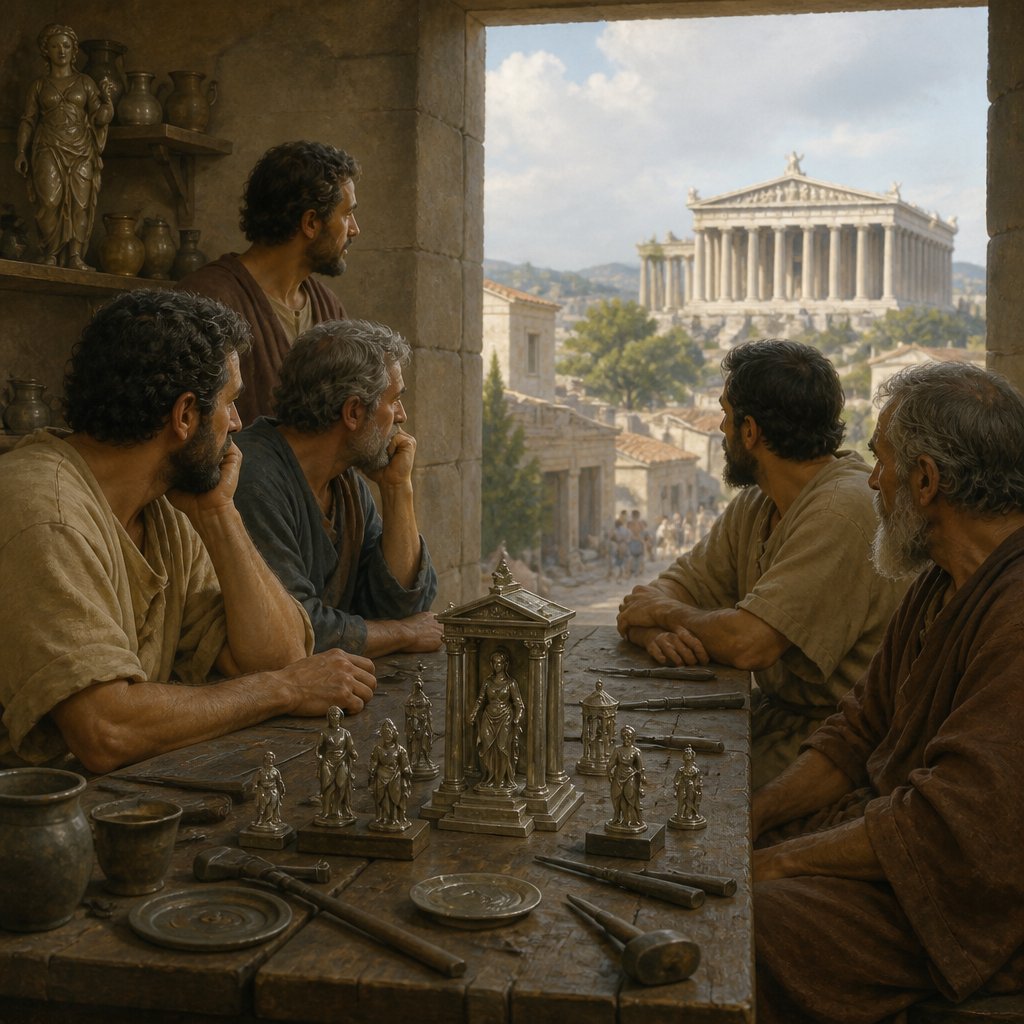
Acts 19:27 in the King James Version (KJV) states, "So that not only this our craft is in danger to be set at nought; but also that the temple of the great goddess Diana should be despised, and her magnificence should be destroyed, whom all Asia and the world worshippeth." This verse captures the intense opposition that the apostle Paul faced during his ministry in Ephesus, as well as the underlying themes of idolatry, fear, and the power of cultural influence.
To fully understand the significance of Acts 19:27, it is essential to examine the historical and cultural context in which it takes place. Ephesus was a prominent city in the Roman Empire, and it was known for its devotion to the goddess Diana (or Artemis in Greek mythology). The Temple of Artemis in Ephesus was one of the seven wonders of the ancient world, and the city's economy was heavily reliant on the worship of this deity. The silversmiths in the city made a lucrative business crafting silver shrines of Diana, and many individuals derived their livelihood from this trade.
In this verse, Demetrius, a silversmith, expresses his concerns about the impact of Paul's preaching on their business and the widespread worship of Diana. He argues that not only is their craft in jeopardy, but also that the temple of Diana is at risk of being despised and destroyed. This reveals the deep-seated fear and opposition that Paul's teachings posed to the existing religious and economic structures in Ephesus. The mention of "whom all Asia and the world worshippeth" emphasizes the widespread influence of Diana's cult and the significance of her worship in the ancient world.
One of the central themes in Acts 19:27 is the conflict between Christianity and idolatry. By preaching the Gospel and confronting the widespread worship of false gods, Paul directly challenged the religious practices and beliefs of the Ephesians. This highlights the fundamental tension between the worship of the one true God and the worship of idols, which is a recurring theme throughout the Bible. The verse reflects the spiritual warfare that occurs when the Gospel confronts deeply ingrained cultural practices and beliefs.
Furthermore, Acts 19:27 also illustrates the power of cultural influence and the fear of change. The silversmiths' reaction to Paul's preaching demonstrates how deeply entrenched their livelihood and identity were in the worship of Diana. The threat of economic loss and the potential decline of their cultural heritage led to fear, anger, and opposition towards Paul and his message. This reflects the broader issue of human resistance to change, especially when it comes to deeply rooted traditions and societal structures.
Symbolically, this verse represents the clash between the Kingdom of God and the kingdom of this world. The silversmiths' devotion to Diana and their reliance on her worship for their livelihoods symbolize the temporal and materialistic nature of worldly pursuits. In contrast, Paul's preaching embodies the spiritual truth and eternal significance of the Gospel. The verse serves as a reminder of the ongoing spiritual battle between the forces of darkness and the light of Christ, as well as the transformative power of the Gospel in challenging cultural norms and belief systems.
In conclusion, Acts 19:27 provides a vivid depiction of the intense opposition and conflict that Paul faced during his ministry in Ephesus. It captures the themes of idolatry, fear, and the power of cultural influence, as well as the spiritual warfare that occurs when the Gospel confronts deeply ingrained beliefs and practices. This verse continues to offer valuable insights into the challenges of proclaiming the Gospel in a world dominated by competing ideologies and allegiances, and it encourages believers to stand firm in their faith despite opposition.
Get our apps


Artwork for Acts 19:27

Acts 19:27 - "So that not only this our craft is in danger to be set at nought; but also that the temple of the great goddess Diana should be despised, and her magnificence should be destroyed, whom all Asia and the world worshippeth."
"So that not only this our craft is in danger to be set at nought; but also that the temple of the great goddess Diana should be despised, and her magnificence should be destroyed, whom all Asia and the world worshippeth." - Acts 19:27

Acts 27:19 - "And the third day we cast out with our own hands the tackling of the ship."

Acts 27:19 On the third day we threw the ship’s tackle overboard with our own hands.

"And the third day we cast out with our own hands the tackling of the ship." - Acts 27:19

Acts 17:27

Genesis 19-27

Acts 19: 11

Acts 19:11

Acts 27:26 - "Howbeit we must be cast upon a certain island."

Exodus 27:19-20

Genesis 27:18-19

John 19:25-27

Acts 27:27 - "But when the fourteenth night was come, as we were driven up and down in Adria, about midnight the shipmen deemed that they drew near to some country;"

Acts 11:27 - "¶ And in these days came prophets from Jerusalem unto Antioch."

John 19:25-27

John 19:26-27

Exodus 27:19-21

Acts 27:36 - "Then were they all of good cheer, and they also took some meat."

Acts 27:14 - "But not long after there arose against it a tempestuous wind, called Euroclydon."

Acts 27:32 - "Then the soldiers cut off the ropes of the boat, and let her fall off."

Acts 27:18 - "And we being exceedingly tossed with a tempest, the next day they lightened the ship;"

Acts 27:37 - "And we were in all in the ship two hundred threescore and sixteen souls."

Acts 20:27 - "For I have not shunned to declare unto you all the counsel of God."

Acts 26:27 - "King Agrippa, believest thou the prophets? I know that thou believest."

Acts 27:38 - "And when they had eaten enough, they lightened the ship, and cast out the wheat into the sea."
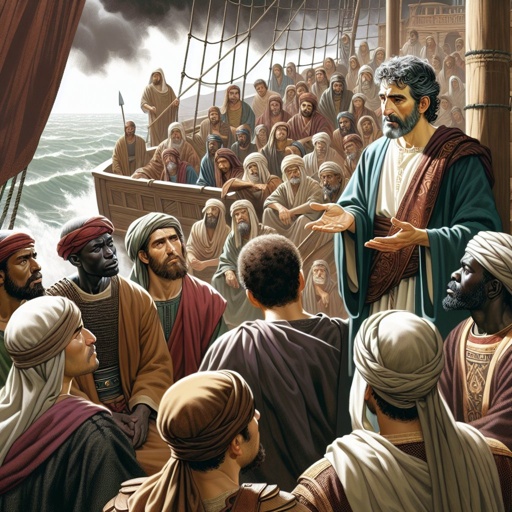
Acts 27:31 - "Paul said to the centurion and to the soldiers, Except these abide in the ship, ye cannot be saved."

Acts 10:27 - "And as he talked with him, he went in, and found many that were come together."

Acts 19:7 - "And all the men were about twelve."

Acts 27:6 - "And there the centurion found a ship of Alexandria sailing into Italy; and he put us therein."