What does Acts 22:24 mean?
“The chief captain commanded him to be brought into the castle, and bade that he should be examined by scourging; that he might know wherefore they cried so against him.” — Acts 22:24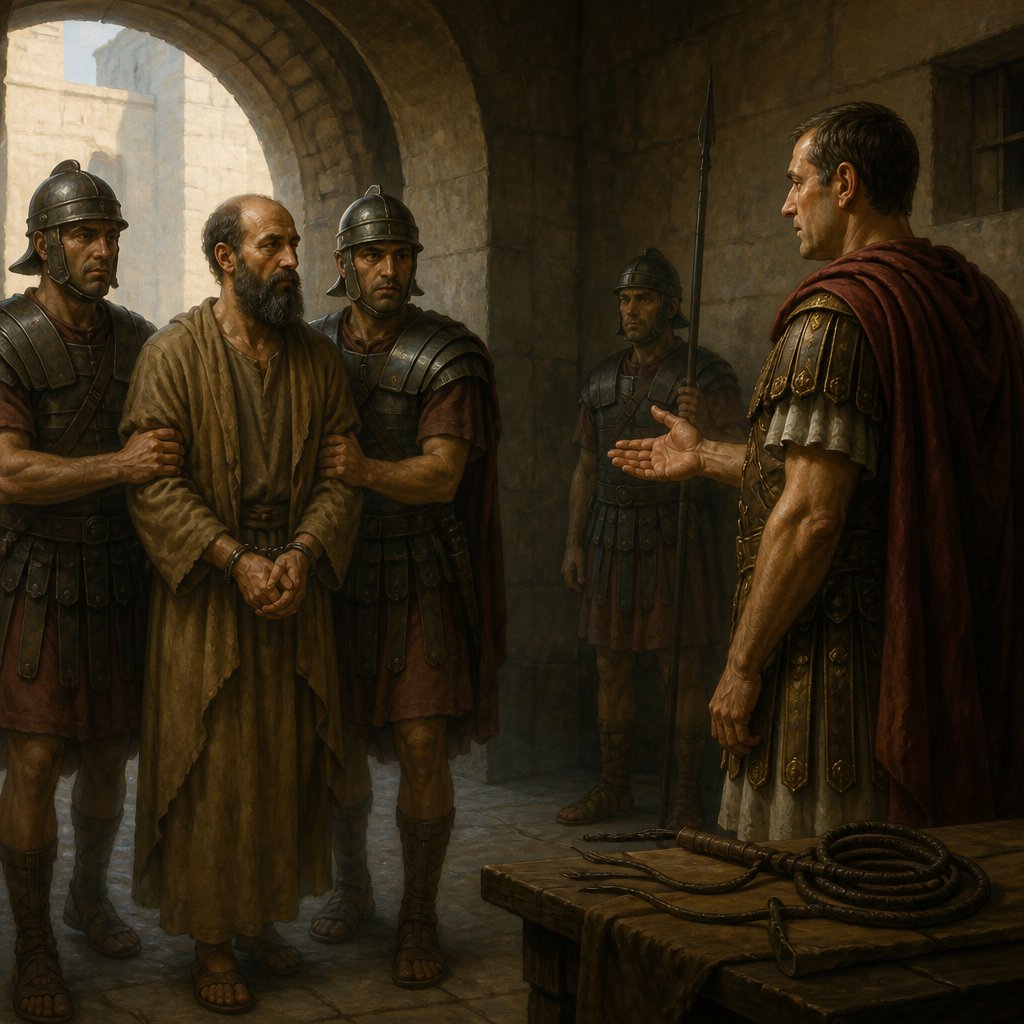
In Acts 22:24, the King James Version of the Bible reads, "The chief captain commanded him to be brought into the castle, and bade that he should be examined by scourging; that he might know wherefore they cried so against him."
This verse is part of a larger passage in the book of Acts that details the story of the apostle Paul's arrest in Jerusalem. Having been accused of bringing a Gentile into the inner court of the temple, Paul found himself in the midst of a riot as the Jews sought to kill him. He was then taken into custody by the Roman soldiers and brought to the chief captain of the Roman garrison. It is in this context that we find the verse under consideration.
In terms of themes, this verse serves as a powerful illustration of the persecution and suffering that followers of Christ may face in the course of proclaiming the gospel. The apostle Paul, a devout and dedicated follower of Christ, endured countless hardships and trials as he spread the message of Jesus throughout the known world. Here, we see him being unjustly accused and subjected to the harsh treatment of scourging, a form of punishment involving the use of a whip with pieces of metal or bone attached to it. This persecution and suffering are common themes found throughout the New Testament as Jesus himself forewarned his disciples that they would face opposition and persecution on account of their faith.
Moreover, the verse also sheds light on the inherent tension between the Roman authorities and the Jewish religious leaders. The chief captain's decision to have Paul examined by scourging highlights the political and social dynamics at play in the first-century Roman-occupied Judea. The Roman authorities were often caught in the middle of the disputes and conflicts between the Jewish leaders and the early followers of Christ. The subsequent chapters in the book of Acts detail how Paul appealed to his Roman citizenship as a means of legal protection and eventually found himself standing trial before the Roman governor, Felix.
From a symbolic perspective, this verse serves as a reminder of the physical and emotional toll that comes with standing up for one's faith. The act of scourging represents the suffering and pain that believers may endure for the sake of the gospel. Throughout Christian history, countless individuals have faced persecution, torture, and even death for their unwavering commitment to Christ and His teachings. The apostle Paul himself would go on to endure numerous hardships, including imprisonment, beatings, and ultimately martyrdom for the cause of Christ.
In conclusion, Acts 22:24 captures the essence of the persecution and suffering that believers may face as they seek to faithfully follow Christ. It also provides insight into the complex social and political dynamics of the first-century Roman Empire. Through the themes of persecution and suffering, and the symbolism of the scourging, this verse serves as a poignant reminder of the sacrifices made by those who stand firm in their faith, and the unwavering commitment to the message of the gospel.
Get our apps


Artwork for Acts 22:24

Acts 22:24 - "The chief captain commanded him to be brought into the castle, and bade that he should be examined by scourging; that he might know wherefore they cried so against him."
"The chief captain commanded him to be brought into the castle, and bade that he should be examined by scourging; that he might know wherefore they cried so against him." - Acts 22:24

James 2:2-4

Acts 24:22 - "And when Felix heard these things, having more perfect knowledge of that way, he deferred them, and said, When Lysias the chief captain shall come down, I will know the uttermost of your matter."

Acts 12:24 - "¶ But the word of God grew and multiplied."

Genesis 24-22

Genesis 22-24

Acts 1:21-22

Acts 1:21-22

Jude 9:22-24

Acts 24:9 - "And the Jews also assented, saying that these things were so."

2 Samuel 24:22

2 Samuel 24:22

2 Samuel 24:22

Genesis 3:22-24

Acts 14:24 - "And after they had passed throughout Pisidia, they came to Pamphylia."

Acts 24:13 - "Neither can they prove the things whereof they now accuse me."

Acts 28:24 - "And some believed the things which were spoken, and some believed not."

Acts 24:24 - "And after certain days, when Felix came with his wife Drusilla, which was a Jewess, he sent for Paul, and heard him concerning the faith in Christ."

Acts 22:22 - "And they gave him audience unto this word, and then lifted up their voices, and said, Away with such a fellow from the earth: for it is not fit that he should live."

Acts 12:22 - "And the people gave a shout, saying, It is the voice of a god, and not of a man."

Acts 5:22 - "But when the officers came, and found them not in the prison, they returned, and told,"

1 Chronicles 24:22 - "Of the Izharites; Shelomoth: of the sons of Shelomoth; Jahath."

Acts 22:23 - "And as they cried out, and cast off their clothes, and threw dust into the air,"

Acts 7:22 - "And Moses was learned in all the wisdom of the Egyptians, and was mighty in words and in deeds."

"¶ But the word of God grew and multiplied." - Acts 12:24

Acts 9:24 - "But their laying await was known of Saul. And they watched the gates day and night to kill him."

Acts 24:3 - "We accept it always, and in all places, most noble Felix, with all thankfulness."

Acts 4:22 - "For the man was above forty years old, on whom this miracle of healing was shewed."

Acts 24:17 - "Now after many years I came to bring alms to my nation, and offerings."