What does Acts 25:10 mean?
“Then said Paul, I stand at Cæsar’s judgment seat, where I ought to be judged: to the Jews have I done no wrong, as thou very well knowest.” — Acts 25:10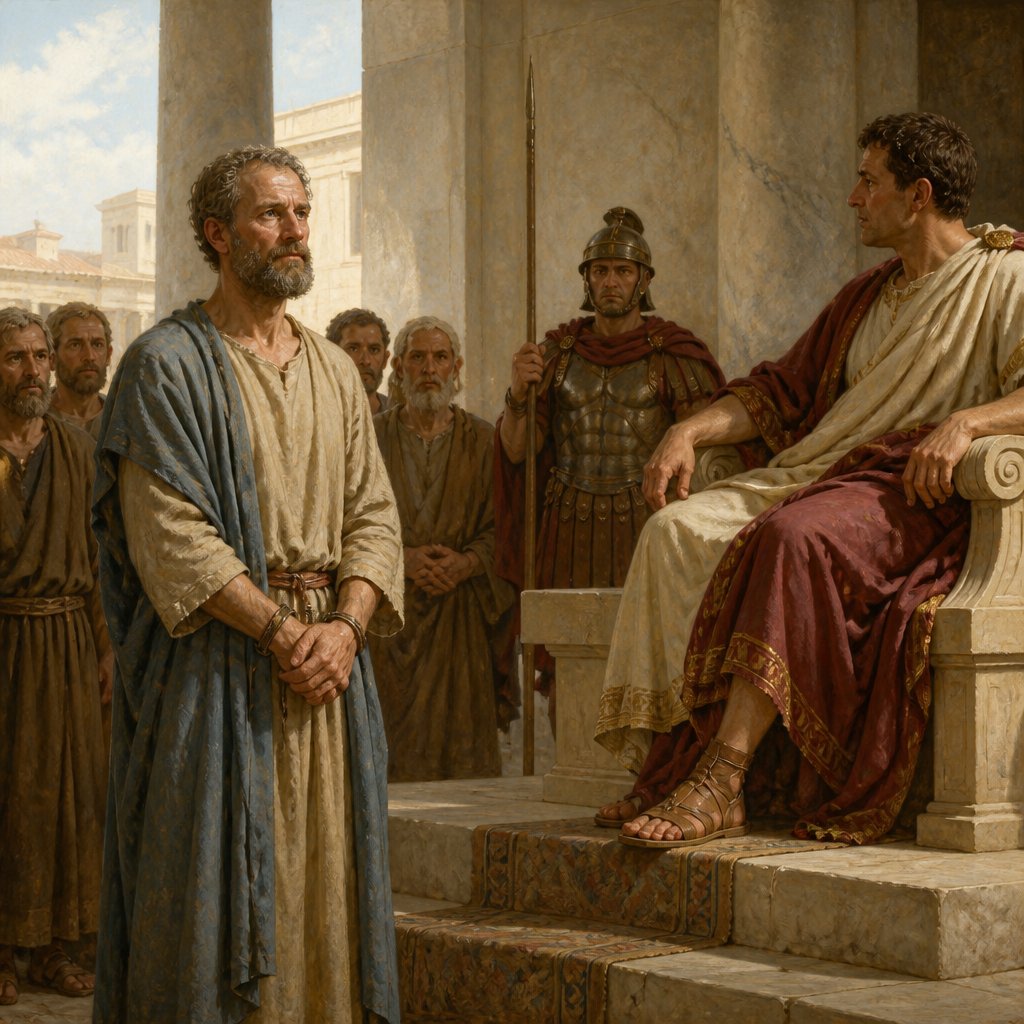
In Acts 25:10, King James Version (KJV) of the Bible, we read the following words spoken by the Apostle Paul to the Roman governor, Festus: "I stand at Caesar's judgment seat, where I ought to be judged: to the Jews have I done no wrong, as thou very well knowest."
This verse is part of the narrative of Paul's trial before Festus, which takes place after he is accused by the Jewish religious leaders. The context of this verse is crucial to understanding its profound meaning. Paul, a devout Jewish man and a former persecutor of Christians, had experienced a dramatic conversion on the road to Damascus and had become one of the most fervent preachers of the Christian faith. He had been arrested in Jerusalem for his Christian beliefs and was now being interrogated by Festus in Caesarea.
The theme of justice and persecution is central to this passage. Paul asserts his right to be judged at Caesar's judgment seat, asserting his Roman citizenship and demanding a fair trial. The symbolism of Caesar's judgment seat is significant because it represents the highest authority and the rule of law. By appealing to the judgment seat of Caesar, Paul is invoking the principles of justice and fairness that were fundamental to Roman law.
Furthermore, Paul declares his innocence before the Jewish leaders, emphasizing that he has done no wrong to them. This statement reflects the theme of persecution and the unjust treatment of Christians by the religious establishment. Throughout his missionary journeys, Paul faced opposition and persecution from the Jewish leaders who saw him as a threat to their religious authority. His declaration of innocence is a powerful assertion of his faith and his commitment to the truth of the gospel.
Additionally, the verse also reveals Paul's unwavering courage and boldness in defending his beliefs. Despite the imminent danger and the hostility of his accusers, Paul fearlessly proclaims his innocence and asserts his right to a fair trial. His steadfastness and confidence in the face of adversity serve as an inspiring example of faith and conviction.
In a broader theological context, this verse also underscores the sovereignty of God and His providential care for His people. As Paul stands before the judgment seat of Caesar, he trusts in God's protection and ultimately in the divine justice that transcends human judgment. This theme of divine sovereignty and ultimate justice is a recurring motif in the New Testament, reflecting the belief that God is the ultimate arbiter of truth and righteousness.
In conclusion, Acts 25:10 in the King James Version encapsulates profound themes of justice, persecution, courage, and divine sovereignty. The verse portrays the unwavering faith and fearless resolve of the Apostle Paul as he confronts his accusers and asserts his innocence. It also demonstrates the timeless relevance of the biblical message, offering inspiration and guidance for believers who face opposition and adversity. As we meditate on this verse, we are reminded of the enduring power of faith and the righteous principles that continue to guide and inspire us today.
Get our apps


Artwork for Acts 25:10

Acts 25:10 - "Then said Paul, I stand at Caesar's judgment seat, where I ought to be judged: to the Jews have I done no wrong, as thou very well knowest."

"Then said Paul, I stand at Caesar's judgment seat, where I ought to be judged: to the Jews have I done no wrong, as thou very well knowest." - Acts 25:10

Acts 10:25 - "And as Peter was coming in, Cornelius met him, and fell down at his feet, and worshipped him."

"And as Peter was coming in, Cornelius met him, and fell down at his feet, and worshipped him." - Acts 10:25

Acts 23:25 - "And he wrote a letter after this manner:"

Acts 11:25 - "Then departed Barnabas to Tarsus, for to seek Saul:"

Acts 14:25 - "And when they had preached the word in Perga, they went down into Attalia:"

Acts 25:25 - "But when I found that he had committed nothing worthy of death, and that he himself hath appealed to Augustus, I have determined to send him."

Acts 9:25 - "Then the disciples took him by night, and let him down by the wall in a basket."

Psalm 25:10

Palme 25:10

Genesis 25-10

Acts 25:2 - "Then the high priest and the chief of the Jews informed him against Paul, and besought him,"

Acts 16:25 - "¶ And at midnight Paul and Silas prayed, and sang praises unto God: and the prisoners heard them."

Acts 25:27 - "For it seemeth to me unreasonable to send a prisoner, and not withal to signify the crimes laid against him."

Acts 27:25 - "Wherefore, sirs, be of good cheer: for I believe God, that it shall be even as it was told me."

Acts 25:13 - "And after certain days king Agrippa and Bernice came unto Caesarea to salute Festus."

Nehemiah 10:25 - "Rehum, Hashabnah, Maaseiah,"

acts 10:44-46

Acts 25:4 - "But Festus answered, that Paul should be kept at Caesarea, and that he himself would depart shortly thither."

"And he wrote a letter after this manner:" - Acts 23:25

"Then departed Barnabas to Tarsus, for to seek Saul:" - Acts 11:25

Acts 25:18 - "Against whom when the accusers stood up, they brought none accusation of such things as I supposed:"

Exodus 25:10-22

Acts 25:1 - "Now when Festus was come into the province, after three days he ascended from Caesarea to Jerusalem."

Acts 8:25 - "And they, when they had testified and preached the word of the Lord, returned to Jerusalem, and preached the gospel in many villages of the Samaritans."

2 Chronicles 25:26 - "Now the rest of the acts of Amaziah, first and last, behold, are they not written in the book of the kings of Judah and Israel?"

2 Kings 21:25 - "Now the rest of the acts of Amon which he did, are they not written in the book of the chronicles of the kings of Judah?"

Acts 26:25 - "But he said, I am not mad, most noble Festus; but speak forth the words of truth and soberness."

Acts 10:10 - "And he became very hungry, and would have eaten: but while they made ready, he fell into a trance,"