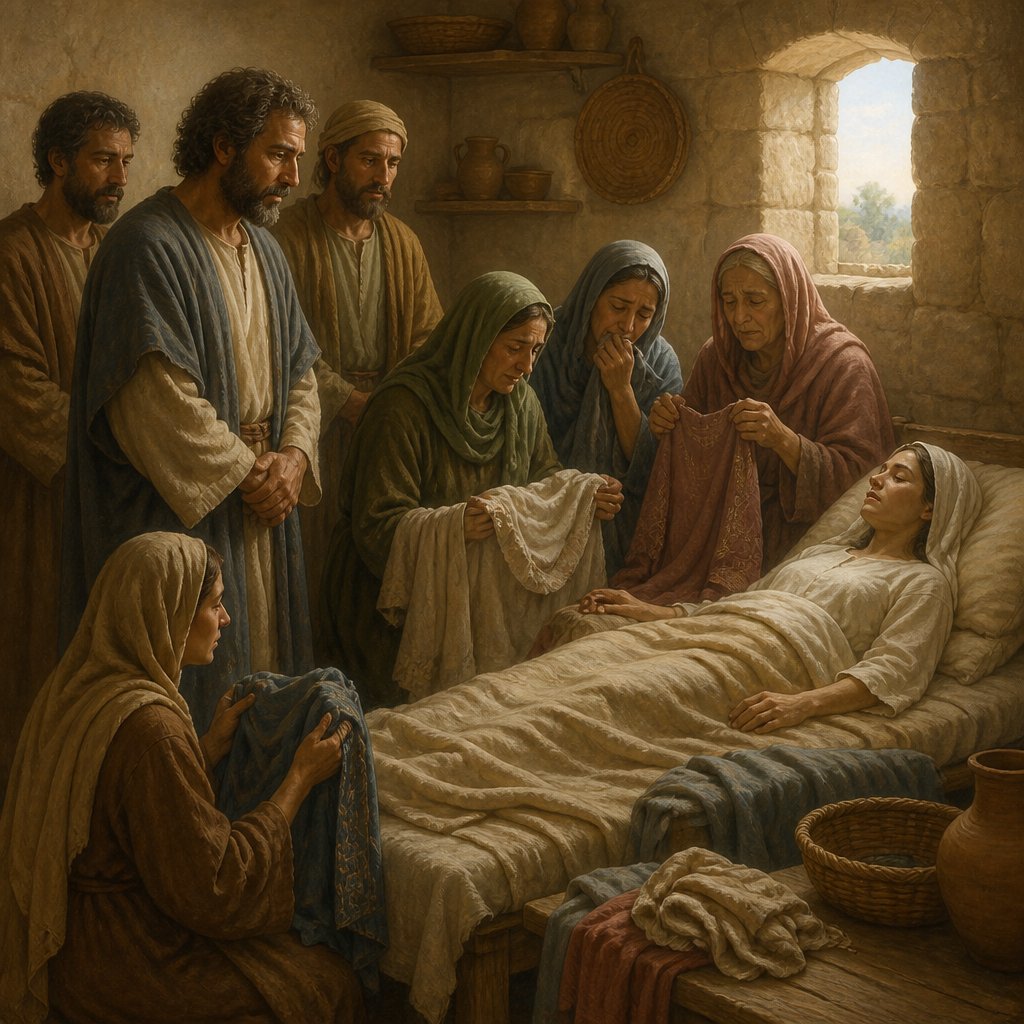
Acts 9:36-39 in the King James Version of the Bible reads:
"Now there was at Joppa a certain disciple named Tabitha, which by interpretation is called Dorcas: this woman was full of good works and almsdeeds which she did. And it came to pass in those days, that she was sick, and died: whom when they had washed, they laid her in an upper chamber. And forasmuch as Lydda was nigh to Joppa, and the disciples had heard that Peter was there, they sent unto him two men, desiring him that he would not delay to come to them. Then Peter arose and went with them. When he was come, they brought him into the upper chamber: and all the widows stood by him weeping, and shewing the coats and garments which Dorcas made, while she was with them. But Peter put them all forth, and kneeled down, and prayed; and turning him to the body said, Tabitha, arise. And she opened her eyes: and when she saw Peter, she sat up."
This passage from the book of Acts tells the story of the miraculous resurrection of a woman named Tabitha, also known as Dorcas. It is a powerful account of the early Christian community and the impact of faith and good works. Let's explore the themes, context, and symbolism contained within this passage.
One of the central themes of this passage is the power of faith and prayer. Tabitha, also known as Dorcas, is described as a disciple who was full of good works and alms deeds which she did. This indicates that she was a compassionate and charitable woman who dedicated her life to serving others. When she falls ill and dies, the other disciples waste no time in seeking out Peter, believing in the power of his faith and prayers to bring her back to life. This demonstrates the deep faith and belief in the supernatural abilities of the early Christians.
Another theme present in this passage is the importance of community and solidarity. When Tabitha passes away, the widows she had helped gather around her, weeping and showing the coats and garments which she had made for them. This illustrates the impact she had on her community and the love and respect they had for her. It also emphasizes the value of mutual support and compassion within the early Christian community.
The context of this passage is important in understanding its significance. The book of Acts was written by Luke, the companion of the Apostle Paul, and it serves as a historical account of the early Christian church. This particular passage occurs after the conversion of Saul, who becomes the Apostle Paul, and highlights the spread of Christianity and the miracles that took place within the faith community.
The symbolism in this passage is profound. The resurrection of Tabitha serves as a powerful symbol of the transformative power of faith and prayer. It also represents the belief in life after death and the ultimate triumph over mortality through the teachings of Jesus Christ. Additionally, the story of Tabitha's resurrection serves as a testament to the authority and power vested in the apostles, particularly Peter, within the early Christian church.
Overall, Acts 9:36-39 is a poignant and inspiring passage that highlights the themes of faith, community, and the miraculous power of God. It provides a glimpse into the early Christian community and the extraordinary events that shaped the spread of Christianity. The story of Tabitha's resurrection continues to be a powerful testimony to the enduring impact of faith and the compassion and generosity of the early disciples.
Get our apps


Artwork for Acts 9:36-39

Acts 9:36-39 - "In Joppa there was a disciple named Tabitha (in Greek her name is Dorcas); she was always doing good and helping the poor. About that time she became sick and died, and her body was washed and placed in an upstairs room. Lydda was near Joppa; so when the disciples heard that Peter was in Lydda, they sent two men to him and urged him, “Please come at once!” Peter went with them, and when he arrived he was taken upstairs to the room. All the widows stood around him, crying and showing him the robes and other clothing that Dorcas had made while she was still with them."
"In Joppa there was a disciple named Tabitha (in Greek her name is Dorcas); she was always doing good and helping the poor. About that time she became sick and died, and her body was washed and placed in an upstairs room. Lydda was near Joppa; so when the disciples heard that Peter was in Lydda, they sent two men to him and urged him, “Please come at once!” Peter went with them, and when he arrived he was taken upstairs to the room. All the widows stood around him, crying and showing him the robes and other clothing that Dorcas had made while she was still with them." - Acts 9:36-39

Acts 9:36 - "¶ Now there was at Joppa a certain disciple named Tabitha, which by interpretation is called Dorcas: this woman was full of good works and almsdeeds which she did."

Exodus 39:36 - "The table, and all the vessels thereof, and the shewbread,"

Acts 9:39 - "Then Peter arose and went with them. When he was come, they brought him into the upper chamber: and all the widows stood by him weeping, and shewing the coats and garments which Dorcas made, while she was with them."

"The table, and all the vessels thereof, and the shewbread," - Exodus 39:36

Acts 21:36 - "For the multitude of the people followed after, crying, Away with him."
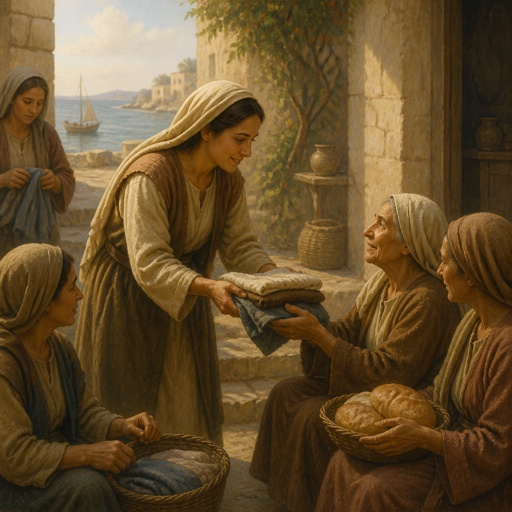
"¶ Now there was at Joppa a certain disciple named Tabitha, which by interpretation is called Dorcas: this woman was full of good works and almsdeeds which she did." - Acts 9:36

Acts 27:36 - "Then were they all of good cheer, and they also took some meat."

Acts 16:39 - "And they came and besought them, and brought them out, and desired them to depart out of the city."

Acts 19:39 - "But if ye enquire any thing concerning other matters, it shall be determined in a lawful assembly."

Acts 5:39 - "But if it be of God, ye cannot overthrow it; lest haply ye be found even to fight against God."
Genesis 36:39 - "And Baal-hanan the son of Achbor died, and Hadar reigned in his stead: and the name of his city was Pau; and his wife's name was Mehetabel, the daughter of Matred, the daughter of Mezahab."

Mark 9:36-37

Acts 7:39 - "To whom our fathers would not obey, but thrust him from them, and in their hearts turned back again into Egypt,"

Acts 13:39 - "And by him all that believe are justified from all things, from which ye could not be justified by the law of Moses."

Job 39:9 - "Will the unicorn be willing to serve thee, or abide by thy crib?"

Acts 20:36 - "¶ And when he had thus spoken, he kneeled down, and prayed with them all."

Acts 19:36 - "Seeing then that these things cannot be spoken against, ye ought to be quiet, and to do nothing rashly."

Acts 27:39 - "And when it was day, they knew not the land: but they discovered a certain creek with a shore, into the which they were minded, if it were possible, to thrust in the ship."

Acts 2:39 - "For the promise is unto you, and to your children, and to all that are afar off, even as many as the Lord our God shall call."

Acts 10:39 - "And we are witnesses of all things which he did both in the land of the Jews, and in Jerusalem; whom they slew and hanged on a tree:"

Judges 9:39 - "And Gaal went out before the men of Shechem, and fought with Abimelech."

Acts 4:36 - "And Joses, who by the apostles was surnamed Barnabas, (which is, being interpreted, The son of consolation,) a Levite, and of the country of Cyprus,"

2 Kings 15:36 - "¶ Now the rest of the acts of Jotham, and all that he did, are they not written in the book of the chronicles of the kings of Judah?"

2 kings 9:34-36

Psalms 39:9 - "I was dumb, I opened not my mouth; because thou didst it."

Genesis 36:9 - "¶ And these are the generations of Esau the father of the Edomites in mount Seir:"

Peter raises Tabitha from the dead

Acts 15:39 - "And the contention was so sharp between them, that they departed asunder one from the other: and so Barnabas took Mark, and sailed unto Cyprus;"