What does Acts 9:37 mean?
“And it came to pass in those days, that she was sick, and died: whom when they had washed, they laid in an upper chamber.” — Acts 9:37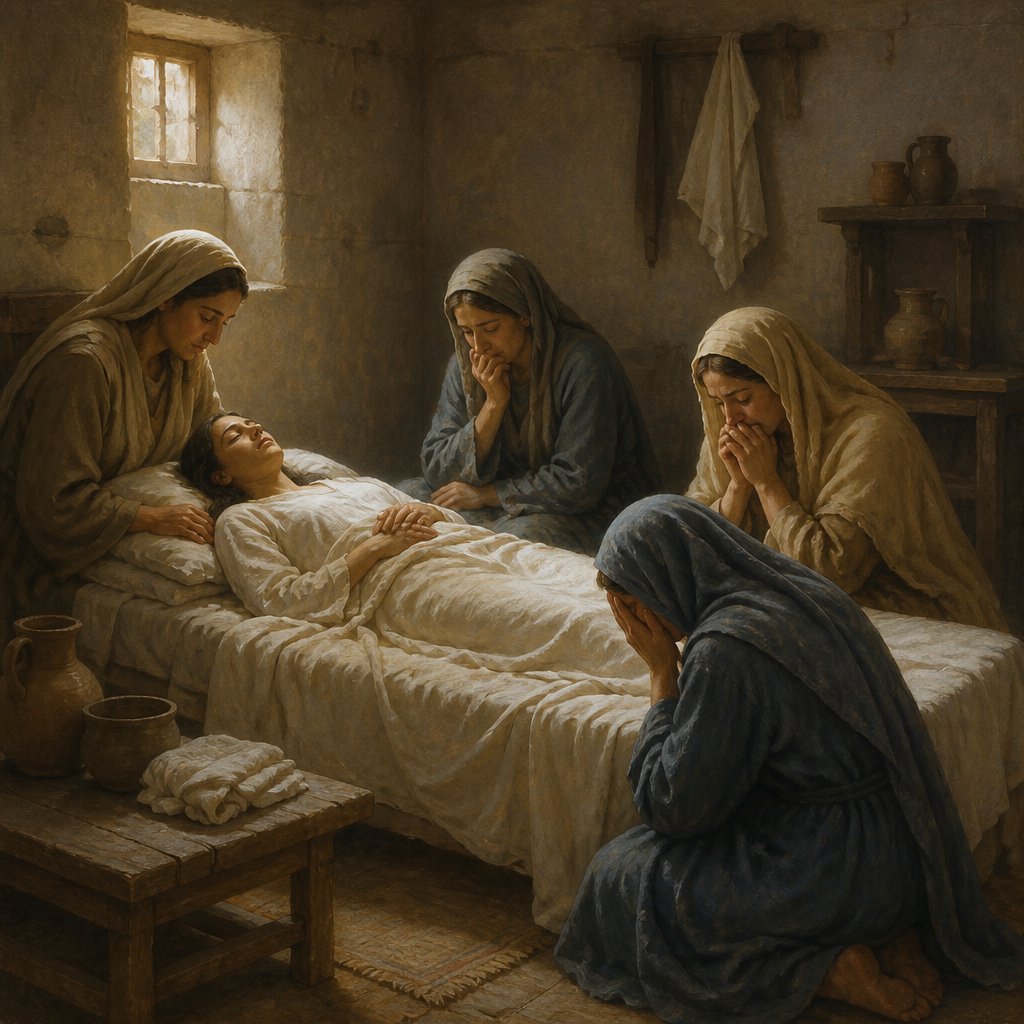
The Bible verse Acts 9:37 in the King James Version (KJV) reads, "And it came to pass in those days, that she was sick, and died: whom when they had washed, they laid her in an upper chamber." This verse is part of the larger narrative of the book of Acts, which chronicles the early days of the Christian church after the death and resurrection of Jesus Christ.
This particular verse describes an incident in which a woman named Dorcas, also known as Tabitha, became sick and eventually died. This event took place in the town of Joppa, and it had a profound impact on the community of believers there. The verse sets the stage for the miraculous resurrection that takes place later in the chapter, emphasizing the power of faith and the work of the Holy Spirit.
The themes and context of this verse are significant for understanding the broader message of the book of Acts and the Christian faith. One key theme that emerges from this passage is the reality of human suffering and death. Even though Dorcas was a faithful follower of Christ, she still experienced illness and ultimately passed away. This reminds us that the Christian life does not exempt us from the challenges and difficulties of this world. However, the message of hope and resurrection that follows in the subsequent verses also underscores the power of God to overcome even the most final of human experiences.
Another important theme in this verse is the sense of community and solidarity among believers. When Dorcas became sick and died, the members of her community came together to mourn her passing and honor her memory. They performed the ritual of washing her body and laid her in an upper chamber, demonstrating their care and respect for her. This emphasis on the importance of community and mutual support is a central aspect of the Christian faith, and it is evident throughout the book of Acts as the early church grapples with the challenges and opportunities of their new faith.
The symbolism in this verse is also worth considering. The act of washing and laying Dorcas in an upper chamber has symbolic significance within the Christian tradition. Washing the body before burial is a ritual of purification and preparation, symbolizing the transition from this life to the next. The placement of her body in an upper chamber is also significant, as it reflects the cultural practices of the time and the honor given to the deceased.
Ultimately, this verse sets the stage for the incredible miracle that occurs later in the chapter when Dorcas is raised from the dead through the power of the Holy Spirit working through the apostle Peter. This event serves as a powerful demonstration of the central message of the Christian faith – that through Christ, death does not have the final word. The resurrection of Dorcas becomes a testament to the power of God to overcome even the most insurmountable obstacles and to bring about new life in the midst of death.
In conclusion, Acts 9:37 in the King James Version of the Bible offers a profound meditation on the themes of suffering, community, and resurrection. Through the story of Dorcas, we are reminded of the reality of human mortality and the importance of standing together as a community of faith. The symbolism of her death and resurrection also points to the central message of the Christian gospel, that through Christ, we have the hope of resurrection and new life. This verse invites believers to reflect on the power of God to transform even the most dire circumstances and to trust in the promise of eternal life.
Get our apps


Artwork for Acts 9:37

Acts 9:37 - "And it came to pass in those days, that she was sick, and died: whom when they had washed, they laid her in an upper chamber."
"And it came to pass in those days, that she was sick, and died: whom when they had washed, they laid her in an upper chamber." - Acts 9:37

Acts 13:37 - "But he, whom God raised again, saw no corruption."

Acts 15:37 - "And Barnabas determined to take with them John, whose surname was Mark."

Acts 20:37 - "And they all wept sore, and fell on Paul's neck, and kissed him,"

Acts 4:37 - "Having land, sold it, and brought the money, and laid it at the apostles' feet."

Acts 27:37 - "And we were in all in the ship two hundred threescore and sixteen souls."

Mark 9:36-37

Matthew 9:37-38

1 Chronicles 9:37 - "And Gedor, and Ahio, and Zechariah, and Mikloth."

Acts 19:37 - "For ye have brought hither these men, which are neither robbers of churches, nor yet blasphemers of your goddess."

Job 37:9 - "Out of the south cometh the whirlwind: and cold out of the north."

"But he, whom God raised again, saw no corruption." - Acts 13:37

Acts 2:37 - "¶ Now when they heard this, they were pricked in their heart, and said unto Peter and to the rest of the apostles, Men and brethren, what shall we do?"

Acts 8:37 - "And Philip said, If thou believest with all thine heart, thou mayest. And he answered and said, I believe that Jesus Christ is the Son of God."

Acts 10:37 - "That word, I say, ye know, which was published throughout all Judaea, and began from Galilee, after the baptism which John preached;"

Matthew 9:37 - "Then saith he unto his disciples, The harvest truly is plenteous, but the labourers are few;"

"And they all wept sore, and fell on Paul's neck, and kissed him," - Acts 20:37

"Having land, sold it, and brought the money, and laid it at the apostles' feet." - Acts 4:37

"And Barnabas determined to take with them John, whose surname was Mark." - Acts 15:37

Acts 21:37 - "And as Paul was to be led into the castle, he said unto the chief captain, May I speak unto thee? Who said, Canst thou speak Greek?"

Psalms 37:9 - "For evildoers shall be cut off: but those that wait upon the LORD, they shall inherit the earth."

Acts 9:9 - "And he was three days without sight, and neither did eat nor drink."

"And Gedor, and Ahio, and Zechariah, and Mikloth." - 1 Chronicles 9:37

John 9:37 - "And Jesus said unto him, Thou hast both seen him, and it is he that talketh with thee."

"And we were in all in the ship two hundred threescore and sixteen souls." - Acts 27:37

Mark 9:37 (KJVA) 37 Whosoever shall receive one of such children in my name, receiveth me: and whosoever shall receive me, receiveth not me, but him that sent me.

Mark 9:37 (KJVA) 37 Whosoever shall receive one of such children in my name, receiveth me: and whosoever shall receive me, receiveth not me, but him that sent me.

Acts 9:1-20

Acts 9:1-20