What does Acts 9:40 mean?
“But Peter put them all forth, and kneeled down, and prayed; and turning him to the body said, Tabitha, arise. And she opened her eyes: and when she saw Peter, she sat up.” — Acts 9:40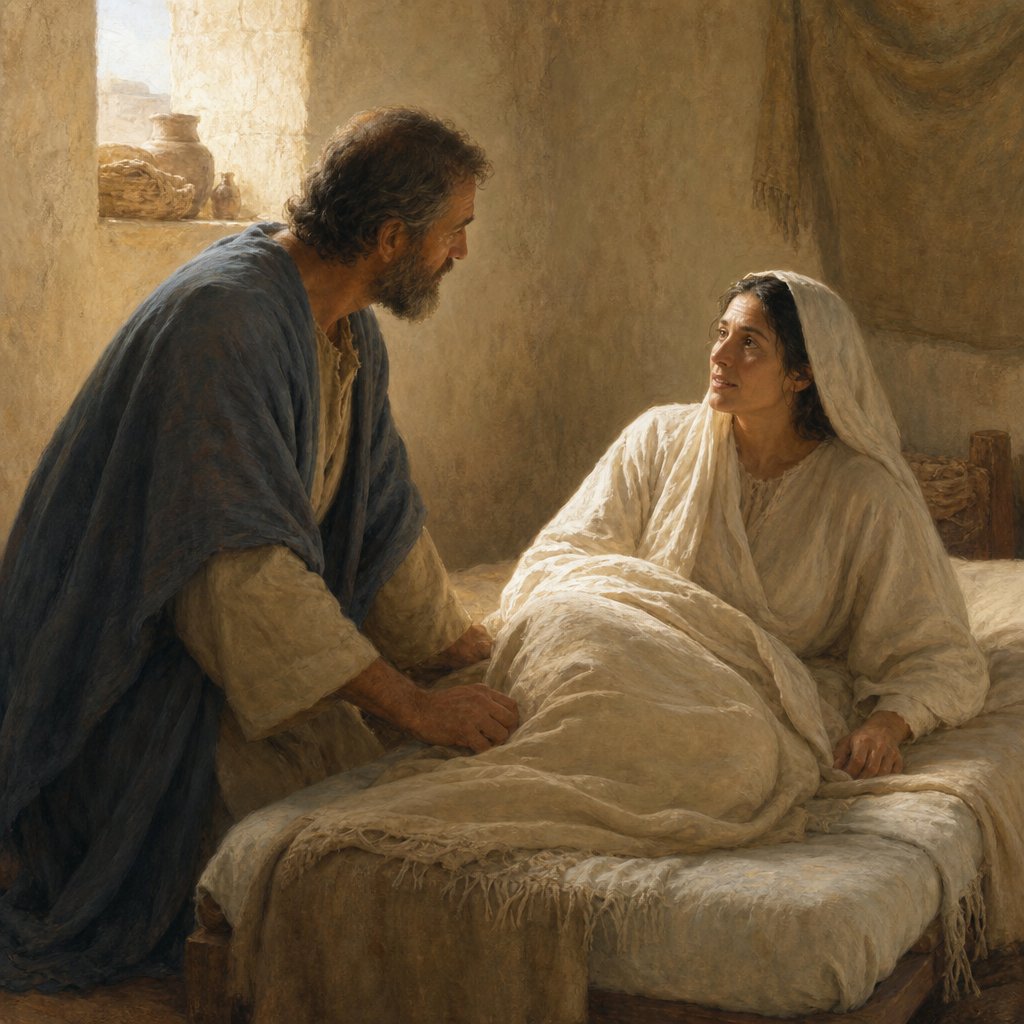
Acts 9:40 in the King James Version reads, “But Peter put them all forth, and kneeled down, and prayed; and turning him to the body said, Tabitha, arise. And she opened her eyes: and when she saw Peter, she sat up.” The meaning of the verse becomes clearer when it is heard as the climax of a short but densely patterned narrative in which God confirms the living power of Christ among the early believers, and does so in a way that joins private prayer, public witness, and compassionate restoration.
In context, Peter has come to Joppa because “Tabitha” (also called “Dorcas”) has died, and the disciples have urgently sent for him. The believers show Peter the “coats and garments which Dorcas made, while she was with them,” and the scene is intentionally human and tangible: the grief is real, and so is the testimony of her life. She is presented not merely as a name but as a source of mercy to the community, a woman whose works clothed people, relieved want, and left visible evidence behind. The verse you asked about is the turning point where the narrative moves from mourning to divine intervention.
The first phrase, “But Peter put them all forth,” signals both separation and reverence. Peter does not make a spectacle of prayer or treat the dead as an occasion for performance. The mourners are real, yet they are asked to leave so that what happens next is not driven by emotion, noise, or display, but by dependence upon God. This moment also highlights a theme that runs throughout Acts: the apostles are not wonder-workers by personal power; they are servants who act under the authority of the risen Christ. By clearing the room, Peter places the focus where Acts repeatedly places it—on God’s act, not man’s.
Then, “and kneeled down, and prayed.” Kneeling is bodily symbolism that reinforces inward submission. It is not magic; it is worship. Peter’s posture and action teach that even an apostle approaches death and impossible situations by petitioning God, not by commanding reality as though the power were his own. The verse itself does not record the words of the prayer, and that silence is meaningful: the emphasis is not on a formula but on communion with God. In Acts, prayer repeatedly precedes decisive moments, and here it stands at the threshold between death’s finality and God’s restoration.
After prayer comes the direct address: “and turning him to the body said, Tabitha, arise.” The wording is simple, personal, and authoritative, yet it is not separated from the prayer that precedes it. Peter “turning” to the body suggests a deliberate shift from speaking to God to speaking into the situation with God’s granted authority. He calls her by name, “Tabitha,” underscoring personal identity and relational care; this is not an anonymous miracle. The command “arise” carries strong resurrection language. In the New Testament, to “arise” is often the language of awakening, restoration, and the reversal of death. Within Acts, it fits the larger proclamation that Jesus is risen and that His life is active among His people.
The verse’s symbolism also quietly echoes earlier Gospel scenes. Peter, as a leading apostle, is shown doing what his Lord did: removing onlookers, confronting death, and speaking life where there was none. The resemblance functions as theological continuity: the ministry in Acts is the continuing work of Christ through His servants. The point is not that Peter has become Christ, but that Christ’s power and pattern continue in the church’s witness.
The response is described with striking restraint: “And she opened her eyes: and when she saw Peter, she sat up.” The narrative does not linger on spectacle, but on signs of real life—eyes opening, recognition, sitting up. The sequence emphasizes restoration that is concrete and verifiable. She is not portrayed as a spirit or apparition; she is bodily alive, responsive, and aware. Seeing Peter matters because it confirms consciousness and relationship; it also frames Peter as the instrument and witness, not the source. Her sitting up is the quiet proof that death has been interrupted by God’s mercy.
In significance, Acts 9:40 is not only about an extraordinary event; it serves the mission of the early church. The surrounding passage shows that this miracle becomes known and leads many to believe. Yet even within the single verse, the themes are already present: compassion for the vulnerable, the honor of a life marked by good works, the supremacy of prayer, the refusal to sensationalize holy power, and the proclamation—without a sermon—that Jesus’ resurrection is not merely a past fact but a present reality. Tabitha’s raising stands as a sign that the God who raised Christ is able to restore, and that the church’s witness is meant to be both spiritual and practical, touching bodies as well as souls, and confirming by deed the message it proclaims.
Get our apps


Artwork for Acts 9:40

Acts 9:40 - "But Peter put them all forth, and kneeled down, and prayed; and turning him to the body said, Tabitha, arise. And she opened her eyes: and when she saw Peter, she sat up."
"But Peter put them all forth, and kneeled down, and prayed; and turning him to the body said, Tabitha, arise. And she opened her eyes: and when she saw Peter, she sat up." - Acts 9:40

Exodus 40:9

Acts 13:40 - "Beware therefore, lest that come upon you, which is spoken of in the prophets;"

Acts 10:40 - "Him God raised up the third day, and shewed him openly;"

Acts 15:40 - "And Paul chose Silas, and departed, being recommended by the brethren unto the grace of God."

Mark 9:40 - "For he that is not against us is on our part."

Acts 16:40 - "And they went out of the prison, and entered into the house of Lydia: and when they had seen the brethren, they comforted them, and departed."

Acts 8:40 - "But Philip was found at Azotus: and passing through he preached in all the cities, till he came to Caesarea."

Acts 2:40 - "And with many other words did he testify and exhort, saying, Save yourselves from this untoward generation."

Acts 19:40 - "For we are in danger to be called in question for this day's uproar, there being no cause whereby we may give an account of this concourse."

Luke 9:40 - "And I besought thy disciples to cast him out; and they could not."

Acts 5:40 - "And to him they agreed: and when they had called the apostles, and beaten them, they commanded that they should not speak in the name of Jesus, and let them go."

1 Chronicles 9:40 - "And the son of Jonathan was Merib-baal: and Merib-baal begat Micah."

Acts 27:40 - "And when they had taken up the anchors, they committed themselves unto the sea, and loosed the rudder bands, and hoised up the mainsail to the wind, and made toward shore."

Job 40:9 - "Hast thou an arm like God? or canst thou thunder with a voice like him?"

"For he that is not against us is on our part." - Mark 9:40
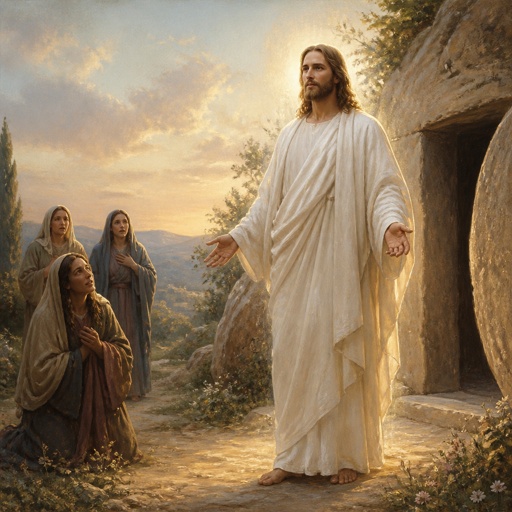
"Him God raised up the third day, and shewed him openly;" - Acts 10:40
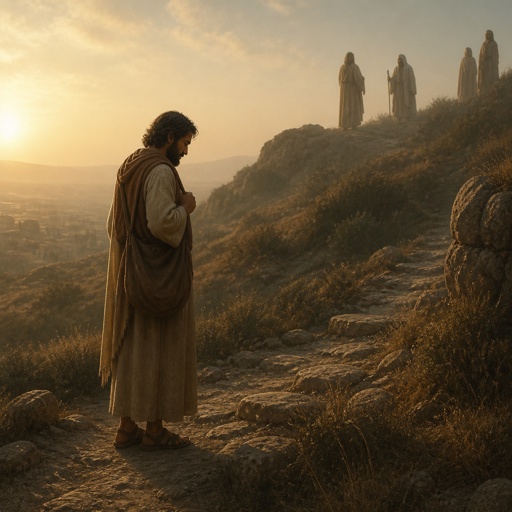
"Beware therefore, lest that come upon you, which is spoken of in the prophets;" - Acts 13:40

John 9:40 - "And some of the Pharisees which were with him heard these words, and said unto him, Are we blind also?"

Ezekiel 40:9 - "Then measured he the porch of the gate, eight cubits; and the posts thereof, two cubits; and the porch of the gate was inward."
Acts 7:40 - "Saying unto Aaron, Make us gods to go before us: for as for this Moses, which brought us out of the land of Egypt, we wot not what is become of him."

Genesis 40:9 - "And the chief butler told his dream to Joseph, and said to him, In my dream, behold, a vine was before me;"

Acts 9:9 - "And he was three days without sight, and neither did eat nor drink."
"And Paul chose Silas, and departed, being recommended by the brethren unto the grace of God." - Acts 15:40

Acts 9:1-20

Acts 9:1-20

Judges 9:40 - "And Abimelech chased him, and he fled before him, and many were overthrown and wounded, even unto the entering of the gate."
Acts 21:40 - "And when he had given him licence, Paul stood on the stairs, and beckoned with the hand unto the people. And when there was made a great silence, he spake unto them in the Hebrew tongue, saying,"

Jesus said, ‘Anyone who is not against us is for us.’ (Mk 9:40)