What does Colossians 1:21 mean?
“And you, that were sometime alienated and enemies in your mind by wicked works, yet now hath he reconciled” — Colossians 1:21
Colossians 1:21 in the King James Version (KJV) reads, "And you, that were sometime alienated and enemies in your mind by wicked works, yet now hath he reconciled." This verse is from the book of Colossians, which is a letter written by the apostle Paul to the church in Colossae. In this verse, Paul is addressing the Colossian believers, reminding them of their former state of alienation and enmity towards God, and how they have now been reconciled to Him through the sacrifice of Jesus Christ.
The theme of reconciliation is central to this verse. It speaks to the idea of restoring a relationship that has been broken or damaged. In the context of the Christian faith, reconciliation refers to restoring the relationship between God and humanity, which was broken by sin. This reconciliation is made possible through the atoning work of Jesus Christ on the cross. Paul emphasizes that before their reconciliation with God, the Colossian believers were alienated and enemies in their minds by their wicked works. This passage emphasizes the desperate condition of humanity before salvation, highlighting the need for reconciliation with God.
The context of this verse is important for understanding its significance. Paul is writing to a predominantly Gentile church, and he is addressing the issue of false teaching and spiritual growth. In the preceding verses, Paul speaks about the preeminence of Christ and His redemptive work on the cross. He emphasizes the supremacy of Christ as the image of the invisible God and the firstborn over all creation. In verse 20, he speaks of Christ reconciling all things to Himself, making peace through the blood of His cross. This sets the stage for the message of reconciliation in verse 21, where Paul focuses on the personal application of Christ's work to the believers in Colossae.
One significant aspect of this verse is the symbolism of reconciliation. The imagery of being alienated and enemies in the mind by wicked works conveys a sense of separation and hostility. This symbolism reflects the spiritual condition of humanity before coming to faith in Christ. The reconciliation that Paul speaks about represents the restoration of a harmonious relationship with God. This reconciliation is not achieved through human effort or moral works, but through the redemptive work of Christ on the cross. It highlights the central message of the gospel – that through Christ, God has made a way for sinful humanity to be reconciled to Himself.
The transformation from alienation and enmity to reconciliation also carries a significant spiritual meaning. It speaks to the experience of believers who have been redeemed by Christ. It illustrates the radical change that takes place in the life of a person who comes to faith in Christ. Through the work of the Holy Spirit, believers are no longer alienated from God, but are brought near to Him and adopted as His children. This transformation has profound implications for the believer's identity, purpose, and destiny.
In conclusion, Colossians 1:21 in the King James Version conveys a powerful message of reconciliation through Christ. It emphasizes the desperate state of humanity before salvation, the transformative power of reconciliation, and the central role of Christ in restoring the broken relationship between God and humanity. This verse serves as a reminder of the profound love and grace of God, who reaches out to reconcile sinful humanity to Himself. It also serves as an encouragement to believers, reminding them of the transformation and restoration that they have experienced through their faith in Christ.
Get our apps


Artwork for Colossians 1:21
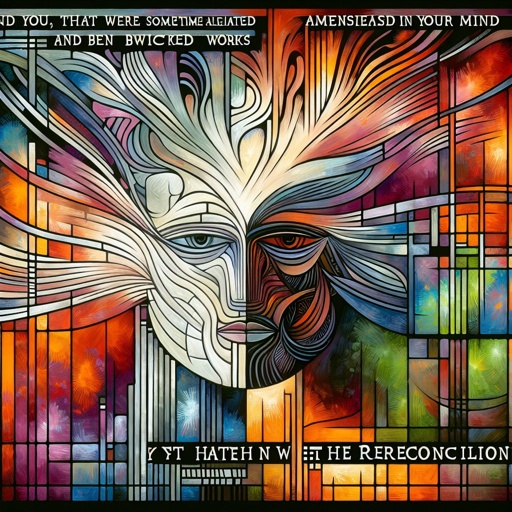
Colossians 1:21 - "And you, that were sometime alienated and enemies in your mind by wicked works, yet now hath he reconciled"

Colossians 1:21-22 - "And you, who once were alienated and enemies in your mind by wicked works, yet now He has reconciled in the body of His flesh through death, to present you holy, and blameless, and above reproach in His sight."

"And you, that were sometime alienated and enemies in your mind by wicked works, yet now hath he reconciled" - Colossians 1:21

"And you, who once were alienated and enemies in your mind by wicked works, yet now He has reconciled in the body of His flesh through death, to present you holy, and blameless, and above reproach in His sight." - Colossians 1:21-22

Colossians 2:21 - "(Touch not; taste not; handle not;"

Colossians 3:21 - "Fathers, provoke not your children to anger, lest they be discouraged."

"(Touch not; taste not; handle not;" - Colossians 2:21

Colossians 1:18

Colossians 1:17

Colossians 1:17

Colossians 1:18

Colossians 3:20-21 - "Children, obey your parents in everything, for this pleases the Lord. Fathers, do not embitter your children, or they will become discouraged."

Colossians 1:15-20

Colossians 1:15-20

COLOSSIANS 1:19

Colossians 3:13

"Fathers, provoke not your children to anger, lest they be discouraged." - Colossians 3:21

Colossians 2:19

Colossians 2:19

Colossians 4:6

Colossians 3:5-15

Colossians 3:12-15

Colossians 1:1 - "Paul, an apostle of Jesus Christ by the will of God, and Timotheus our brother,"

Colossians 1:19 - "For it pleased the Father that in him should all fulness dwell;"

Colossians 1:15 - "Who is the image of the invisible God, the firstborn of every creature:"

Colossians 1:8 - "Who also declared unto us your love in the Spirit."

Colossians 1:17 - "And he is before all things, and by him all things consist."

Colossians 1:14 - "In whom we have redemption through his blood, even the forgiveness of sins:"

Colossians 1:11 - "Strengthened with all might, according to his glorious power, unto all patience and longsuffering with joyfulness;"

Colossians 1:7 - "As ye also learned of Epaphras our dear fellowservant, who is for you a faithful minister of Christ;"