What does Deuteronomy 1:17 mean?
“Ye shall not respect persons in judgment; but ye shall hear the small as well as the great; ye shall not be afraid of the face of man; for the judgment is God’s: and the cause that is too hard for you, bring it unto me, and I will hear it.” — Deuteronomy 1:17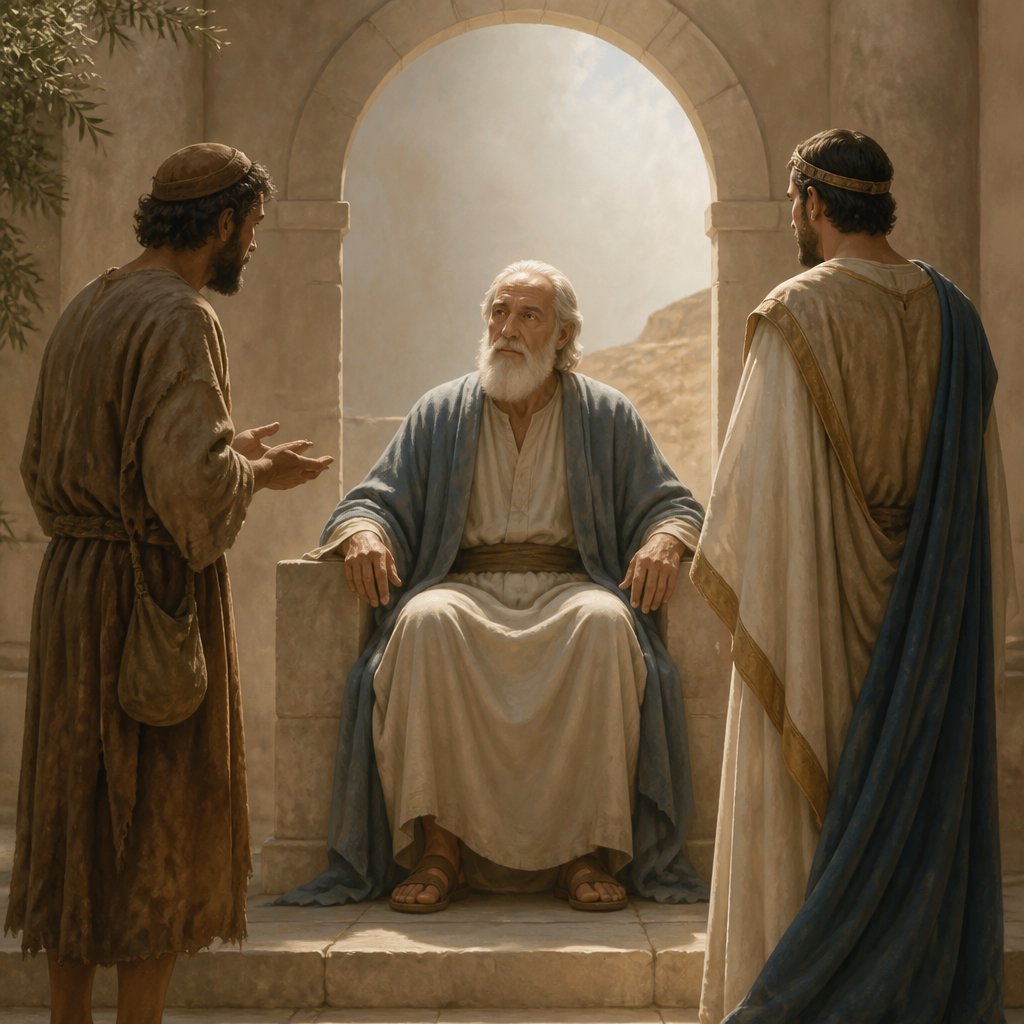
Deuteronomy 1:17 states, "Ye shall not respect persons in judgment; but ye shall hear the small as well as the great; ye shall not be afraid of the face of man; for the judgment is God's: and the cause that is too hard for you, bring it unto me, and I will hear it." This verse is part of Moses' speech to the Israelites before they entered the Promised Land, recounting their journey and reminding them of their covenant with God. In this specific verse, Moses is instructing the Israelites on how to administer justice and maintain fairness within their community.
The theme of this verse is justice and impartiality. It emphasizes the importance of treating everyone equally in the eyes of the law, regardless of their social status or influence. The phrase "ye shall not respect persons in judgment" conveys the idea that judges should not show favoritism or bias towards individuals when making legal decisions. Instead, they are to "hear the small as well as the great," meaning that they should listen to the grievances of all people, whether they are powerful or marginalized. This concept of impartiality is deeply rooted in the Judeo-Christian tradition and is a fundamental principle of a just society.
The context of this verse is significant in understanding its meaning. At this point in the biblical narrative, the Israelites are on the cusp of entering the Promised Land after wandering in the wilderness for forty years. Moses, their leader and lawgiver, is delivering a series of speeches, recapping their history and reaffirming the importance of following God's commandments. The verse in question falls within a section where Moses is instructing the Israelites on the appointment of judges and the administration of justice. It serves as a foundational principle for establishing a fair and equitable legal system within the community.
Symbolically, this verse represents the divine authority behind human judgement. The phrase "the judgment is God's" underscores the idea that ultimate justice belongs to God, and human judges are merely instruments of His will. This concept serves as a reminder to those in positions of authority that they should carry out their duties with humility and reverence for God's moral order. Additionally, the instruction to bring difficult cases to Moses reflects the belief in seeking divine wisdom and guidance when faced with complex or challenging decisions.
In a broader theological sense, this verse aligns with the biblical theme of God's concern for the oppressed and marginalized. Throughout the Bible, there is a consistent call to defend the rights of the poor and vulnerable, and to resist the temptation to show favoritism towards the powerful. This principle is reflected in the teachings of the prophets and the actions of Jesus, who consistently advocated for the rights of the disenfranchised.
In conclusion, Deuteronomy 1:17 conveys a profound message about justice, impartiality, and the divine nature of judgment. Its significance extends beyond the specific context of ancient Israel and continues to resonate as a timeless ethical principle. The verse challenges individuals and societies to uphold fairness and equality in their legal systems, and to recognize the ultimate authority of God in the pursuit of justice. It serves as a reminder of the moral imperative to defend the rights of the weak and to resist the corrupting influence of power and privilege.
Get our apps


Artwork for Deuteronomy 1:17
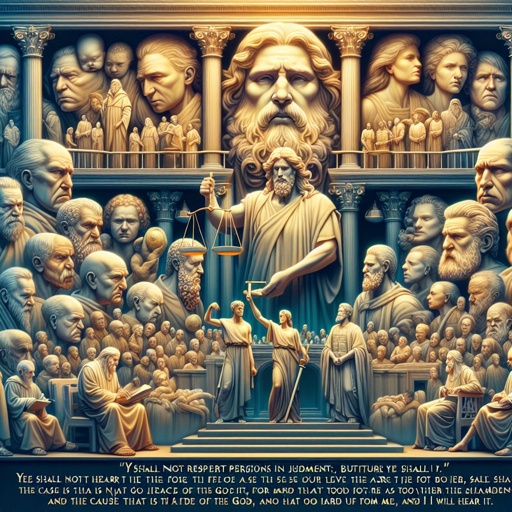
Deuteronomy 1:17 - "Ye shall not respect persons in judgment; but ye shall hear the small as well as the great; ye shall not be afraid of the face of man; for the judgment is God's: and the cause that is too hard for you, bring it unto me, and I will hear it."
"Ye shall not respect persons in judgment; but ye shall hear the small as well as the great; ye shall not be afraid of the face of man; for the judgment is God's: and the cause that is too hard for you, bring it unto me, and I will hear it." - Deuteronomy 1:17

Deuteronomy 17:1 - "Thou shalt not sacrifice unto the LORD thy God any bullock, or sheep, wherein is blemish, or any evilfavouredness: for that is an abomination unto the LORD thy God."

Deuteronomy 5:17 - "Thou shalt not kill."

Deuteronomy 14:17 - "And the pelican, and the gier eagle, and the cormorant,"

Deuteronomy 2:17 - "That the LORD spake unto me, saying,"

Deuteronomy 28:17 - "Cursed shall be thy basket and thy store."

"Thou shalt not kill." - Deuteronomy 5:17

Deuteronomy 23:17 - "¶ There shall be no whore of the daughters of Israel, nor a sodomite of the sons of Israel."

Deuteronomy 17:13 - "And all the people shall hear, and fear, and do no more presumptuously."

Deuteronomy 17:17 - "Neither shall he multiply wives to himself, that his heart turn not away: neither shall he greatly multiply to himself silver and gold."

Deuteronomy 4:17 - "The likeness of any beast that is on the earth, the likeness of any winged fowl that flieth in the air,"

"And the pelican, and the gier eagle, and the cormorant," - Deuteronomy 14:17

Deuteronomy 18:17 - "And the LORD said unto me, They have well spoken that which they have spoken."

Deuteronomy 27:17 - "Cursed be he that removeth his neighbour's landmark. And all the people shall say, Amen."

Deuteronomy 24:17 - "¶ Thou shalt not pervert the judgment of the stranger, nor of the fatherless; nor take a widow's raiment to pledge:"

"That the LORD spake unto me, saying," - Deuteronomy 2:17

Deuteronomy 8:17 - "And thou say in thine heart, My power and the might of mine hand hath gotten me this wealth."

Deuteronomy 29:17 - "And ye have seen their abominations, and their idols, wood and stone, silver and gold, which were among them:)"

Deuteronomy 25:17 - "¶ Remember what Amalek did unto thee by the way, when ye were come forth out of Egypt;"

Deuteronomy 7:17 - "If thou shalt say in thine heart, These nations are more than I; how can I dispossess them?"

Deuteronomy 17:4 - "And it be told thee, and thou hast heard of it, and enquired diligently, and, behold, it be true, and the thing certain, that such abomination is wrought in Israel:"

"Cursed shall be thy basket and thy store." - Deuteronomy 28:17

Deuteronomy 9:17 - "And I took the two tables, and cast them out of my two hands, and brake them before your eyes."

Deuteronomy 30:17 - "But if thine heart turn away, so that thou wilt not hear, but shalt be drawn away, and worship other gods, and serve them;"

Deuteronomy 19:17 - "Then both the men, between whom the controversy is, shall stand before the LORD, before the priests and the judges, which shall be in those days;"

Deuteronomy 32:17 - "They sacrificed unto devils, not to God; to gods whom they knew not, to new gods that came newly up, whom your fathers feared not."
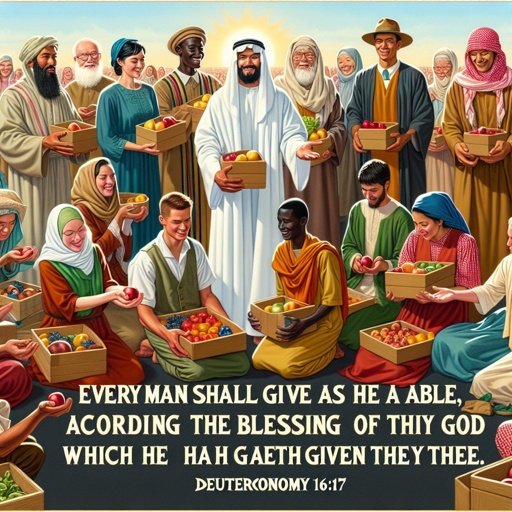
Deuteronomy 16:17 - "Every man shall give as he is able, according to the blessing of the LORD thy God which he hath given thee."

Deuteronomy 17:3 - "And hath gone and served other gods, and worshipped them, either the sun, or moon, or any of the host of heaven, which I have not commanded;"

Deuteronomy 10:17 - "For the LORD your God is God of gods, and Lord of lords, a great God, a mighty, and a terrible, which regardeth not persons, nor taketh reward:"