What does Deuteronomy 1:4 mean?
“After he had slain Sihon the king of the Amorites, which dwelt in Heshbon, and Og the king of Bashan, which dwelt at Astaroth in Edrei:” — Deuteronomy 1:4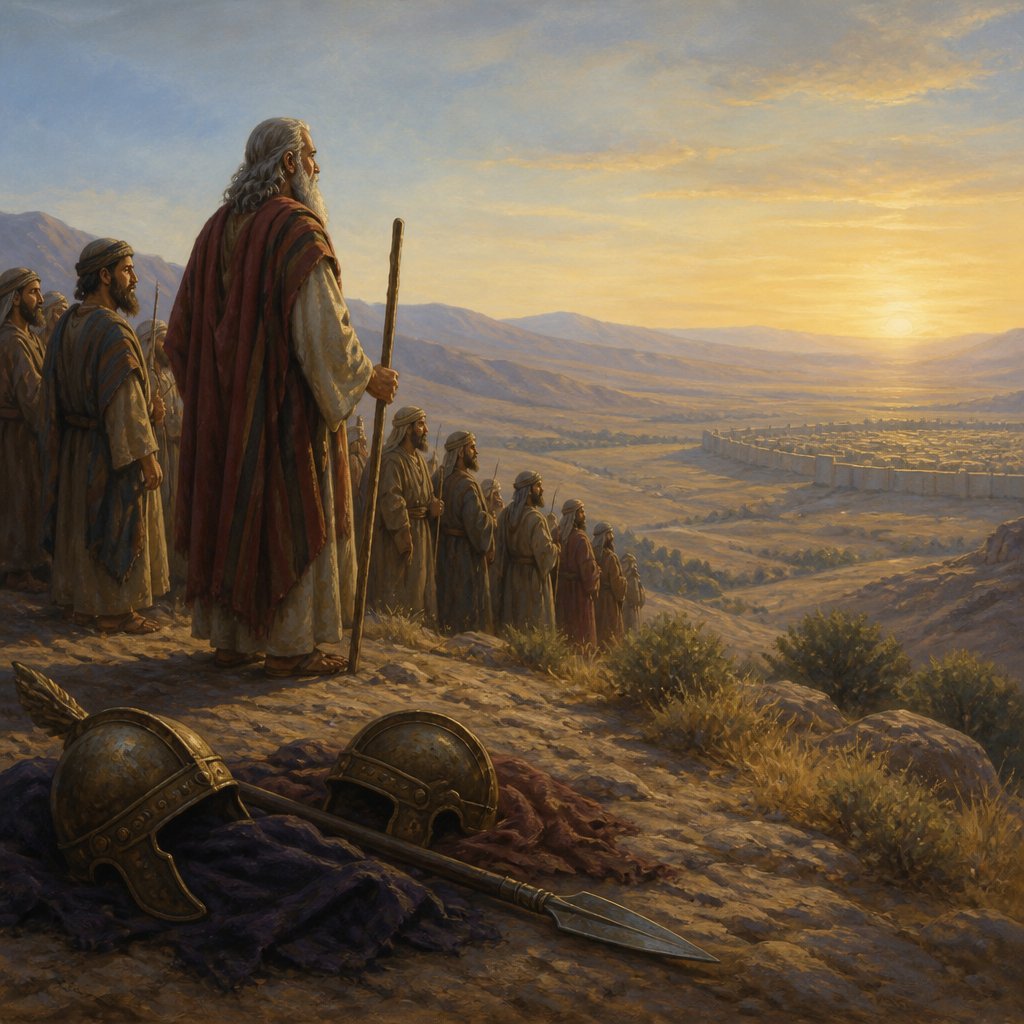
Deuteronomy 1:4 (KJV) states, "After he had slain Sihon the king of the Amorites, which dwelt in Heshbon, and Og the king of Bashan, which dwelt at Ashtaroth in Edrei."
This verse is part of the opening lines of the Book of Deuteronomy in the Old Testament of the Bible. The book is attributed to Moses, who delivered a series of speeches to the Israelites before they entered the Promised Land.
In this particular verse, Moses is recounting the victories of the Israelites as they journeyed toward the Promised Land. The mention of Sihon, the king of the Amorites, and Og, the king of Bashan, signifies the military conquests that the Israelites achieved under the leadership of Moses. These victories were significant milestones in the Israelites' journey and are often cited as evidence of God's faithfulness in fulfilling his promises to his chosen people.
The themes present in this verse include the faithfulness of God, the fulfillment of promises, and the leadership of Moses. These themes are central to the overarching narrative of the Israelites' journey from slavery in Egypt to the land that God had promised to give them.
One of the key contextual elements to consider when examining this verse is the broader narrative of the Israelites' history. Prior to these victories, the Israelites had experienced decades of wandering in the wilderness as a result of their disobedience and lack of faith. However, with the leadership of Moses and the guidance of God, they were able to overcome their enemies and move closer to the fulfillment of God's promises.
The mention of Sihon and Og also serves as a reminder of the faithfulness and power of God. These were formidable kings who ruled over vast territories, yet the Israelites were able to defeat them with God's help. This serves as a testament to the strength and sovereignty of God, who consistently intervened on behalf of his people throughout their history.
Symbolically, the victories over Sihon and Og can be interpreted as representations of the obstacles and challenges that believers face in their own journeys. The Amorites and the people of Bashan were not easily overcome, yet with faith in God, the Israelites were able to emerge victorious. This can serve as a reminder to believers that with God's guidance and strength, they can overcome any challenge or adversity they encounter.
Overall, Deuteronomy 1:4 is a significant verse that carries themes of faithfulness, perseverance, and the sovereignty of God. It serves as a reminder to believers of the power of God and the fulfillment of his promises, while also providing historical context for the Israelites' journey to the Promised Land. As part of the broader narrative of the Old Testament, this verse holds deep meaning and relevance for believers seeking to understand the faithfulness and power of God throughout history.
Get our apps


Artwork for Deuteronomy 1:4

Deuteronomy 1:4 - "After he had slain Sihon the king of the Amorites, which dwelt in Heshbon, and Og the king of Bashan, which dwelt at Astaroth in Edrei:"

"After he had slain Sihon the king of the Amorites, which dwelt in Heshbon, and Og the king of Bashan, which dwelt at Astaroth in Edrei:" - Deuteronomy 1:4

Deuteronomy 34:1-4 – Moses views the Promised Land from Mount Nebo.

Deuteronomy 34:1-4 – Moses views the Promised Land from Mount Nebo.

Deuteronomy 34:1-4 – Moses views the Promised Land from Mount Nebo.

Deuteronomy 34:1-4 – Moses views the Promised Land from Mount Nebo.

Deuteronomy 34:1-4 – Moses views the Promised Land from Mount Nebo.

Deuteronomy 34:1-4 – Moses views the Promised Land from Mount Nebo.

Deuteronomy 34:1-4 – Moses views the Promised Land from Mount Nebo.

Deuteronomy 26:4-10

Deuteronomy 26:4-10

Deuteronomy 4:4 - "But ye that did cleave unto the LORD your God are alive every one of you this day."

Deuteronomy 4:1 - "Now therefore hearken, O Israel, unto the statutes and unto the judgments, which I teach you, for to do them, that ye may live, and go in and possess the land which the LORD God of your fathers giveth you."

Deuteronomy 4:44 - "¶ And this is the law which Moses set before the children of Israel:"

Deuteronomy 33:4 - "Moses commanded us a law, even the inheritance of the congregation of Jacob."

Deuteronomy 12:4 - "Ye shall not do so unto the LORD your God."

Deuteronomy 6:4 - "Hear, O Israel: The LORD our God is one LORD:"

Deuteronomy 4:24 - "For the LORD thy God is a consuming fire, even a jealous God."

Deuteronomy 4:41 - "¶ Then Moses severed three cities on this side Jordan toward the sunrising;"

Deuteronomy 14:4 - "These are the beasts which ye shall eat: the ox, the sheep, and the goat,"

Deuteronomy 25:4 - "¶ Thou shalt not muzzle the ox when he treadeth out the corn."

Deuteronomy 5:4 - "The LORD talked with you face to face in the mount out of the midst of the fire,"

Deuteronomy 4:17 - "The likeness of any beast that is on the earth, the likeness of any winged fowl that flieth in the air,"

Deuteronomy 32:41

Deuteronomy 4:18 - "The likeness of any thing that creepeth on the ground, the likeness of any fish that is in the waters beneath the earth:"

Deuteronomy 4:48 - "From Aroer, which is by the bank of the river Arnon, even unto mount Sion, which is Hermon,"

Deuteronomy 32:43

Deuteronomy 4:49 - "And all the plain on this side Jordan eastward, even unto the sea of the plain, under the springs of Pisgah."

Deuteronomy 4:43 - "Namely, Bezer in the wilderness, in the plain country, of the Reubenites; and Ramoth in Gilead, of the Gadites; and Golan in Bashan, of the Manassites."

Deuteronomy 20:4 - "For the LORD your God is he that goeth with you, to fight for you against your enemies, to save you."