What does Deuteronomy 14:25 mean?
“Then shalt thou turn it into money, and bind up the money in thine hand, and shalt go unto the place which the LORD thy God shall choose:” — Deuteronomy 14:25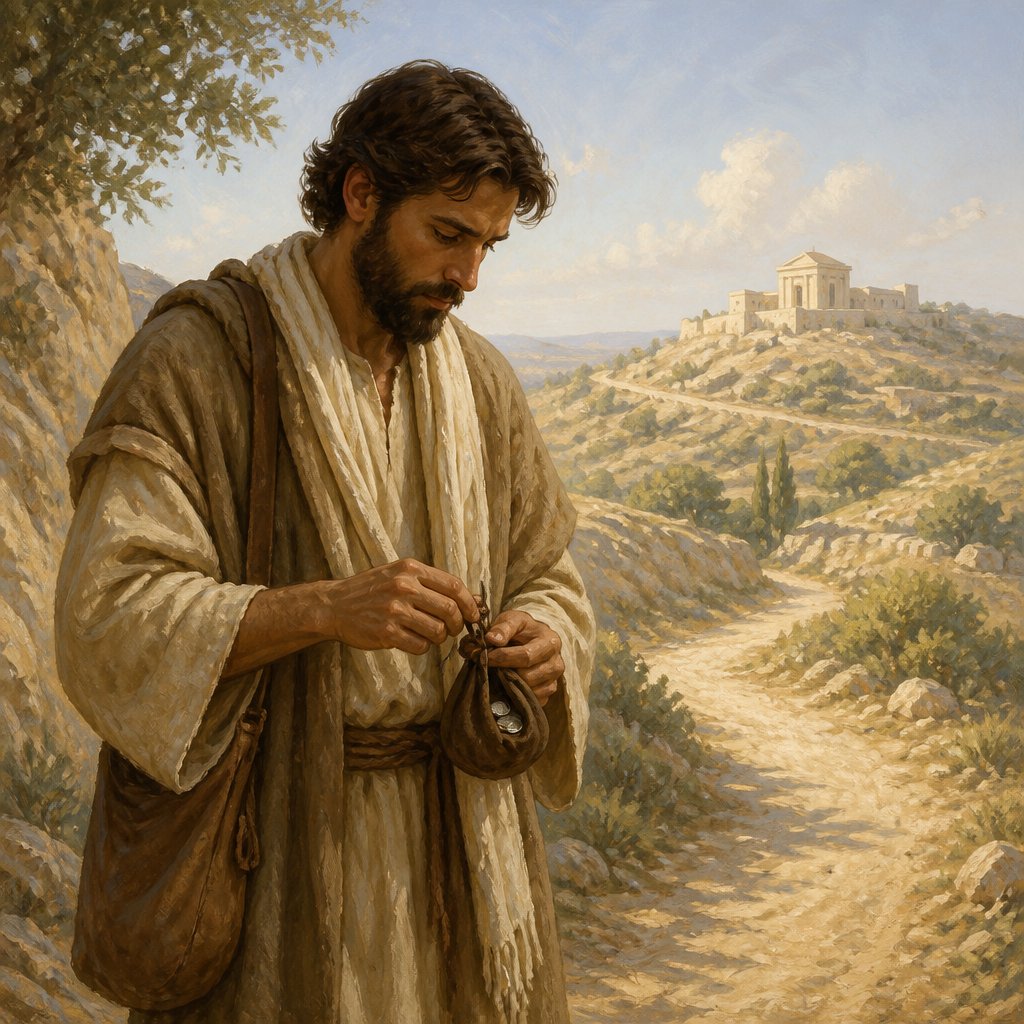
Deuteronomy 14:25 (KJV) says: "Then shalt thou turn it into money, and bind up the money in thine hand, and shalt go unto the place which the Lord thy God shall choose."
This verse comes from the Book of Deuteronomy in the Old Testament, which is a record of the words of Moses to the Israelites as they are about to enter the Promised Land. In this particular verse, Moses is instructing the Israelites on what to do with their tithes.
The context of this verse is important to understand its meaning. The Israelites were required to give a tithe of their produce and livestock to the Lord, and they were expected to bring this tithe to the place that the Lord had chosen, which later became the temple in Jerusalem. However, carrying produce or livestock over long distances presented a challenge, so Moses instructed them to turn their tithe into money and bring the money to the designated place.
One of the key themes of this verse is obedience to God's commands. The Israelites were expected to follow the specific instructions given to them by Moses in regards to their tithes. This theme of obedience runs throughout the book of Deuteronomy, as Moses repeatedly emphasizes the importance of keeping God's commandments in order to receive His blessings.
Another important theme in this verse is faithfulness in stewardship. By giving a tithe of their produce and livestock, the Israelites were acknowledging that everything they had came from God, and they were to use it in a way that honored Him. This verse emphasizes the practical aspect of stewardship, as the Israelites were to convert their tithes into money and then use that money to support the religious activities and needs of the community.
The symbolism in this verse is also noteworthy. The act of turning produce and livestock into money can be seen as a representation of transformation. The raw materials of the earth are being converted into a form that is more portable and easily used for the purposes of worship. This act symbolizes the transformation that takes place in the hearts of believers as they give of their resources to further the work of God.
Additionally, the act of binding up the money in their hand can be seen as a symbol of commitment and dedication. By physically holding onto the money, the Israelites were demonstrating their readiness to use it for the purposes that God had designated. This imagery is a powerful reminder of the importance of being intentional and purposeful in our stewardship of the resources that God has entrusted to us.
In conclusion, Deuteronomy 14:25 is a verse that offers practical guidance for the Israelites in their giving of tithes. However, it also contains timeless principles that are relevant for believers today. The themes of obedience to God's commands, faithfulness in stewardship, and the symbolism of transformation and commitment all contribute to the rich and meaningful message of this verse. As Christians, we can look to this verse as a reminder of the importance of giving back to God and using our resources in a way that honors Him.
Get our apps


Artwork for Deuteronomy 14:25

Deuteronomy 14:25 - "Then shalt thou turn it into money, and bind up the money in thine hand, and shalt go unto the place which the LORD thy God shall choose:"
"Then shalt thou turn it into money, and bind up the money in thine hand, and shalt go unto the place which the LORD thy God shall choose:" - Deuteronomy 14:25

Deuteronomy 25:14 - "Thou shalt not have in thine house divers measures, a great and a small."
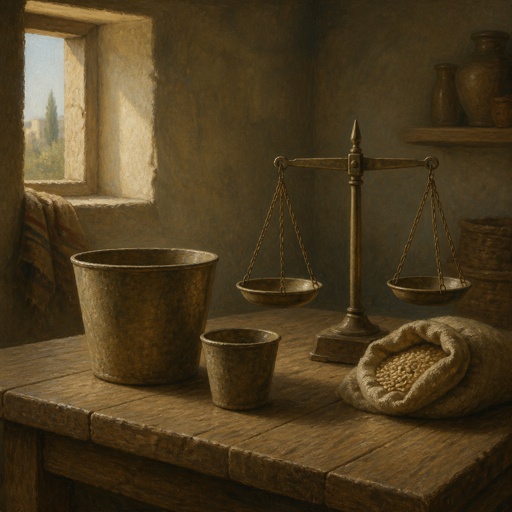
"Thou shalt not have in thine house divers measures, a great and a small." - Deuteronomy 25:14

Deuteronomy 14:14 - "And every raven after his kind,"

Matthew 25: 14-25

Deuteronomy 25:13 - "¶ Thou shalt not have in thy bag divers weights, a great and a small."

Deuteronomy 25:4 - "¶ Thou shalt not muzzle the ox when he treadeth out the corn."

Deuteronomy 31:25 - "That Moses commanded the Levites, which bare the ark of the covenant of the LORD, saying,"

Deuteronomy 14:17 - "And the pelican, and the gier eagle, and the cormorant,"

Isaiah 14:25

Genesis 25-14

"And every raven after his kind," - Deuteronomy 14:14

Deuteronomy 33:25 - "Thy shoes shall be iron and brass; and as thy days, so shall thy strength be."

Deuteronomy 25:10 - "And his name shall be called in Israel, The house of him that hath his shoe loosed."

Deuteronomy 14:16 - "The little owl, and the great owl, and the swan,"

Deuteronomy 25:16 - "For all that do such things, and all that do unrighteously, are an abomination unto the LORD thy God."

Genesis 25:14 - "And Mishma, and Dumah, and Massa,"

Deuteronomy 14:3 - "¶ Thou shalt not eat any abominable thing."

Deuteronomy 27:25 - "Cursed be he that taketh reward to slay an innocent person. And all the people shall say, Amen."

Deuteronomy 14:11 - "¶ Of all clean birds ye shall eat."

Deuteronomy 14:20 - "But of all clean fowls ye may eat."

Deuteronomy 14:13 - "And the glede, and the kite, and the vulture after his kind,"

Luke 14:25 - 33

Deuteronomy 14:18 - "And the stork, and the heron after her kind, and the lapwing, and the bat."

Deuteronomy 14:12 - "But these are they of which ye shall not eat: the eagle, and the ossifrage, and the ospray,"

Deuteronomy 25:17 - "¶ Remember what Amalek did unto thee by the way, when ye were come forth out of Egypt;"

Deuteronomy 14:15 - "And the owl, and the night hawk, and the cuckow, and the hawk after his kind,"

Deuteronomy 29:14 - "Neither with you only do I make this covenant and this oath;"

Deuteronomy 14:4 - "These are the beasts which ye shall eat: the ox, the sheep, and the goat,"