What does Deuteronomy 14:6 mean?
“And every beast that parteth the hoof, and cleaveth the cleft into two claws, and cheweth the cud among the beasts, that ye shall eat.” — Deuteronomy 14:6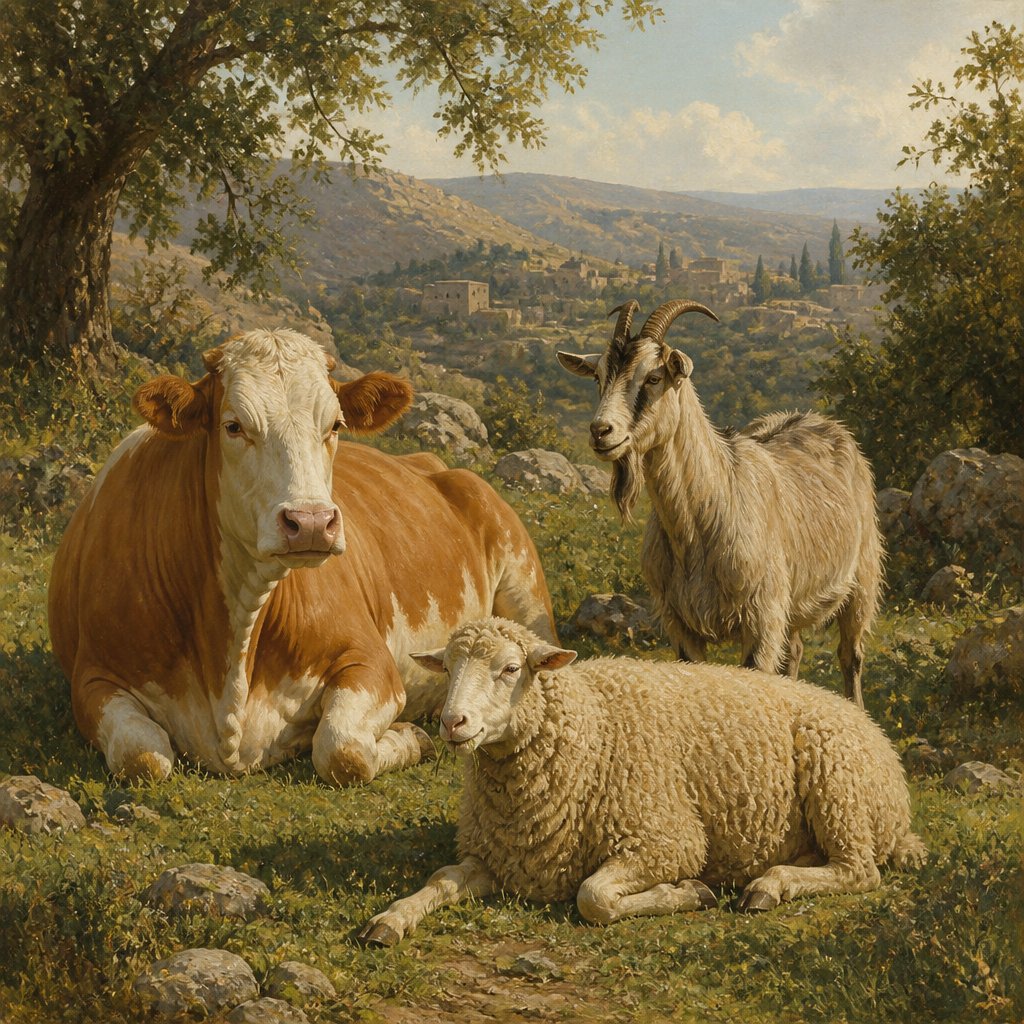
Deuteronomy 14:6 (KJV) states, "And every beast that parteth the hoof, and cleaveth the cleft into two claws, and cheweth the cud among the beasts, that ye shall eat." This passage is part of the dietary laws outlined in the book of Deuteronomy, which were given to the Israelites by God through Moses. These dietary laws were a means of distinguishing the Israelites from the surrounding nations and promoting holiness and purity.
The verse specifically relates to the clean and unclean animals that the Israelites were permitted to eat. The criteria mentioned in the verse outline the characteristics of a clean animal, which include having a split hoof and chewing the cud. This means that animals such as cattle, sheep, goats, and deer were considered clean and permissible for consumption.
One of the key themes in this verse is obedience to God's commands. Throughout the book of Deuteronomy, Moses emphasizes the importance of obeying God's laws and commands as a means of experiencing His blessings and staying in covenant relationship with Him. By following the dietary laws, the Israelites were showing their obedience to God and acknowledging His authority over their lives.
Another theme present in this verse is holiness and separation. The dietary laws served to set the Israelites apart from the surrounding nations and to promote a sense of holiness and purity among them. By adhering to these laws, the Israelites were reminded of their unique identity as God's chosen people and their call to live in a way that reflected their relationship with Him.
The context of this verse is important to understand its significance within the larger framework of the Mosaic law. In the book of Deuteronomy, Moses is giving a series of speeches to the Israelites before they enter the Promised Land. These speeches serve as a reminder of God's faithfulness and the covenant relationship that He established with His people. The dietary laws outlined in this verse were part of the broader set of laws given to the Israelites to guide their behavior and worship.
Symbolism is also present in this verse, particularly in the criteria for clean animals. The split hoof and chewing of the cud can be seen as symbolic of discernment and reflection. The split hoof represents the need for believers to discern between what is good and evil, and the chewing of the cud signifies the importance of reflecting on God's word and meditating on His commandments.
Overall, Deuteronomy 14:6 is a verse that carries significant meaning within the context of the Mosaic law. It emphasizes themes of obedience, holiness, and separation, and serves as a reminder of the unique identity and calling of the Israelites as God's chosen people. The dietary laws outlined in this verse were a tangible way for the Israelites to demonstrate their commitment to God and their willingness to live in accordance with His commands. Today, this verse also serves as a reminder for believers to seek discernment, reflect on God's word, and live in obedience to His will.
Get our apps


Artwork for Deuteronomy 14:6

Deuteronomy 14:6 - "And every beast that parteth the hoof, and cleaveth the cleft into two claws, and cheweth the cud among the beasts, that ye shall eat."
"And every beast that parteth the hoof, and cleaveth the cleft into two claws, and cheweth the cud among the beasts, that ye shall eat." - Deuteronomy 14:6

Deuteronomy 6:14 - "Ye shall not go after other gods, of the gods of the people which are round about you;"

Deuteronomy 14:14 - "And every raven after his kind,"

"Ye shall not go after other gods, of the gods of the people which are round about you;" - Deuteronomy 6:14

Deuteronomy 14:17 - "And the pelican, and the gier eagle, and the cormorant,"

"And every raven after his kind," - Deuteronomy 14:14

Deuteronomy 6:6 - "And these words, which I command thee this day, shall be in thine heart:"

Deuteronomy 14:16 - "The little owl, and the great owl, and the swan,"

Deuteronomy 14:3 - "¶ Thou shalt not eat any abominable thing."

Deuteronomy 14:11 - "¶ Of all clean birds ye shall eat."

Deuteronomy 14:20 - "But of all clean fowls ye may eat."

Deuteronomy 14:13 - "And the glede, and the kite, and the vulture after his kind,"

Deuteronomy 34:5-6

Deuteronomy 14:18 - "And the stork, and the heron after her kind, and the lapwing, and the bat."

Deuteronomy 14:12 - "But these are they of which ye shall not eat: the eagle, and the ossifrage, and the ospray,"

Deuteronomy 14:15 - "And the owl, and the night hawk, and the cuckow, and the hawk after his kind,"

Deuteronomy 29:14 - "Neither with you only do I make this covenant and this oath;"

Deuteronomy 14:4 - "These are the beasts which ye shall eat: the ox, the sheep, and the goat,"

Deuteronomy 14:19 - "And every creeping thing that flieth is unclean unto you: they shall not be eaten."

Deuteronomy 25:14 - "Thou shalt not have in thine house divers measures, a great and a small."

"And the pelican, and the gier eagle, and the cormorant," - Deuteronomy 14:17

Deuteronomy 27:14 - "¶ And the Levites shall speak, and say unto all the men of Israel with a loud voice,"

Deuteronomy 14:10 - "And whatsoever hath not fins and scales ye may not eat; it is unclean unto you."

Deuteronomy 14:5 - "The hart, and the roebuck, and the fallow deer, and the wild goat, and the pygarg, and the wild ox, and the chamois."

Deuteronomy 33:14 - "And for the precious fruits brought forth by the sun, and for the precious things put forth by the moon,"

Deuteronomy 6:4 - "Hear, O Israel: The LORD our God is one LORD:"

Deuteronomy 33:6 - "¶ Let Reuben live, and not die; and let not his men be few."

Deuteronomy 10:14 - "Behold, the heaven and the heaven of heavens is the LORD'S thy God, the earth also, with all that therein is."

Deuteronomy 1:14 - "And ye answered me, and said, The thing which thou hast spoken is good for us to do."