What does Deuteronomy 16:14 mean?
“And thou shalt rejoice in thy feast, thou, and thy son, and thy daughter, and thy manservant, and thy maidservant, and the Levite, the stranger, and the fatherless, and the widow, that are within thy gates.” — Deuteronomy 16:14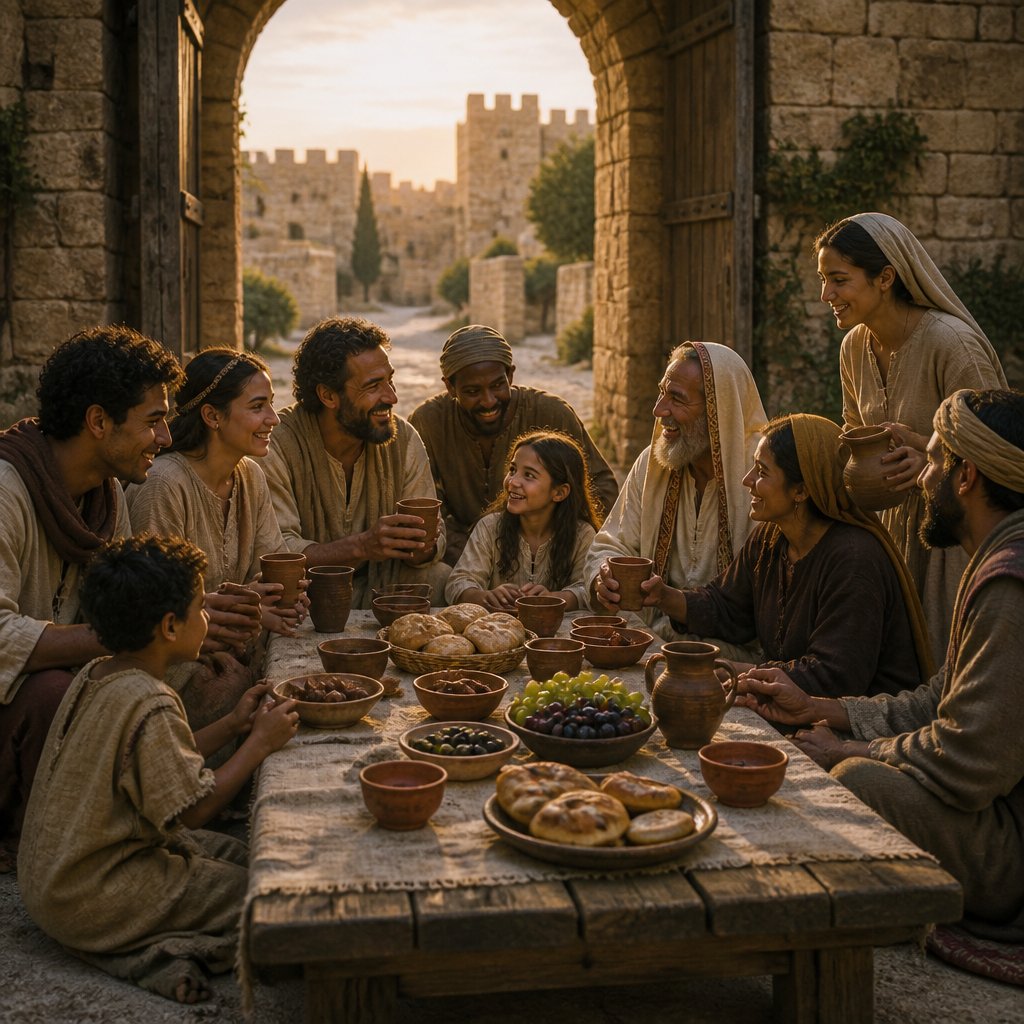
Deuteronomy 16:14 from the King James Version reads, "And thou shalt rejoice in thy feast, thou, and thy son, and thy daughter, and thy manservant, and thy maidservant, and the Levite, the stranger, and the fatherless, and the widow, that are within thy gates."
This verse is part of a larger passage in the book of Deuteronomy that discusses the various festivals and feasts that the Israelites were commanded to observe. In this specific verse, the emphasis is on the command to rejoice during these feasts and to include all members of the community in the celebration. The verse lists specific groups of people who should be included in the celebration, highlighting the inclusivity and equality that was to be practiced during these times of communal festivity.
The themes present in this verse include joy, community, and justice. The command to rejoice is a reminder that the festivals and feasts were not merely religious obligations, but occasions for the community to come together in celebration and thanksgiving. Additionally, the inclusion of various members of the community, such as the Levite, the stranger, the fatherless, and the widow, underscores the principle of justice and equality that was to be upheld within the Israelite society. These marginalized and vulnerable members of society were to be given the opportunity to partake in the festivities alongside their more privileged counterparts.
The context of this verse is important in understanding its significance. The book of Deuteronomy was written as a series of speeches given by Moses to the Israelites just before they were to enter the Promised Land. The purpose of these speeches was to remind the people of the covenant that God had made with them and to reiterate the laws and commandments that they were to follow in order to remain faithful to that covenant. The festivals and feasts mentioned in this verse were an integral part of Israelite religious and communal life, serving as occasions for the people to come together to worship God and celebrate His goodness.
Symbolism in this verse can be found in the idea of rejoicing and communal inclusion. The act of rejoicing symbolizes the joy and gratitude that should characterize the relationship between God and His people. It is an outward expression of faith and thanksgiving, reflecting the understanding that all good things come from God. The inclusion of various groups in the community symbolizes the equality and justice that is central to God's covenant with the Israelites. By emphasizing the importance of including the marginalized and vulnerable members of society in the festivities, the verse highlights the value of every individual in the eyes of God.
In conclusion, Deuteronomy 16:14 is a verse that encapsulates the spirit of joy, community, and justice that permeates the Israelite religious and communal life. It serves as a reminder of the importance of coming together as a community to rejoice and give thanks to God, and of the obligation to ensure that all members of the community are included and valued. This verse continues to hold relevance for believers today, serving as a timeless reminder of the principles of joy, inclusivity, and justice that are fundamental to the Christian faith.
Get our apps


Artwork for Deuteronomy 16:14

Deuteronomy 16:14 - "And thou shalt rejoice in thy feast, thou, and thy son, and thy daughter, and thy manservant, and thy maidservant, and the Levite, the stranger, and the fatherless, and the widow, that are within thy gates."
"And thou shalt rejoice in thy feast, thou, and thy son, and thy daughter, and thy manservant, and thy maidservant, and the Levite, the stranger, and the fatherless, and the widow, that are within thy gates." - Deuteronomy 16:14

Deuteronomy 14:16 - "The little owl, and the great owl, and the swan,"

"The little owl, and the great owl, and the swan," - Deuteronomy 14:16

Deuteronomy 14:14 - "And every raven after his kind,"

Deuteronomy 20:16

Deuteronomy 20:16

Deuteronomy 20:16

Deuteronomy 14:17 - "And the pelican, and the gier eagle, and the cormorant,"

"And every raven after his kind," - Deuteronomy 14:14

Deuteronomy 10:16 - "Circumcise therefore the foreskin of your heart, and be no more stiffnecked."

Deuteronomy 14:3 - "¶ Thou shalt not eat any abominable thing."

Deuteronomy 14:11 - "¶ Of all clean birds ye shall eat."

Deuteronomy 14:20 - "But of all clean fowls ye may eat."

Deuteronomy 14:13 - "And the glede, and the kite, and the vulture after his kind,"

Deuteronomy 28:16 - "Cursed shalt thou be in the city, and cursed shalt thou be in the field."

Deuteronomy 14:18 - "And the stork, and the heron after her kind, and the lapwing, and the bat."

Deuteronomy 14:12 - "But these are they of which ye shall not eat: the eagle, and the ossifrage, and the ospray,"

Deuteronomy 14:15 - "And the owl, and the night hawk, and the cuckow, and the hawk after his kind,"

Deuteronomy 29:14 - "Neither with you only do I make this covenant and this oath;"

Deuteronomy 14:4 - "These are the beasts which ye shall eat: the ox, the sheep, and the goat,"

Deuteronomy 32:16 - "They provoked him to jealousy with strange gods, with abominations provoked they him to anger."

Deuteronomy 14:19 - "And every creeping thing that flieth is unclean unto you: they shall not be eaten."

Deuteronomy 25:14 - "Thou shalt not have in thine house divers measures, a great and a small."

Deuteronomy 6:16 - "¶ Ye shall not tempt the LORD your God, as ye tempted him in Massah."

Genesis 16:14

John 14:16

"And the pelican, and the gier eagle, and the cormorant," - Deuteronomy 14:17

Deuteronomy 27:14 - "¶ And the Levites shall speak, and say unto all the men of Israel with a loud voice,"

Deuteronomy 14:10 - "And whatsoever hath not fins and scales ye may not eat; it is unclean unto you."