What does Deuteronomy 16:7 mean?
“And thou shalt roast and eat it in the place which the LORD thy God shall choose: and thou shalt turn in the morning, and go unto thy tents.” — Deuteronomy 16:7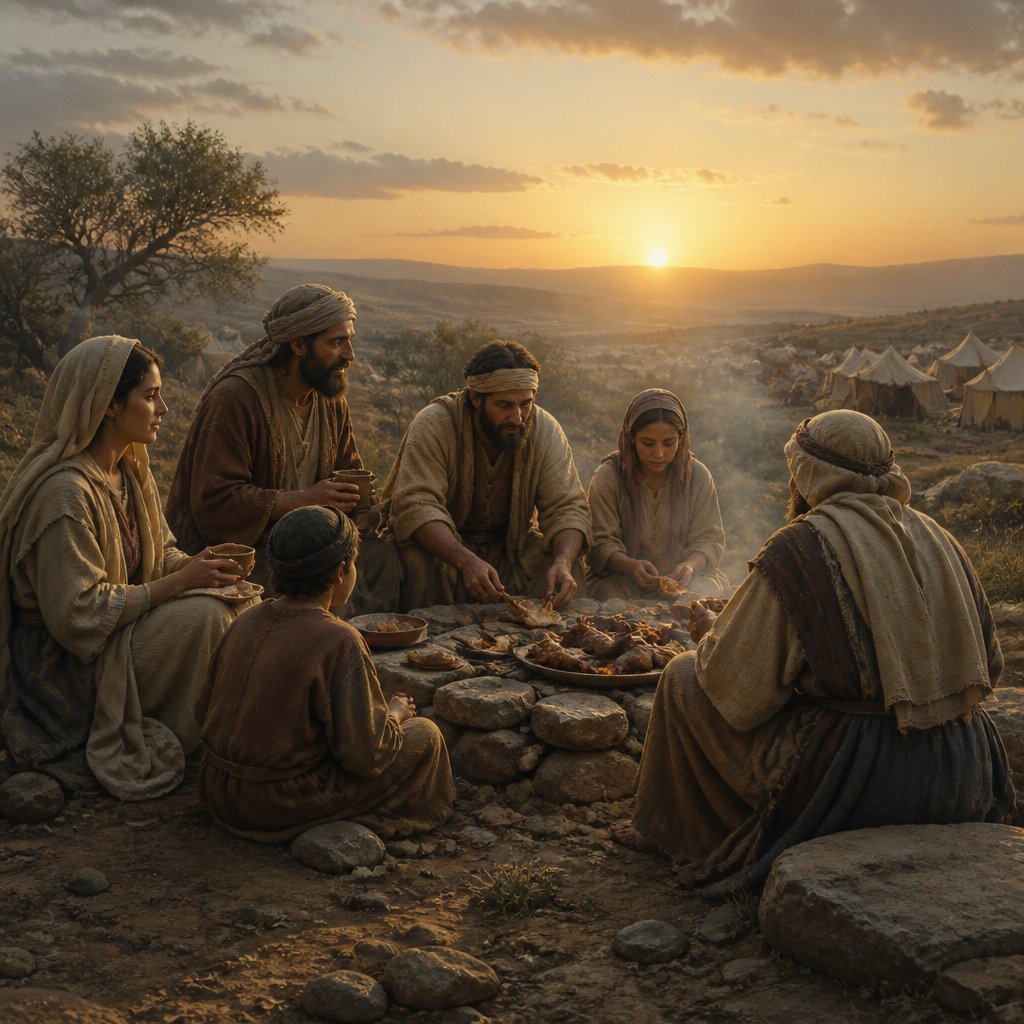
Deuteronomy 16:7 (KJV) states, "And thou shalt roast and eat it in the place which the Lord thy God shall choose: and thou shalt turn in the morning, and go unto thy tents."
In order to fully understand the significance of this verse, it is important to explore the context in which it is situated. Deuteronomy is the fifth book of the Hebrew Bible and the Christian Old Testament. It is part of the Torah, which is the foundational text of the Jewish faith. In Deuteronomy, Moses delivers his final words to the Israelites before they enter the Promised Land. The book is a series of speeches in which Moses reminds the Israelites of God's covenant and the laws they are to obey. In this particular verse, Moses is detailing the instructions for the feast of the Passover.
The verse begins with the command to roast and eat the Passover sacrifice in the place that the Lord God will choose. This is a reference to the central sanctuary that the Israelites were to establish once they entered the Promised Land. The central sanctuary was a place of worship and sacrifice, and it symbolized the presence of God among his people. By emphasizing the importance of eating the Passover sacrifice in the designated place, the verse underscores the significance of communal worship and obedience to God's commands.
The verse continues with the instruction to "turn in the morning, and go unto thy tents." This indicates that after partaking in the Passover meal, the Israelites were to return to their homes. This signifies the completion of the communal worship and the resumption of daily life. The act of returning to their tents also serves as a reminder of the Israelites' nomadic past and their dependence on God's protection and provision during their journey in the wilderness.
Symbolically, the act of roasting and eating the Passover sacrifice holds deep significance. The Passover feast commemorates the Israelites' deliverance from slavery in Egypt and the sparing of their firstborn sons during the final plague. The roasted lamb served as a reminder of the blood that the Israelites smeared on their doorposts to protect them from the angel of death. This act of obedience and faithfulness to God's command ultimately led to their liberation.
In Christian theology, the Passover sacrifice is seen as a foreshadowing of the sacrificial death of Jesus Christ. Just as the blood of the lamb protected the Israelites from death, so too does the blood of Christ offer salvation and deliverance from sin. The act of eating the Passover sacrifice also reflects the communal aspect of the Christian faith, as believers partake in the Eucharist, symbolizing their unity with Christ and with one another.
The themes present in Deuteronomy 16:7 revolve around obedience, worship, and communal unity. The verse emphasizes the importance of following God's commands, participating in communal worship, and recognizing the presence of God among his people. It also serves as a reminder of God's faithfulness and provision throughout the Israelites' history.
In conclusion, Deuteronomy 16:7 holds deep significance within the broader context of the book of Deuteronomy and the biblical narrative as a whole. It serves as a reminder of the Israelites' deliverance from bondage, the importance of communal worship, and the faithfulness of God. Furthermore, it carries symbolic significance in Christian theology, pointing to the ultimate sacrifice of Jesus Christ. As believers reflect on this verse, they are reminded of the importance of obedience, worship, and communal unity in their own faith journey.
Get our apps


Artwork for Deuteronomy 16:7

Deuteronomy 16:7 - "And thou shalt roast and eat it in the place which the LORD thy God shall choose: and thou shalt turn in the morning, and go unto thy tents."
"And thou shalt roast and eat it in the place which the LORD thy God shall choose: and thou shalt turn in the morning, and go unto thy tents." - Deuteronomy 16:7

Deuteronomy 7:16 - "And thou shalt consume all the people which the LORD thy God shall deliver thee; thine eye shall have no pity upon them: neither shalt thou serve their gods; for that will be a snare unto thee."

Deuteronomy 20:16

Deuteronomy 20:16

Deuteronomy 20:16

Deuteronomy 14:16 - "The little owl, and the great owl, and the swan,"

Deuteronomy 10:16 - "Circumcise therefore the foreskin of your heart, and be no more stiffnecked."

Deuteronomy 28:16 - "Cursed shalt thou be in the city, and cursed shalt thou be in the field."

Deuteronomy 32:16 - "They provoked him to jealousy with strange gods, with abominations provoked they him to anger."

Deuteronomy 6:16 - "¶ Ye shall not tempt the LORD your God, as ye tempted him in Massah."

Deuteronomy 3:7 - "But all the cattle, and the spoil of the cities, we took for a prey to ourselves."

Deuteronomy 19:16 - "¶ If a false witness rise up against any man to testify against him that which is wrong;"

Deuteronomy 16:12 - "And thou shalt remember that thou wast a bondman in Egypt: and thou shalt observe and do these statutes."

Deuteronomy 12:16 - "Only ye shall not eat the blood; ye shall pour it upon the earth as water."

Deuteronomy 25:16 - "For all that do such things, and all that do unrighteously, are an abomination unto the LORD thy God."

Deuteronomy 5:7 - "Thou shalt have none other gods before me."

Deuteronomy 2:16 - "¶ So it came to pass, when all the men of war were consumed and dead from among the people,"

Deuteronomy 27:16 - "Cursed be he that setteth light by his father or his mother. And all the people shall say, Amen."

"The little owl, and the great owl, and the swan," - Deuteronomy 14:16

Deuteronomy 11:16 - "Take heed to yourselves, that your heart be not deceived, and ye turn aside, and serve other gods, and worship them;"

Deuteronomy 4:16 - "Lest ye corrupt yourselves, and make you a graven image, the similitude of any figure, the likeness of male or female,"

Genesis 16:7

Deuteronomy 16:22 - "Neither shalt thou set thee up any image; which the LORD thy God hateth."

Deuteronomy 16:13 - "¶ Thou shalt observe the feast of tabernacles seven days, after that thou hast gathered in thy corn and thy wine:"

Deuteronomy 19:7 - "Wherefore I command thee, saying, Thou shalt separate three cities for thee."

Deuteronomy 16:5 - "Thou mayest not sacrifice the passover within any of thy gates, which the LORD thy God giveth thee:"

Deuteronomy 10:7 - "From thence they journeyed unto Gudgodah; and from Gudgodah to Jotbath, a land of rivers of waters."

Deuteronomy 11:7 - "But your eyes have seen all the great acts of the LORD which he did."

Deuteronomy 20:16 - "But of the cities of these people, which the LORD thy God doth give thee for an inheritance, thou shalt save alive nothing that breatheth:"