What does Deuteronomy 21:2 mean?
“Then thy elders and thy judges shall come forth, and they shall measure unto the cities which are round about him that is slain:” — Deuteronomy 21:2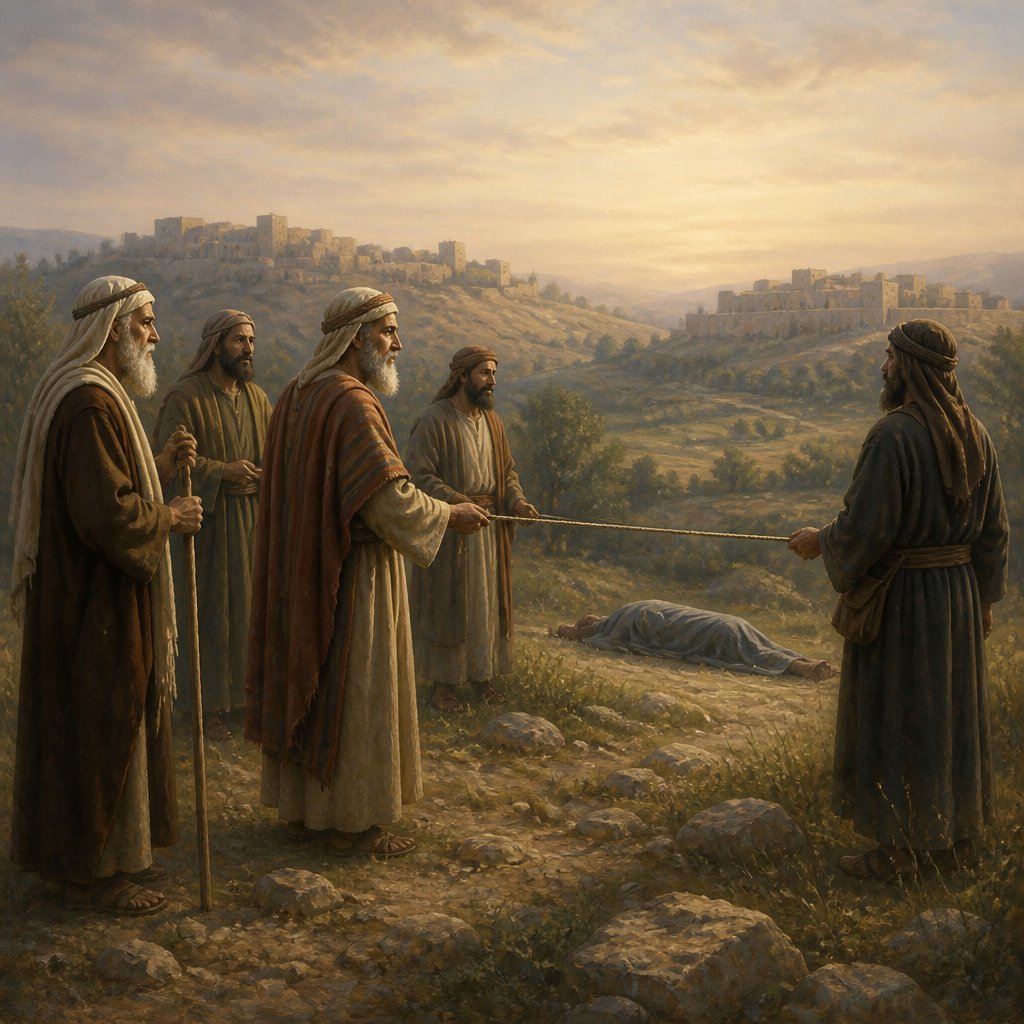
Deuteronomy 21:2 in the King James Version of the Bible states, "Then thy elders and thy judges shall come forth, and they shall measure unto the cities which are round about him that is slain." This verse is part of a larger passage that deals with the atonement for an unsolved murder in ancient Israel. The passage provides instructions for the ritual that the elders and judges were to perform when a body was found in a field, and the killer was unknown.
At first glance, this verse may seem obscure and disconnected from modern life. However, there are several important themes, contexts, and symbols embedded within this verse that still carry significance for believers today. In order to understand the deeper meaning of this verse, it is important to examine it in its historical and biblical context, and to explore its broader implications for spiritual and ethical understanding.
Historical and Biblical Context:
The book of Deuteronomy is part of the Jewish Torah, which is the first five books of the Bible. It is also considered part of the Pentateuch and is traditionally attributed to Moses. Deuteronomy contains laws and instructions given to the Israelites before they entered the Promised Land. The verse in question is part of a larger section of Deuteronomy that deals with principles of justice and societal order. In this specific passage, the elders and judges are instructed to measure the distance between the body of the slain person and the neighboring cities in order to determine which city is closest to the crime scene.
In ancient Israel, this ritual was a solemn and sobering reminder of the severity of murder and the responsibility of the community to ensure justice for the victim. The act of measuring the distance between the body and the nearby cities served to underscore the collective responsibility of the community for maintaining order and preventing harm. The involvement of the elders and judges signified the importance of wise and impartial leadership in upholding justice and righteousness.
Themes and Symbolism:
One of the central themes of this verse is the concept of communal responsibility for justice and ethical conduct. In ancient Israel, the community as a whole was responsible for addressing and rectifying acts of violence and injustice. The ritual outlined in this passage underscored the need for collective accountability in maintaining social order and upholding the value of human life. This theme resonates with contemporary discussions about the role of communities and societies in addressing issues of violence, injustice, and inequality.
Another important theme is the pursuit of justice and righteousness in the face of ambiguity and uncertainty. The situation described in this verse involves an unsolved murder, which presents a challenge to the traditional legal process. The elders and judges are called upon to navigate the complexities of the situation and to carry out a just resolution. This theme carries implications for contemporary debates about the pursuit of justice in situations where the truth may be elusive or contested.
The act of measuring the distance between the body and the neighboring cities can also be seen as a symbolic gesture of seeking truth and accountability. It serves as a tangible expression of the community's commitment to uncovering the truth and ensuring that justice is served. The symbolism of measurement underscores the importance of precision, fairness, and thoroughness in the pursuit of justice.
The involvement of the elders and judges in this ritual carries symbolic significance as well. These leaders represent the authority and wisdom necessary for discerning truth, administering justice, and upholding moral standards. Their role in this process highlights the importance of wise and equitable leadership in promoting and safeguarding the principles of justice and righteousness.
Implications for Spiritual and Ethical Understanding:
While the specific ritual described in this verse may have been unique to the historical context of ancient Israel, the broader principles and themes it embodies hold relevance for believers today. The verse challenges us to consider the importance of communal responsibility for promoting justice, ethics, and social order. It prompts reflection on our collective obligations to confront and address issues of violence, wrongdoing, and injustice in our communities and societies.
Additionally, this verse encourages believers to grapple with the complexities of pursuing justice and righteousness in a world fraught with ambiguity, moral dilemmas, and contested truths. It invites us to consider the role of wise and ethical leadership in promoting justice, truth, and accountability.
From a spiritual perspective, this verse also prompts believers to reflect on the biblical teachings about the value of human life, the pursuit of justice, and the responsibility to uphold moral and ethical standards. It challenges us to consider how our faith commitments should inform our response to issues of violence, wrongdoing, and societal injustice.
In conclusion, Deuteronomy 21:2 may initially appear to be an obscure and archaic biblical verse, but upon closer examination, it reveals profound insights into the themes of communal responsibility for justice, the pursuit of righteousness in the face of uncertainty, and the importance of wise and ethical leadership. Its implications for spiritual and ethical understanding continue to resonate with believers today, prompting reflection on our collective responsibilities for promoting justice, truth, and ethical conduct in our communities and societies.
Get our apps


Artwork for Deuteronomy 21:2

Deuteronomy 21:2 - "Then thy elders and thy judges shall come forth, and they shall measure unto the cities which are round about him that is slain:"
"Then thy elders and thy judges shall come forth, and they shall measure unto the cities which are round about him that is slain:" - Deuteronomy 21:2

Deuteronomy 2:21 - "A people great, and many, and tall, as the Anakims; but the LORD destroyed them before them; and they succeeded them, and dwelt in their stead:"

Deuteronomy 1.1-21
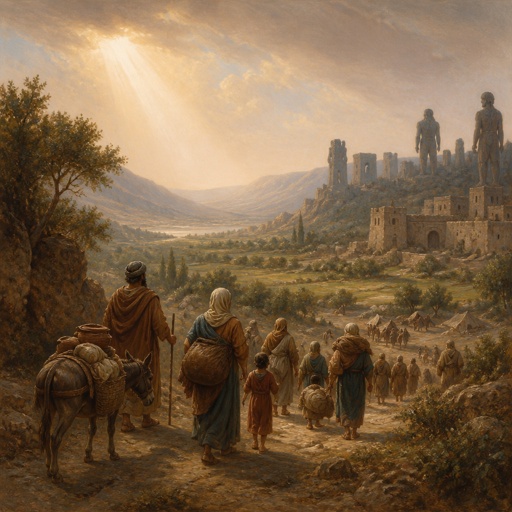
"A people great, and many, and tall, as the Anakims; but the LORD destroyed them before them; and they succeeded them, and dwelt in their stead:" - Deuteronomy 2:21

Deuteronomy 27:21 - "Cursed be he that lieth with any manner of beast. And all the people shall say, Amen."

Deuteronomy 21:21 - "And all the men of his city shall stone him with stones, that he die: so shalt thou put evil away from among you; and all Israel shall hear, and fear."

Deuteronomy 7:21 - "Thou shalt not be affrighted at them: for the LORD thy God is among you, a mighty God and terrible."

Deuteronomy 18:21 - "And if thou say in thine heart, How shall we know the word which the LORD hath not spoken?"

Deuteronomy 21:7 - "And they shall answer and say, Our hands have not shed this blood, neither have our eyes seen it."

Deuteronomy 21:22 - "¶ And if a man have committed a sin worthy of death, and he be to be put to death, and thou hang him on a tree:"

Deuteronomy 21:6 - "And all the elders of that city, that are next unto the slain man, shall wash their hands over the heifer that is beheaded in the valley:"

Deuteronomy 2:2 - "And the LORD spake unto me, saying,"

Deuteronomy 24:21 - "When thou gatherest the grapes of thy vineyard, thou shalt not glean it afterward: it shall be for the stranger, for the fatherless, and for the widow."

Deuteronomy 21:12 - "Then thou shalt bring her home to thine house; and she shall shave her head, and pare her nails;"

Deuteronomy 21:11 - "And seest among the captives a beautiful woman, and hast a desire unto her, that thou wouldest have her to thy wife;"

Deuteronomy 15:21 - "And if there be any blemish therein, as if it be lame, or blind, or have any ill blemish, thou shalt not sacrifice it unto the LORD thy God."

Deuteronomy 19:21 - "And thine eye shall not pity; but life shall go for life, eye for eye, tooth for tooth, hand for hand, foot for foot."

Deuteronomy 21:20 - "And they shall say unto the elders of his city, This our son is stubborn and rebellious, he will not obey our voice; he is a glutton, and a drunkard."

Deuteronomy 10:21 - "He is thy praise, and he is thy God, that hath done for thee these great and terrible things, which thine eyes have seen."

Deuteronomy 29:21 - "And the LORD shall separate him unto evil out of all the tribes of Israel, according to all the curses of the covenant that are written in this book of the law:"

Deuteronomy 21:1 - "If one be found slain in the land which the LORD thy God giveth thee to possess it, lying in the field, and it be not known who hath slain him:"

Deuteronomy 6:21 - "Then thou shalt say unto thy son, We were Pharaoh's bondmen in Egypt; and the LORD brought us out of Egypt with a mighty hand:"

Deuteronomy 16:21 - "¶ Thou shalt not plant thee a grove of any trees near unto the altar of the LORD thy God, which thou shalt make thee."
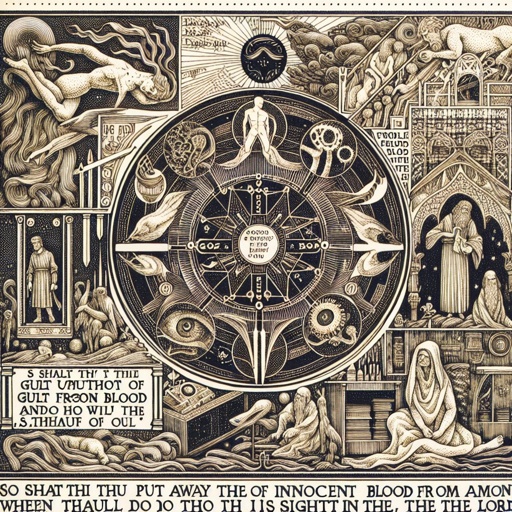
Deuteronomy 21:9 - "So shalt thou put away the guilt of innocent blood from among you, when thou shalt do that which is right in the sight of the LORD."

Deuteronomy 21:15 - "¶ If a man have two wives, one beloved, and another hated, and they have born him children, both the beloved and the hated; and if the firstborn son be hers that was hated:"

Deuteronomy 28:21 - "The LORD shall make the pestilence cleave unto thee, until he have consumed thee from off the land, whither thou goest to possess it."

Deuteronomy 21:19 - "Then shall his father and his mother lay hold on him, and bring him out unto the elders of his city, and unto the gate of his place;"
Deuteronomy 21:17 - "But he shall acknowledge the son of the hated for the firstborn, by giving him a double portion of all that he hath: for he is the beginning of his strength; the right of the firstborn is his."

Deuteronomy 2:17 - "That the LORD spake unto me, saying,"