What does Deuteronomy 22:19 mean?
“And they shall amerce him in an hundred shekels of silver, and give them unto the father of the damsel, because he hath brought up an evil name upon a virgin of Israel: and she shall be his wife; he may not put her away all his days.” — Deuteronomy 22:19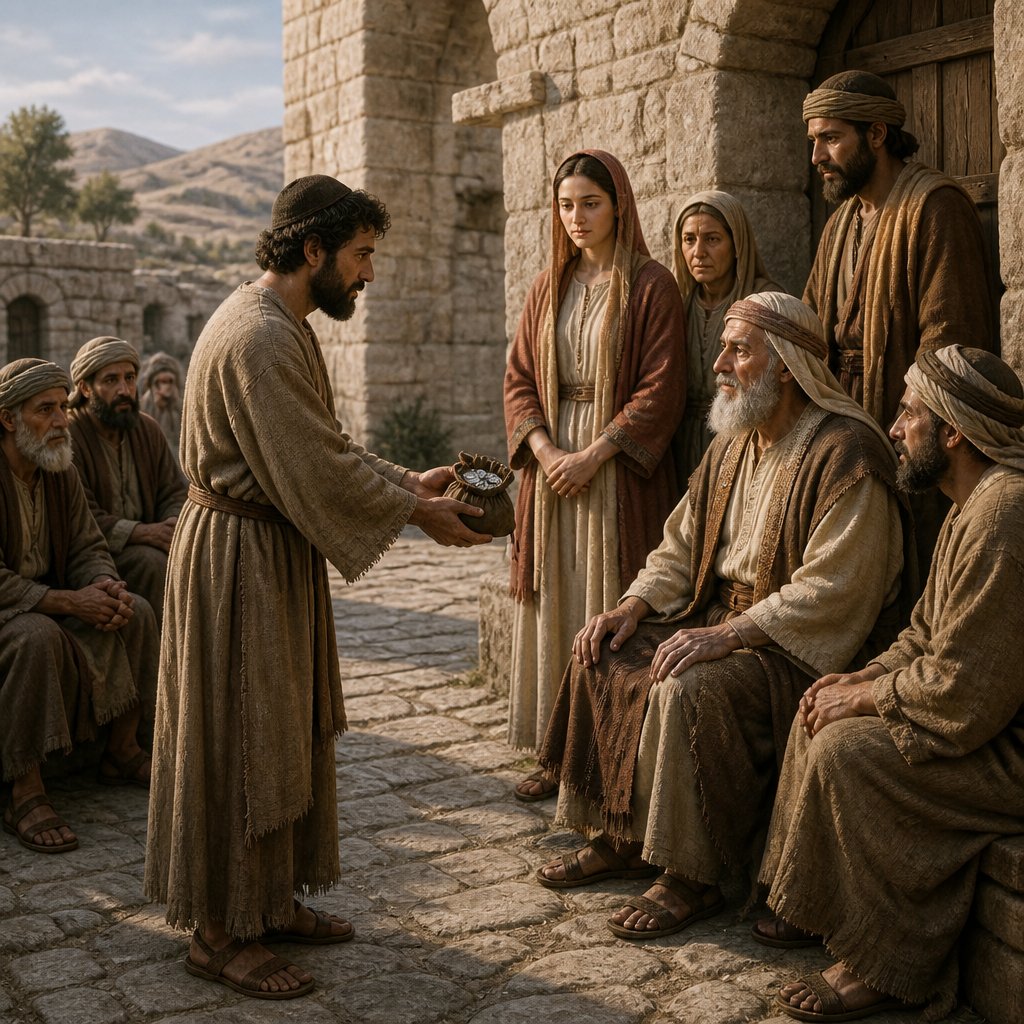
Deuteronomy 22:19 in the King James Version of the Bible states, "And they shall amerce him in an hundred shekels of silver, and give them unto the father of the damsel, because he hath brought up an evil name upon a virgin of Israel: and she shall be his wife; he may not put her away all his days."
This verse is part of the larger context of Deuteronomy, which is the fifth book of the Hebrew Bible and the Christian Old Testament. It contains the words of Moses as he addresses the Israelites before they enter the Promised Land. The book is made up of three sermons given by Moses to the Israelites, in which he reviews their history and gives them laws and instructions for living in the land. Deuteronomy contains a mixture of laws, ethical teachings, and religious exhortations, collectively forming the key elements of the Israelite legal and moral code.
The specific verse in question deals with the punishment and responsibility of a man who brings disgrace upon a virgin of Israel. In this case, if a man accuses a woman of not being a virgin on her wedding night, and his accusation is found to be false, he is required to pay a fine to the woman's father and must marry the woman, with no option to divorce her.
This law reveals several important themes and principles. Firstly, it demonstrates the importance of truth and honesty in relationships and matters of personal reputation. The severe financial penalty and mandated marriage for the false accuser highlight the gravity of making unfounded and damaging accusations. This law serves as a deterrent against baseless claims that could harm the integrity and honor of an innocent woman.
Additionally, this verse reflects the value placed on the sanctity of marriage and the protection of women within the Israelite society. In ancient Israel and many other cultures at that time, a woman's virginity before marriage was highly prized, and any hint of impropriety could have serious consequences for both the woman and her family. By stipulating that the accused man must marry the woman and cannot divorce her, the law ensures that the woman's welfare and social standing are safeguarded, even if her reputation has been unfairly tarnished.
Symbolically, this verse also points to the concept of restitution and the idea of making amends for the harm caused by one's actions. The payment of the fine is a form of compensation for the distress and damage inflicted upon the woman and her family. Furthermore, the mandated marriage, though initially a consequence for the accused man, also serves to restore the woman's honor and secure her future by providing her with a husband and protector.
In a broader context, this verse reflects the overarching principles of justice, accountability, and moral responsibility that are fundamental to the Israelite legal and ethical system as outlined in the book of Deuteronomy. It emphasizes the value of upholding the truth, protecting the vulnerable, and ensuring that individuals are held accountable for their actions, particularly when they have the potential to cause harm to others.
In conclusion, Deuteronomy 22:19 carries profound significance within the larger framework of the Israelite laws and ethical teachings. It addresses issues of honesty, reputation, and the protection of women, while also underscoring the principles of justice, restitution, and moral accountability. By examining this verse in its historical and cultural context, we can glean valuable insights into the ancient Israelite societal norms and the enduring moral and ethical values that continue to resonate in contemporary perspectives on truth, justice, and personal integrity.
Get our apps


Artwork for Deuteronomy 22:19

Deuteronomy 22:19 - "And they shall amerce him in an hundred shekels of silver, and give them unto the father of the damsel, because he hath brought up an evil name upon a virgin of Israel: and she shall be his wife; he may not put her away all his days."
"And they shall amerce him in an hundred shekels of silver, and give them unto the father of the damsel, because he hath brought up an evil name upon a virgin of Israel: and she shall be his wife; he may not put her away all his days." - Deuteronomy 22:19

Deuteronomy 30:19:

Deuteronomy 5:19 - "Neither shalt thou steal."

Deuteronomy 22:20 - "But if this thing be true, and the tokens of virginity be not found for the damsel:"

Deuteronomy 22:10 - "¶ Thou shalt not plow with an ox and an ass together."

Deuteronomy 22:18 - "And the elders of that city shall take that man and chastise him;"

Deuteronomy 23:22 - "But if thou shalt forbear to vow, it shall be no sin in thee."

Genesis 22:19

Genesis 19-22

Deuteronomy 9:22 - "And at Taberah, and at Massah, and at Kibroth-hattaavah, ye provoked the LORD to wrath."

Deuteronomy 22:11 - "¶ Thou shalt not wear a garment of divers sorts, as of woollen and linen together."

Deuteronomy 22:13 - "¶ If any man take a wife, and go in unto her, and hate her,"

Deuteronomy 31:22 - "¶ Moses therefore wrote this song the same day, and taught it the children of Israel."

Deuteronomy 22:27 - "For he found her in the field, and the betrothed damsel cried, and there was none to save her."

Deuteronomy 10:19 - "Love ye therefore the stranger: for ye were strangers in the land of Egypt."

Deuteronomy 14:19 - "And every creeping thing that flieth is unclean unto you: they shall not be eaten."

1 kings 22:19

Deuteronomy 3:22 - "Ye shall not fear them: for the LORD your God he shall fight for you."

Deuteronomy 22:23 - "¶ If a damsel that is a virgin be betrothed unto an husband, and a man find her in the city, and lie with her;"

Deuteronomy 33:22 - "¶ And of Dan he said, Dan is a lion's whelp: he shall leap from Bashan."

"Neither shalt thou steal." - Deuteronomy 5:19

Deuteronomy 19:7 - "Wherefore I command thee, saying, Thou shalt separate three cities for thee."

Deuteronomy 6:19 - "To cast out all thine enemies from before thee, as the LORD hath spoken."

Deuteronomy 22:22 - "¶ If a man be found lying with a woman married to an husband, then they shall both of them die, both the man that lay with the woman, and the woman: so shalt thou put away evil from Israel."

Deuteronomy 22:30 - "¶ A man shall not take his father's wife, nor discover his father's skirt."

Deuteronomy 22:28 - "¶ If a man find a damsel that is a virgin, which is not betrothed, and lay hold on her, and lie with her, and they be found;"

Deuteronomy 19:19 - "Then shall ye do unto him, as he had thought to have done unto his brother: so shalt thou put the evil away from among you."

Deuteronomy 12:19 - "Take heed to thyself that thou forsake not the Levite as long as thou livest upon the earth."

Deuteronomy 19:16 - "¶ If a false witness rise up against any man to testify against him that which is wrong;"