What does Deuteronomy 25:9 mean?
“Then shall his brother’s wife come unto him in the presence of the elders, and loose his shoe from off his foot, and spit in his face, and shall answer and say, So shall it be done unto that man that will not build up his brother’s house.” — Deuteronomy 25:9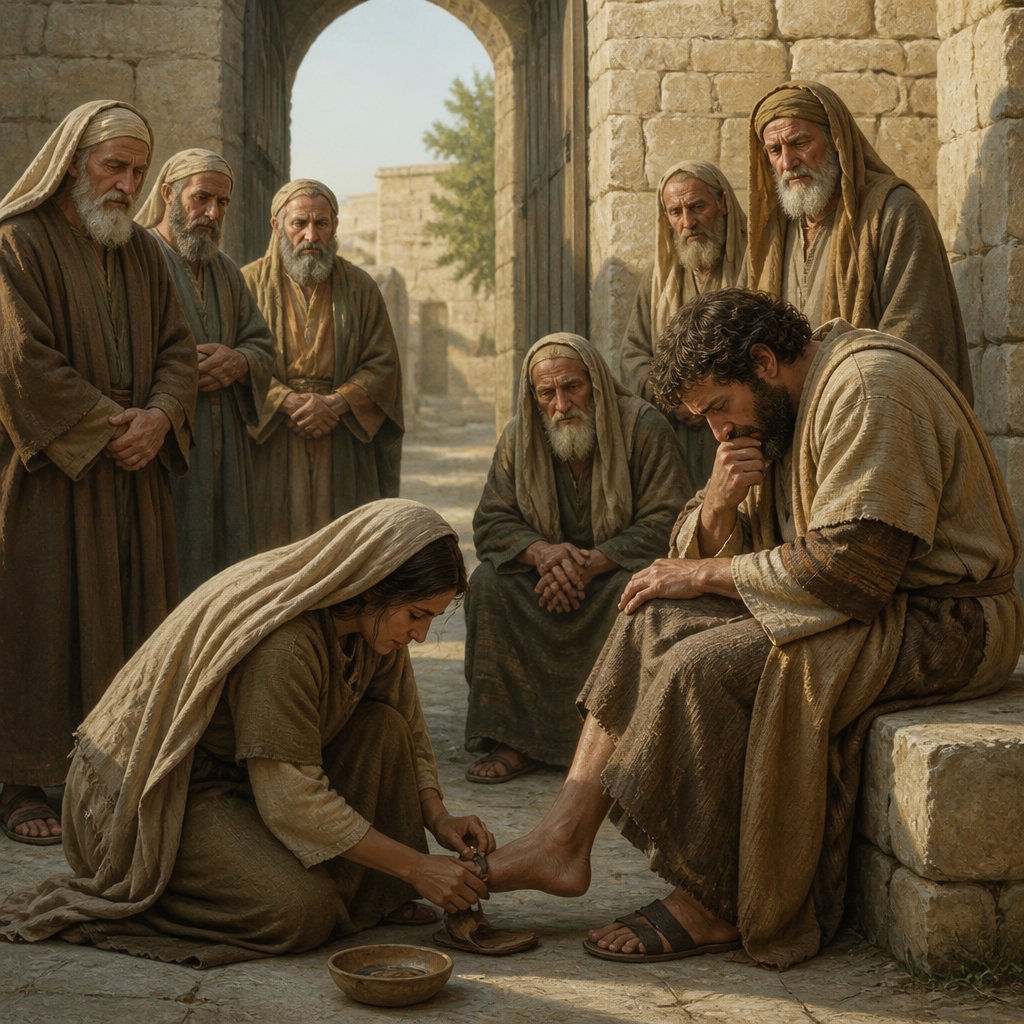
Deuteronomy 25:9 (KJV) states, "Then shall his brother's wife come unto him in the presence of the elders, and loose his shoe from off his foot, and spit in his face, and shall answer and say, So shall it be done unto that man that will not build up his brother's house." This verse is part of the laws given to the Israelites by Moses, and it addresses the practice of levirate marriage, which was a custom in ancient Israel and other ancient societies.
The concept of levirate marriage is based on the belief that it was the duty of a man to marry the widow of his deceased brother in order to produce an heir for his brother and continue his family line. In the event that a man died without producing a son, his brother was expected to marry the widow and have a child with her who would be considered the legal heir of the deceased brother. This practice was seen as a way of ensuring the continuity of a man's family line and the inheritance of his property.
The verse in Deuteronomy 25:9 describes the ritual that would take place if a man refused to fulfill his duty to marry his deceased brother's widow. The woman would come before the elders of the community and publicly remove the man's shoe, spit in his face, and declare that he had failed to fulfill his duty. This act was a form of public shaming and served as a punishment for the man's refusal to carry out his familial obligation.
The act of removing the shoe was symbolic of the man's refusal to "walk in the way" of his brother, as marriage and procreation were seen as essential components of fulfilling one's duty to their family. The act of spitting in the man's face was a sign of contempt and disgrace, highlighting the severity of his refusal to uphold his familial responsibilities.
This verse reflects the social and cultural norms of ancient Israel, where family lineage and inheritance were of utmost importance. It also illustrates the emphasis placed on duty and obligation within the community, as individuals were expected to prioritize the needs of their family over their own personal desires.
From a broader perspective, this verse carries a message about the importance of honoring one's commitments and responsibilities, particularly within the context of familial relationships. The concept of fulfilling one's duty to their family members is a recurring theme in the biblical narrative, emphasizing the significance of loyalty, sacrifice, and selflessness.
Furthermore, the ritual described in this verse serves as a form of social and moral regulation within the community, reinforcing the expectations and consequences associated with the failure to fulfill one's obligations. The public nature of the ritual also underscores the communal nature of responsibility, highlighting the role of the elders and the wider community in enforcing social norms and expectations.
In a metaphorical sense, the act of spitting in the man's face can also be interpreted as a symbol of the consequences of moral and ethical failure. It serves as a reminder of the dishonor and shame that result from neglecting one's responsibilities and betraying the trust of others.
Overall, Deuteronomy 25:9 provides valuable insight into the social, cultural, and ethical norms of ancient Israel, while also conveying timeless messages about the importance of duty, loyalty, and the consequences of failing to uphold one's responsibilities. It serves as a powerful reminder of the enduring significance of these principles within the biblical narrative and beyond.
Get our apps


Artwork for Deuteronomy 25:9

Deuteronomy 25:9 - "Then shall his brother's wife come unto him in the presence of the elders, and loose his shoe from off his foot, and spit in his face, and shall answer and say, So shall it be done unto that man that will not build up his brother's house."
"Then shall his brother's wife come unto him in the presence of the elders, and loose his shoe from off his foot, and spit in his face, and shall answer and say, So shall it be done unto that man that will not build up his brother's house." - Deuteronomy 25:9

Deuteronomy 9:25 - "Thus I fell down before the LORD forty days and forty nights, as I fell down at the first; because the LORD had said he would destroy you."

Deuteronomy 25:13 - "¶ Thou shalt not have in thy bag divers weights, a great and a small."

Deuteronomy 25:4 - "¶ Thou shalt not muzzle the ox when he treadeth out the corn."

Deuteronomy 31:25 - "That Moses commanded the Levites, which bare the ark of the covenant of the LORD, saying,"

Deuteronomy 25:14 - "Thou shalt not have in thine house divers measures, a great and a small."

Deuteronomy 33:25 - "Thy shoes shall be iron and brass; and as thy days, so shall thy strength be."

Deuteronomy 25:10 - "And his name shall be called in Israel, The house of him that hath his shoe loosed."

Deuteronomy 25:16 - "For all that do such things, and all that do unrighteously, are an abomination unto the LORD thy God."

1 Corinthians 9:25-27

1 Corinthians 9:25-27

1 Corinthians 9:25-27

1 Corinthians 9:25-27

Genesis 25-9

Deuteronomy 27:25 - "Cursed be he that taketh reward to slay an innocent person. And all the people shall say, Amen."

Deuteronomy 9:25-26 - "So I lay prostrate before the Lord for these forty days and forty nights, because the Lord had said he would destroy you. And I prayed to the Lord, 'O Lord God, do not destroy your people and your heritage, whom you have redeemed through your greatness, whom you have brought out of Egypt with a mighty hand."

Genesis 9:24-25

Deuteronomy 25:17 - "¶ Remember what Amalek did unto thee by the way, when ye were come forth out of Egypt;"

Deuteronomy 3:25 - "I pray thee, let me go over, and see the good land that is beyond Jordan, that goodly mountain, and Lebanon."

Deuteronomy 25:1 - "If there be a controversy between men, and they come unto judgment, that the judges may judge them; then they shall justify the righteous, and condemn the wicked."

Deuteronomy 32:25 - "The sword without, and terror within, shall destroy both the young man and the virgin, the suckling also with the man of gray hairs."

Deuteronomy 25:8 - "Then the elders of his city shall call him, and speak unto him: and if he stand to it, and say, I like not to take her;"

Deuteronomy 32:9 - "For the LORD'S portion is his people; Jacob is the lot of his inheritance."

Deuteronomy 3:9 - "(Which Hermon the Sidonians call Sirion; and the Amorites call it Shenir;)"

Deuteronomy 9:22 - "And at Taberah, and at Massah, and at Kibroth-hattaavah, ye provoked the LORD to wrath."

Deuteronomy 22:25 - "¶ But if a man find a betrothed damsel in the field, and the man force her, and lie with her: then the man only that lay with her shall die:"

Deuteronomy 6:25 - "And it shall be our righteousness, if we observe to do all these commandments before the LORD our God, as he hath commanded us."
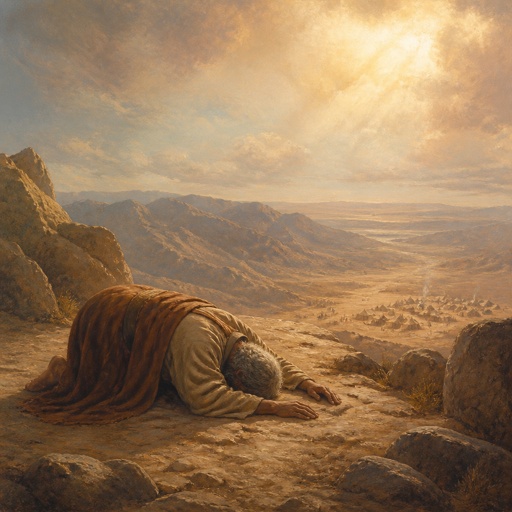
"Thus I fell down before the LORD forty days and forty nights, as I fell down at the first; because the LORD had said he would destroy you." - Deuteronomy 9:25

Deuteronomy 25:6 - "And it shall be, that the firstborn which she beareth shall succeed in the name of his brother which is dead, that his name be not put out of Israel."