What does Deuteronomy 27:26 mean?
“Cursed be he that confirmeth not all the words of this law to do them. And all the people shall say, Amen.” — Deuteronomy 27:26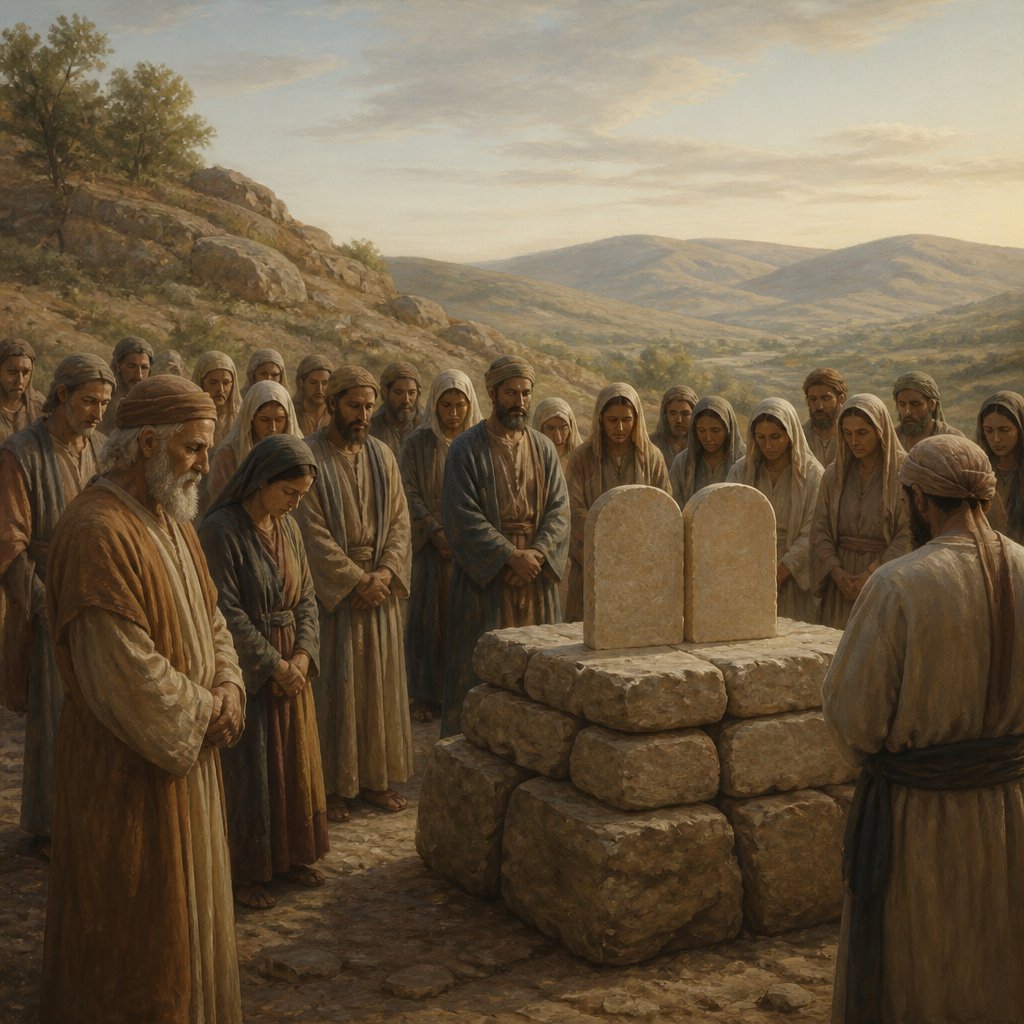
Deuteronomy 27:26 (KJV) reads, "Cursed be he that confirmeth not all the words of this law to do them. And all the people shall say, Amen."
This verse is found in the book of Deuteronomy, which is the fifth book of the Old Testament. It contains the final teachings of Moses to the Israelites before they enter the Promised Land. The verse 27:26 is part of a larger section in which Moses instructs the Israelites to set up large stones on Mount Ebal, whitewash them, and write the words of the law on them. This is done so that the people will remember and keep the commandments of the Lord.
The verse is a stern warning about the consequences of disobedience to God's law. It speaks of a curse upon those who do not confirm or uphold all the words of the law to do them. This verse emphasizes the importance of obedience and the serious consequences of failing to adhere to God's commandments.
One of the key themes of this verse is obedience. The Israelites are reminded of the importance of obeying God's law and the severe consequences that result from disobedience. Throughout the book of Deuteronomy, Moses repeatedly emphasizes the importance of obeying God's commandments and the blessings that come from doing so. This verse serves as a reminder to the Israelites that their relationship with God is contingent upon their obedience to His law.
Another prominent theme in this verse is the concept of curses and blessings. The verse warns of a curse for those who do not uphold the words of the law, while in other parts of the Bible, particularly in Deuteronomy, blessings are promised to those who obey God's commands. This presents a binary understanding of the consequences of obedience and disobedience, and underscores the idea that God's law is not to be taken lightly.
The context of this verse is significant in understanding its meaning. The Israelites have been freed from slavery in Egypt, have wandered in the wilderness for forty years, and are on the brink of entering the Promised Land. Throughout their journey, God has provided for them, protected them, and given them His law. As they stand on the threshold of this new chapter in their history, Moses's words are a solemn reminder of their covenant with God and the importance of adhering to His commandments.
In addition to its thematic significance, this verse also carries significant symbolism. The mention of a curse for those who do not uphold the words of the law serves as a powerful symbol of the consequences of disobedience. It underscores the seriousness of God's commandments and the need for the Israelites to take them seriously.
Furthermore, the act of writing the law on large stones and whitewashing them symbolizes the permanence and importance of God's commandments. This symbolic act serves as a visual reminder for the people to obey God's law and is intended to ensure that the commandments are not forgotten.
In conclusion, Deuteronomy 27:26 from the King James Version of the Bible carries significant thematic, contextual, and symbolic meaning. It emphasizes the importance of obedience to God's law, warns of the consequences of disobedience, and serves as a powerful reminder of the covenant between God and the Israelites. The verse also carries symbolic significance in its portrayal of the permanence and importance of God's commandments. It serves as a timeless reminder for believers of the seriousness of God's law and the blessings that come from obedience.
Get our apps


Artwork for Deuteronomy 27:26

Deuteronomy 27:26 - "Cursed be he that confirmeth not all the words of this law to do them. And all the people shall say, Amen."

"Cursed be he that confirmeth not all the words of this law to do them. And all the people shall say, Amen." - Deuteronomy 27:26

Matthew 27:26

Matthew 27:26

Deuteronomy 26:4-10

Deuteronomy 26:4-10

Proverbs 7:26-27

John 19:26-27

Deuteronomy 27:11 - "¶ And Moses charged the people the same day, saying,"

Proverbs 27:26 - "The lambs are for thy clothing, and the goats are the price of the field."

Deuteronomy 11:26 - "¶ Behold, I set before you this day a blessing and a curse;"

Acts 27:26 - "Howbeit we must be cast upon a certain island."

Deuteronomy 27:14 - "¶ And the Levites shall speak, and say unto all the men of Israel with a loud voice,"

Deuteronomy 27:8 - "And thou shalt write upon the stones all the words of this law very plainly."

Deuteronomy 22:27 - "For he found her in the field, and the betrothed damsel cried, and there was none to save her."

Deuteronomy 29:27 - "And the anger of the LORD was kindled against this land, to bring upon it all the curses that are written in this book:"

Deuteronomy 27:21 - "Cursed be he that lieth with any manner of beast. And all the people shall say, Amen."

Deuteronomy 27:17 - "Cursed be he that removeth his neighbour's landmark. And all the people shall say, Amen."

Deuteronomy 27:23 - "Cursed be he that lieth with his mother in law. And all the people shall say, Amen."

Deuteronomy 27:24 - "Cursed be he that smiteth his neighbour secretly. And all the people shall say, Amen."

Leviticus 26:27 - "And if ye will not for all this hearken unto me, but walk contrary unto me;"

Deuteronomy 28:27 - "The LORD will smite thee with the botch of Egypt, and with the emerods, and with the scab, and with the itch, whereof thou canst not be healed."

Deuteronomy 27:19 - "Cursed be he that perverteth the judgment of the stranger, fatherless, and widow. And all the people shall say, Amen."

Deuteronomy 11:27 - "A blessing, if ye obey the commandments of the LORD your God, which I command you this day:"

Deuteronomy 27:18 - "Cursed be he that maketh the blind to wander out of the way. And all the people shall say, Amen."

Acts 26:27 - "King Agrippa, believest thou the prophets? I know that thou believest."

Deuteronomy 26:6 - "And the Egyptians evil entreated us, and afflicted us, and laid upon us hard bondage:"

Deuteronomy 1:26 - "Notwithstanding ye would not go up, but rebelled against the commandment of the LORD your God:"

James 1:26-27 - "James 1:26-27: If anyone considers himself religious and yet does not keep a tight rein on his tongue, he deceives himself and his religion is worthless. Religion that God our Father accepts as pure and faultless is this: to look after orphans and widows in their distress and to keep oneself from being polluted by the world."

Deuteronomy 27:7 - "And thou shalt offer peace offerings, and shalt eat there, and rejoice before the LORD thy God."