What does Deuteronomy 34:1 mean?
“And Moses went up from the plains of Moab unto the mountain of Nebo, to the top of Pisgah, that is over against Jericho. And the LORD shewed him all the land of Gilead, unto Dan,” — Deuteronomy 34:1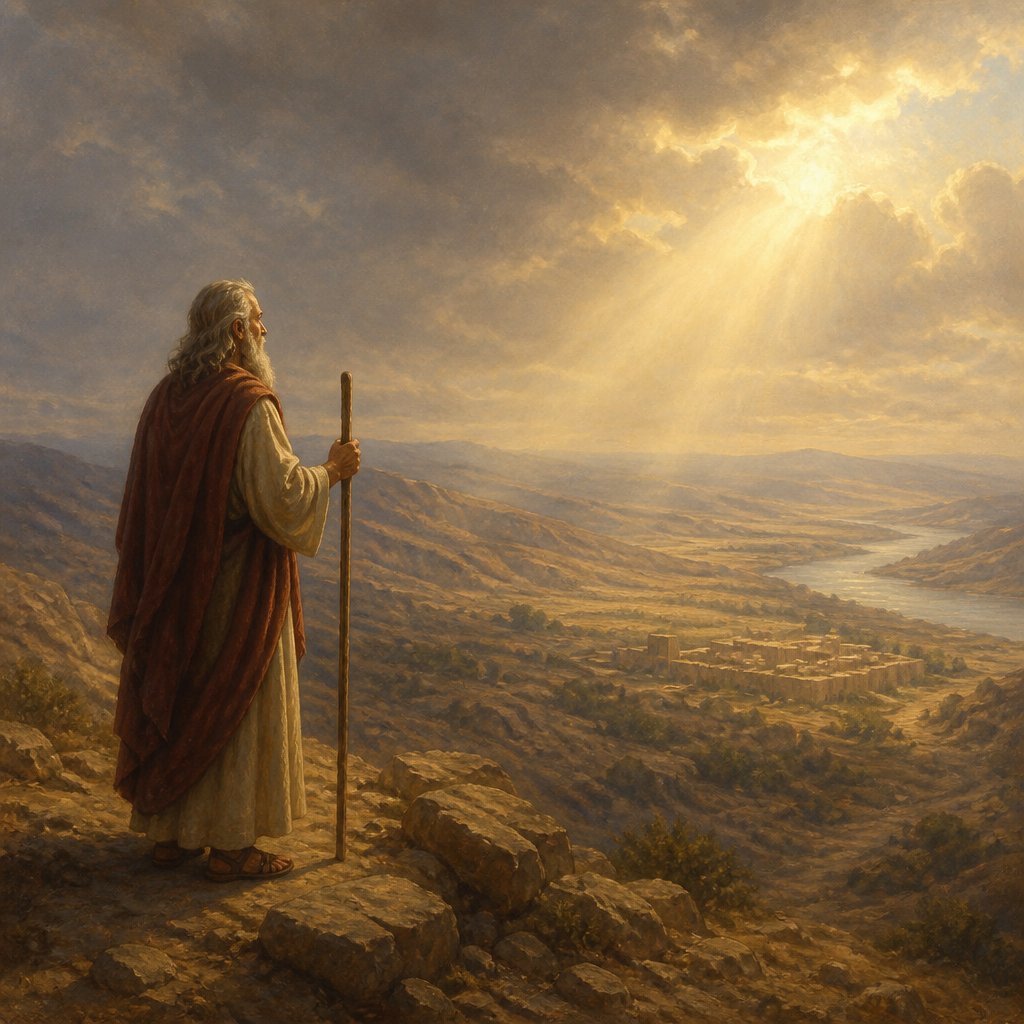
Deuteronomy 34:1 in the King James Version reads, “And Moses went up from the plains of Moab unto the mountain of Nebo, to the top of Pisgah, that is over against Jericho. And the LORD shewed him all the land of Gilead, unto Dan.” This single verse stands at the threshold between promise and possession, closing the public life of Moses and preparing the reader for Israel’s entry into Canaan under Joshua. It is not merely a travel note about an aged prophet climbing a mountain; it is a carefully framed moment in which geography becomes theology and sight becomes a solemn kind of testimony.
The verse begins, “And Moses went up from the plains of Moab unto the mountain of Nebo,” and that movement upward is significant. Moses is coming from “the plains of Moab,” the last camp of Israel before the Jordan, a place of waiting and transition. In Deuteronomy, Moab functions as the edge of inheritance: close enough to see the land, yet still outside it. Moses “went up” to Nebo, and the ascent reads like a final summons. Mountains in Scripture often mark places where God reveals himself, speaks covenant words, or discloses a divine perspective that cannot be gained on the plain. Moses, who met the LORD on Horeb and received the law amid fire and cloud, ends his course on another height. The upward journey suggests that the conclusion of his earthly leadership is being gathered into the presence and purpose of God, not merely into the limitations of age.
Nebo is specified further: “to the top of Pisgah, that is over against Jericho.” The precision anchors the scene in real space, but it also adds meaning. Jericho is the first major city Israel will face after crossing Jordan; it represents the threshold of conquest and the beginning of life in the land. Moses stands “over against Jericho,” facing it, oriented toward the future of the people he has led. He is not indifferent to what is coming; he is positioned in direct relation to Israel’s next step. Yet the phrase also quietly underscores a boundary. Moses is “over against” Jericho, not within it. He is near, he is facing it, he can see it, but he will not pass over. The verse thus holds together two truths at once: the nearness of fulfillment and the firmness of God’s earlier sentence that Moses would not enter the land. Deuteronomy’s narrative tension—promise sure, yet the mediator barred—is crystallized in that line.
Then comes the heart of the verse: “And the LORD shewed him all the land.” The emphasis falls on divine initiative. Moses does not simply look; “the LORD shewed him.” The land is not merely a territory to be surveyed; it is God’s gift, God’s sworn inheritance, God’s work to display. This also makes the moment an act of grace. If Moses cannot enter, the LORD nevertheless grants him a kind of completion by sight. The one who has carried the burden of leadership is allowed to see what his obedience, intercession, and endurance have served. The LORD’s showing is both comfort and confirmation: comfort, because Moses is not dismissed without honor; confirmation, because Israel’s future does not rest on Moses’ remaining years but on the LORD’s faithfulness.
The phrase “all the land” also has covenant resonance. The land is central to the promises given to the fathers, and Deuteronomy repeatedly sets blessing and inheritance within the framework of obedience and covenant loyalty. Moses’ view from Pisgah is therefore not a tourist panorama but a covenant witness. It is as though the LORD is saying, in the most tangible way possible, that what he promised is real and present. Moses becomes the last eyewitness of the wilderness era and the first eyewitness of the inheritance from the edge. His sight functions like a sealing of testimony: the wilderness journey is truly ending, and God’s word has not failed.
The verse continues, “of Gilead, unto Dan.” These names are not casual. They sketch an expanse, indicating breadth and completeness. Gilead lies in the region east of Jordan associated with fertile land and later tribal inheritance; Dan, in the later settlement pattern, marks a northern extremity. By naming points of reference, the text evokes the sweep of the promised territory. Symbolically, this reaches beyond what Moses’ natural eyesight might strictly encompass and points to a divinely granted vision: the LORD’s showing is not limited to what a man can calculate, but communicates the fullness of God’s intention. The land is presented as whole, coherent, and appointed, not as a fragment or uncertain possibility.
In the wider context, this verse stands after Moses’ final acts: he has delivered his last speeches, renewed the covenant, blessed the tribes, and prepared Joshua. Deuteronomy 34 begins the narrative of Moses’ death, but it begins not with decline or loss, but with ascent and revelation. That order is significant. Moses’ end is framed by worshipful perspective rather than by mere mortality. The lawgiver is brought to a place where the LORD himself interprets history—wilderness behind, promise ahead—before Moses is gathered away.
There is also a subtle theme of succession and the continuity of God’s work. Moses is the central human figure of Exodus through Deuteronomy, yet Deuteronomy 34:1 makes clear that the story is not finally about Moses’ ability to finish what he started. It is about the LORD who called him, guided him, judged him, and still honored him. The people will cross without Moses, not because Moses failed to lead them near, but because the LORD’s purpose is larger than any one servant. The verse therefore speaks to both the dignity and the limits of human leadership: a faithful servant may bring others to the brink of blessing and yet personally not enter, while God’s promise continues undiminished.
As symbolism, Pisgah becomes a kind of “in-between” place, a threshold height where seeing replaces possessing. It is a solemn image of hope that is real but not yet in hand, and of fulfillment that may be granted to one generation to enjoy what another generation labored to reach. It also carries a moral weight within Deuteronomy’s theology: the land is gift, but it is also holy trust; the covenant is gracious, but it is not indifferent to disobedience. Moses’ inability to cross, while not stated in this verse, shadows the scene and gives the viewing an austere poignancy. Yet the dominant tone of Deuteronomy 34:1 is not bitterness; it is the LORD’s faithful disclosure, allowing his servant to see “all the land” that God himself will give.
Thus Deuteronomy 34:1 functions as a final, elevated viewpoint over the entire Pentateuchal journey. It gathers up the themes of promise, covenant, leadership, judgment, mercy, and divine faithfulness into one quiet tableau: an old prophet climbing from the plains to the mount, facing Jericho, and receiving from the LORD a vision of the inheritance. The verse teaches that God’s purposes reach beyond the lifespan of his servants, that his promises stand sure, and that even when a servant’s role ends at the border, the LORD can grant a gracious sight of the goodness to come.
Get our apps


Artwork for Deuteronomy 34:1

Deuteronomy 34:1-4 – Moses views the Promised Land from Mount Nebo.

Deuteronomy 34:1-4 – Moses views the Promised Land from Mount Nebo.

Deuteronomy 34:1-4 – Moses views the Promised Land from Mount Nebo.

Deuteronomy 34:1-4 – Moses views the Promised Land from Mount Nebo.

Deuteronomy 34:1-4 – Moses views the Promised Land from Mount Nebo.

Deuteronomy 34:1-4 – Moses views the Promised Land from Mount Nebo.

Deuteronomy 34:1-4 – Moses views the Promised Land from Mount Nebo.

Deuteronomy 34:1 - "And Moses went up from the plains of Moab unto the mountain of Nebo, to the top of Pisgah, that is over against Jericho. And the LORD shewed him all the land of Gilead, unto Dan,"
!["And Moses went up from the plains of Moab unto the mountain of Nebo, to the top of Pisgah, that [is] over against Jericho. And the LORD shewed him all the land of Gilead, unto Dan," - Deuteronomy 34:1](https://media.bible.art/7f85395f-7a9f-49f5-b3b4-fd14f26c1d29-thumbnail.jpg)
"And Moses went up from the plains of Moab unto the mountain of Nebo, to the top of Pisgah, that [is] over against Jericho. And the LORD shewed him all the land of Gilead, unto Dan," - Deuteronomy 34:1
"And Moses went up from the plains of Moab unto the mountain of Nebo, to the top of Pisgah, that is over against Jericho. And the LORD shewed him all the land of Gilead, unto Dan," - Deuteronomy 34:1

Deuteronomy 1:34 - "And the LORD heard the voice of your words, and was wroth, and sware, saying,"
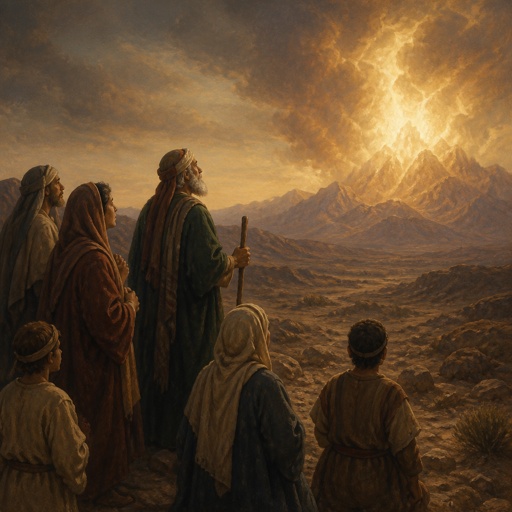
"And the LORD heard the voice of your words, and was wroth, and sware, saying," - Deuteronomy 1:34

Deuteronomy 34:5-6

Deuteronomy 34:3 - "And the south, and the plain of the valley of Jericho, the city of palm trees, unto Zoar."

Deuteronomy 32:34 - "Is not this laid up in store with me, and sealed up among my treasures?"

Deuteronomy 34:5 - "¶ So Moses the servant of the LORD died there in the land of Moab, according to the word of the LORD."

Deuteronomy 34:10 - "¶ And there arose not a prophet since in Israel like unto Moses, whom the LORD knew face to face,"

Deuteronomy 34:2 - "And all Naphtali, and the land of Ephraim, and Manasseh, and all the land of Judah, unto the utmost sea,"

Deuteronomy 28:34 - "So that thou shalt be mad for the sight of thine eyes which thou shalt see."

Deuteronomy 34:12 - "And in all that mighty hand, and in all the great terror which Moses shewed in the sight of all Israel."

Deuteronomy 34:8 - "¶ And the children of Israel wept for Moses in the plains of Moab thirty days: so the days of weeping and mourning for Moses were ended."

Deuteronomy 34:7 - "¶ And Moses was an hundred and twenty years old when he died: his eye was not dim, nor his natural force abated."

Deuteronomy 34:6 - "And he buried him in a valley in the land of Moab, over against Beth-peor: but no man knoweth of his sepulchre unto this day."

Deuteronomy 34:11 - "In all the signs and the wonders, which the LORD sent him to do in the land of Egypt to Pharaoh, and to all his servants, and to all his land,"

Deuteronomy 2:34 - "And we took all his cities at that time, and utterly destroyed the men, and the women, and the little ones, of every city, we left none to remain:"
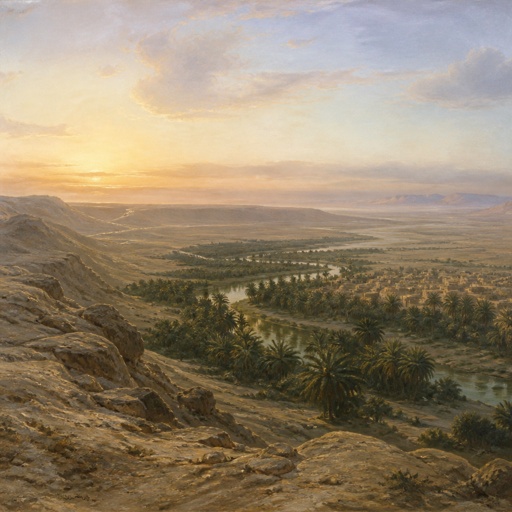
"And the south, and the plain of the valley of Jericho, the city of palm trees, unto Zoar." - Deuteronomy 34:3

"Is not this laid up in store with me, and sealed up among my treasures?" - Deuteronomy 32:34

Deuteronomy 28:34 - "So that thou shalt be mad for the sight of thine eyes which thou shalt see."

Deuteronomy 34:9 - "¶ And Joshua the son of Nun was full of the spirit of wisdom; for Moses had laid his hands upon him: and the children of Israel hearkened unto him, and did as the LORD commanded Moses."

Dopsalms 34:1-12