What does Deuteronomy 7:12 mean?
“Wherefore it shall come to pass, if ye hearken to these judgments, and keep, and do them, that the LORD thy God shall keep unto thee the covenant and the mercy which he sware unto thy fathers:” — Deuteronomy 7:12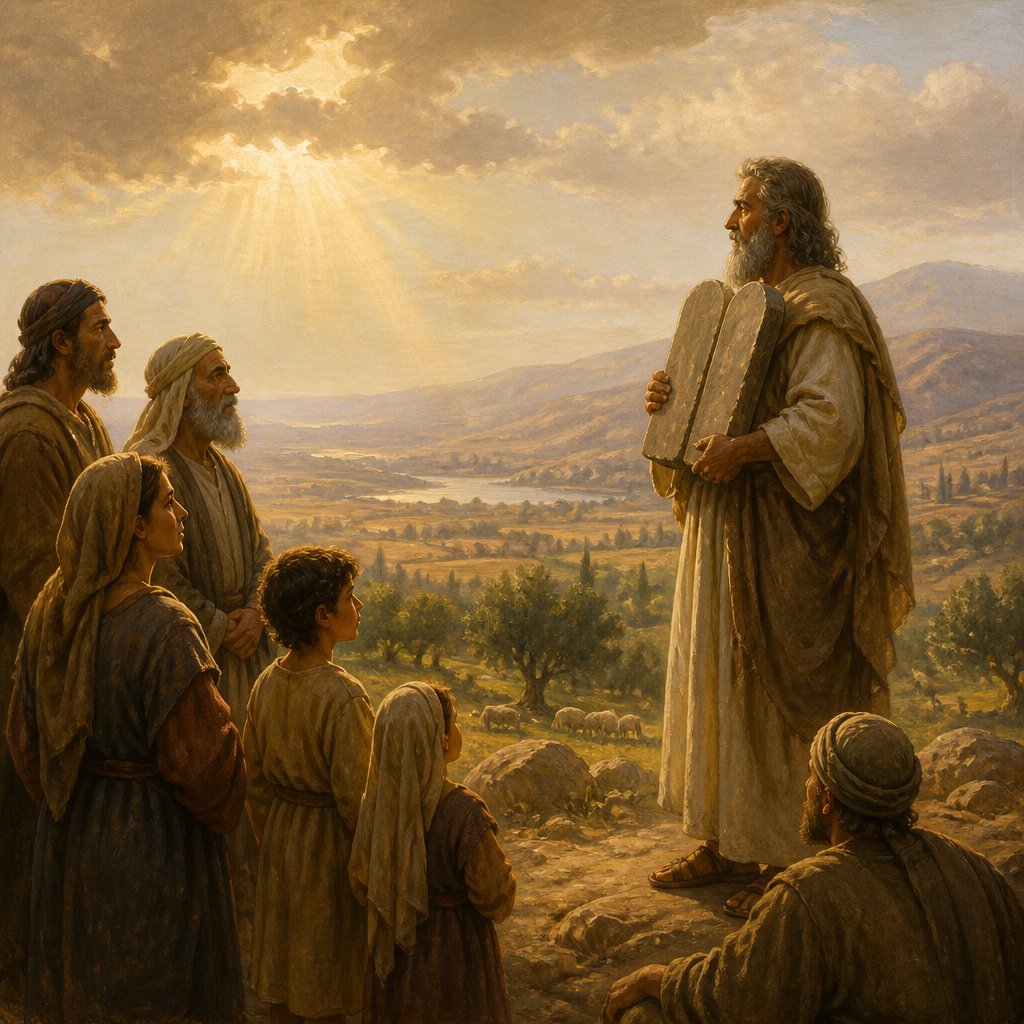
Deuteronomy 7:12 (KJV) says, "Wherefore it shall come to pass, if ye hearken to these judgments, and keep, and do them, that the LORD thy God shall keep unto thee the covenant and the mercy which he sware unto thy fathers."
The book of Deuteronomy is the fifth book of the Hebrew Bible and the Christian Old Testament. It is part of the Torah, the first five books of the Bible, which are also known as the Pentateuch. Deuteronomy is a book of laws and regulations, presented as a series of speeches by Moses. It is sometimes called the "second law" because it contains a restatement of the laws given to the Israelites at Mount Sinai.
Deuteronomy 7:12 is part of a passage in which Moses is exhorting the Israelites to obey the commandments and statutes that God has given them. He is reminding them of the covenant that God made with their ancestors and urging them to remain faithful to it. In this verse, the promise of God's faithfulness to the covenant is contingent upon the people's obedience and adherence to His laws.
The verse begins with the word "wherefore," which can be understood as "therefore" or "so." This indicates that what follows is a consequence of what has been previously stated. In the preceding verses, Moses has been admonishing the Israelites to destroy the idols and altars of the pagan Canaanite nations that they will encounter in the Promised Land. He warns them not to make covenants with these nations or intermarry with them, for fear that they will turn the Israelites away from worshipping the one true God.
Moses then tells the Israelites that if they listen and obey the commandments and statutes that God has given them, the Lord will keep His covenant and show them mercy. The conditional nature of this promise is clear - it is dependent on the people's obedience and fidelity to God's laws. This principle of divine faithfulness in response to human faithfulness is a recurring theme throughout the Bible.
One of the central themes of Deuteronomy is obedience to God's commands. The book emphasizes the idea that Israel's flourishing and success are contingent upon their obedience to God. Obedience is not merely a matter of following rules, but it is a reflection of the people's love and devotion to God. Obedience is an expression of faithfulness, trust, and allegiance to the Lord.
The covenant between God and His people is a central motif in the Hebrew Bible. It is a sacred agreement that establishes a special relationship between God and the people of Israel. The covenant involves mutual obligations - God promises to protect, bless, and provide for the Israelites, and the people agree to worship and serve Him exclusively. The covenant also indicates God's unchanging and steadfast love for His people, despite their shortcomings and failures.
The theme of mercy is also prominent in this verse. God's mercy is an expression of His compassion, forgiveness, and loving-kindness. It is a central aspect of His character, and He extends it generously to those who are faithful to Him. In the context of the covenant, God's mercy is a demonstration of His faithfulness to His promises, even when the people do not deserve it.
The symbolic significance of this verse lies in the imagery of the covenant as a bond between God and His people. The covenant is not merely a legal contract; it is a spiritual and relational commitment. It signifies God's desire for a loving and intimate connection with His people. The covenant also points to the redemptive work of God, who offers forgiveness and restoration to those who are willing to repent and turn back to Him.
In conclusion, Deuteronomy 7:12 communicates a message of divine faithfulness and mercy, predicated on the obedience and fidelity of the people of Israel. The verse underscores the importance of obedience to God's commands, the significance of the covenant relationship, and the assurance of God's steadfast love and mercy. It invites us to consider our own faithfulness to God and His call for us to be obedient and devoted to Him.
Get our apps


Artwork for Deuteronomy 7:12
Deuteronomy 7:12 - "¶ Wherefore it shall come to pass, if ye hearken to these judgments, and keep, and do them, that the LORD thy God shall keep unto thee the covenant and the mercy which he sware unto thy fathers:"
"¶ Wherefore it shall come to pass, if ye hearken to these judgments, and keep, and do them, that the LORD thy God shall keep unto thee the covenant and the mercy which he sware unto thy fathers:" - Deuteronomy 7:12

Deuteronomy 12:7 - "And there ye shall eat before the LORD your God, and ye shall rejoice in all that ye put your hand unto, ye and your households, wherein the LORD thy God hath blessed thee."

Deuteronomy 14:12 - "But these are they of which ye shall not eat: the eagle, and the ossifrage, and the ospray,"

Deuteronomy 24:12 - "And if the man be poor, thou shalt not sleep with his pledge:"

Deuteronomy 12:4 - "Ye shall not do so unto the LORD your God."

Deuteronomy 12:24 - "Thou shalt not eat it; thou shalt pour it upon the earth as water."

Deuteronomy 32:12 - "So the LORD alone did lead him, and there was no strange god with him."

Deuteronomy 3:7 - "But all the cattle, and the spoil of the cities, we took for a prey to ourselves."

Deuteronomy 5:7 - "Thou shalt have none other gods before me."

Deuteronomy 5:12 - "Keep the sabbath day to sanctify it, as the LORD thy God hath commanded thee."

Deuteronomy 20:12 - "And if it will make no peace with thee, but will make war against thee, then thou shalt besiege it:"

Deuteronomy 12:9 - "For ye are not as yet come to the rest and to the inheritance, which the LORD your God giveth you."

Deuteronomy 12:19 - "Take heed to thyself that thou forsake not the Levite as long as thou livest upon the earth."

Deuteronomy 12:16 - "Only ye shall not eat the blood; ye shall pour it upon the earth as water."

Deuteronomy 16:12 - "And thou shalt remember that thou wast a bondman in Egypt: and thou shalt observe and do these statutes."

Deuteronomy 34:12 - "And in all that mighty hand, and in all the great terror which Moses shewed in the sight of all Israel."

Deuteronomy 12:23 - "Only be sure that thou eat not the blood: for the blood is the life; and thou mayest not eat the life with the flesh."

Deuteronomy 1:12 - "How can I myself alone bear your cumbrance, and your burden, and your strife?"

Deuteronomy 12:13 - "Take heed to thyself that thou offer not thy burnt offerings in every place that thou seest:"

Deuteronomy 19:7 - "Wherefore I command thee, saying, Thou shalt separate three cities for thee."

Deuteronomy 8:12 - "Lest when thou hast eaten and art full, and hast built goodly houses, and dwelt therein;"

Deuteronomy 23:12 - "¶ Thou shalt have a place also without the camp, whither thou shalt go forth abroad:"

Deuteronomy 10:7 - "From thence they journeyed unto Gudgodah; and from Gudgodah to Jotbath, a land of rivers of waters."

Deuteronomy 11:7 - "But your eyes have seen all the great acts of the LORD which he did."

Deuteronomy 22:12 - "¶ Thou shalt make thee fringes upon the four quarters of thy vesture, wherewith thou coverest thyself."

Deuteronomy 27:7 - "And thou shalt offer peace offerings, and shalt eat there, and rejoice before the LORD thy God."

Deuteronomy 7:21 - "Thou shalt not be affrighted at them: for the LORD thy God is among you, a mighty God and terrible."

Deuteronomy 21:7 - "And they shall answer and say, Our hands have not shed this blood, neither have our eyes seen it."

Deuteronomy 7:7 - "The LORD did not set his love upon you, nor choose you, because ye were more in number than any people; for ye were the fewest of all people:"