What does Ecclesiastes 1:17 mean?
“And I gave my heart to know wisdom, and to know madness and folly: I perceived that this also is vexation of spirit.” — Ecclesiastes 1:17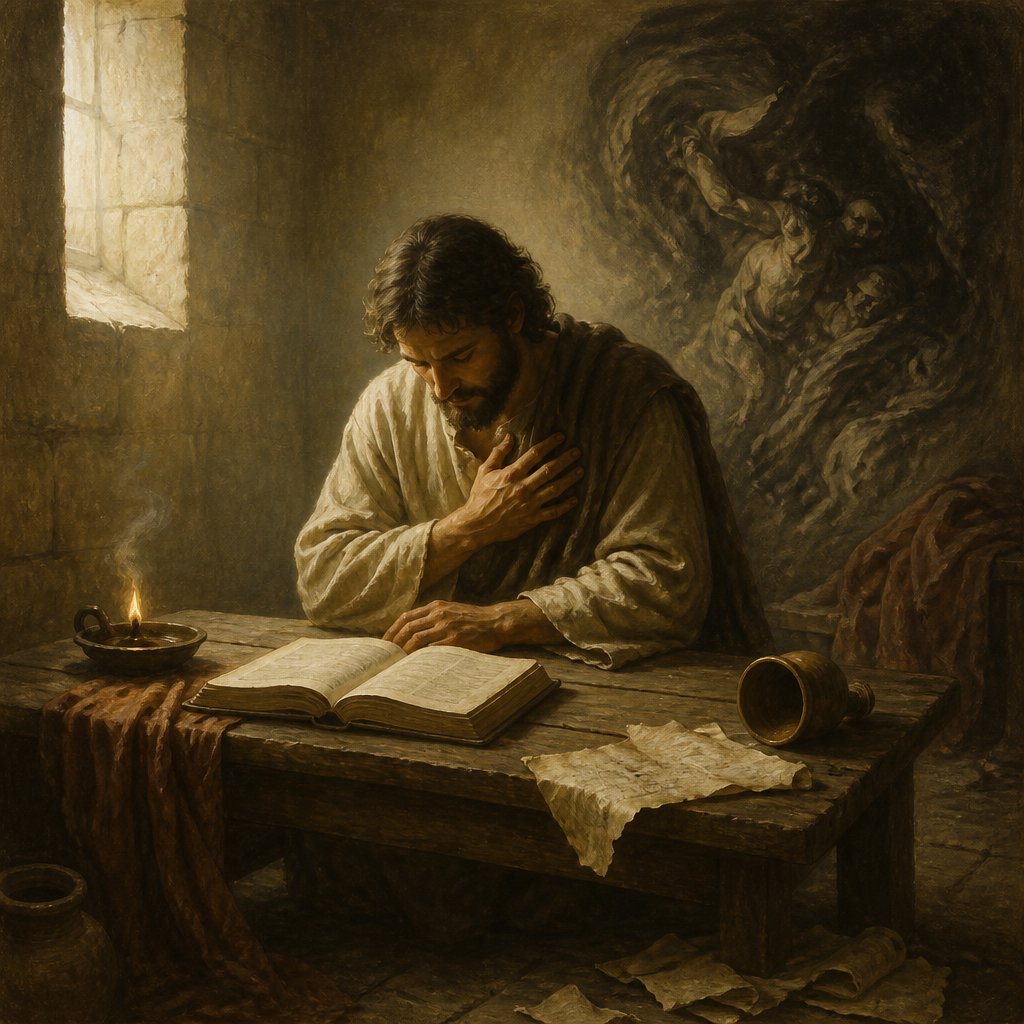
Ecclesiastes 1:17 in the King James Version (KJV) reads, "And I gave my heart to know wisdom, and to know madness and folly: I perceived that this also is vexation of spirit." This verse is part of the book of Ecclesiastes, which is often attributed to King Solomon. In this verse, the author expresses his pursuit of wisdom and understanding, reflecting on the futility and frustration that can come with such pursuits.
The book of Ecclesiastes is a philosophical and reflective work, exploring the meaning and purpose of life. It is often seen as a meditation on the complexities and contradictions of human existence and the search for meaning and fulfillment. The verse in question is part of the author's exploration of the pursuit of wisdom and knowledge, and the recognition of the limitations and frustrations that can come with such endeavors.
The author begins by stating, "And I gave my heart to know wisdom," indicating his single-minded dedication to gaining knowledge and understanding. This reflects the human desire for wisdom and enlightenment, as well as the pursuit of intellectual growth and development. The author's commitment to this pursuit demonstrates a deep longing for meaning and truth, which is a universal aspect of the human experience.
However, the verse continues, "and to know madness and folly," indicating that the author also sought to understand the nature of foolishness and irrationality. This speaks to his desire to comprehend the full scope of human behavior and experience, including the darker and more irrational aspects of human nature. It suggests a willingness to explore the full spectrum of human experience, including its contradictions and complexities.
The verse then concludes with the observation that "this also is vexation of spirit." This statement reflects the author's recognition of the frustration and vexation that can come with the pursuit of wisdom and understanding. It acknowledges the inherent difficulties and challenges of seeking knowledge and insight, as well as the emotional and mental strain that can accompany such endeavors.
One of the key themes of this verse is the recognition of the limitations of human knowledge and understanding. While the author is dedicated to the pursuit of wisdom, he also acknowledges the futility and vexation that can come with such pursuits. This speaks to the inherent complexity and elusiveness of truth and knowledge, as well as the limitations of human understanding.
Another important theme is the recognition of the duality of human nature. The author's desire to understand both wisdom and folly reflects an awareness of the contradictions and complexities of human behavior and experience. It speaks to the author's willingness to confront the full range of human existence, including its irrational and inexplicable aspects.
The verse also reflects a sense of humility and introspection, as the author grapples with the challenges and frustrations of his pursuit of wisdom. It speaks to the universal human experience of grappling with the limitations and complexities of life, and the emotional and intellectual strain that can come with such endeavors.
In terms of context, this verse is part of a larger meditation on the meaning and purpose of life, and the pursuit of wisdom and understanding. The author's reflections on the frustrations and complexities of his pursuits are part of a broader exploration of the human experience and the nature of existence.
Symbolically, this verse can be seen as a reflection of the universal human experience of grappling with the complexities and contradictions of life. It speaks to the inherent challenges and frustrations of seeking knowledge and understanding, as well as the duality and contradictions of human nature. The author's willingness to confront these challenges and complexities reflects a deep engagement with the human experience and a commitment to understanding the full scope of human existence.
Overall, Ecclesiastes 1:17 is a deeply reflective and introspective verse that speaks to the universal human experience of grappling with the complexities and contradictions of life. It reflects the author's dedication to the pursuit of wisdom and understanding, while also acknowledging the frustrations and challenges that can come with such endeavors. It is a powerful meditation on the limitations and complexities of human knowledge and understanding, as well as the duality and contradictions of human nature.
Get our apps


Artwork for Ecclesiastes 1:17

Ecclesiastes 1:17 - "And I gave my heart to know wisdom, and to know madness and folly: I perceived that this also is vexation of spirit."
"And I gave my heart to know wisdom, and to know madness and folly: I perceived that this also is vexation of spirit." - Ecclesiastes 1:17

Ecclesiastes 1:7 - "All the rivers run into the sea; yet the sea is not full; unto the place from whence the rivers come, thither they return again."

Ecclesiastes 7:17 - "Be not over much wicked, neither be thou foolish: why shouldest thou die before thy time?"

Ecclesiastes 9:17 - "The words of wise men are heard in quiet more than the cry of him that ruleth among fools."

Ecclesiastes 3:17 - "I said in mine heart, God shall judge the righteous and the wicked: for there is a time there for every purpose and for every work."

Ecclesiastes 5:17 - "All his days also he eateth in darkness, and he hath much sorrow and wrath with his sickness."

ecclesiastes 12:1

ecclesiastes 12:1

Ecclesiastes 1:11

ecclesiastes 12:1

Ecclesiastes 3:1

Ecclesiastes 10:17 - "Blessed art thou, O land, when thy king is the son of nobles, and thy princes eat in due season, for strength, and not for drunkenness!"

Ecclesiastes 1:1 - "The words of the Preacher, the son of David, king in Jerusalem."

Ecclesiastes 2:17 - "Therefore I hated life; because the work that is wrought under the sun is grievous unto me: for all is vanity and vexation of spirit."

ecclesiastes 12:1-8

ecclesiastes 12:1-8

ecclesiastes 12:1-8

ecclesiastes 12:1-8

ecclesiastes 12:1-8

Ecclesiastes 1:12 - "¶ I the Preacher was king over Israel in Jerusalem."

Ecclesiastes 3:1 – "There is a time for everything, and a season for every activity under the heavens."

Ecclesiastes 3:1 - "To every thing there is a season, and a time to every purpose under the heaven:"

Ecclesiastes 1:2 - "Vanity of vanities, saith the Preacher, vanity of vanities; all is vanity."

Ecclesiastes 1:15 - "That which is crooked cannot be made straight: and that which is wanting cannot be numbered."

"All the rivers run into the sea; yet the sea is not full; unto the place from whence the rivers come, thither they return again." - Ecclesiastes 1:7

"The words of the Preacher, the son of David, king in Jerusalem." - Ecclesiastes 1:1

Ecclesiastes 6:1 - "There is an evil which I have seen under the sun, and it is common among men:"

Ecclesiastes 1:4 - "One generation passeth away, and another generation cometh: but the earth abideth for ever."

Ecclesiastes 1:18 - "For in much wisdom is much grief: and he that increaseth knowledge increaseth sorrow."