What does Ecclesiastes 10:3 mean?
“Yea also, when he that is a fool walketh by the way, his wisdom faileth him, and he saith to every one that he is a fool.” — Ecclesiastes 10:3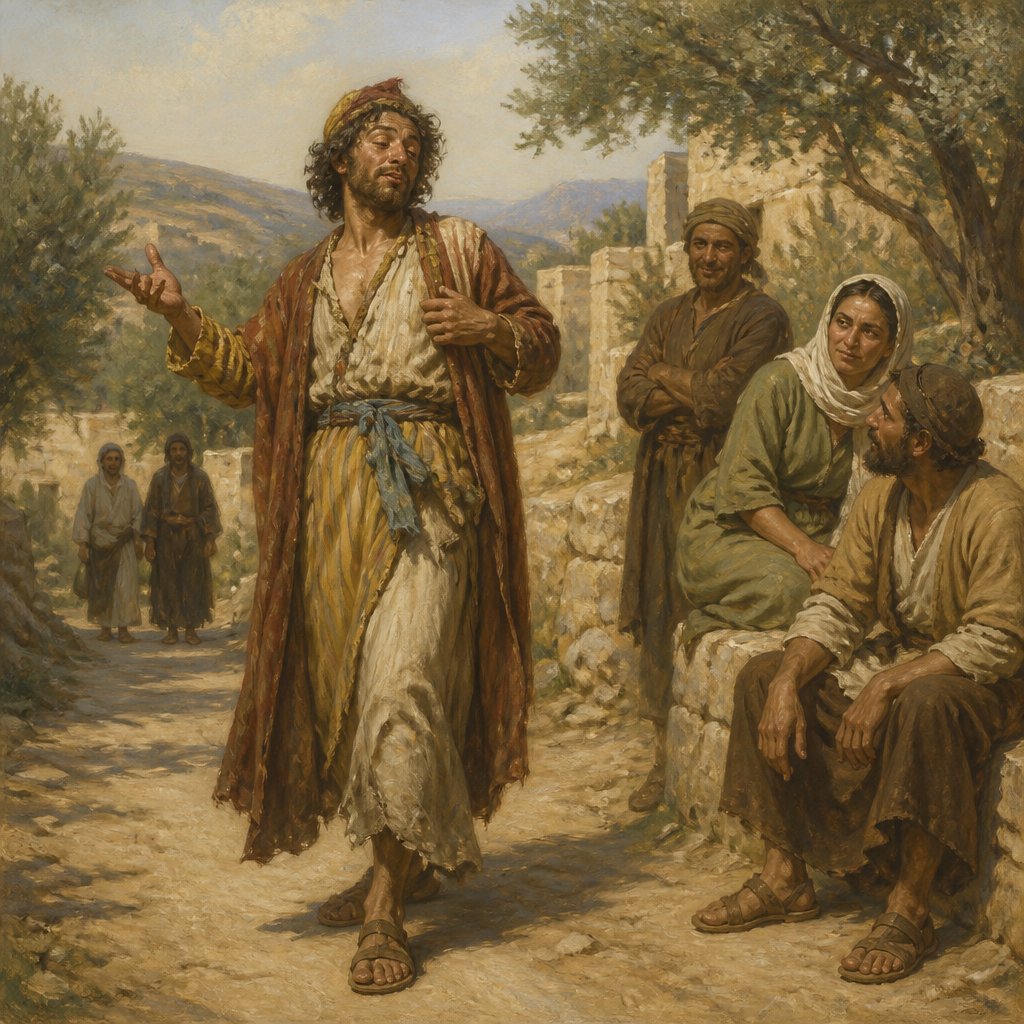
Ecclesiastes 10:3 in the King James Version reads, "Yea also, when he that is a fool walketh by the way, his wisdom faileth him, and he saith to every one that he is a fool."
The book of Ecclesiastes is part of the Wisdom literature in the Old Testament and is traditionally attributed to King Solomon, the son of David. The overarching theme of the book is the futility of life and the pursuit of wisdom, pleasure, and wealth apart from God. The author, known as the Preacher, explores the meaning of life and the human condition, ultimately concluding that true meaning and purpose can only be found in fearing God and keeping His commandments.
In this specific verse, Ecclesiastes 10:3, the Preacher observes the behavior of a fool as he walks along the way. The fool is described as lacking wisdom, and his foolishness is evident in his actions and words. When the fool speaks, he reveals his lack of wisdom to everyone around him, openly declaring himself to be a fool.
The verse serves as a cautionary reflection on the consequences of foolish behavior and the importance of wisdom in one's life. It emphasizes the outward manifestation of a person's inner condition, as the fool's lack of wisdom is evident to all who encounter him. The verse also speaks to the futility of the fool's attempts to assert his own wisdom, as his words only serve to further reveal his foolishness.
The theme of wisdom and folly is a central focus throughout the book of Ecclesiastes. The Preacher contrasts the benefits of wisdom with the consequences of folly, highlighting the value of seeking and embracing wisdom in all areas of life. The fool, in contrast, is characterized by his lack of insight and discernment, leading to foolish decisions and actions.
In the broader context of the book, Ecclesiastes 10:3 serves as a reminder of the importance of pursuing wisdom and discernment, particularly in light of the vanity and meaninglessness that the Preacher sees in worldly pursuits. It aligns with the overarching message of the book, which encourages readers to seek true wisdom that comes from God and to live in accordance with His commands.
The symbolism in this verse lies in the contrast between wisdom and folly, with the fool serving as a cautionary example of the consequences of a life lived without wisdom. The fool's lack of wisdom is evident in his actions and speech, symbolizing the outward manifestation of inner folly. This serves to underscore the importance of pursuing wisdom and discernment as a means of avoiding the pitfalls of foolishness.
Overall, Ecclesiastes 10:3 in the King James Version provides a thought-provoking commentary on the consequences of folly and the value of wisdom. It reflects the broader themes of the book of Ecclesiastes, emphasizing the futility of life apart from God and the significance of seeking true wisdom and discernment. The verse serves as a reminder to readers to prioritize wisdom in their lives and to avoid the foolishness that leads to emptiness and despair.
Get our apps


Artwork for Ecclesiastes 10:3

Ecclesiastes 10:3 - "Yea also, when he that is a fool walketh by the way, his wisdom faileth him, and he saith to every one that he is a fool."

"Yea also, when he that is a fool walketh by the way, his wisdom faileth him, and he saith to every one that he is a fool." - Ecclesiastes 10:3

Ecclesiastes 3:10 - "I have seen the travail, which God hath given to the sons of men to be exercised in it."

"I have seen the travail, which God hath given to the sons of men to be exercised in it." - Ecclesiastes 3:10

Ecclesiastes 3:1

Ecclesiastes 3:3 - "A time to kill, and a time to heal; a time to break down, and a time to build up;"

Ecclesiastes 3:7-8

Ecclesiastes 10:10 - "If the iron be blunt, and he do not whet the edge, then must he put to more strength: but wisdom is profitable to direct."

Ecclesiastes 10:6 - "Folly is set in great dignity, and the rich sit in low place."

Ecclesiastes 3:1 – "There is a time for everything, and a season for every activity under the heavens."

Ecclesiastes 10:11 - "Surely the serpent will bite without enchantment; and a babbler is no better."

Ecclesiastes 10:18 - "¶ By much slothfulness the building decayeth; and through idleness of the hands the house droppeth through."

Ecclesiastes 10:19 - "¶ A feast is made for laughter, and wine maketh merry: but money answereth all things."

Ecclesiastes 3:9 - "What profit hath he that worketh in that wherein he laboureth?"

Ecclesiastes 3:1 - "To every thing there is a season, and a time to every purpose under the heaven:"

Ecclesiastes 3:4 - "A time to weep, and a time to laugh; a time to mourn, and a time to dance;"

Ecclesiastes 3:8 - "A time to love, and a time to hate; a time of war, and a time of peace."

Ecclesiastes 3:6 - "A time to get, and a time to lose; a time to keep, and a time to cast away;"

Ecclesiastes 7:3 - "Sorrow is better than laughter: for by the sadness of the countenance the heart is made better."

Ecclesiastes 10:13 - "The beginning of the words of his mouth is foolishness: and the end of his talk is mischievous madness."

Ecclesiastes 10:2 - "A wise man's heart is at his right hand; but a fool's heart at his left."

Ecclesiastes 10:12 - "The words of a wise man's mouth are gracious; but the lips of a fool will swallow up himself."

Ecclesiastes 10:5 - "There is an evil which I have seen under the sun, as an error which proceedeth from the ruler:"

Ecclesiastes 12:10 - "The preacher sought to find out acceptable words: and that which was written was upright, even words of truth."

Ecclesiastes 10:15 - "The labour of the foolish wearieth every one of them, because he knoweth not how to go to the city."

Ecclesiastes 10:7 - "I have seen servants upon horses, and princes walking as servants upon the earth."

Ecclesiastes 3:7 - "A time to rend, and a time to sew; a time to keep silence, and a time to speak;"

Ecclesiastes 5:10 - "He that loveth silver shall not be satisfied with silver; nor he that loveth abundance with increase: this is also vanity."

Ecclesiastes 3:21 - "Who knoweth the spirit of man that goeth upward, and the spirit of the beast that goeth downward to the earth?"

Ecclesiastes 3:2 - "A time to be born, and a time to die; a time to plant, and a time to pluck up that which is planted;"