What does Ecclesiastes 10:4 mean?
“If the spirit of the ruler rise up against thee, leave not thy place; for yielding pacifieth great offences.” — Ecclesiastes 10:4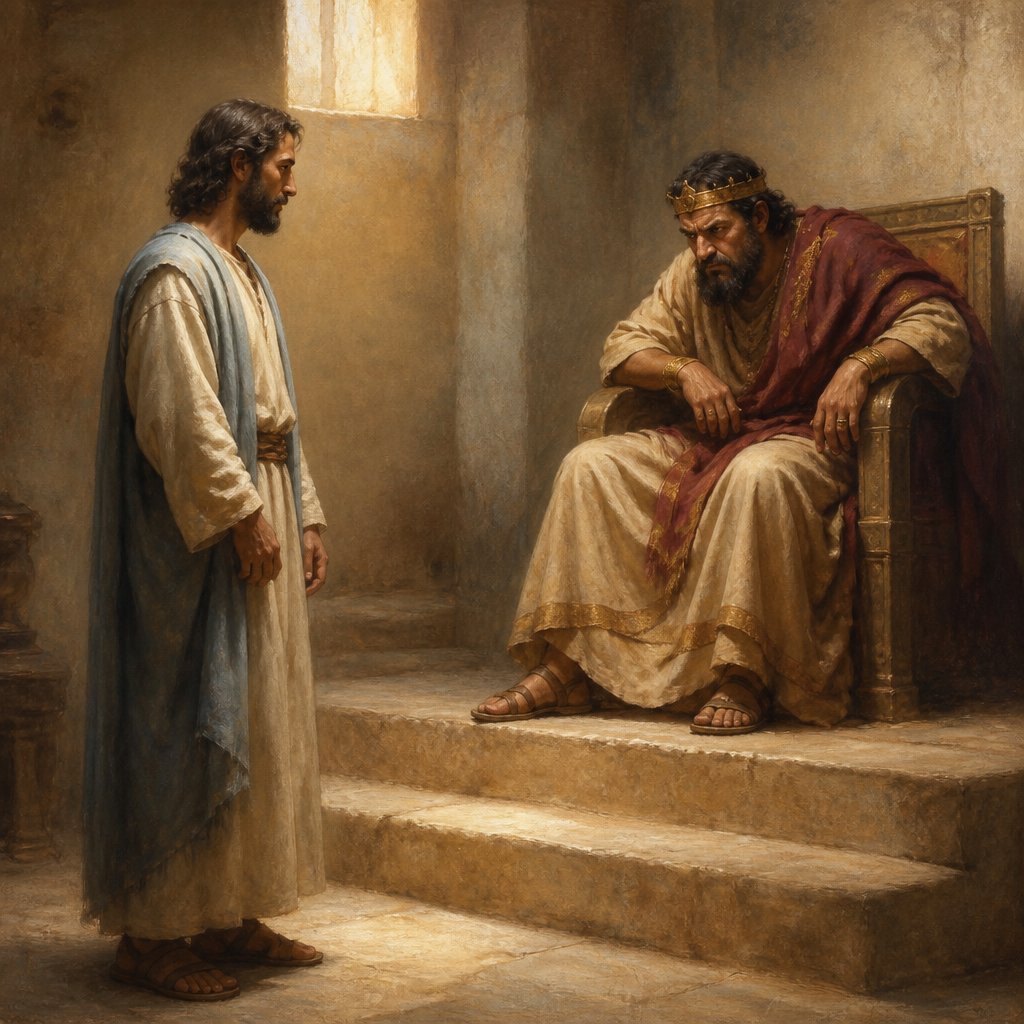
Ecclesiastes 10:4 in the King James Version reads, "If the spirit of the ruler rise up against thee, leave not thy place; for yielding pacifieth great offences."
The book of Ecclesiastes is traditionally attributed to King Solomon, a man known for his great wisdom. In this passage, Solomon is offering advice on how to navigate the complexities of life, particularly in relation to interacting with those in positions of authority.
The first part of the verse begins with the warning, "If the spirit of the ruler rise up against thee, leave not thy place." This can be interpreted as a caution against reacting in a hasty or impulsive manner when faced with the anger or displeasure of a person in power. It encourages the reader to remain steady and composed in the face of adversity, rather than succumbing to fear or temptation to retreat.
The second part of the verse states, "for yielding pacifieth great offences." Here, Solomon imparts the wisdom that yielding, or showing deference and humility, has the power to appease even the most serious of offenses. In essence, he is suggesting that rather than meeting aggression with aggression, one should respond with a spirit of humility and willingness to compromise.
One of the key themes of this verse is the importance of wisdom in dealing with conflicts and power dynamics. It speaks to the notion that maintaining composure and exercising restraint in the midst of confrontation can lead to a more favorable outcome. This wisdom is especially relevant in the context of hierarchies and authority figures, where one's response to an irate ruler or leader can have far-reaching consequences.
The verse also touches on the concept of humility and the virtue of yielding. In many respects, it echoes the teachings of other biblical passages that emphasize the value of meekness and gentleness in interactions with others. It suggests that rather than asserting one's own will or vying for dominance, it is often wiser to submit and seek reconciliation.
Furthermore, there is an underlying message about the significance of peacekeeping and conflict resolution. By advocating for a conciliatory approach, Solomon is promoting the idea that peaceful resolutions are preferable to escalating tensions. This aligns with broader biblical teachings that encourage believers to strive for harmony and unity in their relationships with others.
Symbolically, the verse can be interpreted as a reflection of the broader human experience. It speaks to the universal challenge of navigating power dynamics and conflict, as well as the timeless wisdom that can guide individuals through such trials. The ruler mentioned in the verse can be seen as representative of any figure of authority, whether in the realms of politics, work, or personal relationships.
In summary, Ecclesiastes 10:4 offers timeless wisdom on the importance of wisdom, humility, and conflict resolution in the face of adversity. It serves as a poignant reminder of the value of maintaining composure and seeking peaceful resolutions, even in the midst of challenging circumstances. As a part of the broader themes of Ecclesiastes, this verse invites readers to consider how they might apply such wisdom in their own lives, and the relevance of these teachings in navigating the complexities of the human experience.
Get our apps


Artwork for Ecclesiastes 10:4

Ecclesiastes 10:4 - "If the spirit of the ruler rise up against thee, leave not thy place; for yielding pacifieth great offences."
"If the spirit of the ruler rise up against thee, leave not thy place; for yielding pacifieth great offences." - Ecclesiastes 10:4

Ecclesiastes 4:10 - "For if they fall, the one will lift up his fellow: but woe to him that is alone when he falleth; for he hath not another to help him up."

"Two are better than one, because they have a good return for their labor: If either of them falls down, one can help the other up. But pity anyone who falls and has no one to help them up." - Ecclesiastes 4:9-10

Ecclesiastes 4:9-10 - "Two are better than one, because they have a good return for their labor: If either of them falls down, one can help the other up. But pity anyone who falls and has no one to help them up."

Ecclesiastes 10:10 - "If the iron be blunt, and he do not whet the edge, then must he put to more strength: but wisdom is profitable to direct."

Ecclesiastes 10:6 - "Folly is set in great dignity, and the rich sit in low place."

Ecclesiastes 10:11 - "Surely the serpent will bite without enchantment; and a babbler is no better."

Ecclesiastes 4:7 - "Then I returned, and I saw vanity under the sun."

Ecclesiastes 10:18 - "¶ By much slothfulness the building decayeth; and through idleness of the hands the house droppeth through."

Ecclesiastes 10:19 - "¶ A feast is made for laughter, and wine maketh merry: but money answereth all things."

Ecclesiastes 3:4 - "A time to weep, and a time to laugh; a time to mourn, and a time to dance;"

Ecclesiastes 4:4 - "¶ Again, I considered all travail, and every right work, that for this a man is envied of his neighbour. This is also vanity and vexation of spirit."

Ecclesiastes 10:12 - "The words of a wise man's mouth are gracious; but the lips of a fool will swallow up himself."

Ecclesiastes 10:13 - "The beginning of the words of his mouth is foolishness: and the end of his talk is mischievous madness."

Ecclesiastes 10:2 - "A wise man's heart is at his right hand; but a fool's heart at his left."

Ecclesiastes 4:5 - "The fool foldeth his hands together, and eateth his own flesh."

Ecclesiastes 7:4 - "The heart of the wise is in the house of mourning; but the heart of fools is in the house of mirth."

Ecclesiastes 10:5 - "There is an evil which I have seen under the sun, as an error which proceedeth from the ruler:"

Ecclesiastes 12:10 - "The preacher sought to find out acceptable words: and that which was written was upright, even words of truth."

Ecclesiastes 10:15 - "The labour of the foolish wearieth every one of them, because he knoweth not how to go to the city."

Ecclesiastes 10:7 - "I have seen servants upon horses, and princes walking as servants upon the earth."

Ecclesiastes 3:10 - "I have seen the travail, which God hath given to the sons of men to be exercised in it."

Ecclesiastes 6:4 - "For he cometh in with vanity, and departeth in darkness, and his name shall be covered with darkness."

Ecclesiastes 1:4 - "One generation passeth away, and another generation cometh: but the earth abideth for ever."

Ecclesiastes 4:9 - "¶ Two are better than one; because they have a good reward for their labour."

Ecclesiastes 5:10 - "He that loveth silver shall not be satisfied with silver; nor he that loveth abundance with increase: this is also vanity."

Ecclesiastes 10:16 - "¶ Woe to thee, O land, when thy king is a child, and thy princes eat in the morning!"

Ecclesiastes 10:8 - "He that diggeth a pit shall fall into it; and whoso breaketh an hedge, a serpent shall bite him."

Ecclesiastes 10:9 - "Whoso removeth stones shall be hurt therewith; and he that cleaveth wood shall be endangered thereby."