What does Ecclesiastes 12:6 mean?
“Or ever the silver cord be loosed, or the golden bowl be broken, or the pitcher be broken at the fountain, or the wheel broken at the cistern.” — Ecclesiastes 12:6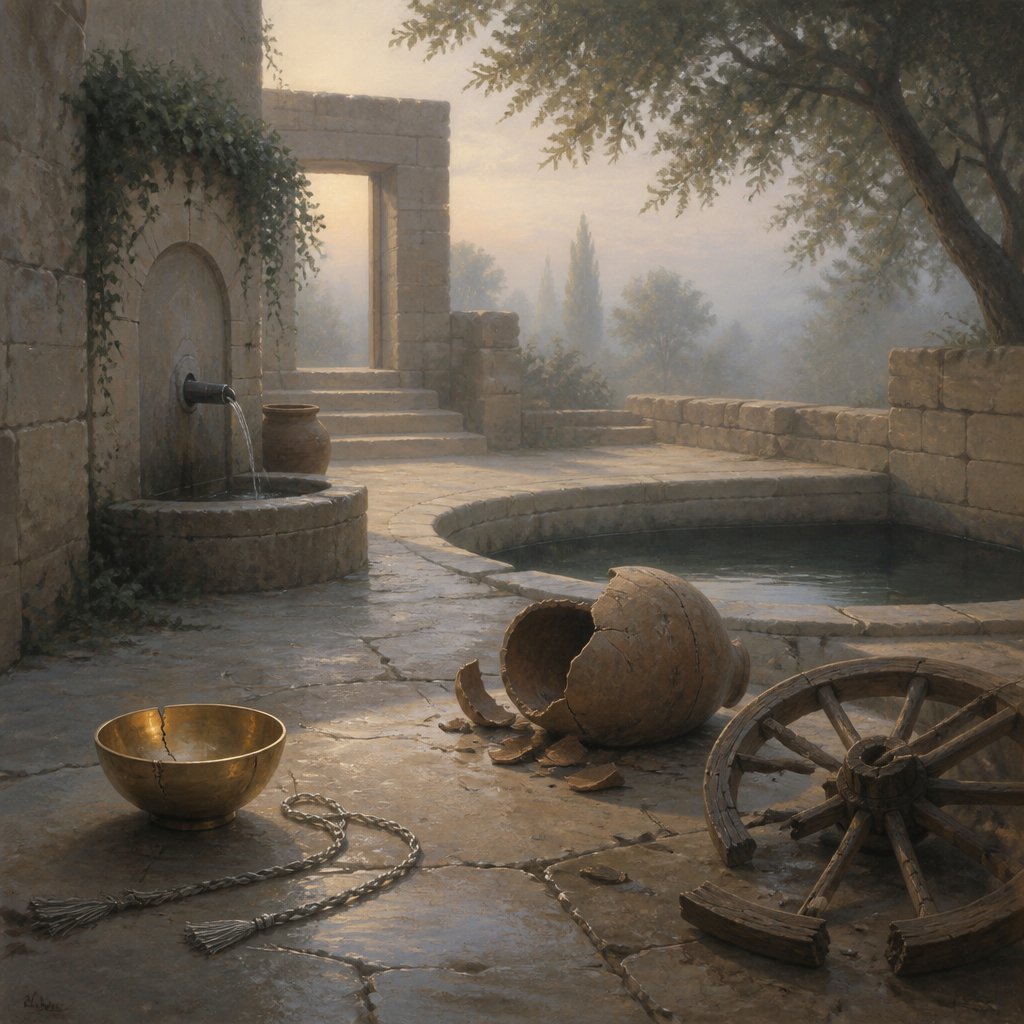
Ecclesiastes 12:6 in the King James Version of the Bible reads, "Or ever the silver cord be loosed, or the golden bowl be broken, or the pitcher be broken at the fountain, or the wheel broken at the cistern." This verse is part of the passage that speaks of the aging process and the inevitability of death.
The book of Ecclesiastes is traditionally attributed to King Solomon, the son of David, who is known for his wisdom and deep understanding of life. The book addresses the challenging question of the purpose of life and the meaning of existence. Ecclesiastes is a book that reflects on the transient nature of life, the futility of material pursuits, and the ultimate meaninglessness of life without God.
In Ecclesiastes 12:6, the imagery presented reflects the physical deterioration and the ultimate breaking of the human body as it ages and approaches death. The "silver cord" is commonly interpreted as a reference to the spinal cord, which is essential for the functioning of the body. When this cord is loosed, it represents the separation of the soul from the body, leading to death. The "golden bowl" and the "pitcher" symbolize the head and the heart, which are essential organs for life. When they are broken, it signifies the end of life. The "wheel broken at the cistern" may symbolize the loss of the breath of life, as the wheel is often associated with the turning of the breath.
The verse uses vivid and evocative language to paint a picture of the physical breakdown that accompanies aging and the approach of death. The imagery is meant to provoke thought about the mortality of human life and the ephemeral nature of the physical body. It is a powerful reminder of the fragility and vulnerability of human existence.
In the context of Ecclesiastes as a whole, this verse serves as a reflection on the transient nature of life and the ultimate fate that awaits all. The book of Ecclesiastes repeatedly emphasizes the futility of worldly pursuits and the fleeting nature of human achievements. It encourages readers to seek meaning and purpose beyond the temporal things of this world and to find fulfillment in a relationship with God.
The themes present in Ecclesiastes 12:6 are consistent with the broader themes of the book, including the fleeting nature of life, the pursuit of wisdom and knowledge, the quest for meaning, and the importance of fearing God and keeping His commandments. The verse serves as a poignant reminder of the brevity of life and the inevitability of death, urging readers to contemplate the ultimate destiny of all humanity and to seek a deeper understanding of existence.
The symbolism in Ecclesiastes 12:6 serves to reinforce the message of the book as a whole, emphasizing the frailty of human life and the transitory nature of worldly pursuits. It is a call to seek something greater and more enduring than the fleeting pleasures and accomplishments of this life. The verse prompts readers to reflect on the meaning of their own lives and to contemplate the reality of their mortality.
In conclusion, Ecclesiastes 12:6 is a poignant and powerful depiction of the physical deterioration that accompanies aging and the approach of death. It is a reminder of the brevity and fragility of human life and a call to seek a deeper understanding of existence beyond the temporal things of this world. It challenges readers to reflect on the ultimate destiny of all humanity and to consider the meaning and purpose of their own lives in light of the transient nature of their existence.
Get our apps


Artwork for Ecclesiastes 12:6

Ecclesiastes 12:6 - "Or ever the silver cord be loosed, or the golden bowl be broken, or the pitcher be broken at the fountain, or the wheel broken at the cistern."
"Or ever the silver cord be loosed, or the golden bowl be broken, or the pitcher be broken at the fountain, or the wheel broken at the cistern." - Ecclesiastes 12:6

ecclesiastes 12:2-6

ecclesiastes 12:1

ecclesiastes 12:1

Ecclesiastes 6:12 - "For who knoweth what is good for man in this life, all the days of his vain life which he spendeth as a shadow? for who can tell a man what shall be after him under the sun?"

ecclesiastes 12:1

ecclesiastes 12:1-8

ecclesiastes 12:1-8

ecclesiastes 12:1-8

ecclesiastes 12:1-8

ecclesiastes 12:1-8

Ecclesiastes 1:12 - "¶ I the Preacher was king over Israel in Jerusalem."

Ecclesiastes 12:8 - "¶ Vanity of vanities, saith the preacher; all is vanity."

Ecclesiastes 12:12 - "And further, by these, my son, be admonished: of making many books there is no end; and much study is a weariness of the flesh."
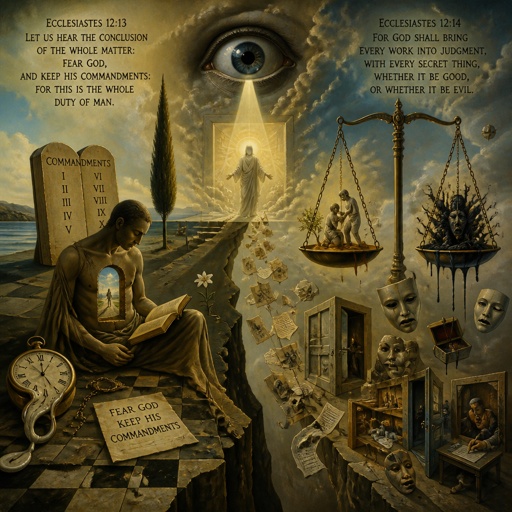
Ecclesiastes 12:13 Let us hear the conclusion of the whole matter: Fear God, and keep his commandments: for this is the whole duty of man. Ecclesiastes 12:14 For God shall bring every work into judgment, with every secret thing, whether it be good, or whether it be evil.
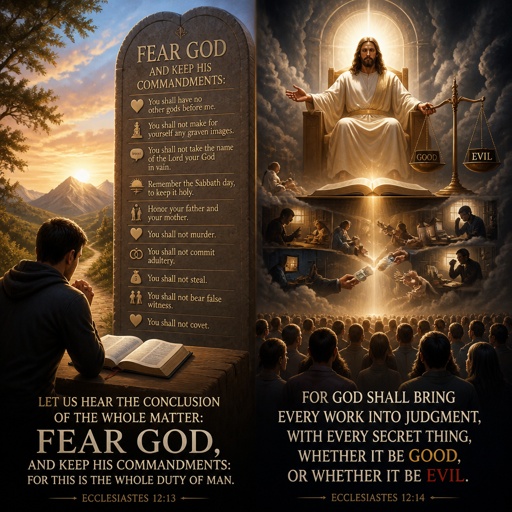
Ecclesiastes 12:13 Let us hear the conclusion of the whole matter: Fear God, and keep his commandments: for this is the whole duty of man. Ecclesiastes 12:14 For God shall bring every work into judgment, with every secret thing, whether it be good, or whether it be evil.

Ecclesiastes 10:6 - "Folly is set in great dignity, and the rich sit in low place."

Ecclesiastes 6:7 - "All the labour of man is for his mouth, and yet the appetite is not filled."

Ecclesiastes 3:6 - "A time to get, and a time to lose; a time to keep, and a time to cast away;"

Ecclesiastes 6:11 - "¶ Seeing there be many things that increase vanity, what is man the better?"

Ecclesiastes 12:7 - "Then shall the dust return to the earth as it was: and the spirit shall return unto God who gave it."

Ecclesiastes 10:12 - "The words of a wise man's mouth are gracious; but the lips of a fool will swallow up himself."

Ecclesiastes 3:12 - "I know that there is no good in them, but for a man to rejoice, and to do good in his life."

Ecclesiastes 6:9 - "¶ Better is the sight of the eyes than the wandering of the desire: this is also vanity and vexation of spirit."

Ecclesiastes 6:1 - "There is an evil which I have seen under the sun, and it is common among men:"

Ecclesiastes 6:4 - "For he cometh in with vanity, and departeth in darkness, and his name shall be covered with darkness."

Ecclesiastes 7:6 - "For as the crackling of thorns under a pot, so is the laughter of the fool: this also is vanity."

Ecclesiastes 12:10 - "The preacher sought to find out acceptable words: and that which was written was upright, even words of truth."

Ecclesiastes 12:11 - "The words of the wise are as goads, and as nails fastened by the masters of assemblies, which are given from one shepherd."