What does Ecclesiastes 3:15 mean?
“That which hath been is now; and that which is to be hath already been; and God requireth that which is past.” — Ecclesiastes 3:15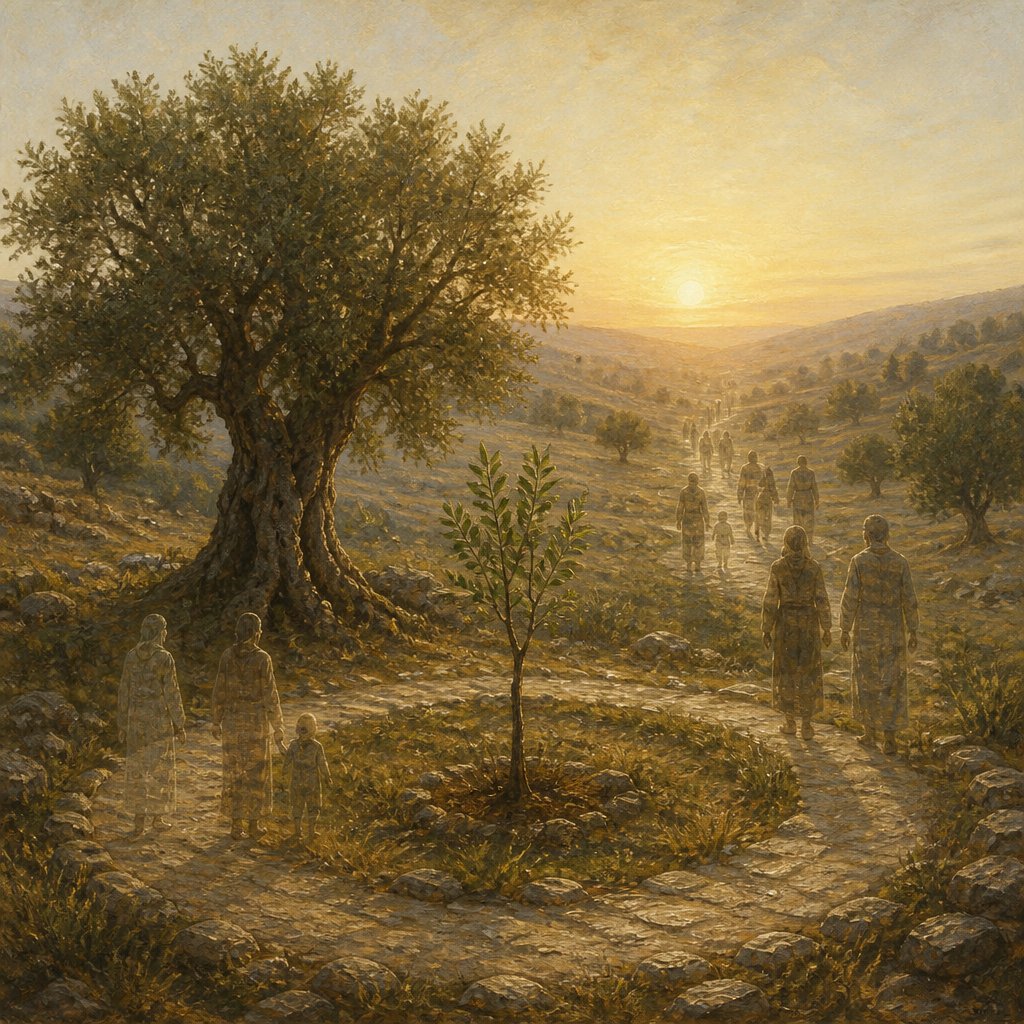
Ecclesiastes 3:15 in the King James Version of the Bible states: "That which hath been is now; and that which is to be hath already been; and God requireth that which is past."
This verse is found within the book of Ecclesiastes, which is traditionally attributed to King Solomon, the son of David and a wise and wealthy king of Israel. The book is known for its philosophical reflections on the meaning of life, the fleeting nature of human existence, and the pursuit of wisdom and pleasure. Ecclesiastes 3:15 is part of a larger passage in which the author discusses the cyclical nature of life and the idea that God's sovereignty encompasses all that has been, is, and will be.
The verse begins by stating, "That which hath been is now," indicating that events and experiences from the past continue to have relevance and impact on the present. This notion of historical continuity implies that the experiences and lessons of previous generations are not lost or forgotten but continue to shape and influence the course of human history. It suggests that the past is not static or disconnected from the present, but rather an integral part of the ongoing narrative of existence.
The second part of the verse declares, "and that which is to be hath already been," reinforcing the cyclical nature of time and the idea that history repeats itself. This concept reflects the author's observation that human behavior and patterns of events often follow familiar cycles, with the same themes and struggles recurring throughout generations. It also implies a sense of inevitability or predestination, as if all that is to come has already been predetermined or anticipated in some form.
The verse concludes by stating, "and God requireth that which is past," which suggests that God holds humanity accountable for its actions and decisions throughout history. This idea of divine accountability underscores the importance of recognizing the impact of the past on the present and future, and implies that God's will and purpose are ultimately revealed through the unfolding of time.
One of the key themes of Ecclesiastes 3:15 is the concept of the circular nature of time and the interconnection between the past, present, and future. This cyclical understanding of time challenges the linear perspective of history and underscores the idea that human existence is not a linear progression from one point to another, but rather a series of interconnected moments that form a continuous and repeating cycle. This theme reflects the author's contemplation of the fleeting and repetitive nature of life, as well as the eternal and unchanging nature of God.
The verse also touches on the theme of divine sovereignty and providence, highlighting the idea that God's will and purpose encompass all aspects of time and history. This notion of God requiring "that which is past" conveys a sense of accountability and purpose, suggesting that God's plan for humanity is intricately woven into the fabric of time and that the past is not forgotten or insignificant, but rather purposeful and integral to God's overarching design.
In terms of context, Ecclesiastes 3:15 is part of a larger passage that explores the complex and enigmatic nature of time, fate, and the human experience. The preceding verses in Ecclesiastes 3 speak of the appointed times and seasons of life, including moments for birth, death, planting, uprooting, love, hate, war, and peace. The following verses continue to delve into the mysteries of time and the human condition. Ecclesiastes 3:15 sits within this broader narrative, providing a theological reflection on the cyclical nature of time and the role of divine providence within the temporal realm.
Symbolically, Ecclesiastes 3:15 can be viewed as a meditation on the timeless and universal aspects of human existence. The cyclical understanding of time and the interconnection between the past, present, and future resonate with the broader themes of human experience, mortality, and the search for meaning. The idea of God requiring "that which is past" could also be interpreted as a call to reflect on and learn from the lessons of history, recognizing the enduring relevance and impact of past events on the present and future.
In conclusion, Ecclesiastes 3:15 offers a thought-provoking exploration of the cyclical nature of time, the interconnection between past, present, and future, and the overarching role of divine providence in the unfolding of history. This verse encapsulates the larger themes of Ecclesiastes, offering philosophical reflections on the enigmatic nature of human existence and the eternal perspective of God. Its timeless insight and contemplative depth continue to resonate with readers across cultures and generations, affirming the enduring significance of this ancient text.
Get our apps


Artwork for Ecclesiastes 3:15

Ecclesiastes 3:15 - "That which hath been is now; and that which is to be hath already been; and God requireth that which is past."
"That which hath been is now; and that which is to be hath already been; and God requireth that which is past." - Ecclesiastes 3:15

Ecclesiastes 3:1

Ecclesiastes 3:3 - "A time to kill, and a time to heal; a time to break down, and a time to build up;"

Ecclesiastes 3:7-8

Ecclesiastes 1:15 - "That which is crooked cannot be made straight: and that which is wanting cannot be numbered."

Ecclesiastes 3:1 – "There is a time for everything, and a season for every activity under the heavens."

Ecclesiastes 1:15 What is crooked cannot be made straight, and what is lacking cannot be counted.

Ecclesiastes 1:15 What is crooked cannot be made straight, and what is lacking cannot be counted.

Ecclesiastes 10:15 - "The labour of the foolish wearieth every one of them, because he knoweth not how to go to the city."

Ecclesiastes 3:9 - "What profit hath he that worketh in that wherein he laboureth?"

Ecclesiastes 3:1 - "To every thing there is a season, and a time to every purpose under the heaven:"

Ecclesiastes 3:4 - "A time to weep, and a time to laugh; a time to mourn, and a time to dance;"

Ecclesiastes 3:8 - "A time to love, and a time to hate; a time of war, and a time of peace."

Ecclesiastes 1:15 What is crooked cannot be made straight, and what is lacking cannot be counted.

Ecclesiastes 3:6 - "A time to get, and a time to lose; a time to keep, and a time to cast away;"

Ecclesiastes 7:3 - "Sorrow is better than laughter: for by the sadness of the countenance the heart is made better."

Ecclesiastes 1:15 What is crooked cannot be made straight, and what is lacking cannot be counted.
![[NRSVUE]
Ecclesiastes 1:15
15 What is crooked cannot be made straight,
and what is lacking cannot be counted.](https://media.bible.art/15df6472-8856-4b1a-ba72-91e73096565e-thumbnail.jpg)
[NRSVUE] Ecclesiastes 1:15 15 What is crooked cannot be made straight, and what is lacking cannot be counted.

Ecclesiastes 1:15 What is crooked cannot be made straight, and what is lacking cannot be counted.
![[NRSVUE]
Ecclesiastes 1:15
15 What is crooked cannot be made straight,
and what is lacking cannot be counted.](https://media.bible.art/6f182873-2ddf-4166-a947-60a35703d2a9-thumbnail.jpg)
[NRSVUE] Ecclesiastes 1:15 15 What is crooked cannot be made straight, and what is lacking cannot be counted.
![[NRSVUE]
Ecclesiastes 1:15
15 What is crooked cannot be made straight,
and what is lacking cannot be counted.](https://media.bible.art/aa6315d4-7282-4c61-998b-d5dd63fd6c52-thumbnail.jpg)
[NRSVUE] Ecclesiastes 1:15 15 What is crooked cannot be made straight, and what is lacking cannot be counted.
![[NRSVUE]
Ecclesiastes 1:15
15 What is crooked cannot be made straight,
and what is lacking cannot be counted.](https://media.bible.art/a8098785-2832-4a9b-a7b3-ce982a90a8b2-thumbnail.jpg)
[NRSVUE] Ecclesiastes 1:15 15 What is crooked cannot be made straight, and what is lacking cannot be counted.

Ecclesiastes 3:7 - "A time to rend, and a time to sew; a time to keep silence, and a time to speak;"

Ecclesiastes 4:15 - "I considered all the living which walk under the sun, with the second child that shall stand up in his stead."

Ecclesiastes 3:21 - "Who knoweth the spirit of man that goeth upward, and the spirit of the beast that goeth downward to the earth?"

Ecclesiastes 3:2 - "A time to be born, and a time to die; a time to plant, and a time to pluck up that which is planted;"

Ecclesiastes 3:16 - "¶ And moreover I saw under the sun the place of judgment, that wickedness was there; and the place of righteousness, that iniquity was there."

Ecclesiastes 3:20 - "All go unto one place; all are of the dust, and all turn to dust again."

Ecclesiastes 3:12 - "I know that there is no good in them, but for a man to rejoice, and to do good in his life."