What does Ecclesiastes 3:3 mean?
“A time to kill, and a time to heal; a time to break down, and a time to build up;” — Ecclesiastes 3:3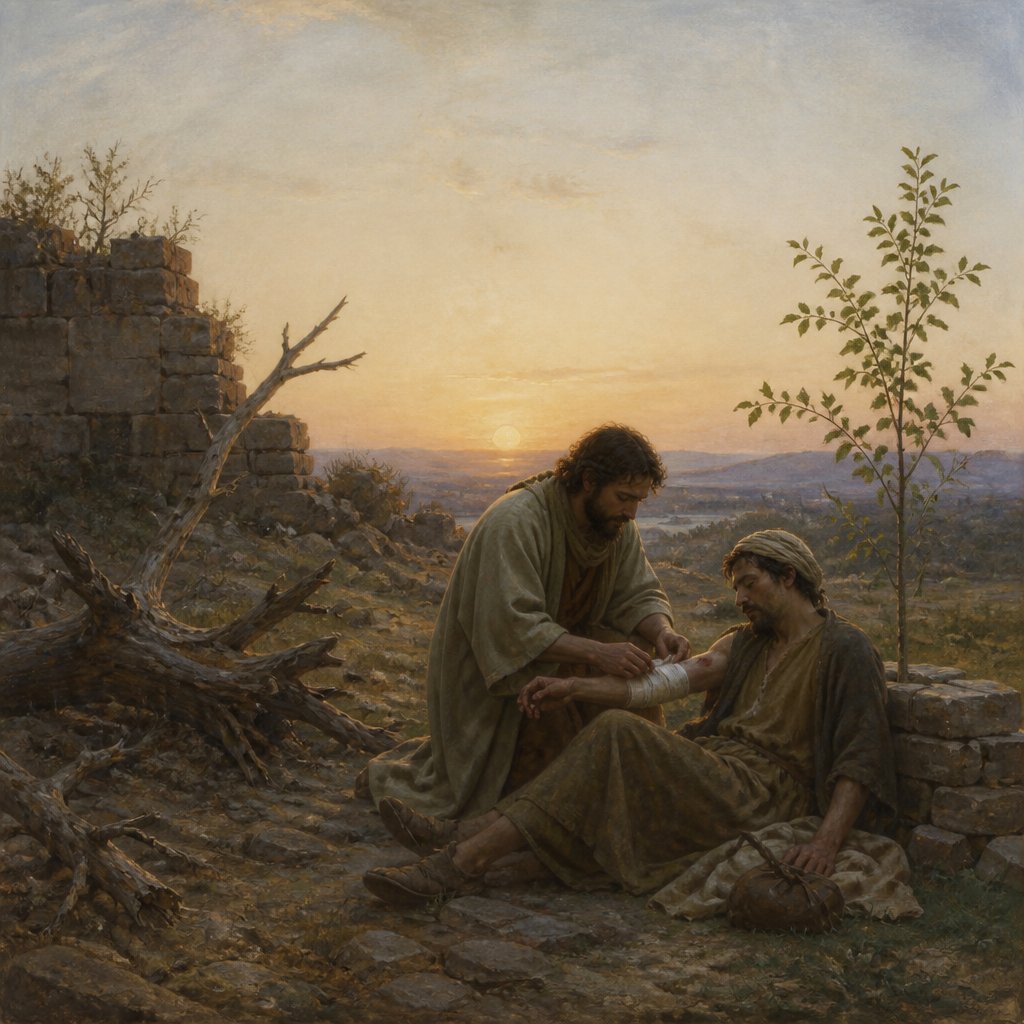
To provide a detailed and in-depth meaning and commentary on Ecclesiastes 3:3 from the King James Version of the Bible, it is important to first understand the context and overall themes of the book of Ecclesiastes.
Ecclesiastes was written by King Solomon, who was known for his wisdom and insight. In the book of Ecclesiastes, Solomon reflects on the meaning of life and the futility of human endeavors. He explores the idea that everything in life is temporary and ultimately unsatisfying. The overarching theme of Ecclesiastes is the fleeting nature of life and the pursuit of meaning and purpose in the midst of this transience.
Ecclesiastes 3:3 specifically states, "A time to kill, and a time to heal; a time to break down, and a time to build up." This verse is part of a larger passage known as the "poem of time" in Ecclesiastes 3:1-8, where Solomon contemplates the cyclical nature of life and the various seasons that we experience.
The verse contains contrasting pairs of actions, each with its own time or season. The first pair, "a time to kill, and a time to heal," highlights the contrasting nature of destruction and restoration. This does not necessarily mean literally killing someone, but it represents the inevitability of death and the need for healing and restoration. It speaks to the ebb and flow of life, where there are moments of hardship and loss, but also times of healing and renewal.
The second pair, "a time to break down, and a time to build up," emphasizes the balancing act between tearing down and building up. This can be interpreted on both a physical and metaphorical level. It speaks to the process of deconstruction, where old structures, systems, or ways of thinking are broken down in order to make room for new growth and rebuilding.
In the broader context of Ecclesiastes, this verse underscores the impermanence of life and the inevitable paradoxes that we face. It reflects the complex and often contradictory nature of human existence, where destruction and growth, sorrow and joy, coexist. It is a reminder that life is filled with seasons and cycles, and that we must learn to navigate through both the difficult and the hopeful times.
Symbolically, this verse can also be interpreted as a reflection of the human condition. We all experience moments of pain, loss, and struggle, but we also have the capacity for healing, restoration, and growth. In a spiritual sense, it can serve as a reminder of the redemptive nature of God, who is able to bring healing and renewal even in the midst of brokenness and despair.
Overall, Ecclesiastes 3:3 from the King James Version of the Bible speaks to the complex and multifaceted nature of life, and the need to embrace the various seasons and cycles that we encounter. It offers a profound reflection on the human experience and our ability to find meaning and purpose in the midst of life's inevitable ups and downs.
Get our apps


Artwork for Ecclesiastes 3:3

Ecclesiastes 3:3 - "A time to kill, and a time to heal; a time to break down, and a time to build up;"
"A time to kill, and a time to heal; a time to break down, and a time to build up;" - Ecclesiastes 3:3

Ecclesiastes 3:1

Ecclesiastes 3:7-8

Ecclesiastes 3:1 – "There is a time for everything, and a season for every activity under the heavens."

Ecclesiastes 3:1 - "To every thing there is a season, and a time to every purpose under the heaven:"

Ecclesiastes 3:9 - "What profit hath he that worketh in that wherein he laboureth?"

Ecclesiastes 3:4 - "A time to weep, and a time to laugh; a time to mourn, and a time to dance;"

Ecclesiastes 3:8 - "A time to love, and a time to hate; a time of war, and a time of peace."

Ecclesiastes 3:6 - "A time to get, and a time to lose; a time to keep, and a time to cast away;"

Ecclesiastes 7:3 - "Sorrow is better than laughter: for by the sadness of the countenance the heart is made better."

Ecclesiastes 3:7 - "A time to rend, and a time to sew; a time to keep silence, and a time to speak;"

Ecclesiastes 3:21 - "Who knoweth the spirit of man that goeth upward, and the spirit of the beast that goeth downward to the earth?"

Ecclesiastes 3:2 - "A time to be born, and a time to die; a time to plant, and a time to pluck up that which is planted;"

Ecclesiastes 3:16 - "¶ And moreover I saw under the sun the place of judgment, that wickedness was there; and the place of righteousness, that iniquity was there."

Ecclesiastes 3:20 - "All go unto one place; all are of the dust, and all turn to dust again."

Ecclesiastes 3:12 - "I know that there is no good in them, but for a man to rejoice, and to do good in his life."

Ecclesiastes 5:3 - "For a dream cometh through the multitude of business; and a fool's voice is known by multitude of words."

Ecclesiastes 1:3 - "What profit hath a man of all his labour which he taketh under the sun?"

Ecclesiastes 3:15 - "That which hath been is now; and that which is to be hath already been; and God requireth that which is past."

Ecclesiastes 3:10 - "I have seen the travail, which God hath given to the sons of men to be exercised in it."

Ecclesiastes 3:13 - "And also that every man should eat and drink, and enjoy the good of all his labour, it is the gift of God."

Ecclesiastes 3:1 – "There is a time for everything, and a season for every activity under the heavens." r

Ecclesiastes 3:17 - "I said in mine heart, God shall judge the righteous and the wicked: for there is a time there for every purpose and for every work."

Ecclesiastes 3:5 - "A time to cast away stones, and a time to gather stones together; a time to embrace, and a time to refrain from embracing;"

Ecclesiastes 8:3 - "Be not hasty to go out of his sight: stand not in an evil thing; for he doeth whatsoever pleaseth him."

Ecclesiastes 3:18 - "I said in mine heart concerning the estate of the sons of men, that God might manifest them, and that they might see that they themselves are beasts."

Ecclesiastes 4:3 - "Yea, better is he than both they, which hath not yet been, who hath not seen the evil work that is done under the sun."

"To every thing there is a season, and a time to every purpose under the heaven:" - Ecclesiastes 3:1

Ecclesiastes 11:3 - "If the clouds be full of rain, they empty themselves upon the earth: and if the tree fall toward the south, or toward the north, in the place where the tree falleth, there it shall be."