What does Ecclesiastes 4:15 mean?
“I considered all the living which walk under the sun, with the second child that shall stand up in his stead.” — Ecclesiastes 4:15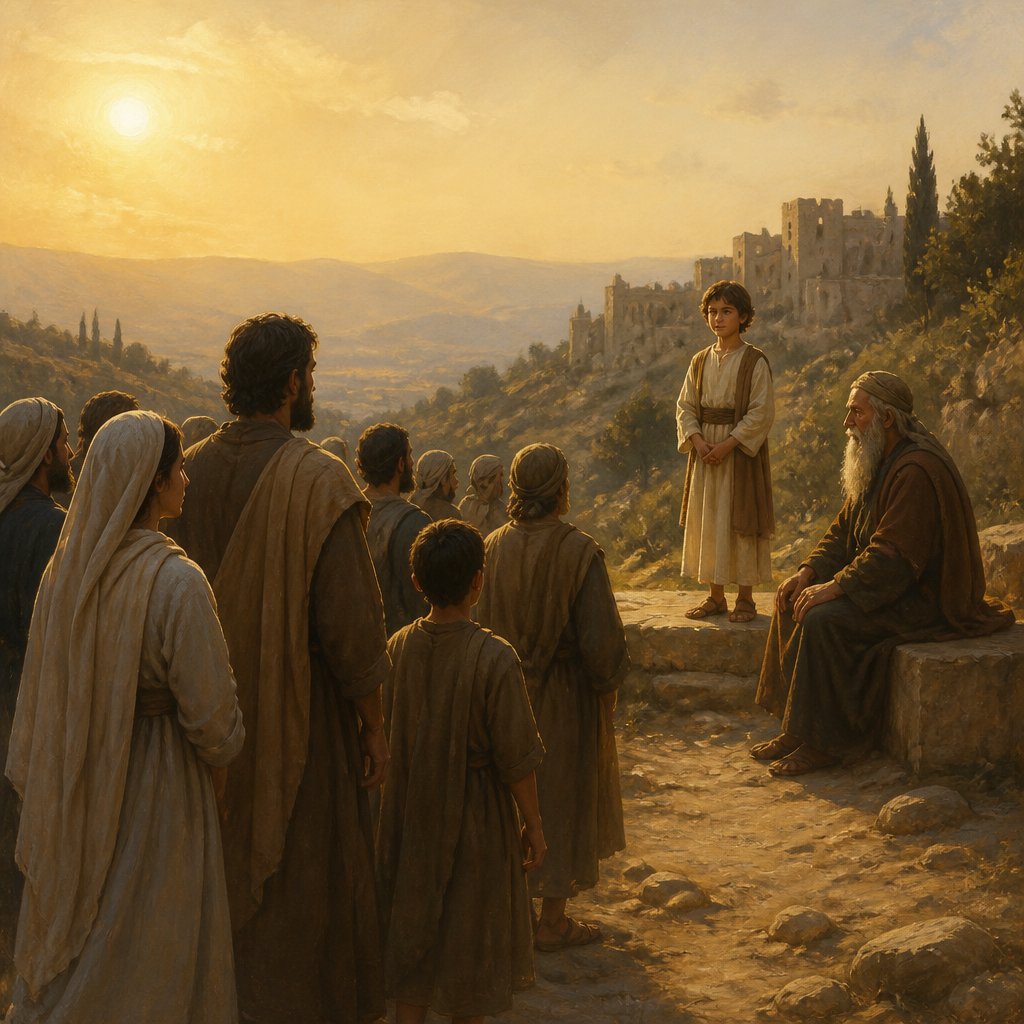
Ecclesiastes 4:15 (KJV) states, "I considered all the living which walk under the sun, with the second child that shall stand up in his stead." This verse comes from the book of Ecclesiastes, which is part of the Old Testament in the Bible. The book is traditionally attributed to King Solomon, the son of King David, who is known for his wisdom. Ecclesiastes is a philosophical and introspective text, reflecting on the meaning of life and the pursuit of happiness.
The verse 4:15 is part of a larger passage in which the author reflects on the fleeting nature of life and the futility of human toil. The use of the phrase "I considered all the living which walk under the sun" reflects the author's deep contemplation of the human condition. The phrase "with the second child that shall stand up in his stead" may suggest the passing of generations and the cyclical nature of life.
One of the key themes in the book of Ecclesiastes is the idea of "vanity" or "futility." The author observes that all human endeavors and achievements are ultimately meaningless in the grand scheme of things. This verse reflects this theme by reminding the reader of the transience of life and the inevitability of succession. Each new generation stands up in the place of the previous one, continuing the cycle of life and death.
The context of this verse is important for understanding its meaning. The author of Ecclesiastes is grappling with fundamental questions about the purpose and meaning of life. He observes the injustices and inequalities in the world and wrestles with the idea of divine justice. This verse may be seen as part of the author's larger meditation on the passage of time and the impermanence of human existence.
Symbolism plays a significant role in the interpretation of this verse. The phrase "living which walk under the sun" can be seen as a symbol of the human experience on earth. It alludes to the idea of earthly existence, with all its joys and sorrows. The "second child that shall stand up in his stead" may symbolize the continuity of life and the succession of generations. It also suggests the cyclical nature of human history, which repeats itself in patterns of rise and fall, success and failure.
The verse can also be interpreted in a broader theological context. In Christianity, the idea of succession and inheritance is often linked to the concept of God's covenant with His people. The passing of generations and the rise of new leaders may be seen as part of God's plan for the world. Despite the fleeting nature of human life, there is a larger purpose at play, which goes beyond individual human actions.
In conclusion, Ecclesiastes 4:15 is a thought-provoking verse that reflects on the transience of life and the passage of time. It encourages the reader to consider the broader context of human existence and to reflect on the cyclical nature of history. The verse resonates with the larger themes of the book of Ecclesiastes, including the idea of vanity, the pursuit of wisdom, and the search for meaning in a seemingly futile world. Its symbolism and theological implications add depth to its message, inviting readers to contemplate the deeper mysteries of life and faith.
Get our apps


Artwork for Ecclesiastes 4:15

Ecclesiastes 4:15 - "I considered all the living which walk under the sun, with the second child that shall stand up in his stead."
"I considered all the living which walk under the sun, with the second child that shall stand up in his stead." - Ecclesiastes 4:15

Ephesians 4:1-5

Ecclesiastes 1:15 - "That which is crooked cannot be made straight: and that which is wanting cannot be numbered."

Ecclesiastes 4:7 - "Then I returned, and I saw vanity under the sun."

Ecclesiastes 1:15 What is crooked cannot be made straight, and what is lacking cannot be counted.

Ecclesiastes 1:15 What is crooked cannot be made straight, and what is lacking cannot be counted.

Ecclesiastes 10:15 - "The labour of the foolish wearieth every one of them, because he knoweth not how to go to the city."

Ecclesiastes 3:15 - "That which hath been is now; and that which is to be hath already been; and God requireth that which is past."

Ecclesiastes 3:4 - "A time to weep, and a time to laugh; a time to mourn, and a time to dance;"

Ecclesiastes 1:15 What is crooked cannot be made straight, and what is lacking cannot be counted.

Ecclesiastes 4:4 - "¶ Again, I considered all travail, and every right work, that for this a man is envied of his neighbour. This is also vanity and vexation of spirit."

Ecclesiastes 1:15 What is crooked cannot be made straight, and what is lacking cannot be counted.

Ecclesiastes 4:5 - "The fool foldeth his hands together, and eateth his own flesh."

Ecclesiastes 7:4 - "The heart of the wise is in the house of mourning; but the heart of fools is in the house of mirth."
![[NRSVUE]
Ecclesiastes 1:15
15 What is crooked cannot be made straight,
and what is lacking cannot be counted.](https://media.bible.art/15df6472-8856-4b1a-ba72-91e73096565e-thumbnail.jpg)
[NRSVUE] Ecclesiastes 1:15 15 What is crooked cannot be made straight, and what is lacking cannot be counted.

Ecclesiastes 1:15 What is crooked cannot be made straight, and what is lacking cannot be counted.

Ecclesiastes 6:4 - "For he cometh in with vanity, and departeth in darkness, and his name shall be covered with darkness."

Ecclesiastes 1:4 - "One generation passeth away, and another generation cometh: but the earth abideth for ever."
![[NRSVUE]
Ecclesiastes 1:15
15 What is crooked cannot be made straight,
and what is lacking cannot be counted.](https://media.bible.art/6f182873-2ddf-4166-a947-60a35703d2a9-thumbnail.jpg)
[NRSVUE] Ecclesiastes 1:15 15 What is crooked cannot be made straight, and what is lacking cannot be counted.

Ecclesiastes 4:9 - "¶ Two are better than one; because they have a good reward for their labour."
![[NRSVUE]
Ecclesiastes 1:15
15 What is crooked cannot be made straight,
and what is lacking cannot be counted.](https://media.bible.art/aa6315d4-7282-4c61-998b-d5dd63fd6c52-thumbnail.jpg)
[NRSVUE] Ecclesiastes 1:15 15 What is crooked cannot be made straight, and what is lacking cannot be counted.
![[NRSVUE]
Ecclesiastes 1:15
15 What is crooked cannot be made straight,
and what is lacking cannot be counted.](https://media.bible.art/a8098785-2832-4a9b-a7b3-ce982a90a8b2-thumbnail.jpg)
[NRSVUE] Ecclesiastes 1:15 15 What is crooked cannot be made straight, and what is lacking cannot be counted.

Ecclesiastes 9:4 - "¶ For to him that is joined to all the living there is hope: for a living dog is better than a dead lion."

Ecclesiastes 4:6 - "Better is an handful with quietness, than both the hands full with travail and vexation of spirit."

Ecclesiastes 11:4 - "He that observeth the wind shall not sow; and he that regardeth the clouds shall not reap."
![[NRSVUE]
Ecclesiastes 1:15
15 What is crooked cannot be made straight,
and what is lacking cannot be counted.](https://media.bible.art/924de3d4-710b-4ba9-87b8-a6cf27004fc4-thumbnail.jpg)
[NRSVUE] Ecclesiastes 1:15 15 What is crooked cannot be made straight, and what is lacking cannot be counted.
![[NRSVUE]
Ecclesiastes 1:15
15 What is crooked cannot be made straight,
and what is lacking cannot be counted.](https://media.bible.art/29d2fb38-b1cc-4e02-8066-8317b6c30d4c-thumbnail.jpg)
[NRSVUE] Ecclesiastes 1:15 15 What is crooked cannot be made straight, and what is lacking cannot be counted.
![[NRSVUE]
Ecclesiastes 1:15
15 What is crooked cannot be made straight,
and what is lacking cannot be counted.](https://media.bible.art/84cd2053-ef6b-42f8-9ca3-ad238c46cf75-thumbnail.jpg)
[NRSVUE] Ecclesiastes 1:15 15 What is crooked cannot be made straight, and what is lacking cannot be counted.
![[NRSVUE]
Ecclesiastes 1:15
15 What is crooked cannot be made straight,
and what is lacking cannot be counted.](https://media.bible.art/d6ab90d5-6150-4b39-9c4e-625de93b44da-thumbnail.jpg)
[NRSVUE] Ecclesiastes 1:15 15 What is crooked cannot be made straight, and what is lacking cannot be counted.