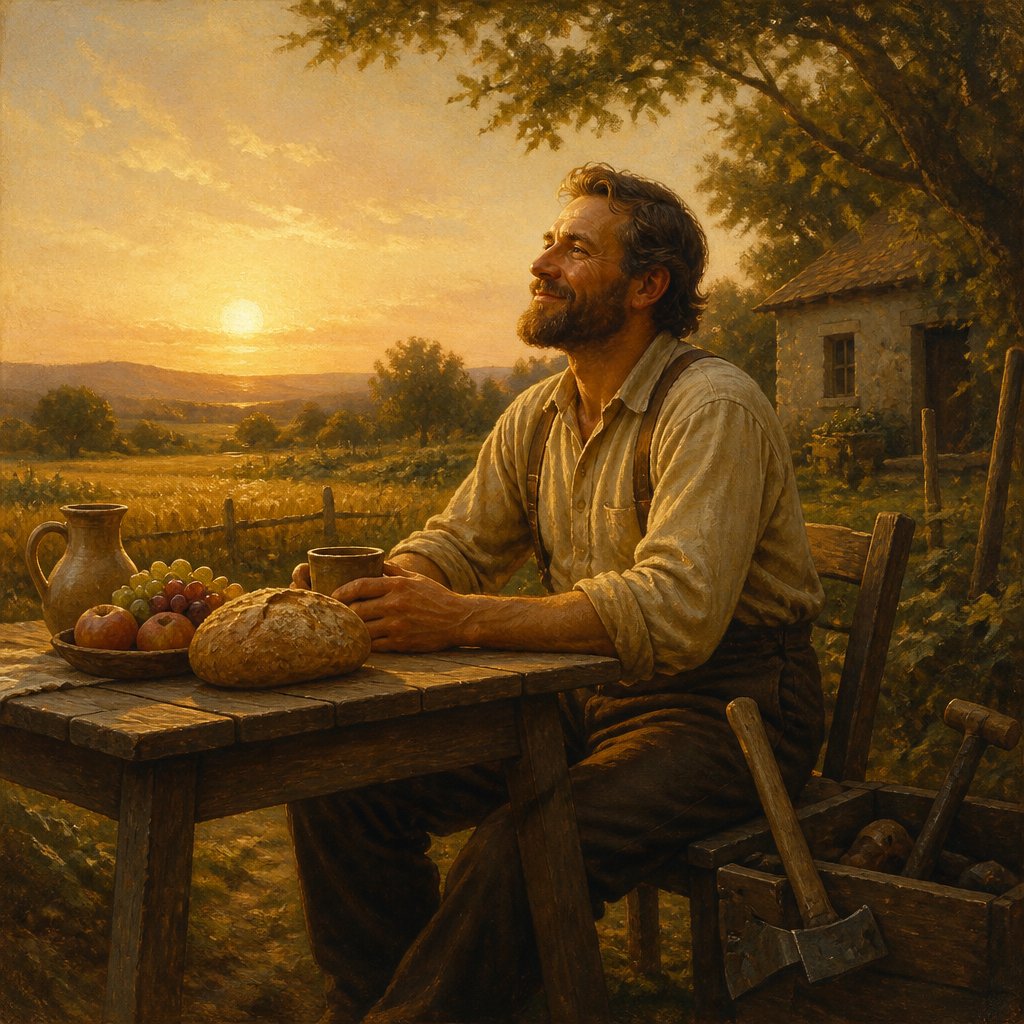
Ecclesiastes 5:18-20 from the King James Version (KJV) reads, "Behold that which I have seen: it is good and comely for one to eat and to drink, and to enjoy the good of all his labour that he taketh under the sun all the days of his life, which God giveth him: for it is his portion. Every man also to whom God hath given riches and wealth, and hath given him power to eat thereof, and to take his portion, and to rejoice in his labour; this is the gift of God. For he shall not much remember the days of his life; because God answereth him in the joy of his heart."
In order to understand the meaning and commentary of these verses, it is important to consider the broader context of the book of Ecclesiastes. Traditionally attributed to King Solomon, Ecclesiastes is a deep and complex reflection on the human experience and the meaning of life. The author, known as the Preacher, explores various aspects of life and the pursuit of happiness, ultimately coming to the conclusion that everything apart from God is ultimately meaningless. This exploration makes Ecclesiastes a book that deals with the harsh realities of life, yet also offers hope and wisdom.
In the particular verses of Ecclesiastes 5:18-20, the Preacher reflects on the enjoyment of the fruits of one's labor. He observes that it is good and fitting for a person to partake in the simple pleasures of life, such as eating, drinking, and enjoying the results of their hard work. The Preacher recognizes that these simple pleasures are a gift from God, and that it is important for individuals to embrace and enjoy these blessings.
The verses emphasize the idea that it is ultimately God who provides the ability and means for people to enjoy the fruits of their labor. This acknowledges the inherent goodness of material blessings and the enjoyment of the fruits of one's labor as a gift from God. The passage also emphasizes the importance of contentment and gratitude for what one has, rather than striving for more and more without finding satisfaction.
Furthermore, the verses make a distinction between earthly wealth and the ability to enjoy it. The Preacher notes that it is also a gift from God for a person to have the means and the capacity to enjoy their wealth. This suggests that wealth in and of itself is not the ultimate end, but rather the ability to enjoy it and find contentment in it is the true gift.
The passage also touches on the fleeting nature of life. The Preacher asserts that the enjoyment of one's labor and the gifts of God should be embraced because life is short and transient. This aligns with the broader theme in Ecclesiastes about the brevity and futility of life on earth, and the importance of living in the moment and finding joy despite the temporary nature of existence.
In relation to symbolism, the verses symbolize the wisdom of finding contentment and joy in the simple blessings of life, rather than becoming consumed by the pursuit of wealth and material possessions. It also symbolizes the notion of God as the ultimate provider of both the means and capacity to enjoy the gifts of life.
In conclusion, Ecclesiastes 5:18-20 offers a message of gratitude, contentment, and enjoyment of the simple pleasures of life as gifts from God. It reminds individuals to find joy in the blessings of their labor and to acknowledge God as the ultimate source of these gifts. The passage serves as a reminder to embrace life's fleeting moments and find fulfillment in the present rather than chasing after material wealth and possessions. It offers a profound reflection on the nature of human existence and the importance of finding joy and contentment in God's gifts in the midst of life's transience.
Get our apps


Artwork for Ecclesiastes 5:18-20

Ecclesiastes 5:18-20 - "This is what I have observed to be good: that it is appropriate for a person to eat, to drink and to find satisfaction in their toilsome labor under the sun during the few days of life God has given them—for this is their lot. Moreover, when God gives someone wealth and possessions, and the ability to enjoy them, to accept their lot and be happy in their toil—this is a gift of God. They seldom reflect on the days of their life, because God keeps them occupied with gladness of heart."
"This is what I have observed to be good: that it is appropriate for a person to eat, to drink and to find satisfaction in their toilsome labor under the sun during the few days of life God has given them—for this is their lot. Moreover, when God gives someone wealth and possessions, and the ability to enjoy them, to accept their lot and be happy in their toil—this is a gift of God. They seldom reflect on the days of their life, because God keeps them occupied with gladness of heart." - Ecclesiastes 5:18-20

Ecclesiastes 5:20 - "For he shall not much remember the days of his life; because God answereth him in the joy of his heart."

Ecclesiastes 5:18 - "¶ Behold that which I have seen: it is good and comely for one to eat and to drink, and to enjoy the good of all his labour that he taketh under the sun all the days of his life, which God giveth him: for it is his portion."

"For he shall not much remember the days of his life; because God answereth him in the joy of his heart." - Ecclesiastes 5:20

Ecclesiastes 5:5 - "Better is it that thou shouldest not vow, than that thou shouldest vow and not pay."

Ecclesiastes 7:20 - "For there is not a just man upon earth, that doeth good, and sinneth not."

Ecclesiastes 1:18 - "For in much wisdom is much grief: and he that increaseth knowledge increaseth sorrow."

Ecclesiastes 10:18 - "¶ By much slothfulness the building decayeth; and through idleness of the hands the house droppeth through."

Ecclesiastes 3:20 - "All go unto one place; all are of the dust, and all turn to dust again."

Ecclesiastes 9:18 - "Wisdom is better than weapons of war: but one sinner destroyeth much good."

Ecclesiastes 5:9 - "¶ Moreover the profit of the earth is for all: the king himself is served by the field."

Ecclesiastes 4:5 - "The fool foldeth his hands together, and eateth his own flesh."

Ecclesiastes 7:5 - "It is better to hear the rebuke of the wise, than for a man to hear the song of fools."

Ecclesiastes 5:7 - "For in the multitude of dreams and many words there are also divers vanities: but fear thou God."

Ecclesiastes 2:20 - "Therefore I went about to cause my heart to despair of all the labour which I took under the sun."

Ecclesiastes 5:3 - "For a dream cometh through the multitude of business; and a fool's voice is known by multitude of words."

Ecclesiastes 5:14 - "But those riches perish by evil travail: and he begetteth a son, and there is nothing in his hand."

Ecclesiastes 10:5 - "There is an evil which I have seen under the sun, as an error which proceedeth from the ruler:"

Ecclesiastes 2:5 - "I made me gardens and orchards, and I planted trees in them of all kind of fruits:"

Ecclesiastes 3:18 - "I said in mine heart concerning the estate of the sons of men, that God might manifest them, and that they might see that they themselves are beasts."

"For there is not a just man upon earth, that doeth good, and sinneth not." - Ecclesiastes 7:20

"Better is it that thou shouldest not vow, than that thou shouldest vow and not pay." - Ecclesiastes 5:5

Ecclesiastes 1:5 - "The sun also ariseth, and the sun goeth down, and hasteth to his place where he arose."

Ecclesiastes 5:10 - "He that loveth silver shall not be satisfied with silver; nor he that loveth abundance with increase: this is also vanity."

Ecclesiastes 10:20 - "¶ Curse not the king, no not in thy thought; and curse not the rich in thy bedchamber: for a bird of the air shall carry the voice, and that which hath wings shall tell the matter."

Ecclesiastes 5:13 - "There is a sore evil which I have seen under the sun, namely, riches kept for the owners thereof to their hurt."

Ecclesiastes 5:17 - "All his days also he eateth in darkness, and he hath much sorrow and wrath with his sickness."

Ecclesiastes 5:11 - "When goods increase, they are increased that eat them: and what good is there to the owners thereof, saving the beholding of them with their eyes?"

Ecclesiastes 3:5 - "A time to cast away stones, and a time to gather stones together; a time to embrace, and a time to refrain from embracing;"