What does Ephesians 3:12 mean?
“In whom we have boldness and access with confidence by the faith of him.” — Ephesians 3:12
Ephesians 3:12 in the King James Version reads, “In whom we have boldness and access with confidence by the faith of him.” The “whom” points back to Jesus Christ, spoken of immediately before as the One in whom God’s eternal purpose is carried out. So the verse is not describing a general religious attitude or a human technique for approaching God; it is describing a new standing that believers possess because they are in Christ. Paul is saying that the believer’s approach to God is grounded in a Person, not in personal merit. The significance of the line rests on this: what was once barred by sin, distance, and limitation is now opened by union with Christ, and therefore the believer’s posture before God is marked by spiritual liberty rather than fear.
The immediate context in Ephesians 3 is Paul’s explanation of “the mystery” now made known, namely that the Gentiles are “fellowheirs, and of the same body, and partakers of his promise in Christ by the gospel” (Ephesians 3:6). Paul is defending the wonder of this inclusion and describing his ministry as a steward of it. He speaks of God’s “eternal purpose” (Ephesians 3:11) and then, in verse 12, draws out one direct consequence: because this purpose is fulfilled in Christ, believers—Jew and Gentile alike—have “boldness and access with confidence.” The verse therefore functions as a practical and devotional conclusion to a doctrinal revelation. The mystery is not merely information about God’s plan; it produces a new relationship to God in which approach is granted and fear is displaced by confidence.
The themes of the verse are carried by three key words: boldness, access, and confidence. “Boldness” is not arrogance; it is spiritual frankness and freedom of speech before God, the opposite of hiding, shrinking back, or approaching as though one must earn a hearing. In Scripture, boldness in God’s presence is remarkable because sinners normally respond to holiness with dread, concealment, or silence. In Christ, Paul says, the believer may speak to God without pretending, bargaining, or performing. “Access” speaks of entry—permission to come near. The word evokes the idea of being introduced into the presence of a king, being brought through what would otherwise be guarded space. Access implies that a barrier existed and that someone with authority has opened the way. “Confidence” adds the sense of settled assurance, not a momentary surge of emotion but a stable persuasion that one truly belongs where one stands and will not be rejected for coming. All three together describe a transformed approach to God: free speech, open entry, and steady assurance.
The phrase “by the faith of him” anchors the entire statement. In the KJV wording, the emphasis falls not on the strength of the believer’s faith as a work to impress God, but on faith as the appointed means of laying hold of what is in Christ. The ground of boldness and access is “in whom,” not in the believer’s worthiness; faith is the channel by which the believer rests in Christ and therefore comes to God. This keeps the verse from being read as self-confidence. It is confidence “in whom,” not confidence in oneself. The believer’s security is derivative: it comes from Christ’s standing, Christ’s acceptance, Christ’s finished work, and Christ’s continuing intercession, and faith is the posture that receives and relies upon that reality.
Symbolically and theologically, “access” resonates with the Old Testament pattern of the tabernacle and temple, where nearness to God was carefully regulated and mediated through priests, sacrifices, and boundaries. The imagery of restricted approach—courts, veils, appointed mediators—taught that God is holy and man is not. Ephesians does not deny that holiness; it announces that, in Christ, the necessary mediation has been accomplished. Thus the verse carries the symbolism of a door opened, a veil removed, a courtroom in which the accused may stand without condemnation, and a throne approached not as a threat but as the rightful place to receive mercy. Paul’s language suggests that what was once the privilege of a few is now the common right of all who are in Christ: the people of God are no longer outsiders peering in, but welcomed participants brought near.
The significance of Ephesians 3:12 is therefore both personal and corporate. Personally, it means that prayer, worship, confession, and petition are not attempts to break through God’s reluctance but responses to God’s invitation secured in Christ. The believer comes with boldness because God has already spoken peace in the gospel; with access because Christ is the way into God’s presence; with confidence because acceptance rests on Christ rather than fluctuating feelings. Corporately, it supports Paul’s larger point that Gentiles are not second-class in God’s household. The same Christ who fulfills God’s eternal purpose grants the same access to all believers, forming “one body” with a shared nearness to God. The verse quietly levels every human hierarchy at the door of God’s presence: entry is not by ethnicity, ceremony, pedigree, or achievement, but “in whom,” and “by the faith of him.”
Read in prose, Ephesians 3:12 is Paul’s declaration that the gospel does more than inform the mind; it changes where a person may stand. In Christ, the believer is not left outside, uncertain and silenced, but is brought in—able to speak, able to draw near, able to rest in the assurance that God receives him. The verse teaches that the heart of Christianity is not anxious distance but confident nearness, and that this nearness is not presumption but the gift and consequence of being in Jesus Christ.
Get our apps


Artwork for Ephesians 3:12

Ephesians 3:12 - "In whom we have boldness and access with confidence by the faith of him."

"In whom we have boldness and access with confidence by the faith of him." - Ephesians 3:12

"In whom we have boldness and access with confidence by the faith of him." - Ephesians 3:12
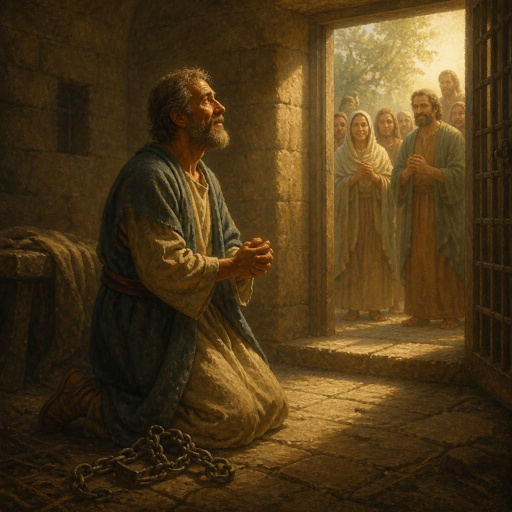
"In him and through faith in him we may approach God with freedom and confidence. I ask you, therefore, not to be discouraged because of my sufferings for you, which are your glory." - Ephesians 3:12-13

Ephesians 6:12

Ephesians 3

Ephesians 3

Ephesians 1:3

Ephesians 4:12 - "For the perfecting of the saints, for the work of the ministry, for the edifying of the body of Christ:"

Ephesians 3:15 - "Of whom the whole family in heaven and earth is named,"

Ephesians 4:3 - "Endeavouring to keep the unity of the Spirit in the bond of peace."

Ephesians 1:12 - "That we should be to the praise of his glory, who first trusted in Christ."

Ephesians 5:12 - "For it is a shame even to speak of those things which are done of them in secret."

Ephesians 3:3 - "How that by revelation he made known unto me the mystery; (as I wrote afore in few words,"

Ephesians 6:3 - "That it may be well with thee, and thou mayest live long on the earth."

Ephesians 3:1 - "For this cause I Paul, the prisoner of Jesus Christ for you Gentiles,"

Ephesians 3:6 - "That the Gentiles should be fellowheirs, and of the same body, and partakers of his promise in Christ by the gospel:"

Ephesians 3:11 - "According to the eternal purpose which he purposed in Christ Jesus our Lord:"

Ephesians 3:18 - "May be able to comprehend with all saints what is the breadth, and length, and depth, and height;"

Ephesians 3:17 - "That Christ may dwell in your hearts by faith; that ye, being rooted and grounded in love,"

Ephesians 3:2 - "If ye have heard of the dispensation of the grace of God which is given me to you-ward:"

Ephesians 3:14 - "For this cause I bow my knees unto the Father of our Lord Jesus Christ,"

Ephesians 5:3 - "But fornication, and all uncleanness, or covetousness, let it not be once named among you, as becometh saints;"

Ephesians 3:4 - "Whereby, when ye read, ye may understand my knowledge in the mystery of Christ)"

Ephesians 3:13 - "Wherefore I desire that ye faint not at my tribulations for you, which is your glory."

Ephesians 3:19 - "And to know the love of Christ, which passeth knowledge, that ye might be filled with all the fulness of God."
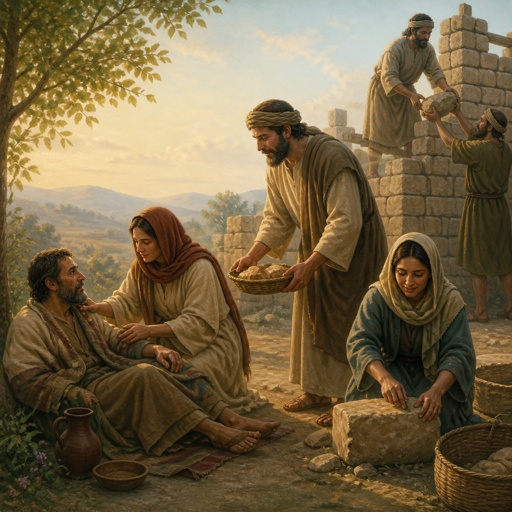
"For the perfecting of the saints, for the work of the ministry, for the edifying of the body of Christ:" - Ephesians 4:12

Ephesians 3:21 - "Unto him be glory in the church by Christ Jesus throughout all ages, world without end. Amen."

Ephesians 3:10 - "To the intent that now unto the principalities and powers in heavenly places might be known by the church the manifold wisdom of God,"

"Of whom the whole family in heaven and earth is named," - Ephesians 3:15