What does Ephesians 4:2 mean?
“With all lowliness and meekness, with longsuffering, forbearing one another in love;” — Ephesians 4:2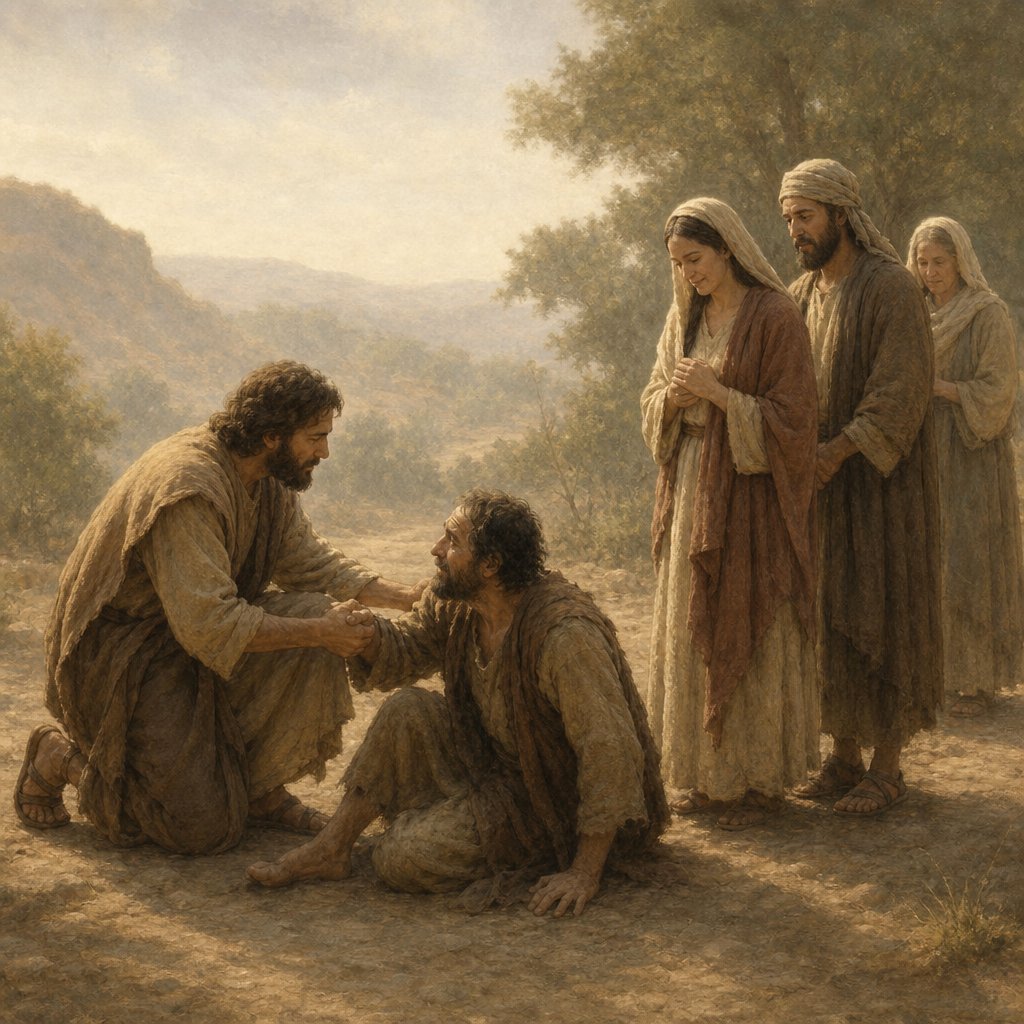
“Ephesians 4:2” in the King James Version reads, “With all lowliness and meekness, with longsuffering, forbearing one another in love.”
In the flow of Ephesians, these words stand at the hinge between what God has done and what God’s people are therefore called to become. The earlier chapters declare the Lord’s purpose in Christ: reconciliation, adoption, redemption, and the gathering of Jews and Gentiles into “one new man,” a single household built together. When the apostle turns to exhortation in chapter four, he does not begin with outward programs or spiritual spectacle, but with the inward temper and relational posture that can actually sustain the unity God has created. The verse is not a list of private virtues detached from community; it is the spiritual climate in which the church can live as one body without tearing itself apart.
The phrase “with all lowliness” speaks to a deliberate descent of the self. Lowliness is not self-hatred, but the refusal to enthrone personal importance. In a community where many gifts, backgrounds, and opinions exist, pride is a solvent that dissolves fellowship. Lowliness, by contrast, is the ground in which unity can take root, because it makes room for others. It also echoes the pattern of Christ’s own humility, the One who did not grasp at status but came to serve. In Ephesians, where believers are described as seated in heavenly places in Christ, “lowliness” is striking: even those raised up by grace are not to become high-minded. The symbolism is almost architectural. The church is being built as a temple; lowliness is a foundation stone. Without it, what is built will crack.
“Meekness” follows as lowliness expressed in behavior. Meekness in Scripture is strength governed, power restrained, the ability to be wronged without becoming vengeful, the willingness to be gentle when one could be harsh. It is not the absence of conviction; it is conviction clothed with gentleness. In the context of a body made up of people formerly separated by deep hostility, meekness is the attitude that keeps truth from turning into a weapon. It is the disposition that treats brothers and sisters not as rivals to overcome but as members to care for.
Then comes “longsuffering,” a word that carries the sense of being long-tempered, slow to anger, patient under provocation. The verse assumes that life together will include friction. The Lord’s people are not told, in effect, “You will always get along,” but rather, “You must be the kind of people who can endure one another’s immaturity without giving up on one another.” Longsuffering is the time-element of love. It is love stretched out over days and years, persisting when quick fixes fail. In Ephesians, where God’s gracious purpose unfolds across ages and where believers are urged not to faint, this patience mirrors God’s own patience toward His people.
“Forbearing one another in love” brings the verse to its relational climax. To forbear is more than to tolerate; it is to carry, to endure, to put up with in the sense of making room and bearing burdens rather than demanding immediate change on one’s own terms. The object is “one another,” which makes this explicitly corporate. Christianity here is not merely devotion to God in isolation; it is holy life expressed in the fellowship of saints. The sphere and motive are “in love,” because forbearance without love becomes cold resignation, and love without forbearance becomes sentimental talk that collapses at the first offense. “In love” binds the four terms together like a cord: lowliness without love can become servile; meekness without love can become fear; longsuffering without love can become stoic; forbearance without love can become bitterness. Love is the inner fire that keeps these qualities alive and sincere.
The immediate context deepens the meaning. The surrounding passage urges believers to keep “the unity of the Spirit in the bond of peace,” and then it confesses “one body, and one Spirit… one Lord, one faith, one baptism.” Ephesians 4:2 is, in effect, the moral and spiritual clothing that fits such a confession. If there is truly “one body,” then the injuries of a brother are not the injuries of a stranger; they are wounds within the same body. Lowliness, meekness, longsuffering, and forbearance are the body’s own immune response to the infections of pride, anger, impatience, and division. The “bond of peace” is not a superficial truce, but a bond held together by these Christlike dispositions.
The significance of the verse also lies in what it implies about the nature of spiritual maturity. The chapter later speaks of growing up into Christ, of being joined and knit together, of edifying itself in love. The virtues of Ephesians 4:2 are not optional niceties; they are the practical means by which a church becomes what it already is in Christ. They protect unity without erasing diversity, and they allow truth to be spoken without destroying fellowship. In a world where strength is often measured by dominance and identity is often defended by hostility, this verse presents a different kind of power: the power of Christlike character, expressed not chiefly in solitary achievement but in patient, humble, loving endurance within the family of God.
Get our apps


Artwork for Ephesians 4:2

Ephesians 4:2 - "With all lowliness and meekness, with longsuffering, forbearing one another in love;"

Ephesians 4:2-3 - "Be completely humble and gentle; be patient, bearing with one another in love. Make every effort to keep the unity of the Spirit through the bond of peace."

"With all lowliness and meekness, with longsuffering, forbearing one another in love;" - Ephesians 4:2
"With all lowliness and meekness, with longsuffering, forbearing one another in love;" - Ephesians 4:2
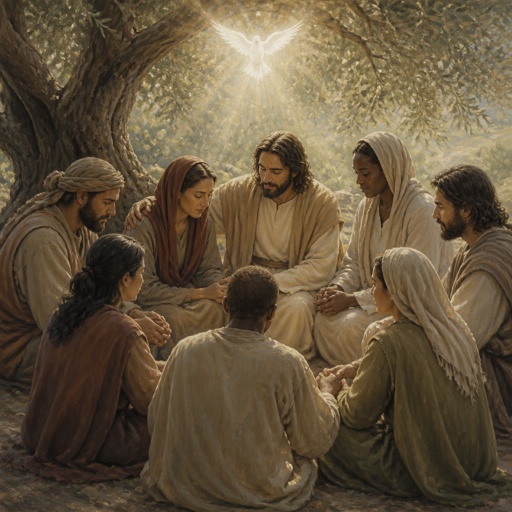
"Be completely humble and gentle; be patient, bearing with one another in love. Make every effort to keep the unity of the Spirit through the bond of peace." - Ephesians 4:2-3

Ephesians 4:1-2

Ephesians 4:1-2

Ephesians 4:1-2

Ephesians 4:1-2

Ephesians 4:1-2

Ephesians 4:1-2

Ephesians 4:1-2

Ephesians 4:1-2

Ephesians 4:1-2

Ephesians 4:1-2

Ephesians 4:1-2

Ephesians 4:1-2

Ephesians 2:4 - "But God, who is rich in mercy, for his great love wherewith he loved us,"

Ephesians 4:4

Ephesians 4:4

Ephesians 4:4

Ephesians 4:4

Ephesians 4:4

Ephesians 4:4

Ephesians 4:4

Ephesians 4:4

Ephesians 4:4

Ephesians 4:4-6

Ephesians 4:4-6

Ephesians 4:4-6