What does Ephesians 4:9 mean?
“( Now that he ascended, what is it but that he also descended first into the lower parts of the earth?” — Ephesians 4:9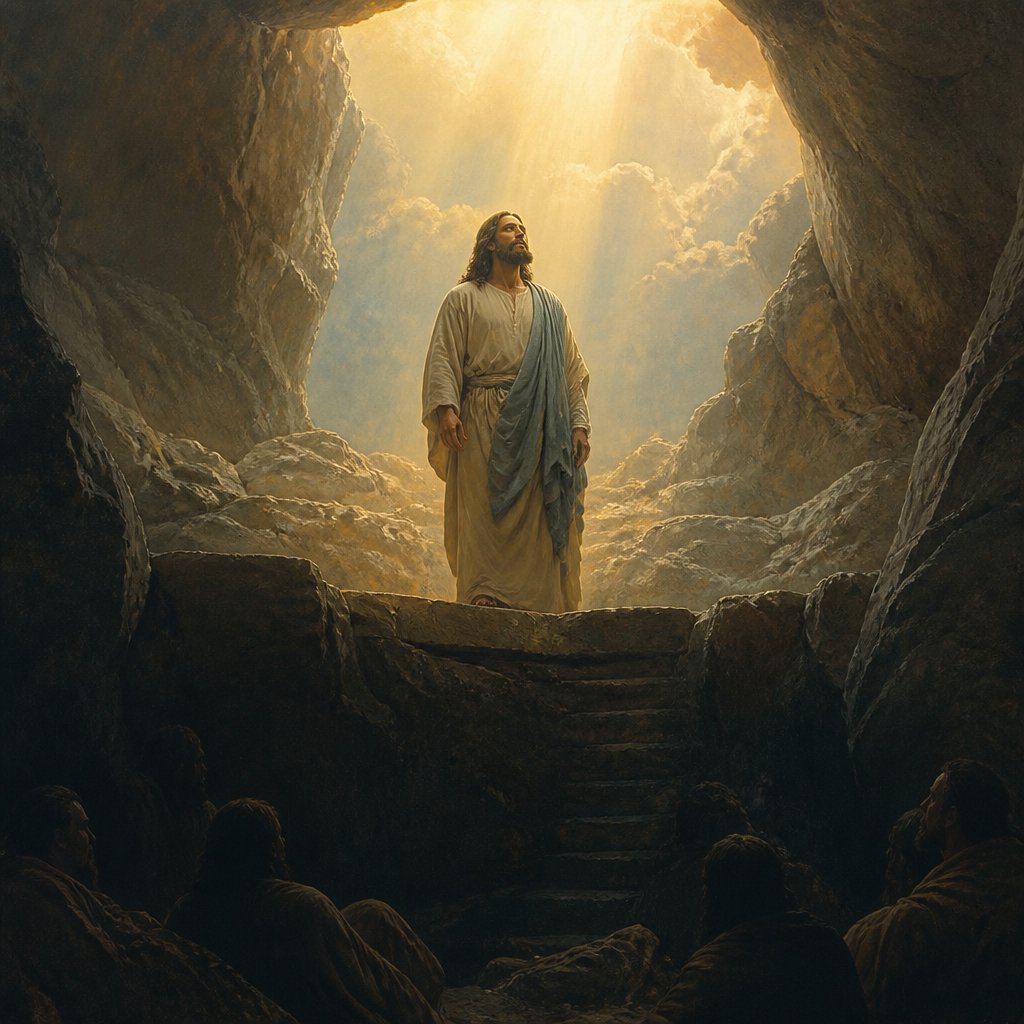
Ephesians 4:9 (KJV) "Now that he ascended, what is it but that he also descended first into the lower parts of the earth?"
In order to fully grasp the meaning and depth of this verse, it is important to first understand the context in which it is situated. The book of Ephesians was written by the apostle Paul to the church in Ephesus, and it addresses various aspects of Christian living, unity, and spiritual growth. In the verses leading up to 4:9, Paul exhorts the believers to walk in a manner worthy of their calling, emphasizing the importance of humility, gentleness, patience, and love in maintaining unity within the body of Christ.
At first glance, Ephesians 4:9 may appear somewhat enigmatic, but its significance becomes clearer when considered in light of its surrounding verses and the broader biblical context. The verse is part of a larger passage in which Paul is expounding on the nature of Christ's redemptive work and its implications for believers. In verses 7-10, Paul writes:
"But unto every one of us is given grace according to the measure of the gift of Christ. Wherefore he saith, When he ascended up on high, he led captivity captive, and gave gifts unto men. (Now that he ascended, what is it but that he also descended first into the lower parts of the earth? He that descended is the same also that ascended up far above all heavens, that he might fill all things.)"
The key to understanding Ephesians 4:9 lies in its reference to Christ's descent into the lower parts of the earth. This is widely interpreted as a reference to Christ's descent into Hades, the realm of the dead, following his crucifixion and preceding his resurrection. The significance of this descent lies in its connection to Christ's triumph over sin, death, and the forces of darkness. By descending into the realm of the dead, Christ conquered the powers of hell and liberated those who were held captive there, thereby paving the way for his subsequent ascension and the outpouring of spiritual gifts upon believers.
This verse is rich in symbolism, pointing to the profound mystery of Christ's redemptive work. It emphasizes the dual nature of Christ's mission, encompassing both his descent into the depths of human suffering and his ascension to the highest heavens. In this sense, Ephesians 4:9 serves as a powerful reminder of the depth of Christ's love and sacrifice, as well as the magnitude of his victory over sin and death.
Furthermore, this verse serves to underscore the continuity and unity of Christ's work throughout different realms and dimensions. It highlights the all-encompassing nature of Christ's redemptive mission, which extends to both the living and the dead, as well as the heavenly and earthly realms. This cosmic perspective reinforces the centrality of Christ in the grand narrative of salvation history, emphasizing his sovereign lordship over all creation.
In terms of its broader themes, Ephesians 4:9 also contributes to the overarching message of the epistle, which is centered on the exaltation and headship of Christ. Throughout the book of Ephesians, Paul consistently emphasizes the supremacy of Christ and the believers' union with him. This verse further reinforces the idea of Christ's lordship over all creation and his ultimate authority over every realm, visible and invisible.
In conclusion, Ephesians 4:9 encapsulates profound truths about the redemptive work of Christ, his victory over the powers of darkness, and his sovereignty over all creation. It serves to deepen our understanding of the cosmic dimensions of Christ's work and to magnify the glory of his exaltation. This verse invites believers to contemplate the immeasurable depth of Christ's love and the far-reaching implications of his redemptive mission, inspiring awe and gratitude for the boundless riches of God's grace.
Get our apps


Artwork for Ephesians 4:9

Ephesians 4:9 - "(Now that he ascended, what is it but that he also descended first into the lower parts of the earth?"
"(Now that he ascended, what is it but that he also descended first into the lower parts of the earth?" - Ephesians 4:9

Ephesians 4:4

Ephesians 4:4

Ephesians 4:4

Ephesians 4:4

Ephesians 4:4

Ephesians 4:4

Ephesians 4:4

Ephesians 4:4

Ephesians 4:4

Ephesians 4:4-6

Ephesians 4:4-6

Ephesians 4:4-6

Ephesians 4:4-6

Ephesians 4:4-5

Ephesians 4:4-6

Ephesians 4:1

ephesians 1:4

Ephesians 4:1

Ephesians 1:4

Ephesians 4:13

Ephesians 4:1

Ephesians 4:1

Ephesians 4:7

Ephesians 1:4

Ephesians 4:1

Ephesians 2:8-9

ephesians 2 8-9

Ephesians 4:16