What does Esther 1:1 mean?
“Now it came to pass in the days of Ahasuerus, (this is Ahasuerus which reigned, from India even unto Ethiopia, over an hundred and seven and twenty provinces:)” — Esther 1:1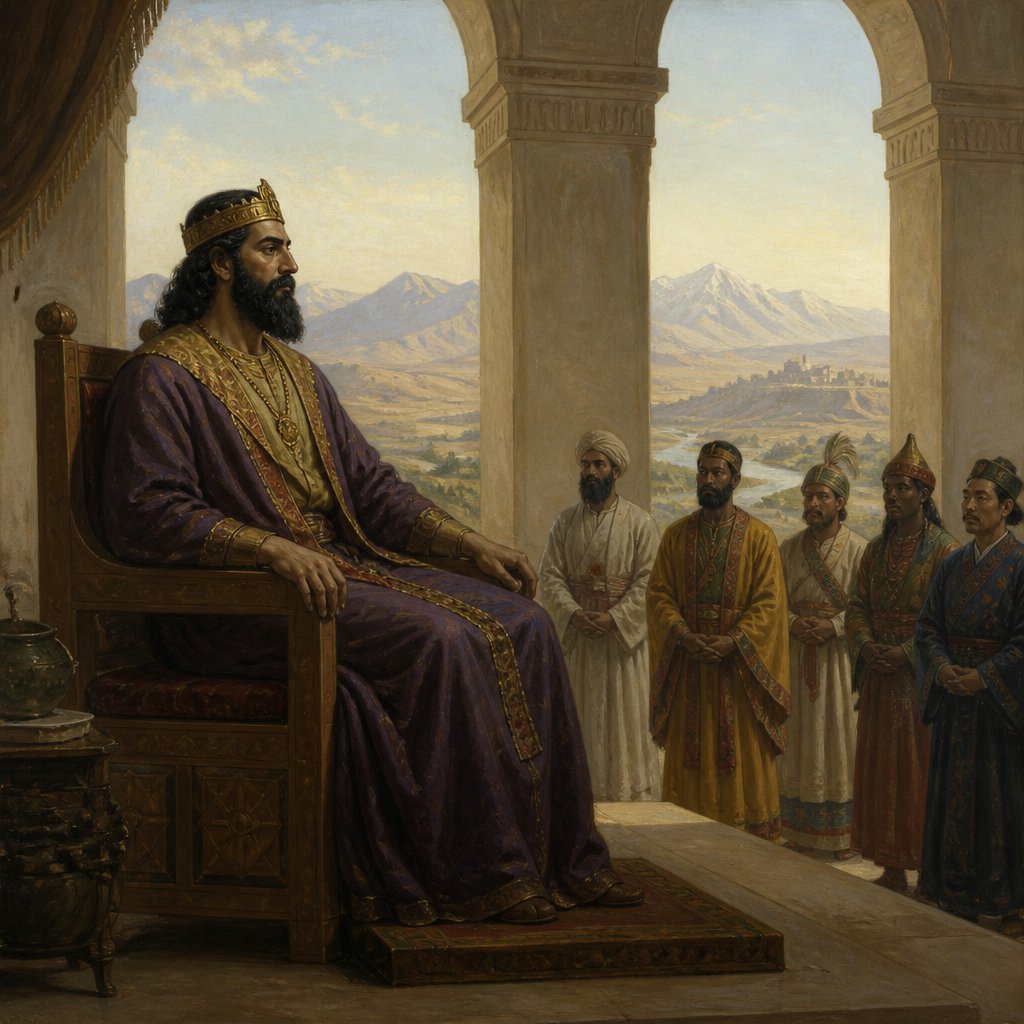
The verse Esther 1:1 from the King James Version (KJV) of the Bible reads: "Now it came to pass in the days of Ahasuerus, (this is Ahasuerus which reigned, from India even unto Ethiopia, over an hundred and seven and twenty provinces:)"
This verse serves as the introduction to the book of Esther and sets the stage for the events that will unfold throughout the narrative. It provides historical and geographical context by mentioning the reign of Ahasuerus and the vast extent of his empire. Understanding the historical and cultural background is essential for a deeper understanding and interpretation of the book of Esther.
The book of Esther is unique in that it does not explicitly mention God, yet His presence and providence are clearly evident throughout the narrative. It is set during the time of the exile of the Jewish people in Persia, and Ahasuerus is identified with the historical figure Xerxes I, who ruled the Persian Empire from 486-465 BC. The mention of the "hundred and seven and twenty provinces" demonstrates the vast extent of Ahasuerus' reign, highlighting the power and influence he held over a large portion of the known world at that time.
One of the key themes in the book of Esther is the concept of divine providence. Despite the absence of direct references to God, the events in the story clearly demonstrate His guiding hand in the deliverance of His people. The verse sets the stage for the unfolding of God's providential plan, showcasing His ability to work through the choices and actions of individuals to bring about His purposes.
The mention of Ahasuerus reigning "from India even unto Ethiopia" further emphasizes the widespread reach of his empire. This geographical expanse serves as a backdrop for the events that will unfold, as the narrative spans across different locations within the vast Persian Empire. It also underscores the diversity of cultures and peoples that were under the rule of Ahasuerus, reflecting the multicultural context of the story.
The mention of the number of provinces also highlights the administrative prowess of the Persian Empire. Ahasuerus' ability to govern such a large territory indicates the vast resources and manpower at his disposal. This sets the stage for the political intrigue and power struggles that will be depicted in the subsequent chapters of the book of Esther.
Symbolically, the mention of Ahasuerus' reign and the extent of his empire can be seen as a representation of the temporal power and authority of human rulers. The vastness of his dominion serves as a contrast to the eternal and unchanging sovereignty of God. It also serves as a reminder that while human leaders may hold significant power and influence, ultimately, they are subject to the overarching rule of the Almighty.
In conclusion, Esther 1:1 serves as an important introductory verse that sets the historical, geographical, and political context for the events that will unfold in the book of Esther. It lays the foundation for the themes of divine providence, the multicultural context of the Persian Empire, and the symbolically significant contrast between human and divine sovereignty. Understanding the significance of this verse is essential for a comprehensive interpretation of the book of Esther and the rich lessons it conveys.
Get our apps


Artwork for Esther 1:1

Esther 1:1 - "Now it came to pass in the days of Ahasuerus, (this is Ahasuerus which reigned, from India even unto Ethiopia, over an hundred and seven and twenty provinces:)"
"Now it came to pass in the days of Ahasuerus, (this is Ahasuerus which reigned, from India even unto Ethiopia, over an hundred and seven and twenty provinces:)" - Esther 1:1

Esther 1:17

Esther 7:1 - "So the king and Haman came to banquet with Esther the queen."

Esther, the courageous queen

Esther 1:6

Esther 8:1 - "On that day did the king Ahasuerus give the house of Haman the Jews' enemy unto Esther the queen. And Mordecai came before the king; for Esther had told what he was unto her."

"So the king and Haman came to banquet with Esther the queen." - Esther 7:1

Esther 10:1 - "And the king Ahasuerus laid a tribute upon the land, and upon the isles of the sea."

Esther 1:21 - "And the saying pleased the king and the princes; and the king did according to the word of Memucan:"

Esther 1:2 - "That in those days, when the king Ahasuerus sat on the throne of his kingdom, which was in Shushan the palace,"

Esther 1:9 - "Also Vashti the queen made a feast for the women in the royal house which belonged to king Ahasuerus."

Esther 5:1 - "Now it came to pass on the third day, that Esther put on her royal apparel, and stood in the inner court of the king's house, over against the king's house: and the king sat upon his royal throne in the royal house, over against the gate of the house."

Esther 6:1 - "On that night could not the king sleep, and he commanded to bring the book of records of the chronicles; and they were read before the king."

Esther 1:11 - "To bring Vashti the queen before the king with the crown royal, to shew the people and the princes her beauty: for she was fair to look on."

"On that day did the king Ahasuerus give the house of Haman the Jews' enemy unto Esther the queen. And Mordecai came before the king; for Esther had told what he was unto her." - Esther 8:1
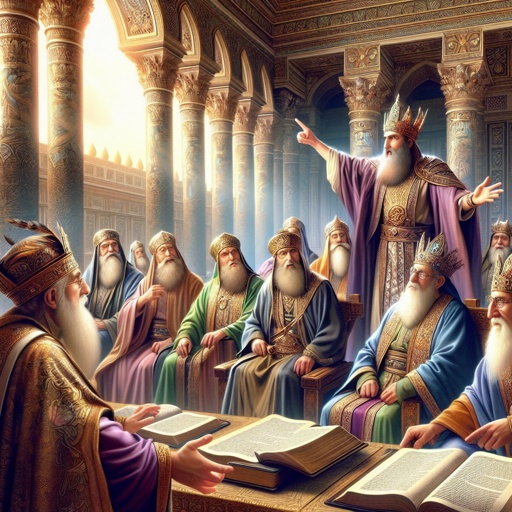
Esther 1:13 - "¶ Then the king said to the wise men, which knew the times, (for so was the king's manner toward all that knew law and judgment:"

Esther 1:12 - "But the queen Vashti refused to come at the king's commandment by his chamberlains: therefore was the king very wroth, and his anger burned in him."

Esther 1:7 - "And they gave them drink in vessels of gold, (the vessels being diverse one from another,) and royal wine in abundance, according to the state of the king."

Esther 1:4 - "When he shewed the riches of his glorious kingdom and the honour of his excellent majesty many days, even an hundred and fourscore days."
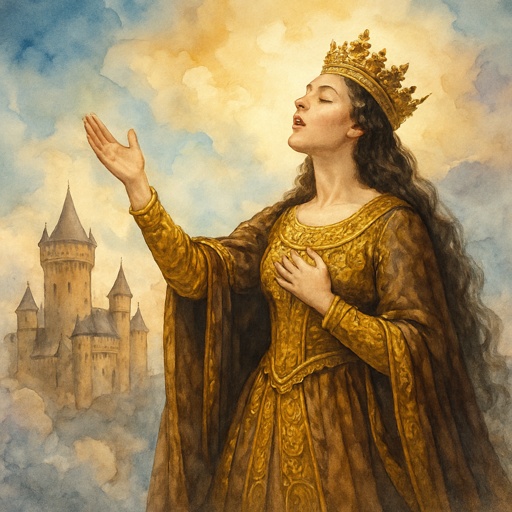
Queen Esther wearing a gold and brown extravagant royalty dress in front of a castle singing to God up in heaven in clouds

Esther 1:15 - "What shall we do unto the queen Vashti according to law, because she hath not performed the commandment of the king Ahasuerus by the chamberlains?"

Esther 2:1 - "After these things, when the wrath of king Ahasuerus was appeased, he remembered Vashti, and what she had done, and what was decreed against her."

Esther 1:8 - "And the drinking was according to the law; none did compel: for so the king had appointed to all the officers of his house, that they should do according to every man's pleasure."

Esther 4:1 - "When Mordecai perceived all that was done, Mordecai rent his clothes, and put on sackcloth with ashes, and went out into the midst of the city, and cried with a loud and a bitter cry;"

Esther 3:1 - "After these things did king Ahasuerus promote Haman the son of Hammedatha the Agagite, and advanced him, and set his seat above all the princes that were with him."
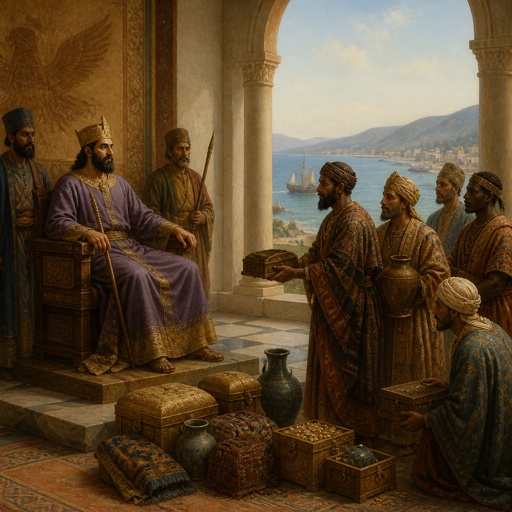
"And the king Ahasuerus laid a tribute upon the land, and upon the isles of the sea." - Esther 10:1
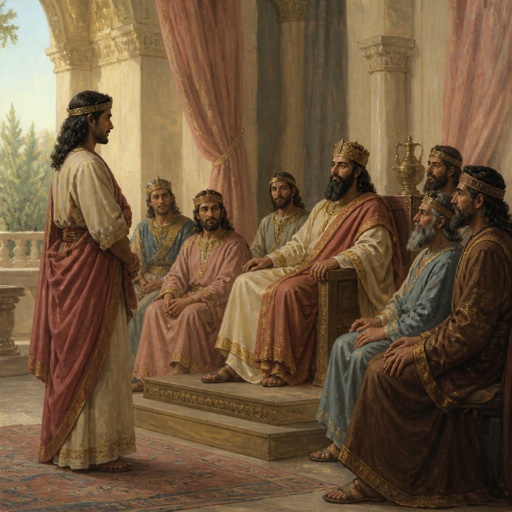
"And the saying pleased the king and the princes; and the king did according to the word of Memucan:" - Esther 1:21

Esther 1:14 - "And the next unto him was Carshena, Shethar, Admatha, Tarshish, Meres, Marsena, and Memucan, the seven princes of Persia and Media, which saw the king's face, and which sat the first in the kingdom;)"

Esther 1:16 - "And Memucan answered before the king and the princes, Vashti the queen hath not done wrong to the king only, but also to all the princes, and to all the people that are in all the provinces of the king Ahasuerus."