What does Esther 1:3 mean?
“In the third year of his reign, he made a feast unto all his princes and his servants; the power of Persia and Media, the nobles and princes of the provinces, being before him:” — Esther 1:3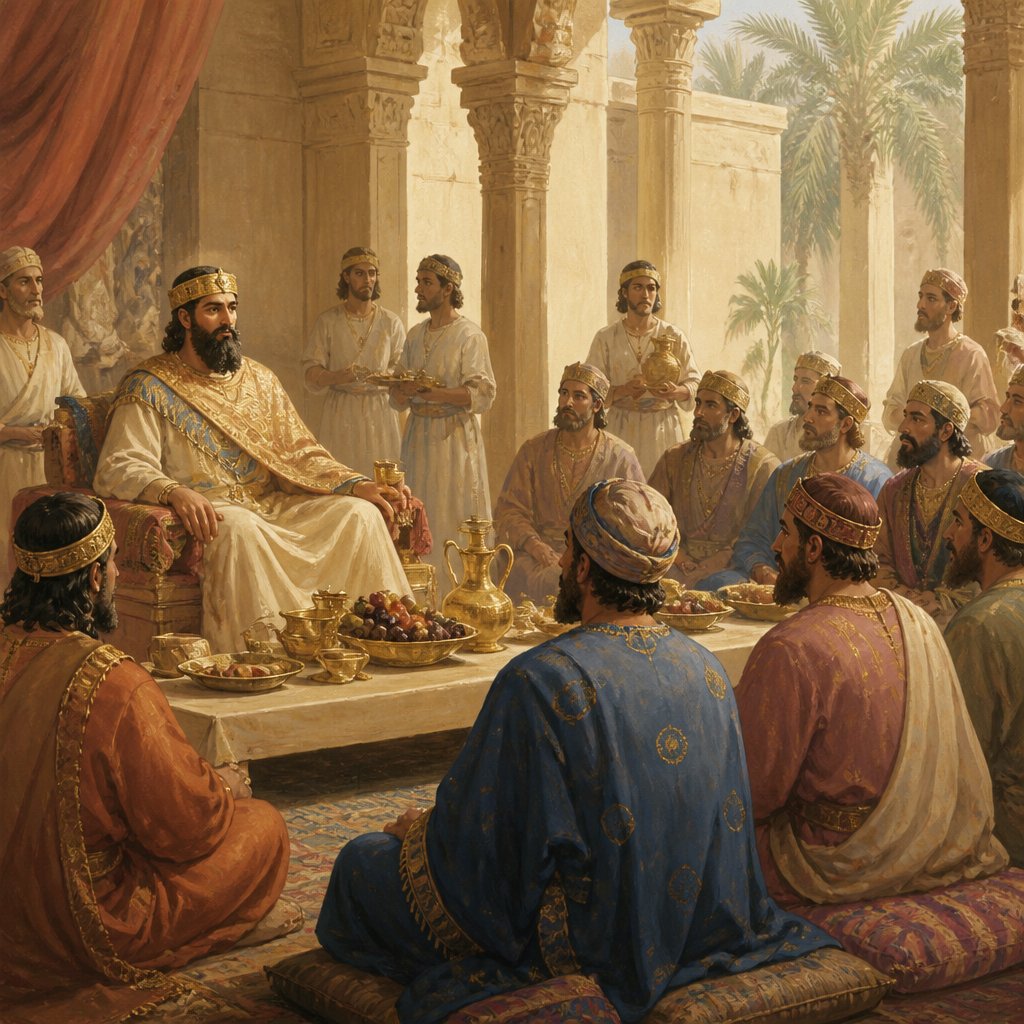
Esther 1:3 (KJV) states, “In the third year of his reign, he made a feast unto all his princes and his servants; the power of Persia and Media, the nobles and princes of the provinces, being before him.”
The book of Esther is a fascinating and important book of the Bible that tells the story of Esther, a young Jewish woman who becomes queen of Persia and, with the help of her cousin Mordecai, helps to save her people from destruction. The verse in question, Esther 1:3, sets the stage for the events to come by describing a grand feast that the Persian King Ahasuerus (also known as Xerxes) throws for all his princes and servants.
The context of this verse is crucial to understanding its meaning. The feast described in Esther 1:3 takes place in the third year of King Ahasuerus’ reign, a time when he was reveling in his power and wealth. This feast is not just any ordinary gathering; it is a lavish display of the king’s opulence and generosity. The fact that it is held in the third year of his reign is significant, as it demonstrates that Ahasuerus is firmly established as the ruler of Persia and Media, and is now in a position to flaunt his wealth and authority.
The themes present in Esther 1:3 are wealth, power, and extravagance. The verse paints a picture of a king who is at the height of his glory and is using his resources to display his grandeur to all those around him. The emphasis on Ahasuerus’ “princes and his servants; the power of Persia and Media, the nobles and princes of the provinces” serves to underscore the opulence and importance of the event. It also highlights the hierarchical structure of the Persian empire, with the king at the top and his subordinates and subjects below him. This sets the stage for the power dynamics that will come into play later in the book.
Symbolism is also present in this verse. The feast can be seen as a symbol of excess and indulgence, reflecting the wealth and luxury of the Persian empire at that time. It also symbolizes Ahasuerus’ authority and control over his kingdom, as he is able to command such a gathering and use it to assert his dominance. Furthermore, the feast serves as a foreshadowing of the events to come, as it sets the stage for the power struggles and intrigues that will unfold throughout the book of Esther.
In summary, Esther 1:3 is a verse that sets the stage for the events of the book of Esther by depicting a grand feast held by King Ahasuerus in the third year of his reign. The verse conveys themes of wealth, power, and extravagance, and uses symbolism to underscore the opulence of the Persian empire and the king’s authority. This verse serves as an introduction to the power dynamics and political maneuvering that will shape the narrative of Esther, making it a crucial starting point for understanding the story that follows.
Get our apps


Artwork for Esther 1:3

Esther 1:3 - "In the third year of his reign, he made a feast unto all his princes and his servants; the power of Persia and Media, the nobles and princes of the provinces, being before him:"
"In the third year of his reign, he made a feast unto all his princes and his servants; the power of Persia and Media, the nobles and princes of the provinces, being before him:" - Esther 1:3

Esther 5:3 - "Then said the king unto her, What wilt thou, queen Esther? and what is thy request? it shall be even given thee to the half of the kingdom."

Esther 7:1 - "So the king and Haman came to banquet with Esther the queen."

Esther 3:1 - "After these things did king Ahasuerus promote Haman the son of Hammedatha the Agagite, and advanced him, and set his seat above all the princes that were with him."
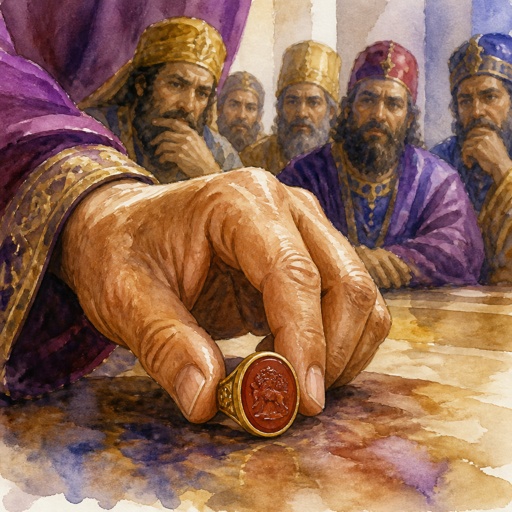
Esther 3:10 focus on ring

Esther 1:17

Esther 8:1 - "On that day did the king Ahasuerus give the house of Haman the Jews' enemy unto Esther the queen. And Mordecai came before the king; for Esther had told what he was unto her."

Esther 3:3 - "Then the king's servants, which were in the king's gate, said unto Mordecai, Why transgressest thou the king's commandment?"

Esther 8:3 - "¶ And Esther spake yet again before the king, and fell down at his feet, and besought him with tears to put away the mischief of Haman the Agagite, and his device that he had devised against the Jews."

Esther, the courageous queen

"So the king and Haman came to banquet with Esther the queen." - Esther 7:1

Esther 1:6

Esther 7:3 - "Then Esther the queen answered and said, If I have found favour in thy sight, O king, and if it please the king, let my life be given me at my petition, and my people at my request:"

Esther 3:5 - "And when Haman saw that Mordecai bowed not, nor did him reverence, then was Haman full of wrath."

Esther 9:3 - "And all the rulers of the provinces, and the lieutenants, and the deputies, and officers of the king, helped the Jews; because the fear of Mordecai fell upon them."

Esther 3:14 - "The copy of the writing for a commandment to be given in every province was published unto all people, that they should be ready against that day."

Esther 3:11 - "And the king said unto Haman, The silver is given to thee, the people also, to do with them as it seemeth good to thee."

Esther 3:10 - "And the king took his ring from his hand, and gave it unto Haman the son of Hammedatha the Agagite, the Jews' enemy."

Esther 10:1 - "And the king Ahasuerus laid a tribute upon the land, and upon the isles of the sea."
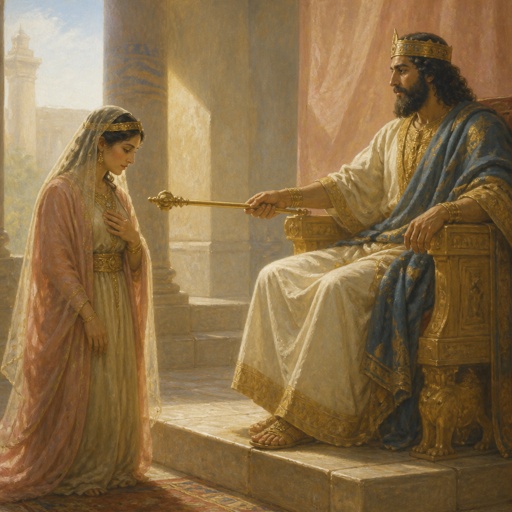
"Then said the king unto her, What wilt thou, queen Esther? and what is thy request? it shall be even given thee to the half of the kingdom." - Esther 5:3

"On that day did the king Ahasuerus give the house of Haman the Jews' enemy unto Esther the queen. And Mordecai came before the king; for Esther had told what he was unto her." - Esther 8:1

Esther 1:21 - "And the saying pleased the king and the princes; and the king did according to the word of Memucan:"

Esther 5:1 - "Now it came to pass on the third day, that Esther put on her royal apparel, and stood in the inner court of the king's house, over against the king's house: and the king sat upon his royal throne in the royal house, over against the gate of the house."

Esther 3:15 - "The posts went out, being hastened by the king's commandment, and the decree was given in Shushan the palace. And the king and Haman sat down to drink; but the city Shushan was perplexed."

Esther 6:3 - "And the king said, What honour and dignity hath been done to Mordecai for this? Then said the king's servants that ministered unto him, There is nothing done for him."

Esther 4:3 - "And in every province, whithersoever the king's commandment and his decree came, there was great mourning among the Jews, and fasting, and weeping, and wailing; and many lay in sackcloth and ashes."

Esther 1:2 - "That in those days, when the king Ahasuerus sat on the throne of his kingdom, which was in Shushan the palace,"

Esther 1:9 - "Also Vashti the queen made a feast for the women in the royal house which belonged to king Ahasuerus."
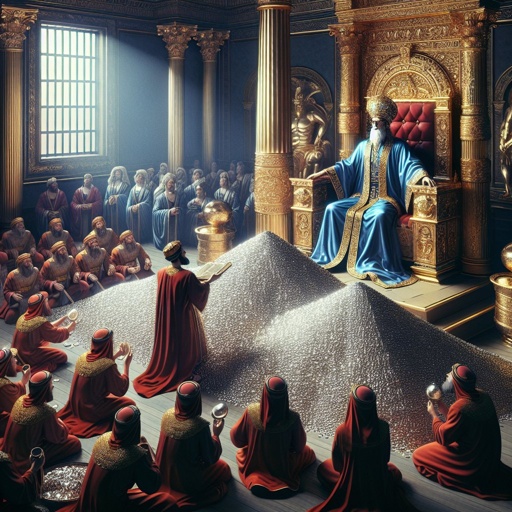
Esther 3:9 - "If it please the king, let it be written that they may be destroyed: and I will pay ten thousand talents of silver to the hands of those that have the charge of the business, to bring it into the king's treasuries."