What does Esther 1:22 mean?
“For he sent letters into all the king’s provinces, into every province according to the writing thereof, and to every people after their language, that every man should bear rule in his own house, and that it should be published according to the language of every people.” — Esther 1:22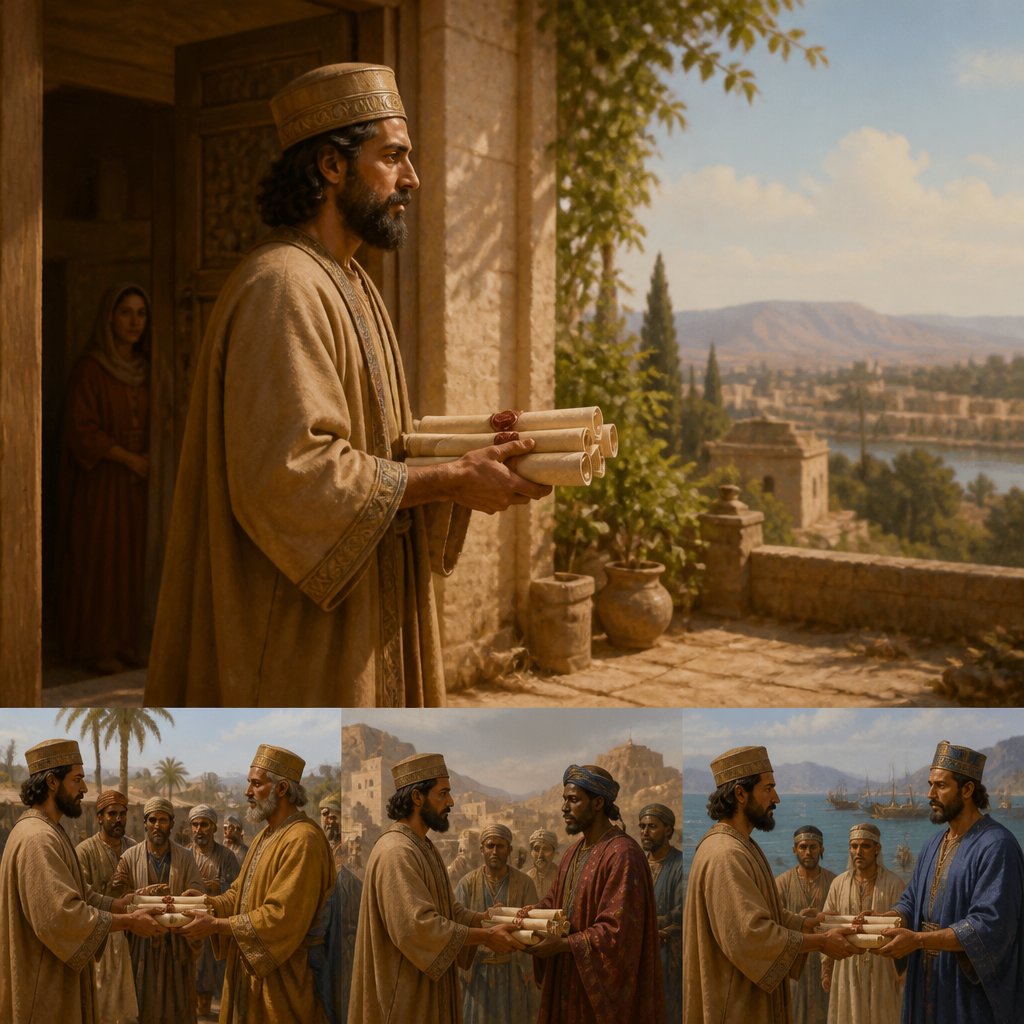
Esther 1:22 in the King James Version of the Bible reads, "For he sent letters into all the king's provinces, into every province according to the writing thereof, and to every people after their language, that every man should bear rule in his own house, and that it should be published according to the language of every people."
The book of Esther is a significant piece of literature in the Bible, and this verse is found in the first chapter. The context of the verse is set in the Persian Empire during the reign of King Ahasuerus, who ruled over 127 provinces from India to Ethiopia. The verse is part of the narrative where King Ahasuerus holds a grand banquet to showcase his wealth and power to his nobles and officials to celebrate his reign. During the feast, the king summons his queen, Vashti, to display her beauty to his guests, but she refuses to comply with the king's request, which leads to her dismissal from the throne.
The verse in question, Esther 1:22, comes at the end of this narrative, as the king sends out letters to all his provinces, instructing every man to "bear rule in his own house." This edict reflects the king's desire to maintain order and control within his vast empire, even extending to the domestic realm. It highlights the tension between authority and submission, particularly in the context of gender dynamics.
One of the key themes of this verse is that of power and authority. The king's letters reflect his attempt to exert his control over the entire empire, not just in matters of state, but also in the private sphere of individuals' homes. This demonstrates the pervasive influence of the king's rule, which reaches into the most intimate aspects of his subjects' lives. It reveals the extent of the king's power and the hierarchical structure of the society in which the story is set.
Moreover, the verse also touches upon the theme of obedience and submission. The king's decree that "every man should bear rule in his own house" suggests a societal expectation of men to exercise authority over their households. This reflects the prevailing social norms and expectations of the time, where the head of the household held significant power and influence over the family unit. The verse implicitly endorses the idea of male dominance within the domestic sphere, reflecting the patriarchal nature of ancient societies.
The language used in the verse also carries symbolic significance. The king's command is conveyed through letters sent to every province and people "after their language." This emphasizes the universality and comprehensiveness of the king's decree, as it is communicated in the native tongues of the diverse peoples within his empire. The use of language underscores the reach of the king's authority and the importance of effective communication in maintaining his rule over such a vast and diverse realm.
In conclusion, Esther 1:22 is a verse that delves into themes of power, authority, obedience, and cultural norms within the context of the ancient Persian Empire. It highlights the far-reaching influence of the king's rule, as well as the societal expectations of male dominance and household leadership. The verse also utilizes language as a symbol of the king's comprehensive and all-encompassing authority. Overall, this verse sheds light on the social, political, and cultural dynamics of the time, while also inviting reflection on the nature of power and control within human societies.
Get our apps


Artwork for Esther 1:22

Esther 1:22 - "For he sent letters into all the king's provinces, into every province according to the writing thereof, and to every people after their language, that every man should bear rule in his own house, and that it should be published according to the language of every people."
"For he sent letters into all the king's provinces, into every province according to the writing thereof, and to every people after their language, that every man should bear rule in his own house, and that it should be published according to the language of every people." - Esther 1:22

Esther 2:22 - "And the thing was known to Mordecai, who told it unto Esther the queen; and Esther certified the king thereof in Mordecai's name."

"And the thing was known to Mordecai, who told it unto Esther the queen; and Esther certified the king thereof in Mordecai's name." - Esther 2:22

Esther 7:1 - "So the king and Haman came to banquet with Esther the queen."

Esther 1:17

Esther 8:1 - "On that day did the king Ahasuerus give the house of Haman the Jews' enemy unto Esther the queen. And Mordecai came before the king; for Esther had told what he was unto her."

Esther, the courageous queen

"So the king and Haman came to banquet with Esther the queen." - Esther 7:1

Esther 1:6

Esther 10:1 - "And the king Ahasuerus laid a tribute upon the land, and upon the isles of the sea."

"On that day did the king Ahasuerus give the house of Haman the Jews' enemy unto Esther the queen. And Mordecai came before the king; for Esther had told what he was unto her." - Esther 8:1

Esther 1:21 - "And the saying pleased the king and the princes; and the king did according to the word of Memucan:"

Esther 5:1 - "Now it came to pass on the third day, that Esther put on her royal apparel, and stood in the inner court of the king's house, over against the king's house: and the king sat upon his royal throne in the royal house, over against the gate of the house."

Esther 1:2 - "That in those days, when the king Ahasuerus sat on the throne of his kingdom, which was in Shushan the palace,"

Esther 1:9 - "Also Vashti the queen made a feast for the women in the royal house which belonged to king Ahasuerus."

Esther 1:1 - "Now it came to pass in the days of Ahasuerus, (this is Ahasuerus which reigned, from India even unto Ethiopia, over an hundred and seven and twenty provinces:)"
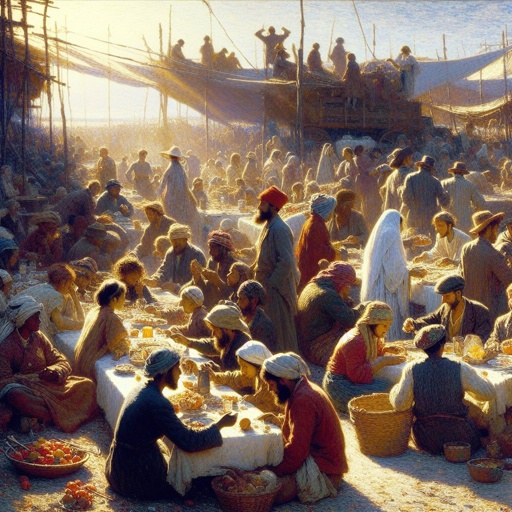
Esther 9:22 - "As the days wherein the Jews rested from their enemies, and the month which was turned unto them from sorrow to joy, and from mourning into a good day: that they should make them days of feasting and joy, and of sending portions one to another, and gifts to the poor."

Esther 6:1 - "On that night could not the king sleep, and he commanded to bring the book of records of the chronicles; and they were read before the king."

Esther 1:11 - "To bring Vashti the queen before the king with the crown royal, to shew the people and the princes her beauty: for she was fair to look on."
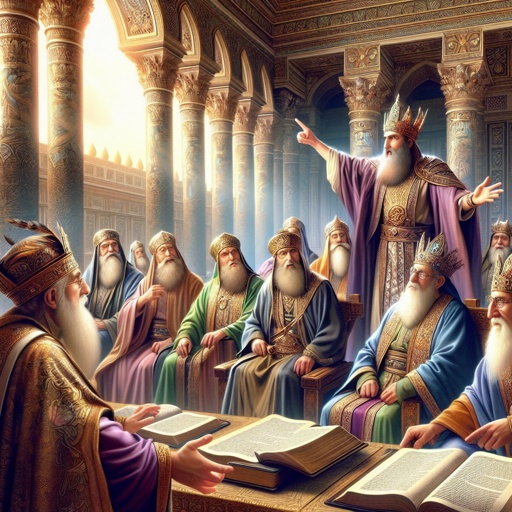
Esther 1:13 - "¶ Then the king said to the wise men, which knew the times, (for so was the king's manner toward all that knew law and judgment:"

Esther 1:7 - "And they gave them drink in vessels of gold, (the vessels being diverse one from another,) and royal wine in abundance, according to the state of the king."

Esther 1:4 - "When he shewed the riches of his glorious kingdom and the honour of his excellent majesty many days, even an hundred and fourscore days."

Esther 1:12 - "But the queen Vashti refused to come at the king's commandment by his chamberlains: therefore was the king very wroth, and his anger burned in him."

Esther 2:1 - "After these things, when the wrath of king Ahasuerus was appeased, he remembered Vashti, and what she had done, and what was decreed against her."

Esther 1:15 - "What shall we do unto the queen Vashti according to law, because she hath not performed the commandment of the king Ahasuerus by the chamberlains?"

Esther 1:8 - "And the drinking was according to the law; none did compel: for so the king had appointed to all the officers of his house, that they should do according to every man's pleasure."

Esther 4:1 - "When Mordecai perceived all that was done, Mordecai rent his clothes, and put on sackcloth with ashes, and went out into the midst of the city, and cried with a loud and a bitter cry;"

Esther 3:1 - "After these things did king Ahasuerus promote Haman the son of Hammedatha the Agagite, and advanced him, and set his seat above all the princes that were with him."
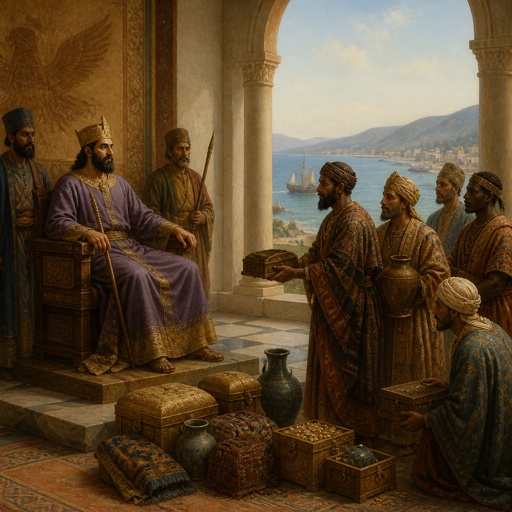
"And the king Ahasuerus laid a tribute upon the land, and upon the isles of the sea." - Esther 10:1