What does Esther 2:4 mean?
“And let the maiden which pleaseth the king be queen instead of Vashti. And the thing pleased the king; and he did so.” — Esther 2:4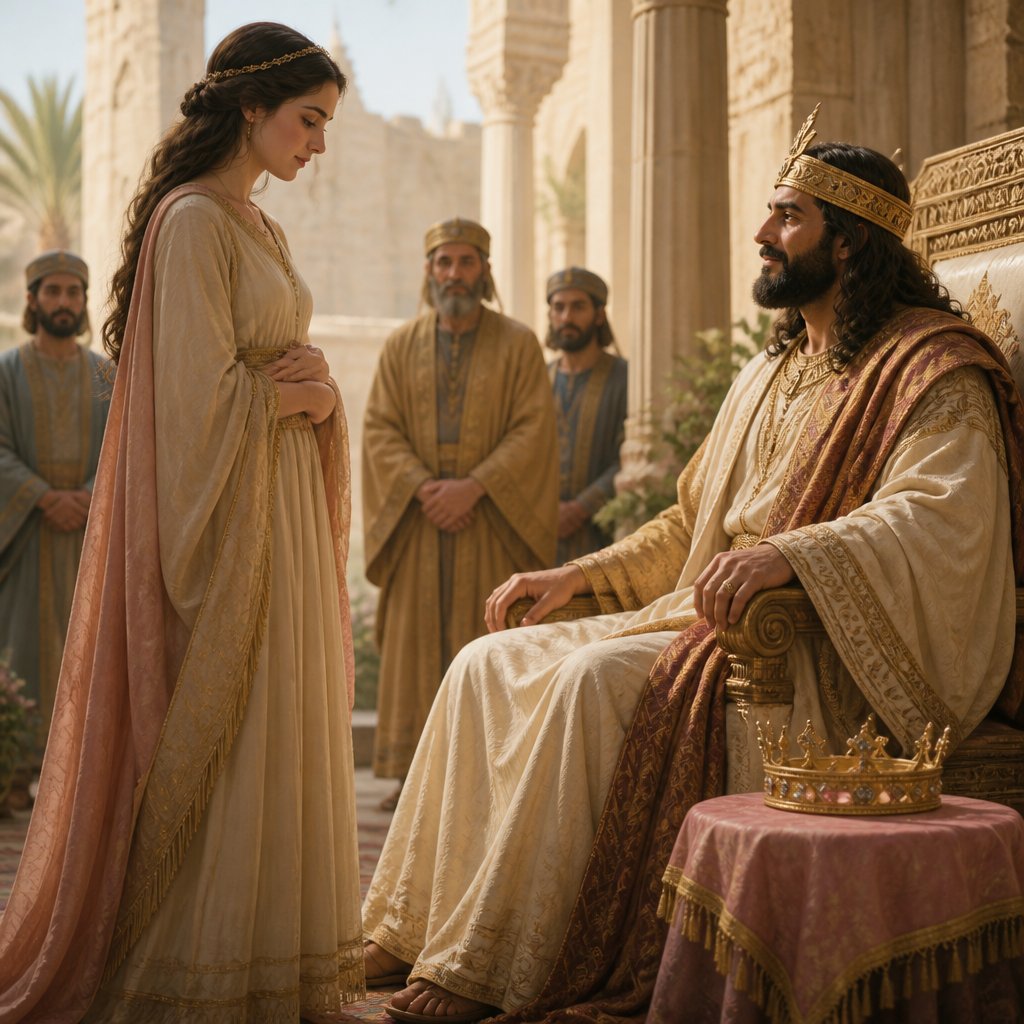
Esther 2:4 (KJV) says, "And let the maiden which pleaseth the king be queen instead of Vashti. And the thing pleased the king; and he did so." This verse is from the Book of Esther in the Old Testament and refers to the process of selecting a new queen after Vashti had been deposed.
To truly understand the significance of this verse, it is essential to look at the context in which it appears. The Book of Esther tells the story of a young Jewish woman named Esther who becomes the Queen of Persia. The story is set during the reign of King Xerxes I, also known as Ahasuerus. During a lavish banquet, Queen Vashti defies the king's orders, and as a result, she is removed from her position as queen. This leaves the king in search of a new queen.
The verse Esther 2:4 illustrates the king's decision to select a new queen. It demonstrates his power and authority as he exercises his right to choose a new partner. In this verse, the king sets forth a decree to find the most pleasing maiden to become the queen in place of Vashti. This decision by the king is significant as it shapes the course of events in the book.
At a deeper level, Esther 2:4 also carries themes of beauty, power, and the role of women in society. In ancient times, a woman's beauty often determined her worth and potential for being selected as a queen. This verse highlights the superficial nature of the selection process, as the young women are essentially paraded before the king to determine who pleases him the most. It is also a reminder of the unequal power dynamics between men and women, as the king's choice holds great influence over the lives of these women.
Additionally, the verse sheds light on the lives of the women in the king's court. Being selected as queen was considered a great honor, but it also carried significant responsibilities and potential dangers. The new queen would be expected to fulfill her duties as a wife and be an influential figure in the kingdom. Esther 2:4 captures the anticipation and anxiety of these young women as they await the king's decision, knowing that their fate hangs in the balance.
Symbolically, the process of choosing a new queen can be seen as a metaphor for the larger themes of fate and authority present in the Book of Esther. The king's selection of a new queen sets off a chain of events that ultimately leads to Esther's rise to power and her pivotal role in saving her people from persecution. This verse underscores the idea that even seemingly insignificant decisions made by those in power can have far-reaching consequences.
In conclusion, Esther 2:4 offers a window into the complexities of power, beauty, and fate within the context of ancient Persia. It provides insight into the dynamics of the royal court and the roles of women in society. This verse is a pivotal moment in the narrative of the Book of Esther and sets the stage for the unfolding drama that follows. Its themes and symbolism continue to resonate today, making it a timeless and thought-provoking passage.
Get our apps


Artwork for Esther 2:4

Esther 2:4 - "And let the maiden which pleaseth the king be queen instead of Vashti. And the thing pleased the king; and he did so."
"And let the maiden which pleaseth the king be queen instead of Vashti. And the thing pleased the king; and he did so." - Esther 2:4

Esther 8:4 - "Then the king held out the golden sceptre toward Esther. So Esther arose, and stood before the king,"

Esther 4:2 - "And came even before the king's gate: for none might enter into the king's gate clothed with sackcloth."

Esther 4:15 - "¶ Then Esther bade them return Mordecai this answer,"

Esther 4:9 - "And Hatach came and told Esther the words of Mordecai."

Esther 4:10 - "¶ Again Esther spake unto Hatach, and gave him commandment unto Mordecai;"

Esther 4:17 - "So Mordecai went his way, and did according to all that Esther had commanded him."
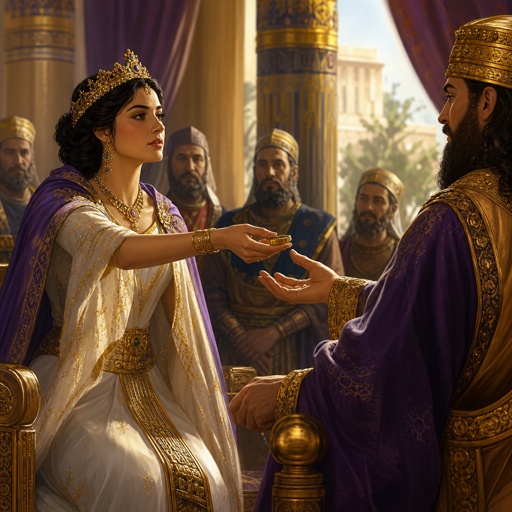
Esther 8:4

Esther 2:22 - "And the thing was known to Mordecai, who told it unto Esther the queen; and Esther certified the king thereof in Mordecai's name."

Esther 4:12 - "And they told to Mordecai Esther's words."

"And Hatach came and told Esther the words of Mordecai." - Esther 4:9

"¶ Then Esther bade them return Mordecai this answer," - Esther 4:15

Esther 4:13 - "Then Mordecai commanded to answer Esther, Think not with thyself that thou shalt escape in the king's house, more than all the Jews."

Esther 5:4 - "And Esther answered, If it seem good unto the king, let the king and Haman come this day unto the banquet that I have prepared for him."

Esther 5:2 - "And it was so, when the king saw Esther the queen standing in the court, that she obtained favour in his sight: and the king held out to Esther the golden sceptre that was in his hand. So Esther drew near, and touched the top of the sceptre."

"Then the king held out the golden sceptre toward Esther. So Esther arose, and stood before the king," - Esther 8:4

Esther 4:5 - "Then called Esther for Hatach, one of the king's chamberlains, whom he had appointed to attend upon her, and gave him a commandment to Mordecai, to know what it was, and why it was."

Esther 7:2 - "And the king said again unto Esther on the second day at the banquet of wine, What is thy petition, queen Esther? and it shall be granted thee: and what is thy request? and it shall be performed, even to the half of the kingdom."

Esther 2:20 - "Esther had not yet shewed her kindred nor her people; as Mordecai had charged her: for Esther did the commandment of Mordecai, like as when she was brought up with him."

Esther 5:2
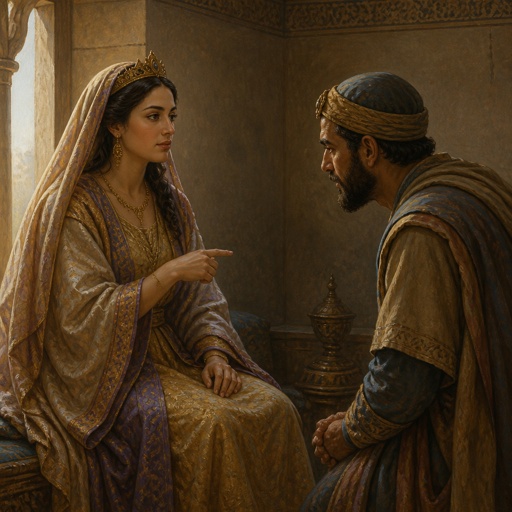
"¶ Again Esther spake unto Hatach, and gave him commandment unto Mordecai;" - Esther 4:10
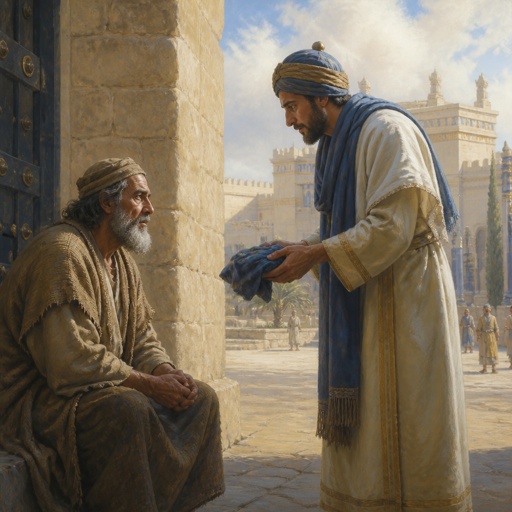
"And they told to Mordecai Esther's words." - Esther 4:12

Esther 5:2

Esther 5:2

Esther 2:11 - "And Mordecai walked every day before the court of the women's house, to know how Esther did, and what should become of her."

Esther 2:10 - "Esther had not shewed her people nor her kindred: for Mordecai had charged her that she should not shew it."

Esther 5:2 - "And it was so, when the king saw Esther the queen standing in the court, that she obtained favour in his sight: and the king held out to Esther the golden sceptre that was in his hand. So Esther drew near, and touched the top of the sceptre."
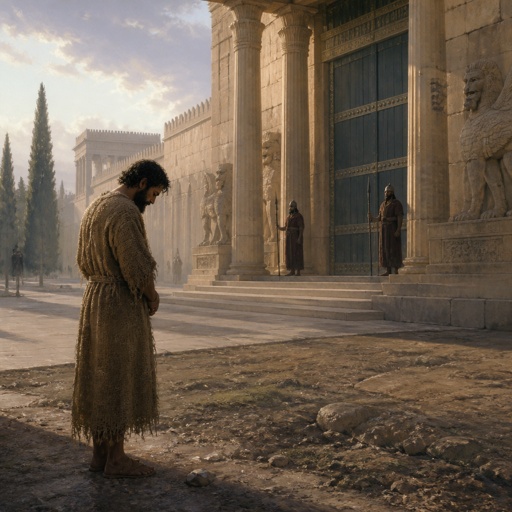
"And came even before the king's gate: for none might enter into the king's gate clothed with sackcloth." - Esther 4:2

"And the thing was known to Mordecai, who told it unto Esther the queen; and Esther certified the king thereof in Mordecai's name." - Esther 2:22