What does Esther 2:7 mean?
“And he brought up Hadassah, that is, Esther, his uncle’s daughter: for she had neither father nor mother, and the maid was fair and beautiful; whom Mordecai, when her father and mother were dead, took for his own daughter.” — Esther 2:7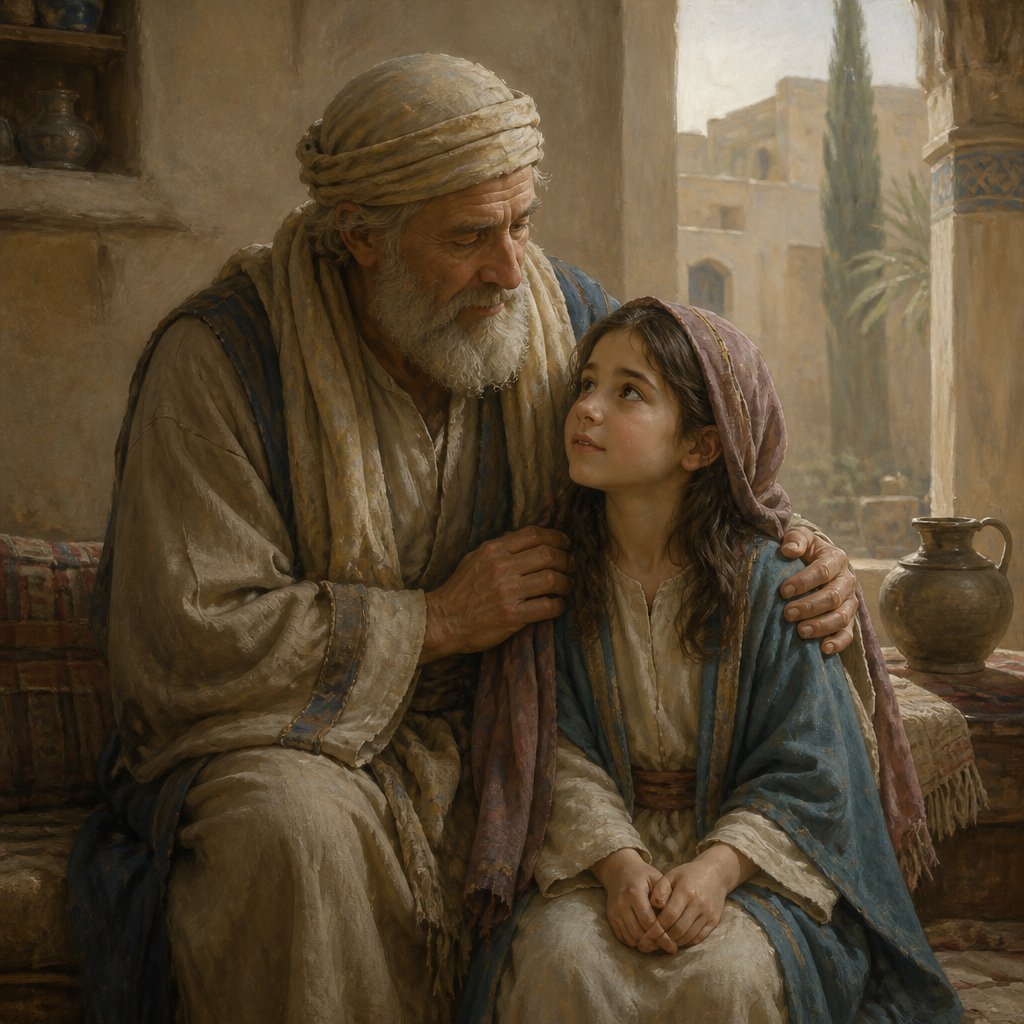
Esther 2:7 in the King James Version of the Bible reads, "And he brought up Hadassah, that is, Esther, his uncle's daughter: for she had neither father nor mother, and the maid was fair and beautiful; whom Mordecai, when her father and mother were dead, took for his own daughter."
The Book of Esther is a historical and religious text that tells the story of a Jewish girl named Esther who becomes the queen of Persia and saves her people from annihilation. Esther 2:7 is a pivotal verse in the narrative, as it introduces the character of Esther and provides crucial background information about her upbringing and family history.
One of the key themes of this verse is the providence of God. The fact that Esther, an orphaned Jewish girl, is chosen to become queen of Persia is no coincidence. It is a clear example of how God works behind the scenes to accomplish His purposes. Despite her tragic circumstances, Esther's beauty and grace capture the attention of King Xerxes, setting the stage for her to play a crucial role in the salvation of the Jewish people.
The name "Hadassah" means "myrtle" in Hebrew, a symbol of strength, hope, and renewal. This symbolic meaning is reflected in Esther's character, as she demonstrates resilience and courage in the face of adversity. Despite being raised by her cousin Mordecai after the death of her parents, Esther grows up to be a woman of great integrity and fortitude, ultimately risking her own life to save her people.
The verse also highlights the concept of adoption, as Mordecai takes Esther in as his own daughter after her parents' death. This act of love and compassion foreshadows the bond that will later develop between them and the pivotal role Mordecai will play in guiding and supporting Esther throughout her journey.
The phrases "the maid was fair and beautiful" and "took for his own daughter" emphasize Esther's physical appearance and inner qualities, hinting at her future role as queen and her ability to captivate the hearts of those around her. However, it is important to note that Esther's beauty is not merely superficial; it is a reflection of her inner purity and strength of character.
Furthermore, the verse sets the stage for the larger context of the Book of Esther, which is the struggle for survival and the preservation of the Jewish people in the face of persecution. The fact that Esther is an orphan and a member of a minority group underscores the vulnerability of her position, as well as the importance of her eventual rise to power and her ability to influence the king's decisions.
Symbolically, Esther's journey from a marginalized orphan to a powerful queen represents the triumph of faith, courage, and divine providence. Her story serves as a powerful reminder that even in the most unlikely circumstances, God can work through ordinary individuals to accomplish extraordinary feats.
In conclusion, Esther 2:7 plays a crucial role in setting the stage for the larger narrative of the Book of Esther. Through its depiction of Esther's upbringing, character, and eventual rise to power, the verse highlights important themes such as the providence of God, the resilience of the human spirit, and the power of love and compassion. Esther's story continues to inspire and resonate with readers today, serving as a timeless testament to the enduring faith and courage of those who seek to make a difference in the world.
Get our apps


Artwork for Esther 2:7

Esther 2:7 - "And he brought up Hadassah, that is, Esther, his uncle's daughter: for she had neither father nor mother, and the maid was fair and beautiful; whom Mordecai, when her father and mother were dead, took for his own daughter."
"And he brought up Hadassah, that is, Esther, his uncle's daughter: for she had neither father nor mother, and the maid was fair and beautiful; whom Mordecai, when her father and mother were dead, took for his own daughter." - Esther 2:7

Esther 7:2 - "And the king said again unto Esther on the second day at the banquet of wine, What is thy petition, queen Esther? and it shall be granted thee: and what is thy request? and it shall be performed, even to the half of the kingdom."

Esther 5:7 - "Then answered Esther, and said, My petition and my request is;"

Esther 7:1 - "So the king and Haman came to banquet with Esther the queen."

Esther 7:6 - "And Esther said, The adversary and enemy is this wicked Haman. Then Haman was afraid before the king and the queen."

Esther 7:7 - "¶ And the king arising from the banquet of wine in his wrath went into the palace garden: and Haman stood up to make request for his life to Esther the queen; for he saw that there was evil determined against him by the king."

Esther 9:7 - "And Parshandatha, and Dalphon, and Aspatha,"

Esther 2:22 - "And the thing was known to Mordecai, who told it unto Esther the queen; and Esther certified the king thereof in Mordecai's name."

"So the king and Haman came to banquet with Esther the queen." - Esther 7:1

Esther 8:7 - "¶ Then the king Ahasuerus said unto Esther the queen and to Mordecai the Jew, Behold, I have given Esther the house of Haman, and him they have hanged upon the gallows, because he laid his hand upon the Jews."
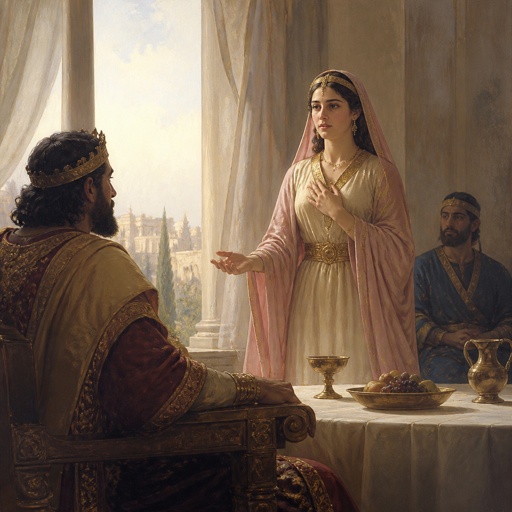
"Then answered Esther, and said, My petition and my request is;" - Esther 5:7

Esther 7:5 - "¶ Then the king Ahasuerus answered and said unto Esther the queen, Who is he, and where is he, that durst presume in his heart to do so?"
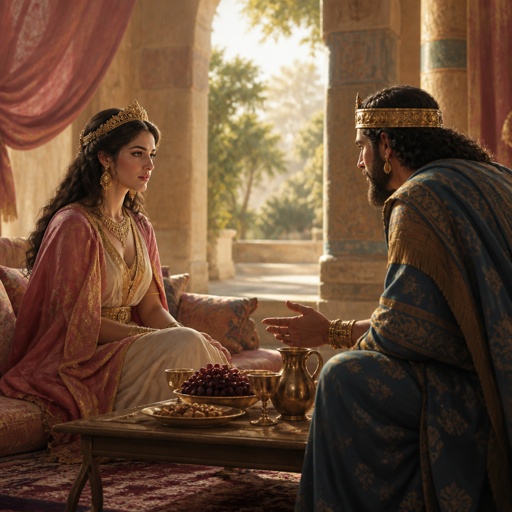
"And the king said again unto Esther on the second day at the banquet of wine, What is thy petition, queen Esther? and it shall be granted thee: and what is thy request? and it shall be performed, even to the half of the kingdom." - Esther 7:2

Esther 5:2 - "And it was so, when the king saw Esther the queen standing in the court, that she obtained favour in his sight: and the king held out to Esther the golden sceptre that was in his hand. So Esther drew near, and touched the top of the sceptre."
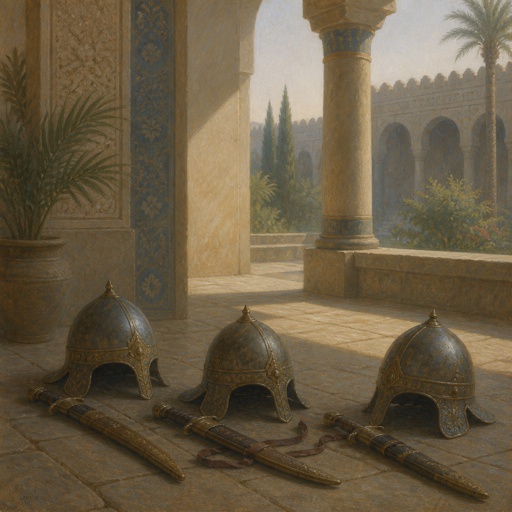
"And Parshandatha, and Dalphon, and Aspatha," - Esther 9:7

Esther 2:20 - "Esther had not yet shewed her kindred nor her people; as Mordecai had charged her: for Esther did the commandment of Mordecai, like as when she was brought up with him."

Esther 5:2

Esther 5:2

Esther 5:2

Esther 2:11 - "And Mordecai walked every day before the court of the women's house, to know how Esther did, and what should become of her."

Esther 6:7 - "And Haman answered the king, For the man whom the king delighteth to honour,"

Esther 2:10 - "Esther had not shewed her people nor her kindred: for Mordecai had charged her that she should not shew it."

"And Esther said, The adversary and enemy is this wicked Haman. Then Haman was afraid before the king and the queen." - Esther 7:6

Esther 7:3 - "Then Esther the queen answered and said, If I have found favour in thy sight, O king, and if it please the king, let my life be given me at my petition, and my people at my request:"

Esther 5:2 - "And it was so, when the king saw Esther the queen standing in the court, that she obtained favour in his sight: and the king held out to Esther the golden sceptre that was in his hand. So Esther drew near, and touched the top of the sceptre."

"And the thing was known to Mordecai, who told it unto Esther the queen; and Esther certified the king thereof in Mordecai's name." - Esther 2:22

Esther 2:16 - "So Esther was taken unto king Ahasuerus into his house royal in the tenth month, which is the month Tebeth, in the seventh year of his reign."

Esther 8:2 - "And the king took off his ring, which he had taken from Haman, and gave it unto Mordecai. And Esther set Mordecai over the house of Haman."

Esther 7:10 - "So they hanged Haman on the gallows that he had prepared for Mordecai. Then was the king's wrath pacified."