What does Esther 2:18 mean?
“Then the king made a great feast unto all his princes and his servants, even Esther’s feast; and he made a release to the provinces, and gave gifts, according to the state of the king.” — Esther 2:18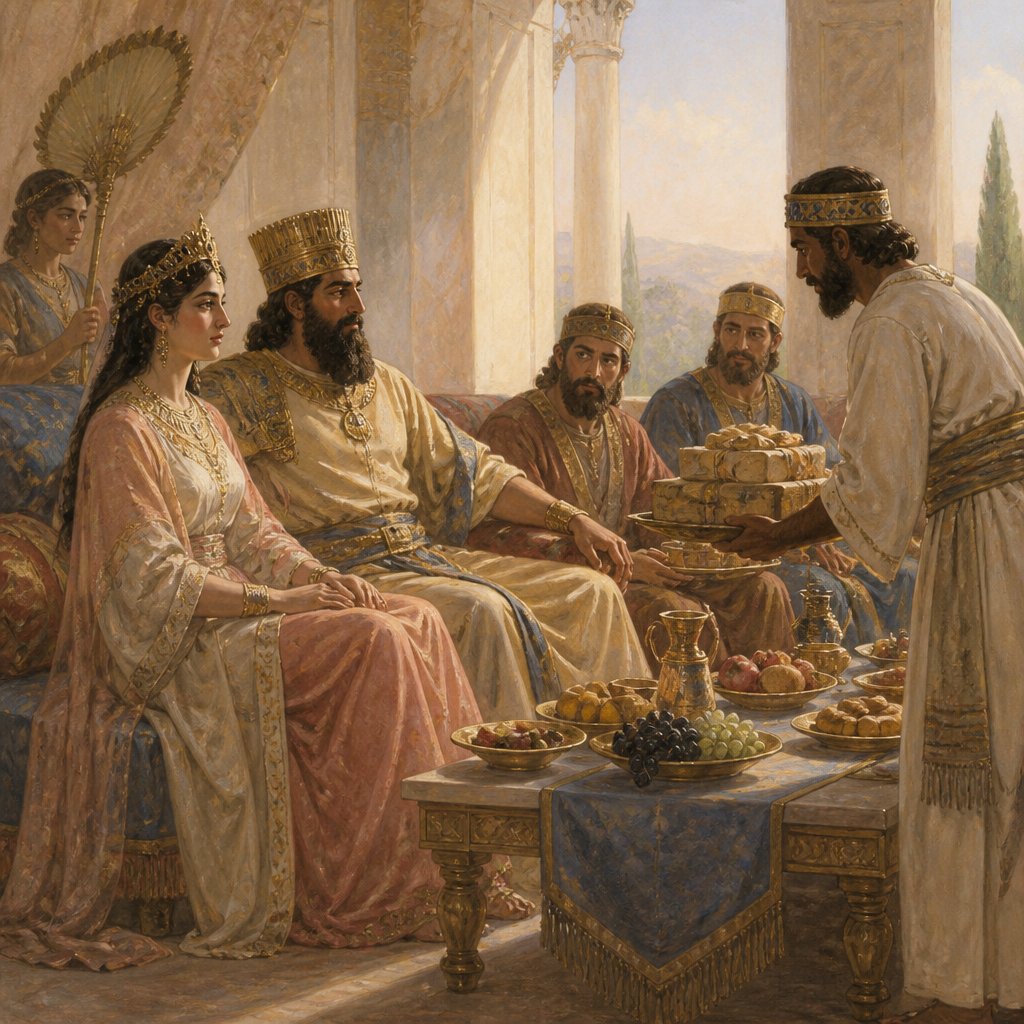
The verse Esther 2:18 from the King James Version (KJV) states, "Then the king made a great feast unto all his princes and his servants, even Esther's feast; and he made a release to the provinces, and gave gifts, according to the state of the king."
This verse comes from the book of Esther, which is part of the Old Testament. The book of Esther tells the story of a Jewish girl named Esther who becomes the queen of Persia and saves her people from a plot to destroy them. This specific verse occurs after Esther is chosen as queen and is a pivotal moment in the narrative.
In this verse, we see King Ahasuerus throwing a great feast for all his princes and servants, which is referred to as Esther's feast. This is a significant event, as it not only highlights the king's favor towards Esther but also sets the stage for the unfolding of events in the rest of the book.
The feast can be seen as a symbol of King Ahasuerus' wealth and power, as well as a display of his grandeur and authority. By hosting such a lavish event, the king is demonstrating his status and superiority, as well as his ability to provide for his subjects.
Additionally, the mention of the release to the provinces and the giving of gifts reflects the king's generosity and benevolence. It shows that he is not only concerned with his own pleasure and indulgence but also with the well-being of his people. This gesture of releasing the provinces and giving gifts can be interpreted as a form of celebration and gratitude, further highlighting the joyous occasion of Esther's feast.
However, this verse also raises questions about the deeper meaning behind the feast and the king's actions. Some scholars interpret the feast as a display of the king's indulgence and extravagance, which could be seen as a reflection of his character and the opulence of his court. This interpretation raises themes of power, luxury, and authority, as well as the responsibilities and expectations that come with such privileges.
Furthermore, the mention of Esther's feast specifically raises questions about her role in the event. As the queen, Esther holds a position of influence and importance, and her presence at the feast carries significant meaning. It can be seen as a demonstration of her acceptance and integration into the royal court, as well as a symbol of her growing influence over the king and his court.
The verse can also be viewed in the context of Esther's identity as a Jewish woman in a foreign land. Despite her background, Esther's rise to power and her involvement in the king's court challenge traditional notions of authority and belonging. This speaks to the themes of identity, inclusion, and the complexities of navigating different cultures and social hierarchies.
In conclusion, Esther 2:18 from the King James Version (KJV) offers a rich and nuanced portrayal of the feast hosted by King Ahasuerus and its significance within the narrative of the book of Esther. The verse brings to light themes of power, authority, and identity, while also raising questions about the motivations and implications of the king's actions. Through its symbolism and context, the verse invites readers to consider the complexities of leadership, privilege, and belonging, as well as the agency and influence of individuals such as Esther within larger societal structures.
Get our apps


Artwork for Esther 2:18
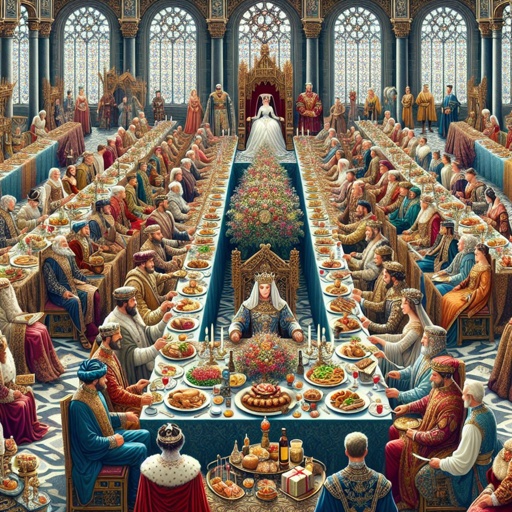
Esther 2:18 - "Then the king made a great feast unto all his princes and his servants, even Esther's feast; and he made a release to the provinces, and gave gifts, according to the state of the king."
"Then the king made a great feast unto all his princes and his servants, even Esther's feast; and he made a release to the provinces, and gave gifts, according to the state of the king." - Esther 2:18

Esther 2:22 - "And the thing was known to Mordecai, who told it unto Esther the queen; and Esther certified the king thereof in Mordecai's name."

Esther 5:2 - "And it was so, when the king saw Esther the queen standing in the court, that she obtained favour in his sight: and the king held out to Esther the golden sceptre that was in his hand. So Esther drew near, and touched the top of the sceptre."

Esther 7:2 - "And the king said again unto Esther on the second day at the banquet of wine, What is thy petition, queen Esther? and it shall be granted thee: and what is thy request? and it shall be performed, even to the half of the kingdom."

Esther 2:20 - "Esther had not yet shewed her kindred nor her people; as Mordecai had charged her: for Esther did the commandment of Mordecai, like as when she was brought up with him."

Esther 5:2

Esther 5:2

Esther 5:2

Esther 2:11 - "And Mordecai walked every day before the court of the women's house, to know how Esther did, and what should become of her."

Esther 2:10 - "Esther had not shewed her people nor her kindred: for Mordecai had charged her that she should not shew it."

Esther 5:2 - "And it was so, when the king saw Esther the queen standing in the court, that she obtained favour in his sight: and the king held out to Esther the golden sceptre that was in his hand. So Esther drew near, and touched the top of the sceptre."

"And the thing was known to Mordecai, who told it unto Esther the queen; and Esther certified the king thereof in Mordecai's name." - Esther 2:22

Esther 2:16 - "So Esther was taken unto king Ahasuerus into his house royal in the tenth month, which is the month Tebeth, in the seventh year of his reign."

Esther 8:2 - "And the king took off his ring, which he had taken from Haman, and gave it unto Mordecai. And Esther set Mordecai over the house of Haman."
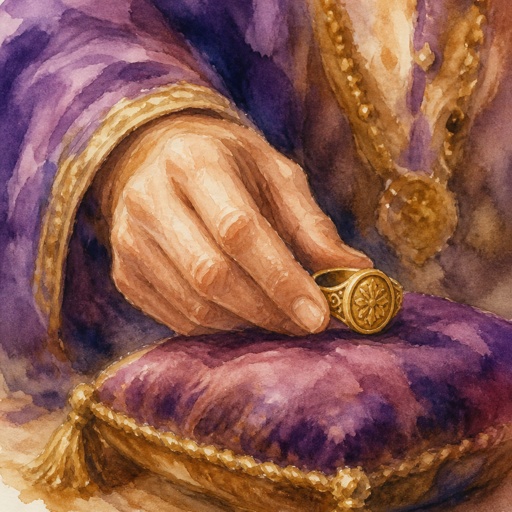
Esther 8:2 focus on the ring

Esther 2:15 - "¶ Now when the turn of Esther, the daughter of Abihail the uncle of Mordecai, who had taken her for his daughter, was come to go in unto the king, she required nothing but what Hegai the king's chamberlain, the keeper of the women, appointed. And Esther obtained favour in the sight of all them that looked upon her."

Esther 2:2 - "Then said the king's servants that ministered unto him, Let there be fair young virgins sought for the king:"

Esther 9:18 - "But the Jews that were at Shushan assembled together on the thirteenth day thereof, and on the fourteenth thereof; and on the fifteenth day of the same they rested, and made it a day of feasting and gladness."

Esther 2:17 - "And the king loved Esther above all the women, and she obtained grace and favour in his sight more than all the virgins; so that he set the royal crown upon her head, and made her queen instead of Vashti."

Esther 2:7 - "And he brought up Hadassah, that is, Esther, his uncle's daughter: for she had neither father nor mother, and the maid was fair and beautiful; whom Mordecai, when her father and mother were dead, took for his own daughter."
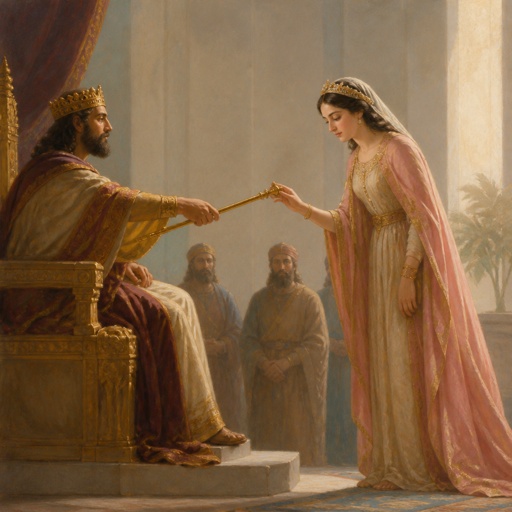
"And it was so, when the king saw Esther the queen standing in the court, that she obtained favour in his sight: and the king held out to Esther the golden sceptre that was in his hand. So Esther drew near, and touched the top of the sceptre." - Esther 5:2

Esther 1:18 - "Likewise shall the ladies of Persia and Media say this day unto all the king's princes, which have heard of the deed of the queen. Thus shall there arise too much contempt and wrath."

Esther 2:8 - "¶ So it came to pass, when the king's commandment and his decree was heard, and when many maidens were gathered together unto Shushan the palace, to the custody of Hegai, that Esther was brought also unto the king's house, to the custody of Hegai, keeper of the women."

Esther 2:19 - "And when the virgins were gathered together the second time, then Mordecai sat in the king's gate."

Esther 1:2 - "That in those days, when the king Ahasuerus sat on the throne of his kingdom, which was in Shushan the palace,"
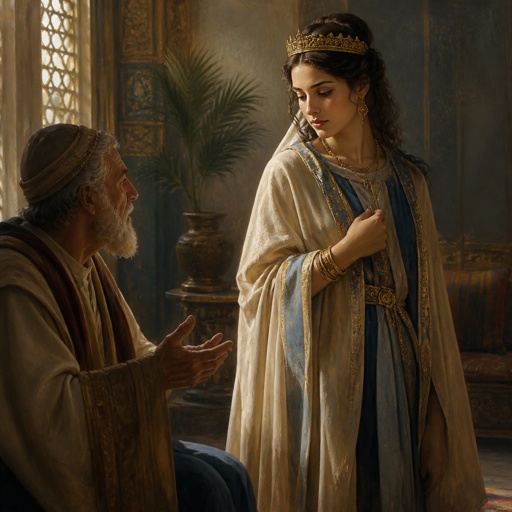
"Esther had not yet shewed her kindred nor her people; as Mordecai had charged her: for Esther did the commandment of Mordecai, like as when she was brought up with him." - Esther 2:20

Esther 4:2 - "And came even before the king's gate: for none might enter into the king's gate clothed with sackcloth."
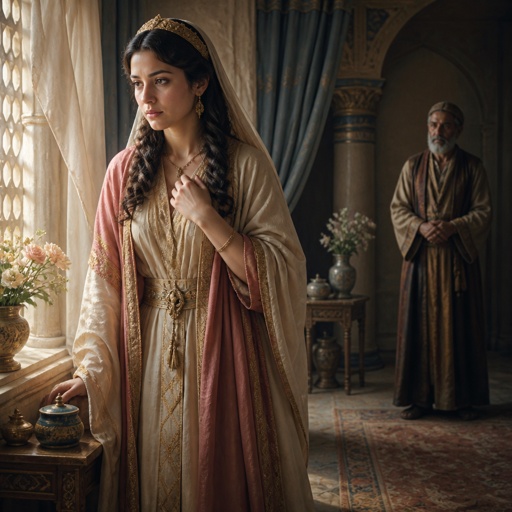
"Esther had not shewed her people nor her kindred: for Mordecai had charged her that she should not shew it." - Esther 2:10
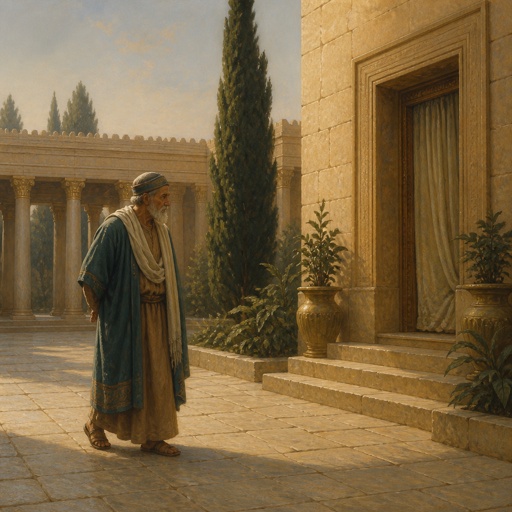
"And Mordecai walked every day before the court of the women's house, to know how Esther did, and what should become of her." - Esther 2:11