What does Esther 3:10 mean?
“And the king took his ring from his hand, and gave it unto Haman the son of Hammedatha the Agagite, the Jews’ enemy.” — Esther 3:10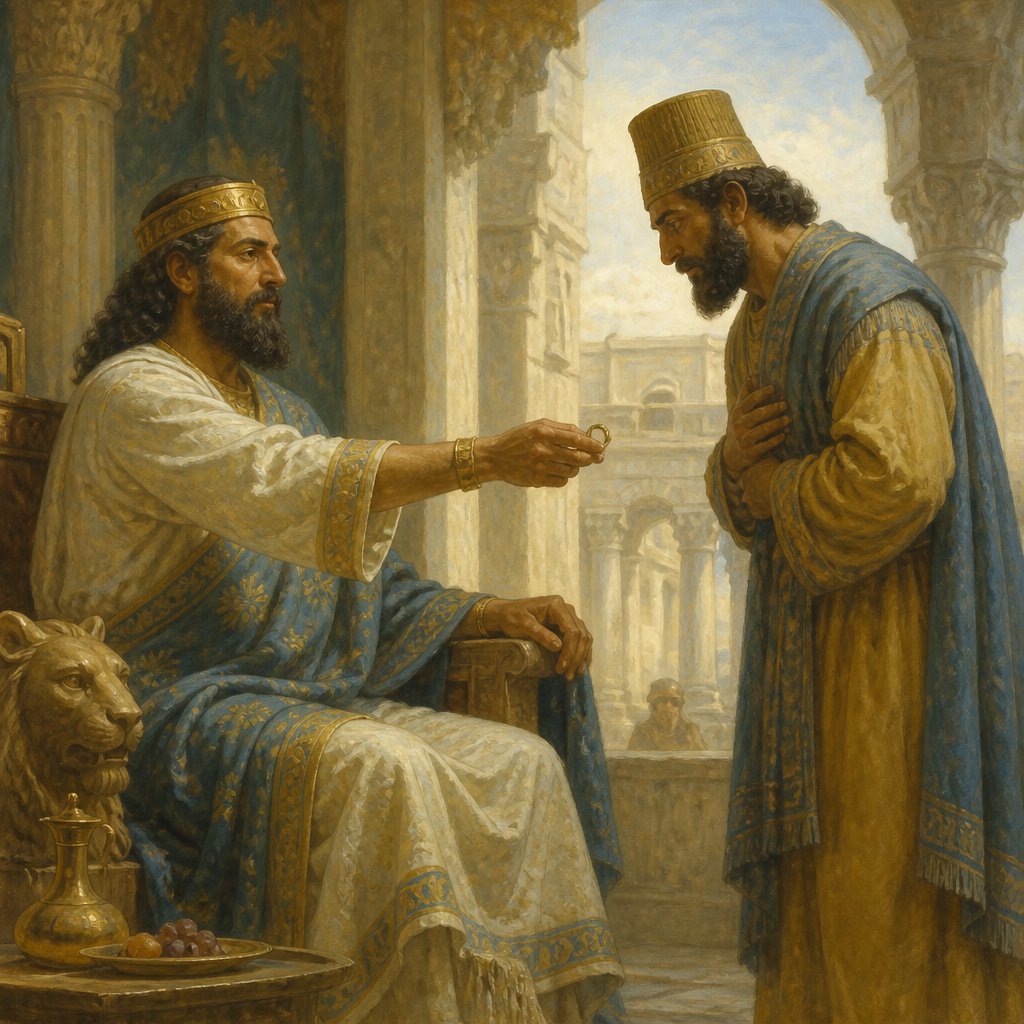
The book of Esther in the Old Testament tells the story of a Jewish girl named Esther who became queen of Persia and her role in saving her people from a plot to destroy them. The verse Esther 3:10 in the King James Version (KJV) reads:
"And the king took his ring from his hand, and gave it unto Haman the son of Hammedatha the Agagite, the Jews' enemy."
To fully understand the significance of this verse, it is important to delve into the context and themes of the book of Esther. The story takes place during the reign of King Xerxes I of Persia, also known as Ahasuerus, and begins with a lavish banquet that lasted for 180 days. The king decided to showcase his wealth and power to his people, and during this time, he ordered his queen, Vashti, to come and display her beauty before the men at the banquet. When Vashti refused, she was deposed, and a new queen needed to be found.
Esther, a Jewish orphan raised by her cousin Mordecai, was chosen to be the new queen. Ahasuerus was unaware of her Jewish heritage. Meanwhile, the king's advisor, Haman, was an enemy of the Jewish people. Haman was a descendant of Agag, the king of the Amalekites whom the Israelites were commanded to destroy (1 Samuel 15:3). Haman held a position of great power and authority, and due to a personal grudge against Mordecai, he devised a plan to annihilate all the Jews in the kingdom. He convinced the king to issue a decree for their destruction.
In Esther 3:10, we see King Ahasuerus giving his signet ring to Haman, granting him the authority to carry out his plan. The signet ring was a sign of authority and sovereignty, and by giving it to Haman, the king was effectively giving him the power to act on his behalf, authorizing the edict to exterminate the Jewish people.
The symbolism in this verse is significant. The king's ring represents his authority and sovereignty, and by giving it to Haman, he was entrusting him with the power to carry out his plans. This symbolizes the misuse of power and the consequences of unchecked authority. Haman's desire to destroy the Jewish people stems from his pride and arrogance, and his influence over the king allows his malicious intentions to come to fruition.
The themes of power, pride, and providence are prevalent throughout the book of Esther. The misuse of power by Haman and the king's heedlessness in granting his advisors such authority reflect the dangers of absolute power and the potential for it to be used for evil purposes. It also illustrates the consequences of pride and the havoc it can wreak when left unchecked.
In the greater context of the story, this verse serves as a turning point, as it sets the stage for Esther's intervention and the salvation of her people. Mordecai urges Esther to intercede on behalf of the Jewish people, and although she initially hesitates due to the risk involved, she ultimately takes action, risking her own life to appeal to the king on behalf of her people. Through a series of events orchestrated by divine providence, the Jewish people are ultimately saved from destruction.
In conclusion, Esther 3:10 in the King James Version holds great significance in the story of Esther, as it symbolizes the misuse of power and the consequences of pride and unchecked authority. It serves as a catalyst for the events that follow, ultimately leading to the deliverance of the Jewish people through the bravery and intervention of Esther. This verse reminds us of the dangers of allowing pride and power to go unchallenged and the potential for good to triumph over evil through acts of courage and righteousness.
Get our apps


Artwork for Esther 3:10
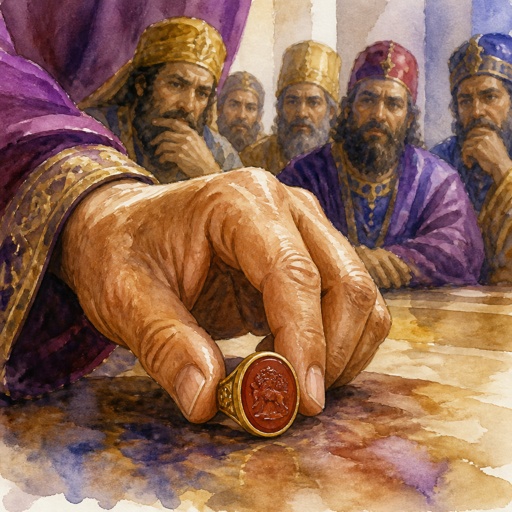
Esther 3:10 focus on ring

Esther 3:10 - "And the king took his ring from his hand, and gave it unto Haman the son of Hammedatha the Agagite, the Jews' enemy."
"And the king took his ring from his hand, and gave it unto Haman the son of Hammedatha the Agagite, the Jews' enemy." - Esther 3:10

Esther 4:10 - "¶ Again Esther spake unto Hatach, and gave him commandment unto Mordecai;"

Esther 10:3 - "For Mordecai the Jew was next unto king Ahasuerus, and great among the Jews, and accepted of the multitude of his brethren, seeking the wealth of his people, and speaking peace to all his seed."

Esther 2:10 - "Esther had not shewed her people nor her kindred: for Mordecai had charged her that she should not shew it."

Esther 5:3 - "Then said the king unto her, What wilt thou, queen Esther? and what is thy request? it shall be even given thee to the half of the kingdom."
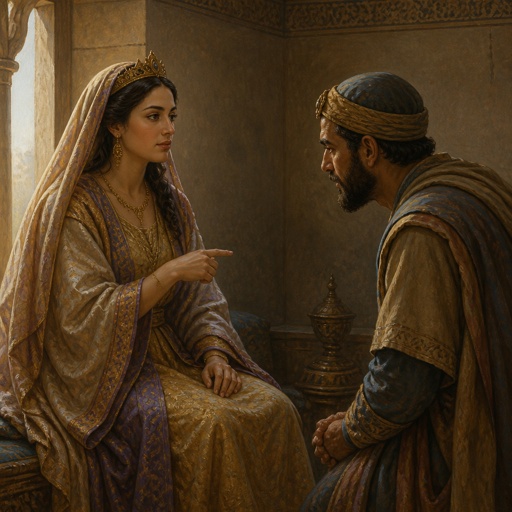
"¶ Again Esther spake unto Hatach, and gave him commandment unto Mordecai;" - Esther 4:10

Esther 10:1 - "And the king Ahasuerus laid a tribute upon the land, and upon the isles of the sea."

Esther 3:3 - "Then the king's servants, which were in the king's gate, said unto Mordecai, Why transgressest thou the king's commandment?"

Esther 8:3 - "¶ And Esther spake yet again before the king, and fell down at his feet, and besought him with tears to put away the mischief of Haman the Agagite, and his device that he had devised against the Jews."

Esther 9:10 - "The ten sons of Haman the son of Hammedatha, the enemy of the Jews, slew they; but on the spoil laid they not their hand."

Esther 7:3 - "Then Esther the queen answered and said, If I have found favour in thy sight, O king, and if it please the king, let my life be given me at my petition, and my people at my request:"

Esther 7:10 - "So they hanged Haman on the gallows that he had prepared for Mordecai. Then was the king's wrath pacified."

Esther 3:5 - "And when Haman saw that Mordecai bowed not, nor did him reverence, then was Haman full of wrath."

"Esther had not shewed her people nor her kindred: for Mordecai had charged her that she should not shew it." - Esther 2:10

Esther 5:10 - "Nevertheless Haman refrained himself: and when he came home, he sent and called for his friends, and Zeresh his wife."

Esther 8:10 - "And he wrote in the king Ahasuerus' name, and sealed it with the king's ring, and sent letters by posts on horseback, and riders on mules, camels, and young dromedaries:"

Esther 9:3 - "And all the rulers of the provinces, and the lieutenants, and the deputies, and officers of the king, helped the Jews; because the fear of Mordecai fell upon them."

Esther 3:14 - "The copy of the writing for a commandment to be given in every province was published unto all people, that they should be ready against that day."

Esther 3:11 - "And the king said unto Haman, The silver is given to thee, the people also, to do with them as it seemeth good to thee."

Esther 10:2 - "And all the acts of his power and of his might, and the declaration of the greatness of Mordecai, whereunto the king advanced him, are they not written in the book of the chronicles of the kings of Media and Persia?"
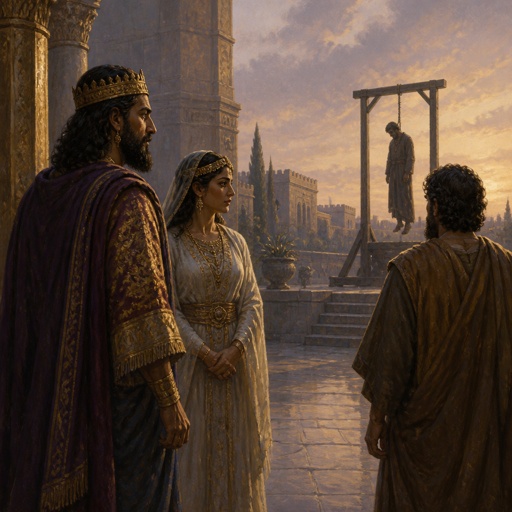
"So they hanged Haman on the gallows that he had prepared for Mordecai. Then was the king's wrath pacified." - Esther 7:10
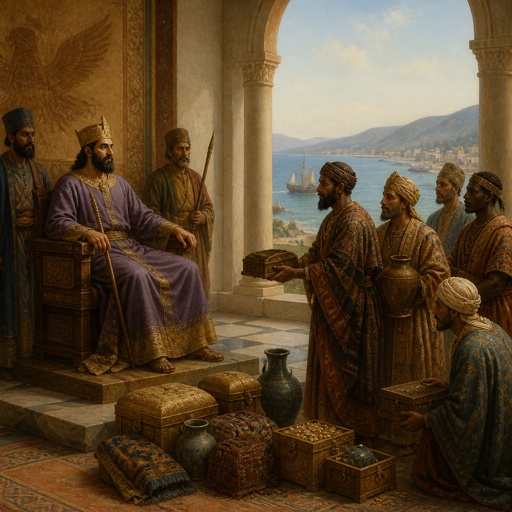
"And the king Ahasuerus laid a tribute upon the land, and upon the isles of the sea." - Esther 10:1
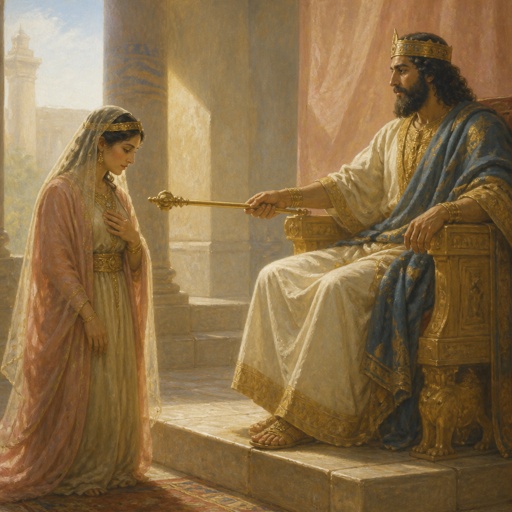
"Then said the king unto her, What wilt thou, queen Esther? and what is thy request? it shall be even given thee to the half of the kingdom." - Esther 5:3
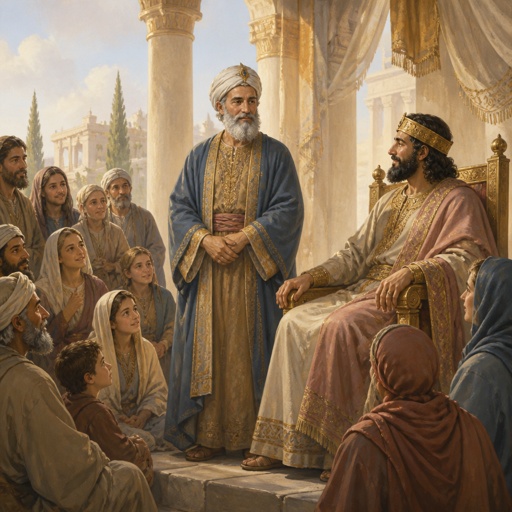
"For Mordecai the Jew was next unto king Ahasuerus, and great among the Jews, and accepted of the multitude of his brethren, seeking the wealth of his people, and speaking peace to all his seed." - Esther 10:3

Esther 3:15 - "The posts went out, being hastened by the king's commandment, and the decree was given in Shushan the palace. And the king and Haman sat down to drink; but the city Shushan was perplexed."

Esther 6:3 - "And the king said, What honour and dignity hath been done to Mordecai for this? Then said the king's servants that ministered unto him, There is nothing done for him."

Esther 3:1 - "After these things did king Ahasuerus promote Haman the son of Hammedatha the Agagite, and advanced him, and set his seat above all the princes that were with him."

Esther 4:3 - "And in every province, whithersoever the king's commandment and his decree came, there was great mourning among the Jews, and fasting, and weeping, and wailing; and many lay in sackcloth and ashes."