What does Esther 3:9 mean?
“If it please the king, let it be written that they may be destroyed: and I will pay ten thousand talents of silver to the hands of those that have the charge of the business, to bring it into the king’s treasuries.” — Esther 3:9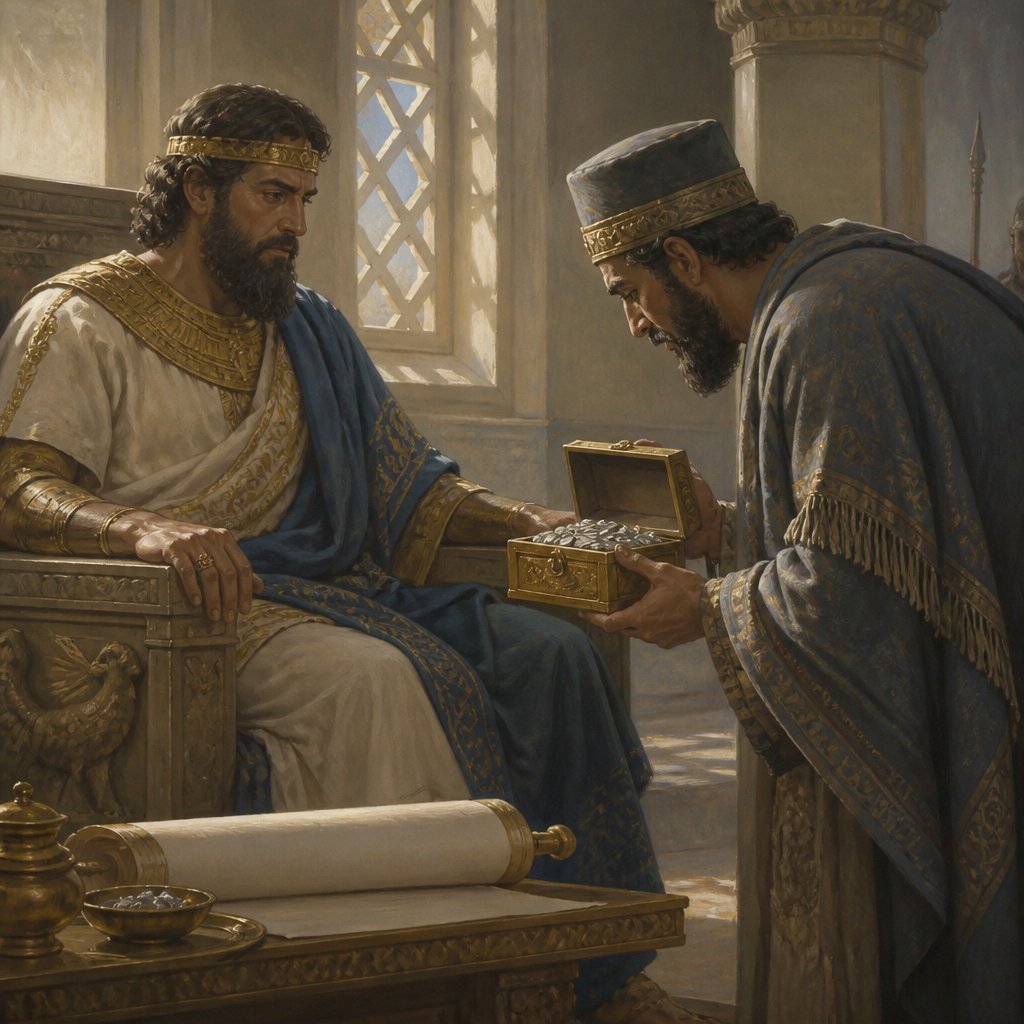
The book of Esther, found in the Old Testament of the Bible, tells the story of a Jewish girl named Esther who becomes queen of Persia and ultimately saves her people from destruction. The verse Esther 3:9 in the King James Version (KJV) reads:
"If it please the king, let it be written that they may be destroyed: and I will pay ten thousand talents of silver to the hands of those that have the charge of the business, to bring it into the king's treasuries."
This verse is part of a larger passage in which the villainous character Haman, the prime minister of Persia, orchestrates a plot to annihilate the Jewish people. He convinces King Xerxes to issue a decree that all Jews within the kingdom should be killed on a certain day. In this particular verse, Haman offers to finance the operation by paying ten thousand talents of silver to the officials in charge of carrying out the massacre.
The verse Esther 3:9 is a pivotal moment in the story, as it represents the height of the tension and danger faced by the Jewish people in Persia. It also serves as a moment of moral reckoning for the characters involved, particularly King Xerxes and Esther, who must decide whether to intervene and save their people.
One of the key themes in this passage is the concept of moral courage and the willingness to stand up for what is right in the face of adversity. Haman's offer to finance the destruction of the Jewish people with a vast sum of money highlights the greed and cruelty of the antagonist, as well as the corrupt nature of the Persian court. The verse also illuminates the depth of the threat faced by the Jewish community, as it is not just a matter of their physical safety, but also their economic security.
The context of Esther 3:9 is crucial for understanding its significance. The book of Esther takes place during the time of the Babylonian exile, when the Jewish people were dispersed throughout the ancient Near East. It is a period of intense persecution and struggle for survival, and the story of Esther represents a message of hope and resilience for the Jewish people. The verse illustrates the grave danger faced by the Jewish community in Persia and sets the stage for Esther's courageous intervention to save her people.
Symbolically, the ten thousand talents of silver mentioned in Esther 3:9 represent the immense cost of the evil plot to destroy the Jewish people. The large sum of money underscores the extent of Haman's wickedness and the scale of the threat faced by the Jewish community. Additionally, the offer of silver serves as a stark contrast to the selflessness and bravery displayed by Esther later in the story, as she risks her own life to appeal to King Xerxes on behalf of her people.
In conclusion, Esther 3:9 is a powerful and dramatic verse that captures the urgency and peril faced by the Jewish people in Persia. It also serves as a catalyst for the unfolding of the rest of the story, in which Esther ultimately saves her people and brings about the downfall of Haman. The verse highlights key themes of moral courage, persecution, and resilience, and offers a timeless message of hope and redemption for those facing adversity.
Get our apps


Artwork for Esther 3:9
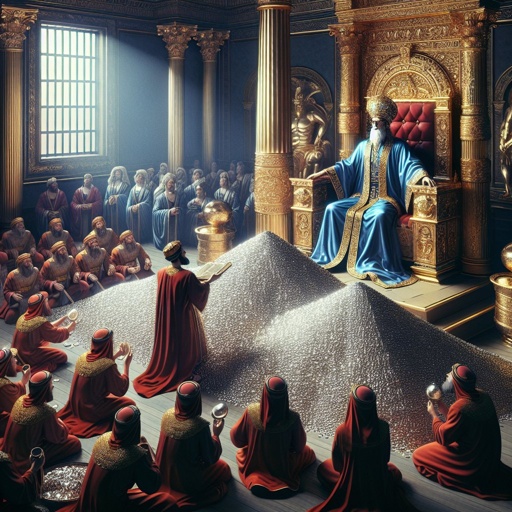
Esther 3:9 - "If it please the king, let it be written that they may be destroyed: and I will pay ten thousand talents of silver to the hands of those that have the charge of the business, to bring it into the king's treasuries."
"If it please the king, let it be written that they may be destroyed: and I will pay ten thousand talents of silver to the hands of those that have the charge of the business, to bring it into the king's treasuries." - Esther 3:9

Esther 9:3 - "And all the rulers of the provinces, and the lieutenants, and the deputies, and officers of the king, helped the Jews; because the fear of Mordecai fell upon them."

Esther 4:9 - "And Hatach came and told Esther the words of Mordecai."

Esther 9:32 - "And the decree of Esther confirmed these matters of Purim; and it was written in the book."

Esther 9:9 - "And Parmashta, and Arisai, and Aridai, and Vajezatha,"

Esther 9:29 - "Then Esther the queen, the daughter of Abihail, and Mordecai the Jew, wrote with all authority, to confirm this second letter of Purim."

"And Hatach came and told Esther the words of Mordecai." - Esther 4:9

Esther 9:8 - "And Poratha, and Adalia, and Aridatha,"

Esther 9:7 - "And Parshandatha, and Dalphon, and Aspatha,"

"And the decree of Esther confirmed these matters of Purim; and it was written in the book." - Esther 9:32
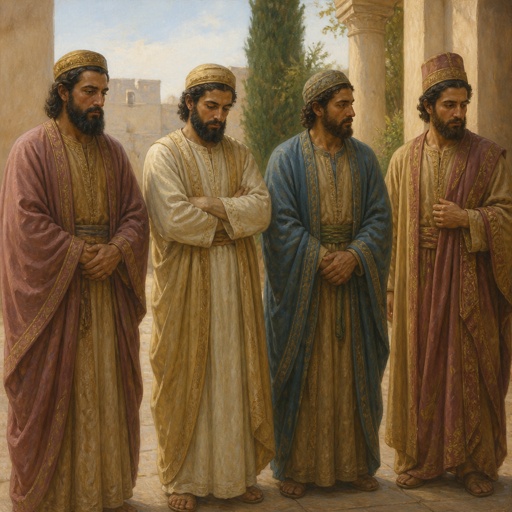
"And Parmashta, and Arisai, and Aridai, and Vajezatha," - Esther 9:9

Esther 5:3 - "Then said the king unto her, What wilt thou, queen Esther? and what is thy request? it shall be even given thee to the half of the kingdom."

Esther 9:31 - "To confirm these days of Purim in their times appointed, according as Mordecai the Jew and Esther the queen had enjoined them, and as they had decreed for themselves and for their seed, the matters of the fastings and their cry."

Esther 9:13 - "Then said Esther, If it please the king, let it be granted to the Jews which are in Shushan to do to morrow also according unto this day's decree, and let Haman's ten sons be hanged upon the gallows."
"And Parshandatha, and Dalphon, and Aspatha," - Esther 9:7
"And Poratha, and Adalia, and Aridatha," - Esther 9:8
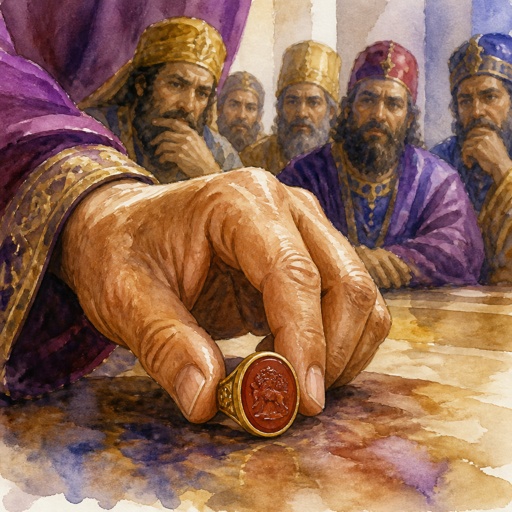
Esther 3:10 focus on ring

Esther 9:6 - "And in Shushan the palace the Jews slew and destroyed five hundred men."

Esther 3:3 - "Then the king's servants, which were in the king's gate, said unto Mordecai, Why transgressest thou the king's commandment?"
"And all the rulers of the provinces, and the lieutenants, and the deputies, and officers of the king, helped the Jews; because the fear of Mordecai fell upon them." - Esther 9:3

Esther 9:25 - "But when Esther came before the king, he commanded by letters that his wicked device, which he devised against the Jews, should return upon his own head, and that he and his sons should be hanged on the gallows."

Esther 8:3 - "¶ And Esther spake yet again before the king, and fell down at his feet, and besought him with tears to put away the mischief of Haman the Agagite, and his device that he had devised against the Jews."

Esther 9:10 - "The ten sons of Haman the son of Hammedatha, the enemy of the Jews, slew they; but on the spoil laid they not their hand."

Esther 9:11 - "On that day the number of those that were slain in Shushan the palace was brought before the king."

Esther 9:23 - "And the Jews undertook to do as they had begun, and as Mordecai had written unto them;"
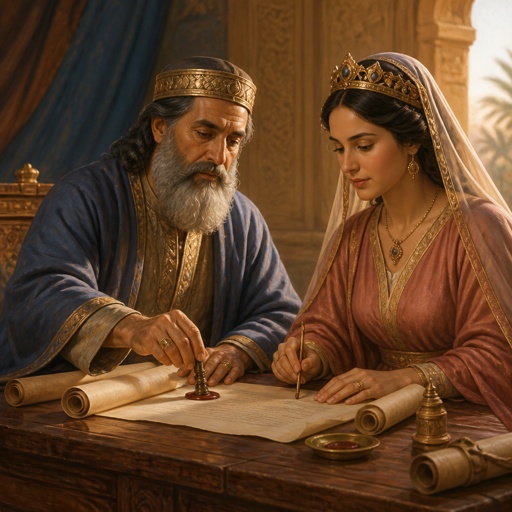
"Then Esther the queen, the daughter of Abihail, and Mordecai the Jew, wrote with all authority, to confirm this second letter of Purim." - Esther 9:29

Esther 7:3 - "Then Esther the queen answered and said, If I have found favour in thy sight, O king, and if it please the king, let my life be given me at my petition, and my people at my request:"

Esther 9:17 - "On the thirteenth day of the month Adar; and on the fourteenth day of the same rested they, and made it a day of feasting and gladness."

Esther 1:9 - "Also Vashti the queen made a feast for the women in the royal house which belonged to king Ahasuerus."