What does Esther 4:14 mean?
“For if thou altogether holdest thy peace at this time, then shall there enlargement and deliverance arise to the Jews from another place; but thou and thy father’s house shall be destroyed: and who knoweth whether thou art come to the kingdom for such a time as this?” — Esther 4:14
The Bible verse Esther 4:14 from the King James Version (KJV) reads: "For if thou altogether holdest thy peace at this time, then shall there enlargement and deliverance arise to the Jews from another place; but thou and thy father's house shall be destroyed: and who knoweth whether thou art come to the kingdom for such a time as this?"
Esther 4:14 is a pivotal verse in the Book of Esther, a narrative that offers profound lessons on courage, divine providence, and the responsibilities of leadership. The verse represents a critical moment in the story, where Mordecai, a Jewish leader, urges his cousin Esther to intercede on behalf of their people and appeal to King Xerxes to rescind a decree that would result in the annihilation of the Jewish community.
The Book of Esther is set in the Persian Empire and tells the story of a Jewish girl named Esther who becomes queen to King Xerxes. As the plot unfolds, it is revealed that Haman, an influential official in the Persian court, plots to exterminate the Jewish people. In response, Mordecai implores Esther to use her position of influence to intervene and save their people, even though doing so could endanger her own life.
The verse presents a profound call to action, emphasizing the need for moral courage and the recognition of divine providence. Mordecai appeals to Esther's sense of responsibility to her people, warning her that her silence will not prevent deliverance for the Jews, but that she and her family will face dire consequences if she fails to act. This verse encapsulates the urgency and gravity of the situation, highlighting the high stakes involved in Esther's decision.
One of the central themes of Esther 4:14 is the concept of divine providence and the idea that individuals are called to fulfill specific roles in the unfolding of God's plan. Mordecai implies that Esther has been placed in her position as queen for a particular purpose and that her actions at this critical moment have the potential to bring about deliverance for the Jewish people. This idea underscores the belief that God works through individuals to achieve his purposes, and that each person has a unique role to play in the larger narrative of redemption and salvation.
Another important theme in Esther 4:14 is the moral obligation to act in the face of injustice and oppression. Mordecai's impassioned plea to Esther underscores the necessity of standing up for what is right, even when doing so involves personal risk or sacrifice. The verse serves as a powerful reminder of the moral imperative to speak out against injustice and to use one's influence and resources to advocate for the marginalized and oppressed.
Symbolism also plays a significant role in this verse. Esther's position as queen represents her access to power and influence, as well as the potential for her to effect change on a grand scale. The mention of "enlargement and deliverance" signifies the hope for a reprieve from the impending destruction facing the Jewish people, and the potential for a positive outcome if Esther chooses to act.
In conclusion, Esther 4:14 is a verse that encapsulates the themes of courage, divine providence, moral responsibility, and the potential for individuals to effect positive change in the face of adversity. It serves as a timeless reminder of the importance of standing up for justice and using one's influence for the betterment of others, even in the face of risk and uncertainty. The verse continues to inspire people to recognize and embrace their roles in fulfilling God's purposes and to act with courage and conviction in the pursuit of righteousness.
Get our apps


Artwork for Esther 4:14

Esther 4:14 - "For if thou altogether holdest thy peace at this time, then shall there enlargement and deliverance arise to the Jews from another place; but thou and thy father's house shall be destroyed: and who knoweth whether thou art come to the kingdom for such a time as this?"

Est 4:14 ESV (14) For if you keep silent at this time, relief and deliverance will rise for the Jews from another place, but you and your father's house will perish. And who knows whether you have not come to the kingdom for such a time as this?”
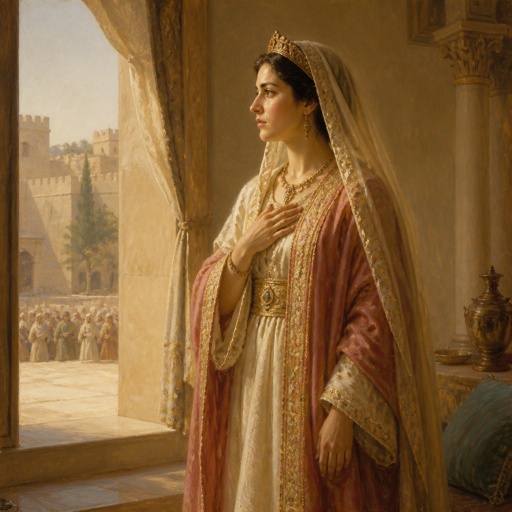
"For if thou altogether holdest thy peace at this time, then shall there enlargement and deliverance arise to the Jews from another place; but thou and thy father's house shall be destroyed: and who knoweth whether thou art come to the kingdom for such a time as this?" - Esther 4:14

Esther 8:4 - "Then the king held out the golden sceptre toward Esther. So Esther arose, and stood before the king,"

Esther 4:15 - "¶ Then Esther bade them return Mordecai this answer,"

Esther 4:9 - "And Hatach came and told Esther the words of Mordecai."

Esther 4:10 - "¶ Again Esther spake unto Hatach, and gave him commandment unto Mordecai;"

Esther 6:14 - "And while they were yet talking with him, came the king's chamberlains, and hasted to bring Haman unto the banquet that Esther had prepared."

Esther 4:17 - "So Mordecai went his way, and did according to all that Esther had commanded him."

Esther 8:4

Esther 4:12 - "And they told to Mordecai Esther's words."

"And Hatach came and told Esther the words of Mordecai." - Esther 4:9

"¶ Then Esther bade them return Mordecai this answer," - Esther 4:15

Esther 4:13 - "Then Mordecai commanded to answer Esther, Think not with thyself that thou shalt escape in the king's house, more than all the Jews."

Esther 5:4 - "And Esther answered, If it seem good unto the king, let the king and Haman come this day unto the banquet that I have prepared for him."

"Then the king held out the golden sceptre toward Esther. So Esther arose, and stood before the king," - Esther 8:4

Esther 4:5 - "Then called Esther for Hatach, one of the king's chamberlains, whom he had appointed to attend upon her, and gave him a commandment to Mordecai, to know what it was, and why it was."

"¶ Again Esther spake unto Hatach, and gave him commandment unto Mordecai;" - Esther 4:10
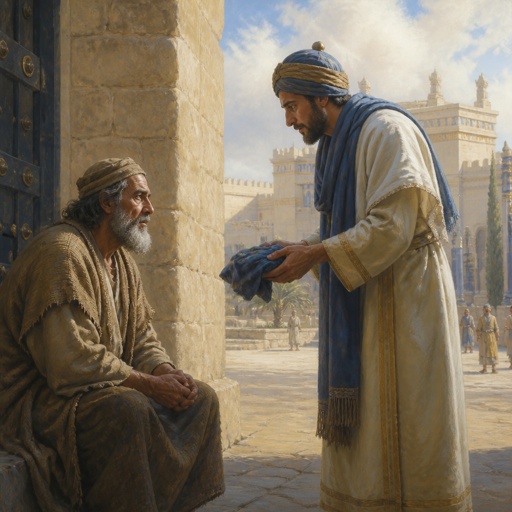
"And they told to Mordecai Esther's words." - Esther 4:12

Esther 9:14 - "And the king commanded it so to be done: and the decree was given at Shushan; and they hanged Haman's ten sons."

"So Mordecai went his way, and did according to all that Esther had commanded him." - Esther 4:17

Esther 3:14 - "The copy of the writing for a commandment to be given in every province was published unto all people, that they should be ready against that day."

"And while they were yet talking with him, came the king's chamberlains, and hasted to bring Haman unto the banquet that Esther had prepared." - Esther 6:14
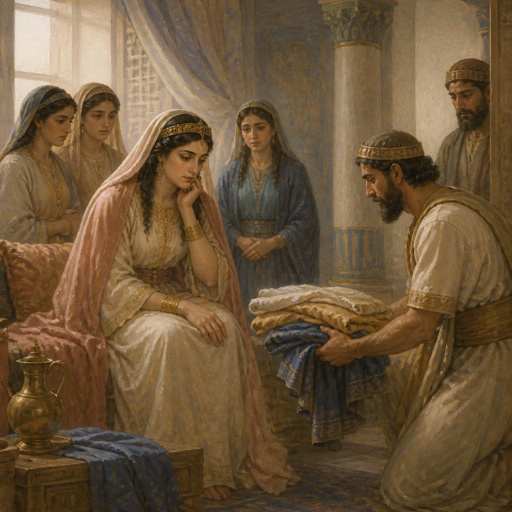
"¶ So Esther's maids and her chamberlains came and told it her. Then was the queen exceedingly grieved; and she sent raiment to clothe Mordecai, and to take away his sackcloth from him: but he received it not." - Esther 4:4

Esther 4:6 - "So Hatach went forth to Mordecai unto the street of the city, which was before the king's gate."

Esther 4:4 - "¶ So Esther's maids and her chamberlains came and told it her. Then was the queen exceedingly grieved; and she sent raiment to clothe Mordecai, and to take away his sackcloth from him: but he received it not."

Esther 4:2 - "And came even before the king's gate: for none might enter into the king's gate clothed with sackcloth."

Esther 8:14 - "So the posts that rode upon mules and camels went out, being hastened and pressed on by the king's commandment. And the decree was given at Shushan the palace."

Esther 4:8 - "Also he gave him the copy of the writing of the decree that was given at Shushan to destroy them, to shew it unto Esther, and to declare it unto her, and to charge her that she should go in unto the king, to make supplication unto him, and to make request before him for her people."
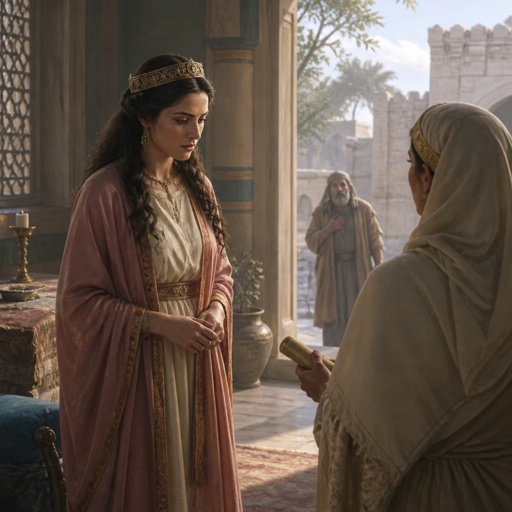
"Then Mordecai commanded to answer Esther, Think not with thyself that thou shalt escape in the king's house, more than all the Jews." - Esther 4:13