What does Esther 5:8 mean?
“If I have found favour in the sight of the king, and if it please the king to grant my petition, and to perform my request, let the king and Haman come to the banquet that I shall prepare for them, and I will do to morrow as the king hath said.” — Esther 5:8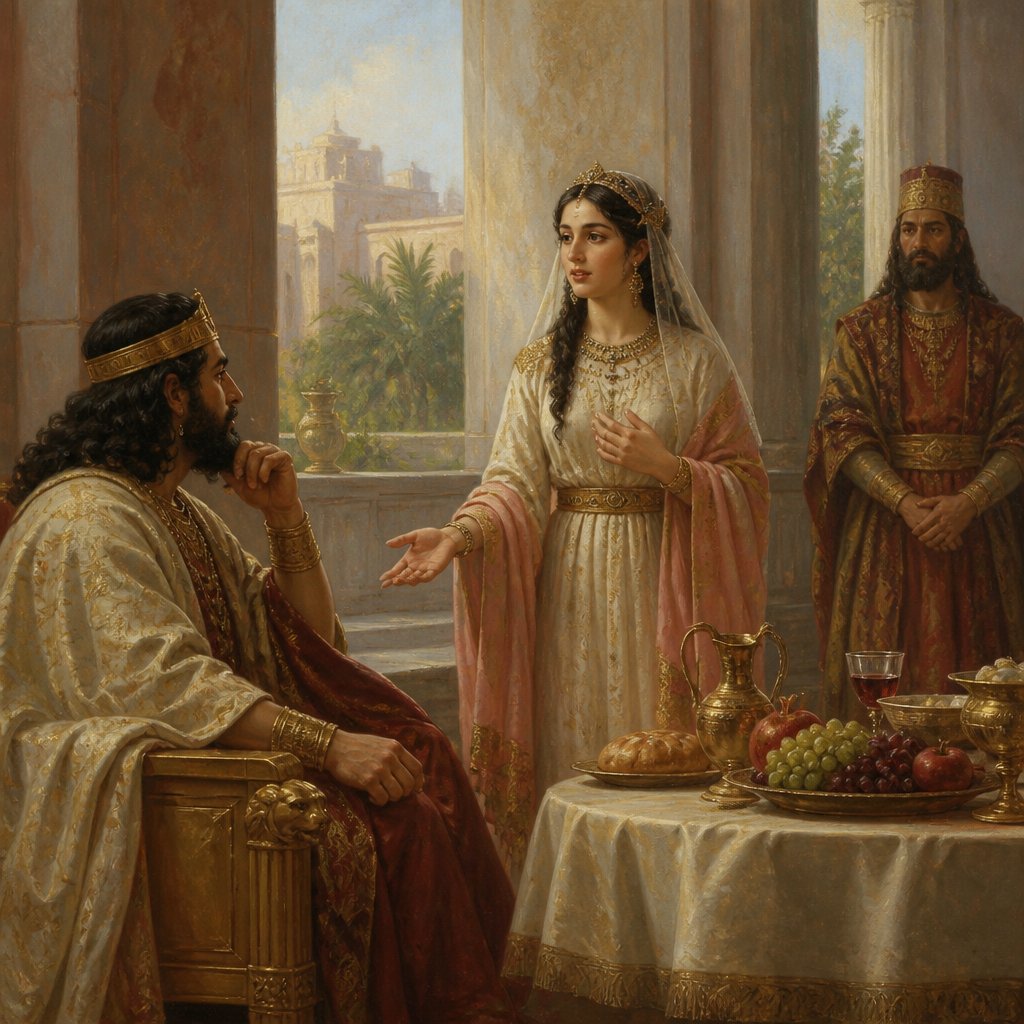
The book of Esther is a powerful and enduring story of courage, faith, and the triumph of good over evil. The story is set in the Persian Empire during the reign of King Xerxes, and revolves around a Jewish woman named Esther who becomes the queen of Persia. The verse Esther 5:8 in the King James Version reads: "If I have found favour in the sight of the king, and if it please the king to grant my petition, and to perform my request, let the king and Haman come to the banquet that I shall prepare for them, and I will do tomorrow as the king hath said."
In this verse, Queen Esther is making a bold and risky move by inviting King Xerxes and his advisor, Haman, to a banquet that she has prepared. This action is the first step in her plan to reveal Haman's evil plot to destroy the Jewish people and to ask the king for their protection. The verse is a pivotal moment in the story, as it sets the stage for Esther to ultimately save her people from destruction.
One of the major themes in the book of Esther is the idea of divine providence and the power of faith. Despite the fact that God is not explicitly mentioned in the book, his presence is felt throughout the story. Esther's bravery in approaching the king, her strategic planning, and the series of events that lead to Haman's downfall all point to a higher power at work. This verse exemplifies Esther's faith and trust in God as she takes a tremendous risk in the hope of saving her people.
Another important theme in the book of Esther is the concept of standing up against injustice. Throughout the story, Esther demonstrates incredible courage as she bravely confronts the oppressive and corrupt forces at work in the Persian court. By risking her own life to expose Haman's wicked plot, Esther becomes a powerful symbol of resistance against tyranny and a beacon of hope for those facing persecution.
The context of this verse is crucial to understanding its significance. At this point in the story, Haman, an arrogant and power-hungry official, has convinced King Xerxes to issue a decree to exterminate all the Jews in the empire. Esther, who has kept her Jewish identity a secret, is deeply distressed by this news and knows that she must act quickly to prevent the impending disaster. Her decision to approach the king, despite the danger it poses to her own life, is a daring and selfless act of heroism.
Symbolism is also an important aspect of this verse and the book of Esther as a whole. The banquet that Esther prepares for the king and Haman is a symbol of her careful planning and her strategic approach to influencing the king. Additionally, the banquet represents a moment of tension and anticipation, as Esther prepares to unveil her true intentions and confront the evil that threatens her people.
In conclusion, Esther 5:8 is a verse of immense significance within the biblical narrative of Esther. It captures the bravery, faith, and determination of Queen Esther as she takes a monumental risk in her quest to save her people. The verse reflects timeless themes of courage, divine providence, and the struggle against injustice, making it a profound and enduring message of hope and inspiration for all who encounter it.
Get our apps


Artwork for Esther 5:8
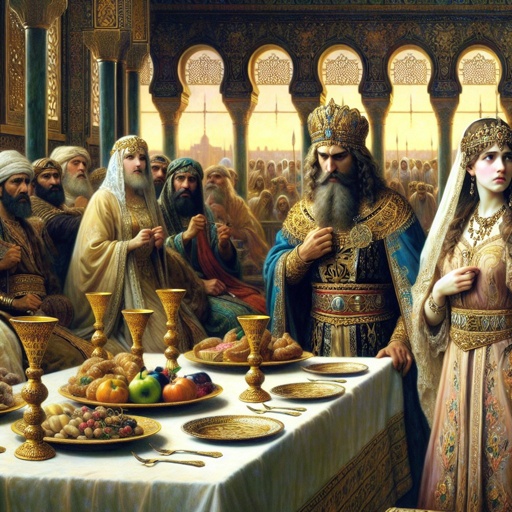
Esther 5:8 - "If I have found favour in the sight of the king, and if it please the king to grant my petition, and to perform my request, let the king and Haman come to the banquet that I shall prepare for them, and I will do to morrow as the king hath said."
"If I have found favour in the sight of the king, and if it please the king to grant my petition, and to perform my request, let the king and Haman come to the banquet that I shall prepare for them, and I will do to morrow as the king hath said." - Esther 5:8

Esther 5:5 - "Then the king said, Cause Haman to make haste, that he may do as Esther hath said. So the king and Haman came to the banquet that Esther had prepared."

Esther 8:4 - "Then the king held out the golden sceptre toward Esther. So Esther arose, and stood before the king,"

Esther 5:7 - "Then answered Esther, and said, My petition and my request is;"

Esther 8:1 - "On that day did the king Ahasuerus give the house of Haman the Jews' enemy unto Esther the queen. And Mordecai came before the king; for Esther had told what he was unto her."

Esther 5:2

Esther 5:2 - "And it was so, when the king saw Esther the queen standing in the court, that she obtained favour in his sight: and the king held out to Esther the golden sceptre that was in his hand. So Esther drew near, and touched the top of the sceptre."
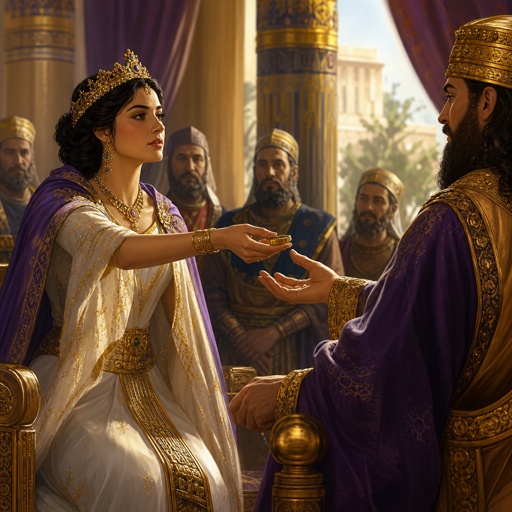
Esther 8:4

Esther 5:2

Esther 5:2

Esther 9:8 - "And Poratha, and Adalia, and Aridatha,"

Esther 8:7 - "¶ Then the king Ahasuerus said unto Esther the queen and to Mordecai the Jew, Behold, I have given Esther the house of Haman, and him they have hanged upon the gallows, because he laid his hand upon the Jews."

Esther 5:4 - "And Esther answered, If it seem good unto the king, let the king and Haman come this day unto the banquet that I have prepared for him."
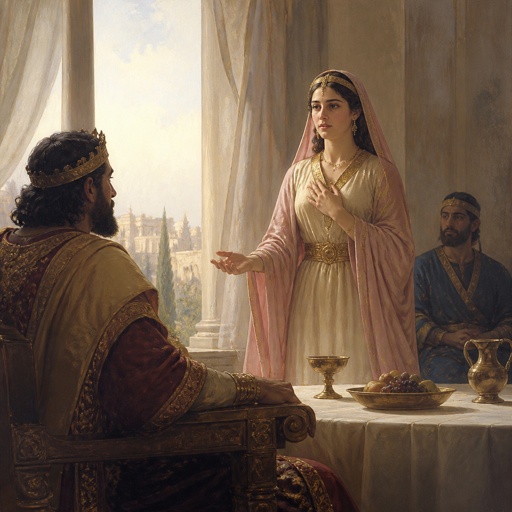
"Then answered Esther, and said, My petition and my request is;" - Esther 5:7

Esther 8:16 - "The Jews had light, and gladness, and joy, and honour."

Esther 5:3 - "Then said the king unto her, What wilt thou, queen Esther? and what is thy request? it shall be even given thee to the half of the kingdom."

Esther 7:5 - "¶ Then the king Ahasuerus answered and said unto Esther the queen, Who is he, and where is he, that durst presume in his heart to do so?"
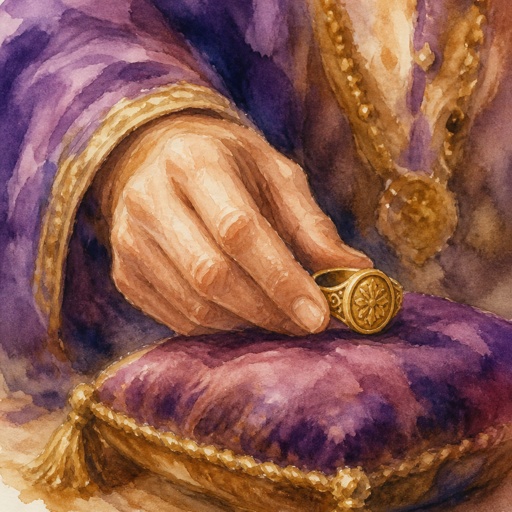
Esther 8:2 focus on the ring

"Then the king held out the golden sceptre toward Esther. So Esther arose, and stood before the king," - Esther 8:4

Esther 8:2 - "And the king took off his ring, which he had taken from Haman, and gave it unto Mordecai. And Esther set Mordecai over the house of Haman."

Esther 5:2 - "And it was so, when the king saw Esther the queen standing in the court, that she obtained favour in his sight: and the king held out to Esther the golden sceptre that was in his hand. So Esther drew near, and touched the top of the sceptre."
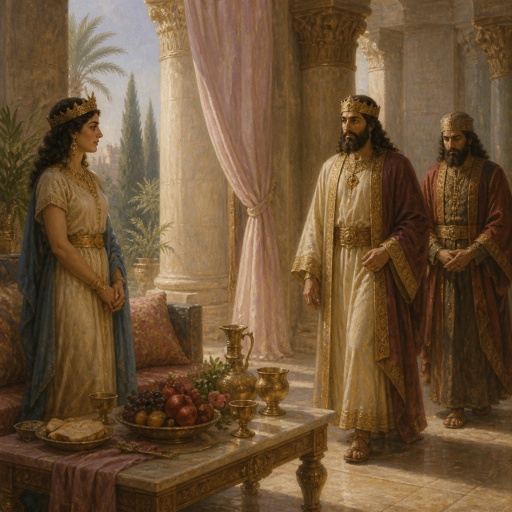
"Then the king said, Cause Haman to make haste, that he may do as Esther hath said. So the king and Haman came to the banquet that Esther had prepared." - Esther 5:5

Esther 4:5 - "Then called Esther for Hatach, one of the king's chamberlains, whom he had appointed to attend upon her, and gave him a commandment to Mordecai, to know what it was, and why it was."

Esther 5:6 - "¶ And the king said unto Esther at the banquet of wine, What is thy petition? and it shall be granted thee: and what is thy request? even to the half of the kingdom it shall be performed."
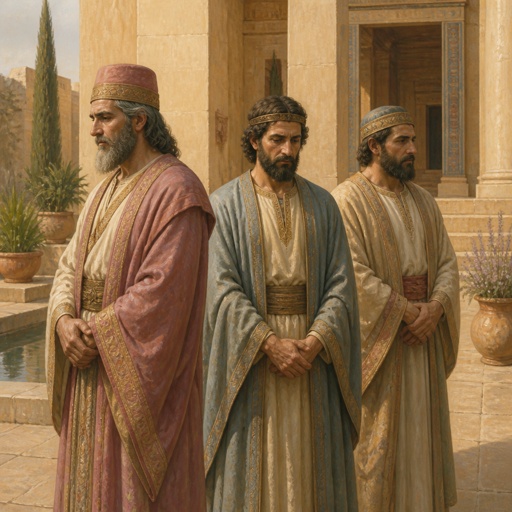
"And Poratha, and Adalia, and Aridatha," - Esther 9:8

Esther 8:3 - "¶ And Esther spake yet again before the king, and fell down at his feet, and besought him with tears to put away the mischief of Haman the Agagite, and his device that he had devised against the Jews."

Esther 5:12 - "Haman said moreover, Yea, Esther the queen did let no man come in with the king unto the banquet that she had prepared but myself; and to morrow am I invited unto her also with the king."

Esther 8:5 - "And said, If it please the king, and if I have found favour in his sight, and the thing seem right before the king, and I be pleasing in his eyes, let it be written to reverse the letters devised by Haman the son of Hammedatha the Agagite, which he wrote to destroy the Jews which are in all the king's provinces:"

Esther 3:5 - "And when Haman saw that Mordecai bowed not, nor did him reverence, then was Haman full of wrath."