What does Esther 6:8 mean?
“Let the royal apparel be brought which the king useth to wear, and the horse that the king rideth upon, and the crown royal which is set upon his head:” — Esther 6:8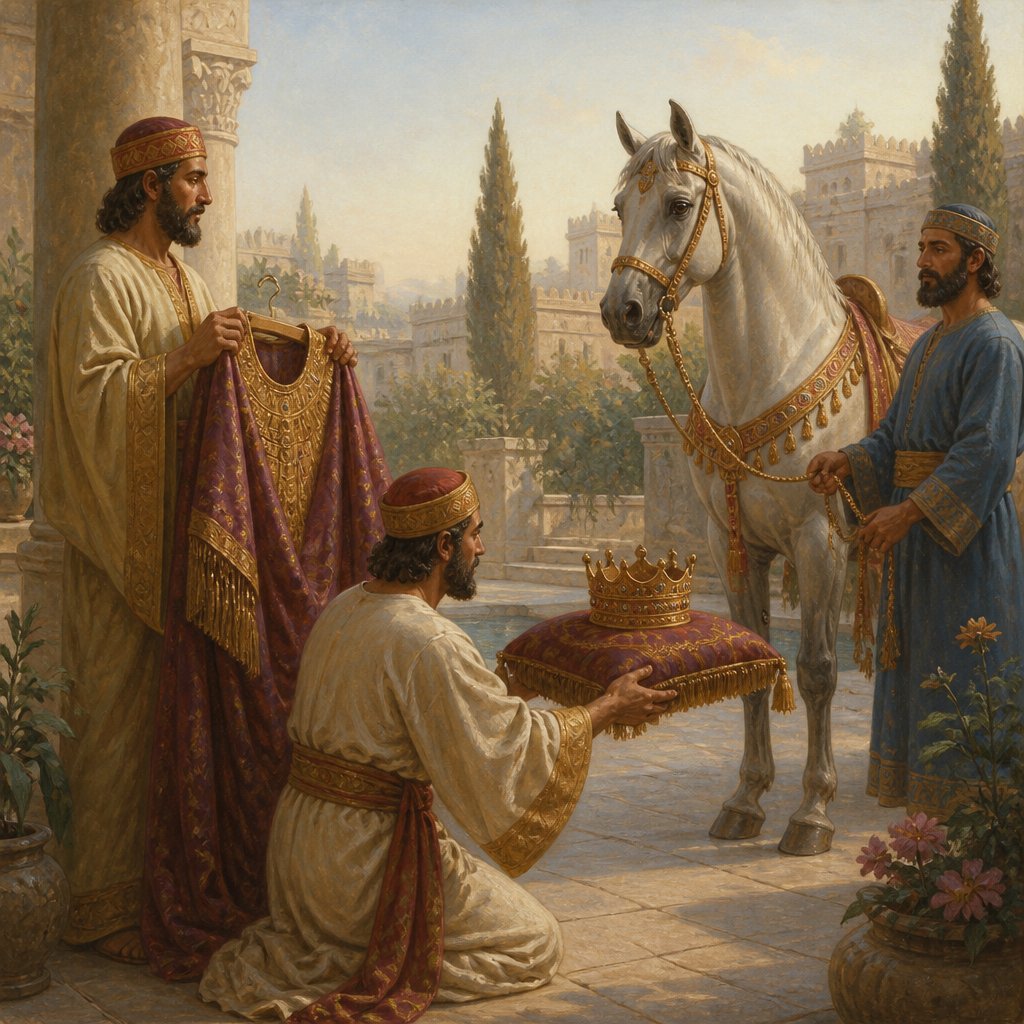
The book of Esther is a historical and dramatic narrative of the deliverance of the Jewish people from a plot to annihilate them, as recorded in the Bible. It is a story of courage, faith, and divine intervention, and the verse Esther 6:8 is a pivotal moment in the plot.
The verse Esther 6:8 in the King James Version (KJV) states: "Let the royal apparel be brought which the king useth to wear, and the horse that the king rideth upon, and the crown royal which is set upon his head."
This verse occurs at a critical juncture in the story of Esther. King Ahasuerus had trouble sleeping, and when he requested to have the book of records read to him, he discovered that Mordecai, a Jewish man who had saved his life, had never been properly rewarded. Just at that moment, Haman, the villain of the story, arrived to beg for Mordecai's execution. However, before he could make his request, the king asked him what should be done for someone the king desires to honor. Haman, thinking the king referred to him, gave an extravagant description of how he should be honored. In a divine twist of fate, the king then ordered Haman to bestow those honors upon Mordecai, a devastating humiliation for Haman.
The verse Esther 6:8 is crucial as it describes the royal apparel, horse, and crown that Haman must provide for Mordecai. These items symbolize power, prestige, and honor, and their bestowal upon Mordecai marks a turning point in the narrative. It is a moment of vindication for Mordecai and a foreshadowing of the downfall of Haman.
One of the central themes of the book of Esther is the providence of God. Although the name of God is not mentioned in the book, His presence and influence are evident throughout. The turn of events in Esther 6:8 is a clear example of how God orchestrates events to fulfill His purposes. It is a reminder that even when evil seems to triumph, God is still in control and working behind the scenes.
The verse also carries a theme of justice and retribution. Mordecai, a righteous man, is finally acknowledged and honored for his loyalty and bravery. On the other hand, Haman, who had sought to destroy Mordecai and his people, is made to publicly honor the very man he intended to annihilate. It is a powerful demonstration of the principle that "you reap what you sow."
The context of Esther 6:8 is also significant. The book of Esther takes place during the time when the Jewish people were in exile in Persia. They were a minority group facing persecution and discrimination. The story of Esther is a message of hope for those who feel marginalized or oppressed. It is a reminder that God is able to turn the tables and bring about deliverance for His people, no matter how dire the circumstances may seem.
In conclusion, Esther 6:8 from the King James Version is a verse that carries deep symbolism and significance within the larger narrative. It highlights themes of divine providence, justice, and the ultimate triumph of good over evil. It is a pivotal moment in the story of Esther, and it continues to inspire and encourage readers to trust in God's sovereignty and His ability to bring about redemption and deliverance.
Get our apps


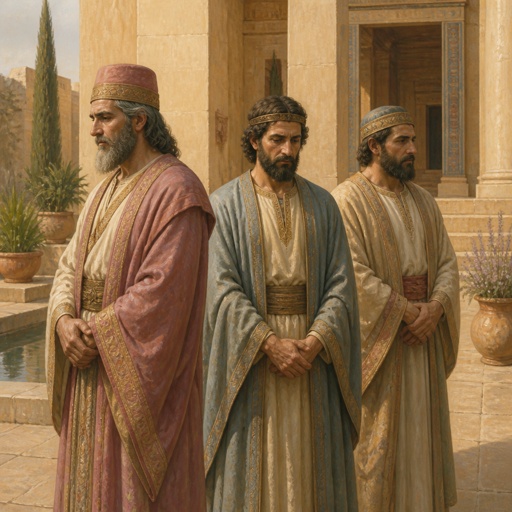
Artwork for Esther 6:8

Esther 6:8 - "Let the royal apparel be brought which the king useth to wear, and the horse that the king rideth upon, and the crown royal which is set upon his head:"
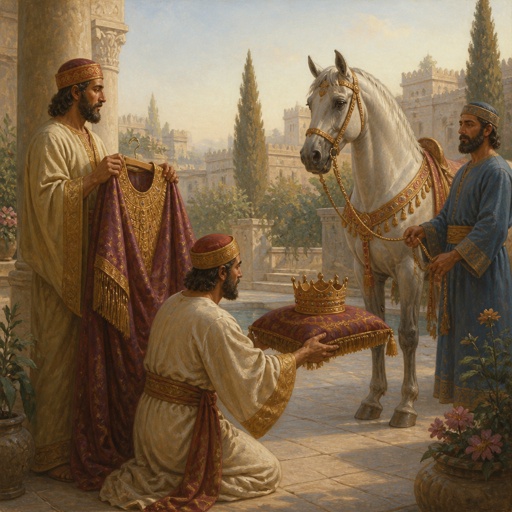
"Let the royal apparel be brought which the king useth to wear, and the horse that the king rideth upon, and the crown royal which is set upon his head:" - Esther 6:8

Esther 8:4 - "Then the king held out the golden sceptre toward Esther. So Esther arose, and stood before the king,"

Esther 8:6 - "For how can I endure to see the evil that shall come unto my people? or how can I endure to see the destruction of my kindred?"

Esther 7:6 - "And Esther said, The adversary and enemy is this wicked Haman. Then Haman was afraid before the king and the queen."

Esther 8:1 - "On that day did the king Ahasuerus give the house of Haman the Jews' enemy unto Esther the queen. And Mordecai came before the king; for Esther had told what he was unto her."
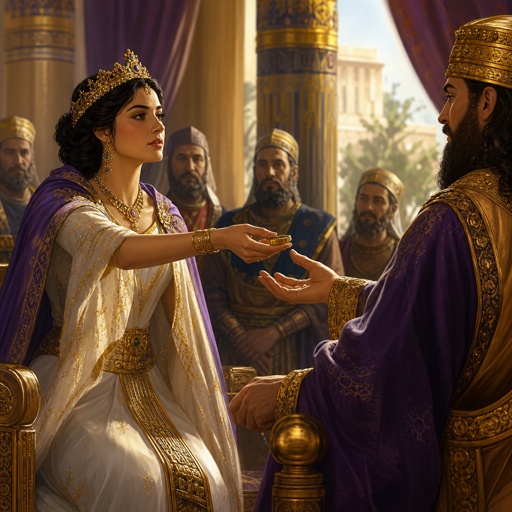
Esther 8:4

Esther 1:6

Esther 9:8 - "And Poratha, and Adalia, and Aridatha,"

Esther 8:7 - "¶ Then the king Ahasuerus said unto Esther the queen and to Mordecai the Jew, Behold, I have given Esther the house of Haman, and him they have hanged upon the gallows, because he laid his hand upon the Jews."

Esther 6:14 - "And while they were yet talking with him, came the king's chamberlains, and hasted to bring Haman unto the banquet that Esther had prepared."

Esther 8:16 - "The Jews had light, and gladness, and joy, and honour."
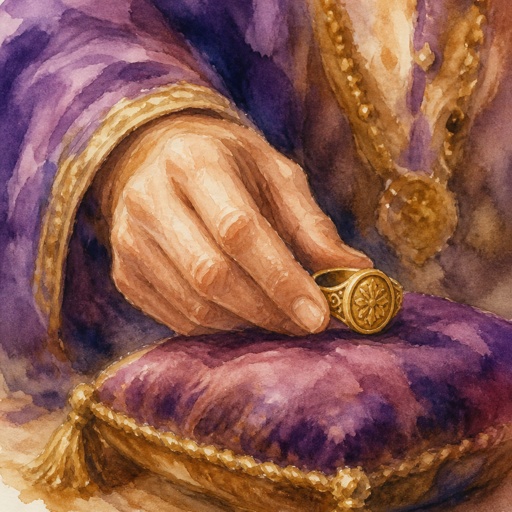
Esther 8:2 focus on the ring

"Then the king held out the golden sceptre toward Esther. So Esther arose, and stood before the king," - Esther 8:4

Esther 8:2 - "And the king took off his ring, which he had taken from Haman, and gave it unto Mordecai. And Esther set Mordecai over the house of Haman."

Esther 5:6 - "¶ And the king said unto Esther at the banquet of wine, What is thy petition? and it shall be granted thee: and what is thy request? even to the half of the kingdom it shall be performed."
"And Poratha, and Adalia, and Aridatha," - Esther 9:8

Esther 8:3 - "¶ And Esther spake yet again before the king, and fell down at his feet, and besought him with tears to put away the mischief of Haman the Agagite, and his device that he had devised against the Jews."

Esther 6:7 - "And Haman answered the king, For the man whom the king delighteth to honour,"

Esther 9:6 - "And in Shushan the palace the Jews slew and destroyed five hundred men."

"And Esther said, The adversary and enemy is this wicked Haman. Then Haman was afraid before the king and the queen." - Esther 7:6

Esther 4:6 - "So Hatach went forth to Mordecai unto the street of the city, which was before the king's gate."

Esther 2:8 - "¶ So it came to pass, when the king's commandment and his decree was heard, and when many maidens were gathered together unto Shushan the palace, to the custody of Hegai, that Esther was brought also unto the king's house, to the custody of Hegai, keeper of the women."

"On that day did the king Ahasuerus give the house of Haman the Jews' enemy unto Esther the queen. And Mordecai came before the king; for Esther had told what he was unto her." - Esther 8:1

Esther 8:8 - "Write ye also for the Jews, as it liketh you, in the king's name, and seal it with the king's ring: for the writing which is written in the king's name, and sealed with the king's ring, may no man reverse."

Esther 7:8 - "Then the king returned out of the palace garden into the place of the banquet of wine; and Haman was fallen upon the bed whereon Esther was. Then said the king, Will he force the queen also before me in the house? As the word went out of the king's mouth, they covered Haman's face."

Esther 4:8 - "Also he gave him the copy of the writing of the decree that was given at Shushan to destroy them, to shew it unto Esther, and to declare it unto her, and to charge her that she should go in unto the king, to make supplication unto him, and to make request before him for her people."

Esther 6:5 - "And the king's servants said unto him, Behold, Haman standeth in the court. And the king said, Let him come in."

Esther 6:1 - "On that night could not the king sleep, and he commanded to bring the book of records of the chronicles; and they were read before the king."

Esther 6:12 - "¶ And Mordecai came again to the king's gate. But Haman hasted to his house mourning, and having his head covered."