What does Esther 6:11 mean?
“Then took Haman the apparel and the horse, and arrayed Mordecai, and brought him on horseback through the street of the city, and proclaimed before him, Thus shall it be done unto the man whom the king delighteth to honour.” — Esther 6:11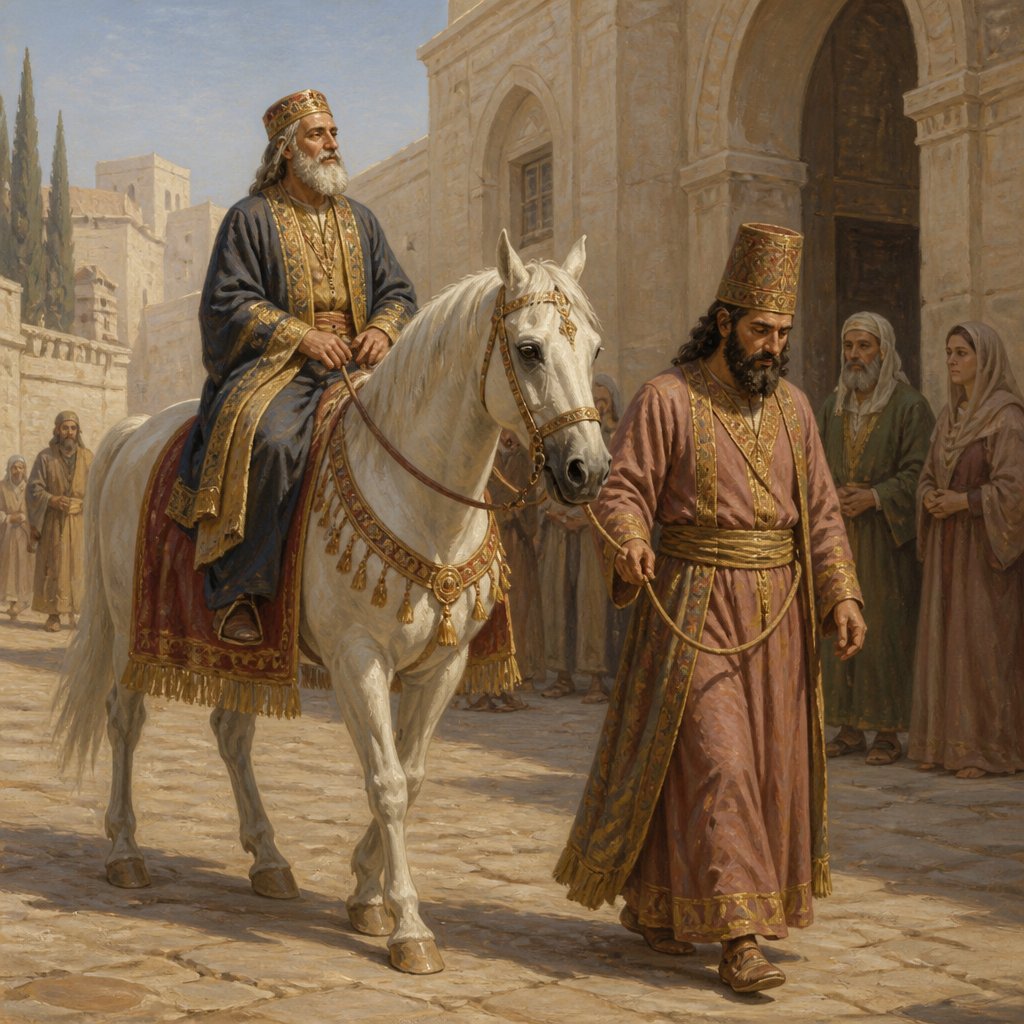
Esther 6:11 (KJV) is a verse from the book of Esther in the Old Testament. This verse is part of the story of Esther, a Jewish orphan raised by her cousin Mordecai, who becomes the queen of Persia and ultimately saves her people from destruction. The verse specifically comes from the part of the story where King Ahasuerus is trying to honor Mordecai for his loyalty and service, and is seeking advice from his official, Haman, on how to bestow this honor.
The verse states: "Then took Haman the apparel and the horse, and arrayed Mordecai, and brought him on horseback through the street of the city, and proclaimed before him, Thus shall it be done unto the man whom the king delighteth to honour."
The context of this verse is filled with intricate political intrigue and displays of power. Haman, the antagonist in the story, is the king's most trusted advisor and has a deep animosity towards Mordecai. However, due to a series of events orchestrated by God and Mordecai's own wisdom, the king begins to see Mordecai's true value. This verse marks a crucial turning point in the story, where Haman is forced by the king to honor Mordecai publicly, despite his personal hatred for him.
The themes and symbolism in this verse are rich and significant. One of the central themes is the idea of divine intervention and the triumph of good over evil. Throughout the book of Esther, God's hand is subtly at work behind the scenes, orchestrating events and using the actions of individuals to bring about justice and deliverance for His people. In this verse, we see the irony of Haman being forced to honor Mordecai, the very man he had plotted to destroy. This serves as a powerful reminder that God's plans cannot be thwarted by the schemes of wicked individuals.
Another significant theme in this verse is the concept of humility and pride. Haman's pride and arrogance are on full display throughout the story, as he seeks to elevate himself and destroy anyone who does not show him the proper respect. On the other hand, Mordecai displays humility and steadfast faith in God, even in the face of great danger. The image of Mordecai being paraded through the city in royal apparel on the king's horse is a symbol of his newfound honor and status, which stands in stark contrast to the humiliation and downfall that awaits Haman.
The verse also serves as a reminder of the importance of standing up for what is right, even in the face of opposition and persecution. Mordecai's unwavering devotion to his faith and his refusal to bow down to Haman ultimately leads to his exaltation and the salvation of his people. This serves as a powerful example for believers today, encouraging them to remain faithful and courageous in the midst of adversity.
In conclusion, Esther 6:11 (KJV) is a pivotal verse in the story of Esther, encapsulating themes of divine intervention, humility, pride, and faithfulness. This verse serves as a powerful reminder of God's sovereignty and the ultimate triumph of righteousness over evil. It also offers valuable lessons and inspiration for believers to trust in God's providence and remain steadfast in their obedience to Him.
Get our apps


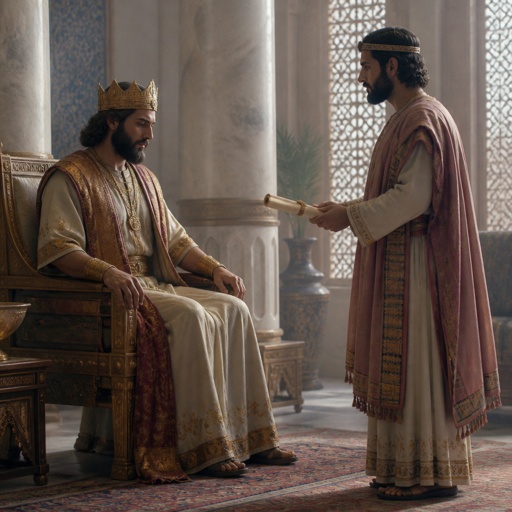
Artwork for Esther 6:11

Esther 6:11 - "Then took Haman the apparel and the horse, and arrayed Mordecai, and brought him on horseback through the street of the city, and proclaimed before him, Thus shall it be done unto the man whom the king delighteth to honour."
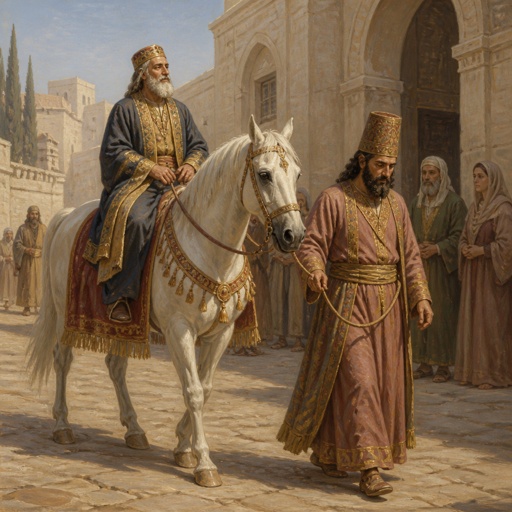
"Then took Haman the apparel and the horse, and arrayed Mordecai, and brought him on horseback through the street of the city, and proclaimed before him, Thus shall it be done unto the man whom the king delighteth to honour." - Esther 6:11

Esther 7:6 - "And Esther said, The adversary and enemy is this wicked Haman. Then Haman was afraid before the king and the queen."

Esther 1:6

Esther 2:11 - "And Mordecai walked every day before the court of the women's house, to know how Esther did, and what should become of her."

Esther 6:14 - "And while they were yet talking with him, came the king's chamberlains, and hasted to bring Haman unto the banquet that Esther had prepared."

Esther 5:6 - "¶ And the king said unto Esther at the banquet of wine, What is thy petition? and it shall be granted thee: and what is thy request? even to the half of the kingdom it shall be performed."

Esther 6:7 - "And Haman answered the king, For the man whom the king delighteth to honour,"

Esther 9:6 - "And in Shushan the palace the Jews slew and destroyed five hundred men."

"And Esther said, The adversary and enemy is this wicked Haman. Then Haman was afraid before the king and the queen." - Esther 7:6

Esther 9:11 - "On that day the number of those that were slain in Shushan the palace was brought before the king."

Esther 4:6 - "So Hatach went forth to Mordecai unto the street of the city, which was before the king's gate."

Esther 1:11 - "To bring Vashti the queen before the king with the crown royal, to shew the people and the princes her beauty: for she was fair to look on."

Esther 3:11 - "And the king said unto Haman, The silver is given to thee, the people also, to do with them as it seemeth good to thee."

Esther 6:5 - "And the king's servants said unto him, Behold, Haman standeth in the court. And the king said, Let him come in."

Esther 6:1 - "On that night could not the king sleep, and he commanded to bring the book of records of the chronicles; and they were read before the king."

Esther 6:12 - "¶ And Mordecai came again to the king's gate. But Haman hasted to his house mourning, and having his head covered."
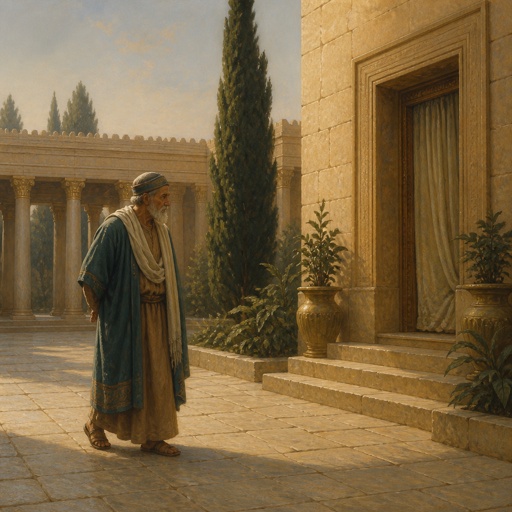
"And Mordecai walked every day before the court of the women's house, to know how Esther did, and what should become of her." - Esther 2:11

"And while they were yet talking with him, came the king's chamberlains, and hasted to bring Haman unto the banquet that Esther had prepared." - Esther 6:14

"And Haman answered the king, For the man whom the king delighteth to honour," - Esther 6:7

"And in Shushan the palace the Jews slew and destroyed five hundred men." - Esther 9:6

Esther 8:6 - "For how can I endure to see the evil that shall come unto my people? or how can I endure to see the destruction of my kindred?"

Esther 6:8 - "Let the royal apparel be brought which the king useth to wear, and the horse that the king rideth upon, and the crown royal which is set upon his head:"

Esther 6:3 - "And the king said, What honour and dignity hath been done to Mordecai for this? Then said the king's servants that ministered unto him, There is nothing done for him."

Esther 6:2 - "And it was found written, that Mordecai had told of Bigthana and Teresh, two of the king's chamberlains, the keepers of the door, who sought to lay hand on the king Ahasuerus."

Esther 6:6 - "So Haman came in. And the king said unto him, What shall be done unto the man whom the king delighteth to honour? Now Haman thought in his heart, To whom would the king delight to do honour more than to myself?"

Esther 6:4 - "¶ And the king said, Who is in the court? Now Haman was come into the outward court of the king's house, to speak unto the king to hang Mordecai on the gallows that he had prepared for him."
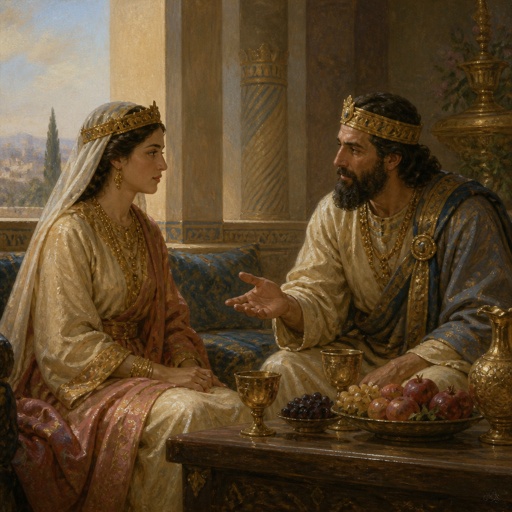
"¶ And the king said unto Esther at the banquet of wine, What is thy petition? and it shall be granted thee: and what is thy request? even to the half of the kingdom it shall be performed." - Esther 5:6
"On that day the number of those that were slain in Shushan the palace was brought before the king." - Esther 9:11

Est 6:10-11 ESV (10) Then the king said to Haman, “Hurry; take the robes and the horse, as you have said, and do so to Mordecai the Jew, who sits at the king's gate. Leave out nothing that you have mentioned.” (11) So Haman took the robes and the horse, and he dressed Mordecai and led him through the square of the city, proclaiming before him, “Thus shall it be done to the man whom the king delights to honor.”