What does Esther 6:14 mean?
“And while they were yet talking with him, came the king’s chamberlains, and hasted to bring Haman unto the banquet that Esther had prepared.” — Esther 6:14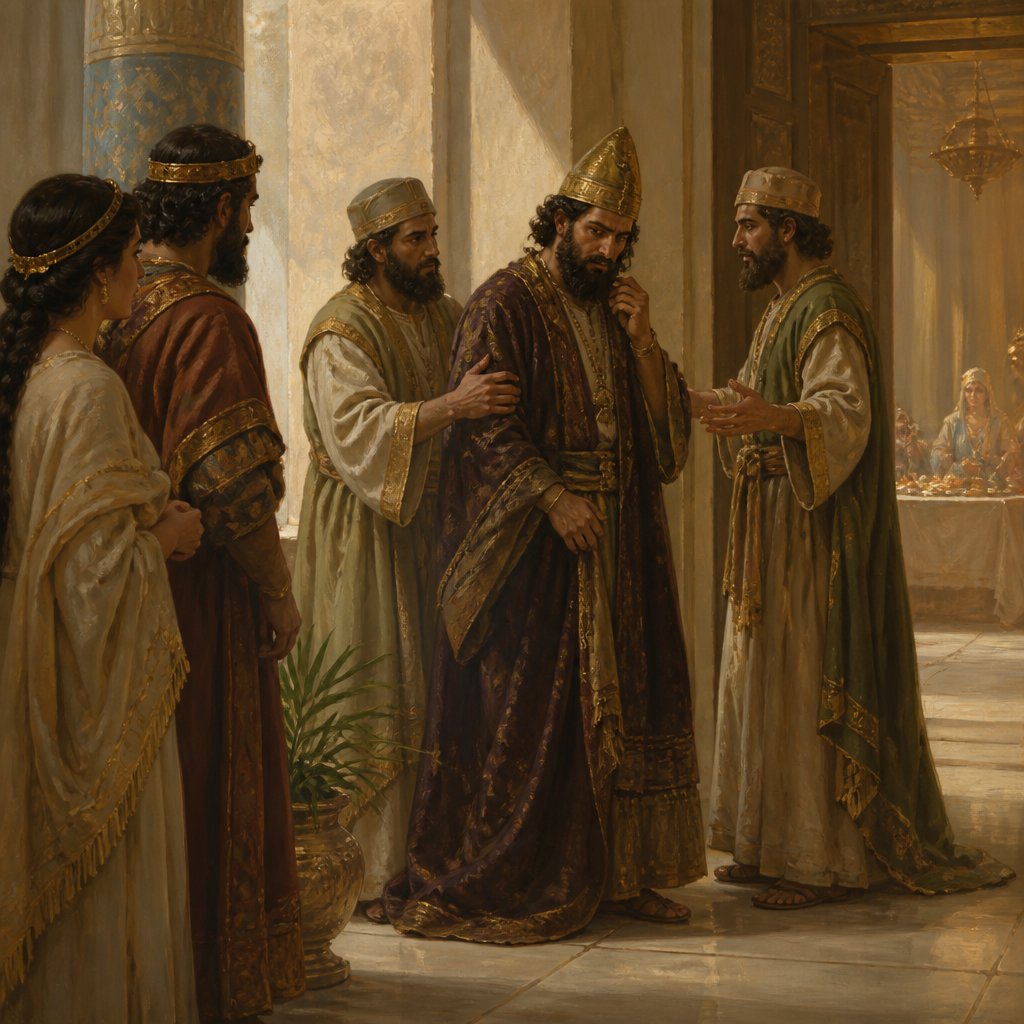
The book of Esther is an intriguing and unique book in the Bible, as it is one of the only two books in the Bible that do not explicitly mention God. However, the story of Esther is rich with themes of providence, courage, and faith, and it contains valuable lessons for believers.
Esther 6:14 in the King James Version reads, "And while they were yet talking with him, came the king's chamberlains, and hasted to bring Haman unto the banquet that Esther had prepared." This verse comes at a crucial moment in the narrative, where the tables are about to turn for the main characters in the story.
The book of Esther is set in the Persian Empire during the reign of King Ahasuerus, and it tells the story of a young Jewish woman named Esther who becomes queen. The villain of the story is Haman, a high-ranking official in the king's court who devises a plot to annihilate all the Jews in the empire. Esther, with the guidance of her cousin Mordecai, bravely risks her life to approach the king and reveal Haman's evil plan. The verse in question occurs just as the plot against the Jews is about to be exposed, and the tension in the story reaches a climax.
One of the key themes of this verse is the theme of providence. Throughout the book of Esther, God's providential care for His people is evident. Although God is not explicitly mentioned in the book, His hand is clearly at work, orchestrating events and using ordinary people to accomplish His purposes. In this particular verse, we see the timing of the king's chamberlains' arrival as they rush to bring Haman to the banquet that Esther had prepared. This sudden turn of events sets the stage for the revelation of Haman's plot and the eventual deliverance of the Jewish people. This serves as a reminder that God is always in control, even in the midst of seemingly chaotic and dangerous situations.
Another important theme in this verse is the theme of courage. Esther's willingness to risk her life by approaching the king without being summoned demonstrates great courage. She knows the potential consequences of her actions, yet she is willing to put her own safety on the line in order to save her people. This act of courage serves as an example for believers, encouraging them to trust in God's providence and to be willing to take bold steps in obedience to Him, even when faced with difficult and dangerous circumstances.
The context of this verse is also important to consider. The sudden arrival of the king's chamberlains at the banquet sets the stage for the revelation of Haman's evil plot and the downfall of the wicked antagonist. This pivotal moment in the narrative signals a shift in the story, as the tables are about to turn in favor of the Jewish people. It serves as a reminder that, ultimately, God will expose and defeat the plans of the wicked, and His justice will prevail.
In terms of symbolism, the banquet that Esther had prepared can be seen as a symbol of God's provision and care for His people. Despite the grave danger facing the Jewish community, God has prepared a way for their deliverance through Esther's bravery and the king's eventual favor. The banquet also serves as a symbol of the ultimate victory and celebration that the Jewish people will experience when they are delivered from their enemies.
In conclusion, Esther 6:14 is a significant verse in the book of Esther, capturing a crucial moment in the narrative. Through the themes of providence, courage, and the symbolism of the banquet, this verse conveys powerful lessons for believers. It serves as a reminder of God's sovereignty, His faithfulness to His people, and the importance of obedience and courage in the face of adversity. As believers reflect on this verse, they can find encouragement and inspiration to trust in God's providence and to stand firm in their faith, even in the midst of challenging and dangerous circumstances.
Get our apps


Artwork for Esther 6:14

Esther 6:14 - "And while they were yet talking with him, came the king's chamberlains, and hasted to bring Haman unto the banquet that Esther had prepared."

"And while they were yet talking with him, came the king's chamberlains, and hasted to bring Haman unto the banquet that Esther had prepared." - Esther 6:14

Esther 7:6 - "And Esther said, The adversary and enemy is this wicked Haman. Then Haman was afraid before the king and the queen."

Esther 1:6

Esther 5:6 - "¶ And the king said unto Esther at the banquet of wine, What is thy petition? and it shall be granted thee: and what is thy request? even to the half of the kingdom it shall be performed."

Esther 6:7 - "And Haman answered the king, For the man whom the king delighteth to honour,"

Esther 9:6 - "And in Shushan the palace the Jews slew and destroyed five hundred men."

"And Esther said, The adversary and enemy is this wicked Haman. Then Haman was afraid before the king and the queen." - Esther 7:6

Esther 9:14 - "And the king commanded it so to be done: and the decree was given at Shushan; and they hanged Haman's ten sons."

Esther 4:6 - "So Hatach went forth to Mordecai unto the street of the city, which was before the king's gate."

Esther 3:14 - "The copy of the writing for a commandment to be given in every province was published unto all people, that they should be ready against that day."

Esther 6:5 - "And the king's servants said unto him, Behold, Haman standeth in the court. And the king said, Let him come in."

Esther 6:1 - "On that night could not the king sleep, and he commanded to bring the book of records of the chronicles; and they were read before the king."

Esther 6:12 - "¶ And Mordecai came again to the king's gate. But Haman hasted to his house mourning, and having his head covered."

Esther 8:14 - "So the posts that rode upon mules and camels went out, being hastened and pressed on by the king's commandment. And the decree was given at Shushan the palace."

"And Haman answered the king, For the man whom the king delighteth to honour," - Esther 6:7

"And in Shushan the palace the Jews slew and destroyed five hundred men." - Esther 9:6

Esther 8:6 - "For how can I endure to see the evil that shall come unto my people? or how can I endure to see the destruction of my kindred?"

Esther 6:8 - "Let the royal apparel be brought which the king useth to wear, and the horse that the king rideth upon, and the crown royal which is set upon his head:"

Esther 6:3 - "And the king said, What honour and dignity hath been done to Mordecai for this? Then said the king's servants that ministered unto him, There is nothing done for him."

Esther 6:2 - "And it was found written, that Mordecai had told of Bigthana and Teresh, two of the king's chamberlains, the keepers of the door, who sought to lay hand on the king Ahasuerus."

Esther 1:14 - "And the next unto him was Carshena, Shethar, Admatha, Tarshish, Meres, Marsena, and Memucan, the seven princes of Persia and Media, which saw the king's face, and which sat the first in the kingdom;)"

Esther 6:6 - "So Haman came in. And the king said unto him, What shall be done unto the man whom the king delighteth to honour? Now Haman thought in his heart, To whom would the king delight to do honour more than to myself?"

Esther 6:4 - "¶ And the king said, Who is in the court? Now Haman was come into the outward court of the king's house, to speak unto the king to hang Mordecai on the gallows that he had prepared for him."
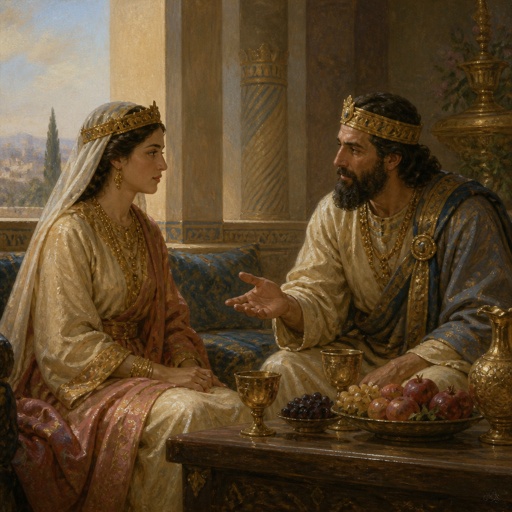
"¶ And the king said unto Esther at the banquet of wine, What is thy petition? and it shall be granted thee: and what is thy request? even to the half of the kingdom it shall be performed." - Esther 5:6
Esther 2:6 - "Who had been carried away from Jerusalem with the captivity which had been carried away with Jeconiah king of Judah, whom Nebuchadnezzar the king of Babylon had carried away."
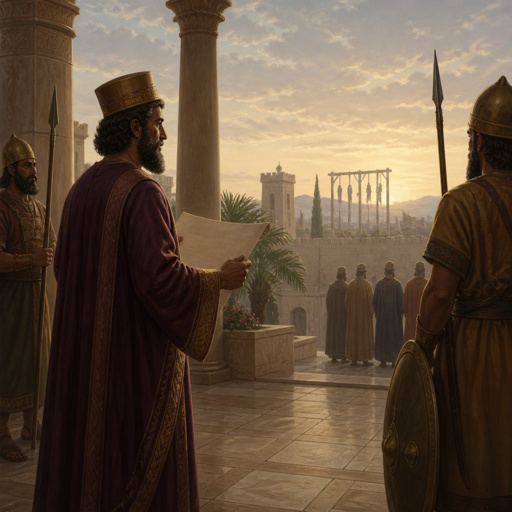
"And the king commanded it so to be done: and the decree was given at Shushan; and they hanged Haman's ten sons." - Esther 9:14

Esther 6:11 - "Then took Haman the apparel and the horse, and arrayed Mordecai, and brought him on horseback through the street of the city, and proclaimed before him, Thus shall it be done unto the man whom the king delighteth to honour."

Esther 6:10 - "Then the king said to Haman, Make haste, and take the apparel and the horse, as thou hast said, and do even so to Mordecai the Jew, that sitteth at the king's gate: let nothing fail of all that thou hast spoken."

Esther 1:6 - "Where were white, green, and blue, hangings, fastened with cords of fine linen and purple to silver rings and pillars of marble: the beds were of gold and silver, upon a pavement of red, and blue, and white, and black, marble."