What does Esther 6:6 mean?
“So Haman came in. And the king said unto him, What shall be done unto the man whom the king delighteth to honour? Now Haman thought in his heart, To whom would the king delight to do honour more than to myself?” — Esther 6:6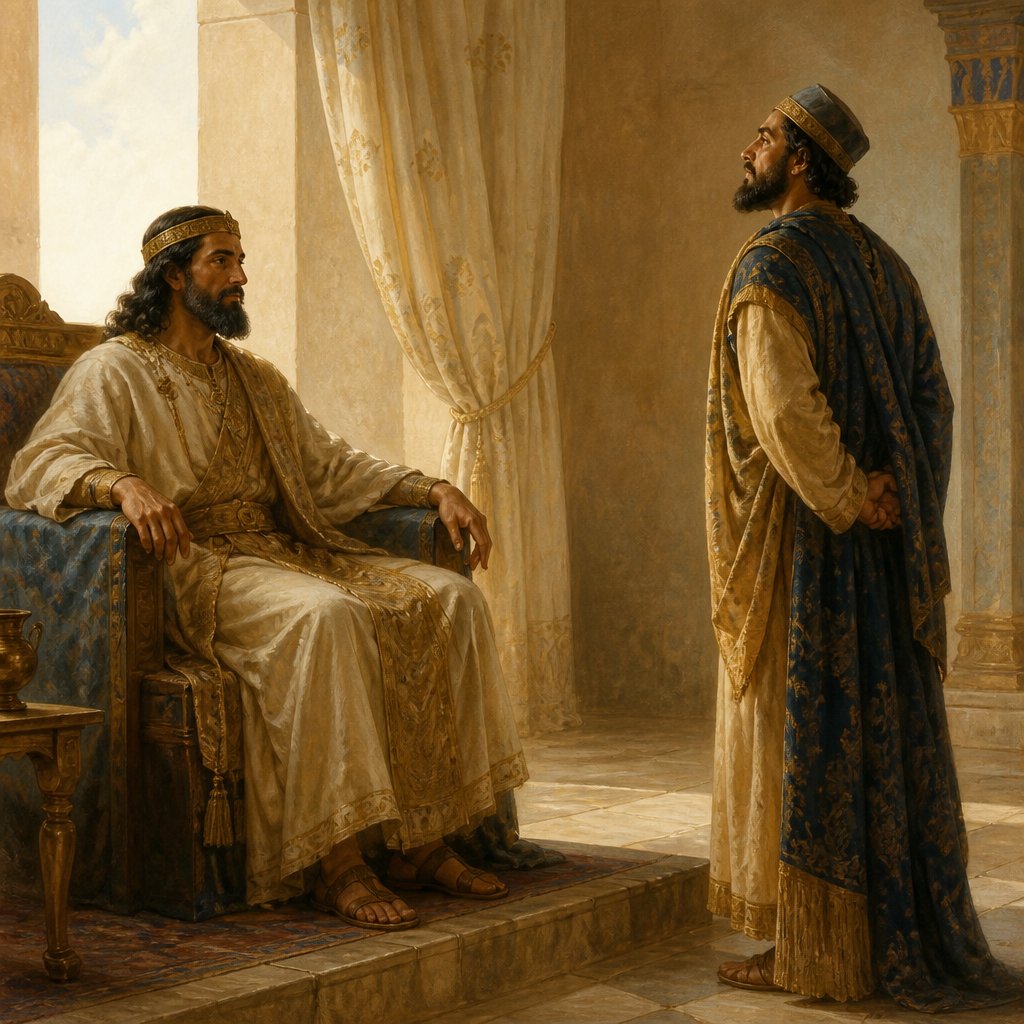
Esther 6:6 (KJV) reads, "So Haman came in. And the king said unto him, What shall be done unto the man whom the king delighteth to honour? Now Haman thought in his heart, To whom would the king delight to do honour more than to myself?"
This verse is part of the biblical book of Esther, which tells the story of a Jewish woman who becomes the queen of Persia and ultimately helps to save her people from destruction. The book of Esther is unique in that it never explicitly mentions the name of God, yet it is clearly evident that God is working behind the scenes to preserve and protect His people.
In Esther 6:6, the main characters are King Ahasuerus and Haman. King Ahasuerus is the ruler of the Persian Empire, and Haman is his chief advisor. At this point in the story, Haman has orchestrated a plot to have all the Jews in the empire killed, and he has convinced the king to issue a decree to that effect. However, the queen, Esther, who is herself a Jew, has just revealed her identity to the king and has asked for him to rescind the order.
In this particular verse, King Ahasuerus is asking Haman for advice on how to honor someone whom he wishes to reward. This question puts Haman in an uncomfortable position because he assumes that he is the one whom the king wants to honor. Haman's arrogance and pride are revealed in his immediate assumption that the king must be referring to him. This sets the stage for the eventual reversal of fortune for Haman and the salvation of the Jewish people.
One of the central themes in the book of Esther is the idea of divine providence. While God is never explicitly mentioned in the book, His hand is clearly seen working behind the scenes to bring about the salvation of His people. The verse Esther 6:6 is a prime example of this, as it sets the stage for the events that will eventually lead to Haman's downfall and the salvation of the Jews.
Another important theme in this verse is the danger of pride and arrogance. Haman's immediate assumption that the king must want to honor him reveals his prideful and self-centered nature. This serves as a warning about the dangers of arrogance and the consequences that can come from putting oneself above others.
The context of this verse is crucial to understanding its significance. The story of Esther is set in the Persian Empire during the reign of King Ahasuerus, and it takes place at a time when the Jewish people were in exile. Haman's plot to have the Jews killed reflects the ongoing struggle of the Jewish people to survive in a hostile and foreign land. The eventual salvation of the Jews through the efforts of Esther and the intervention of God serves as a powerful example of hope and redemption in the face of seemingly insurmountable odds.
Symbolism in Esther 6:6 can be found in the character of Haman himself. He represents the forces of evil and oppression that seek to destroy the Jewish people. His pride and arrogance are symbolic of the negative qualities that can threaten the well-being of individuals and communities. The eventual downfall of Haman serves as a symbol of the triumph of good over evil and the ultimate victory of God's people.
In conclusion, Esther 6:6 is a powerful verse that encapsulates many of the central themes and messages of the book of Esther. It serves as a warning against pride and arrogance, a reminder of the power of divine providence, and a symbol of hope and redemption in the face of adversity. The story of Esther continues to inspire and encourage people to this day, reminding them that God is always working behind the scenes to bring about His purposes and to bring about salvation for His people.
Get our apps


Artwork for Esther 6:6

Esther 6:6 - "So Haman came in. And the king said unto him, What shall be done unto the man whom the king delighteth to honour? Now Haman thought in his heart, To whom would the king delight to do honour more than to myself?"
"So Haman came in. And the king said unto him, What shall be done unto the man whom the king delighteth to honour? Now Haman thought in his heart, To whom would the king delight to do honour more than to myself?" - Esther 6:6

Esther 1:6

Esther 7:6 - "And Esther said, The adversary and enemy is this wicked Haman. Then Haman was afraid before the king and the queen."

Esther 6:14 - "And while they were yet talking with him, came the king's chamberlains, and hasted to bring Haman unto the banquet that Esther had prepared."

Esther 6:7 - "And Haman answered the king, For the man whom the king delighteth to honour,"

Esther 9:6 - "And in Shushan the palace the Jews slew and destroyed five hundred men."

Esther 5:6 - "¶ And the king said unto Esther at the banquet of wine, What is thy petition? and it shall be granted thee: and what is thy request? even to the half of the kingdom it shall be performed."

Esther 4:6 - "So Hatach went forth to Mordecai unto the street of the city, which was before the king's gate."

"And Esther said, The adversary and enemy is this wicked Haman. Then Haman was afraid before the king and the queen." - Esther 7:6

Esther 6:1 - "On that night could not the king sleep, and he commanded to bring the book of records of the chronicles; and they were read before the king."

Esther 6:5 - "And the king's servants said unto him, Behold, Haman standeth in the court. And the king said, Let him come in."

Esther 6:12 - "¶ And Mordecai came again to the king's gate. But Haman hasted to his house mourning, and having his head covered."

"And Haman answered the king, For the man whom the king delighteth to honour," - Esther 6:7

Esther 6:3 - "And the king said, What honour and dignity hath been done to Mordecai for this? Then said the king's servants that ministered unto him, There is nothing done for him."

Esther 6:2 - "And it was found written, that Mordecai had told of Bigthana and Teresh, two of the king's chamberlains, the keepers of the door, who sought to lay hand on the king Ahasuerus."

"And in Shushan the palace the Jews slew and destroyed five hundred men." - Esther 9:6

Esther 8:6 - "For how can I endure to see the evil that shall come unto my people? or how can I endure to see the destruction of my kindred?"

Esther 6:8 - "Let the royal apparel be brought which the king useth to wear, and the horse that the king rideth upon, and the crown royal which is set upon his head:"

"And while they were yet talking with him, came the king's chamberlains, and hasted to bring Haman unto the banquet that Esther had prepared." - Esther 6:14

Esther 6:4 - "¶ And the king said, Who is in the court? Now Haman was come into the outward court of the king's house, to speak unto the king to hang Mordecai on the gallows that he had prepared for him."
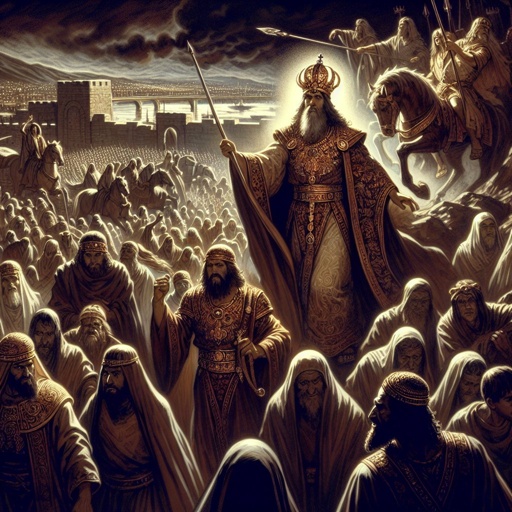
Esther 2:6 - "Who had been carried away from Jerusalem with the captivity which had been carried away with Jeconiah king of Judah, whom Nebuchadnezzar the king of Babylon had carried away."

Esther 6:11 - "Then took Haman the apparel and the horse, and arrayed Mordecai, and brought him on horseback through the street of the city, and proclaimed before him, Thus shall it be done unto the man whom the king delighteth to honour."

Esther 6:10 - "Then the king said to Haman, Make haste, and take the apparel and the horse, as thou hast said, and do even so to Mordecai the Jew, that sitteth at the king's gate: let nothing fail of all that thou hast spoken."

Esther 1:6 - "Where were white, green, and blue, hangings, fastened with cords of fine linen and purple to silver rings and pillars of marble: the beds were of gold and silver, upon a pavement of red, and blue, and white, and black, marble."
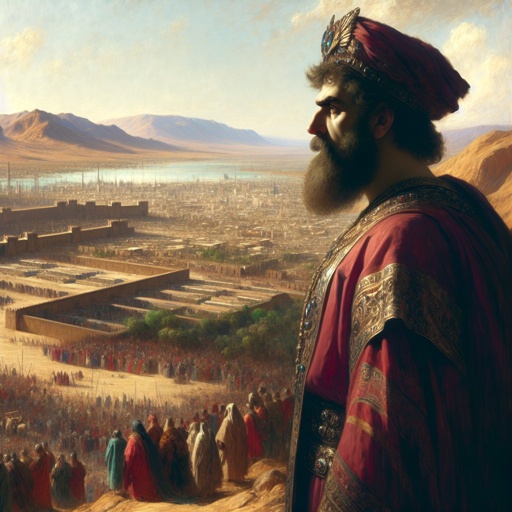
Esther 3:6 - "And he thought scorn to lay hands on Mordecai alone; for they had shewed him the people of Mordecai: wherefore Haman sought to destroy all the Jews that were throughout the whole kingdom of Ahasuerus, even the people of Mordecai."
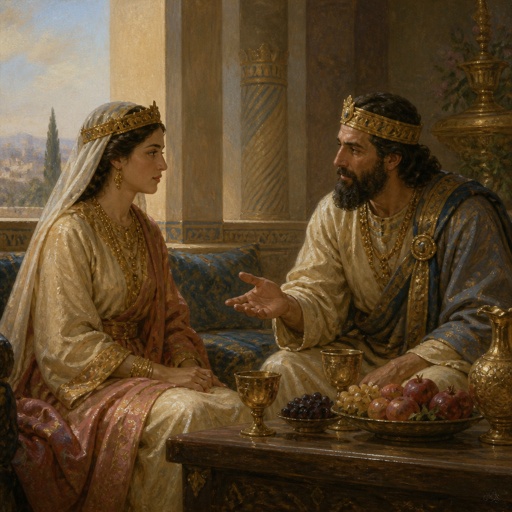
"¶ And the king said unto Esther at the banquet of wine, What is thy petition? and it shall be granted thee: and what is thy request? even to the half of the kingdom it shall be performed." - Esther 5:6
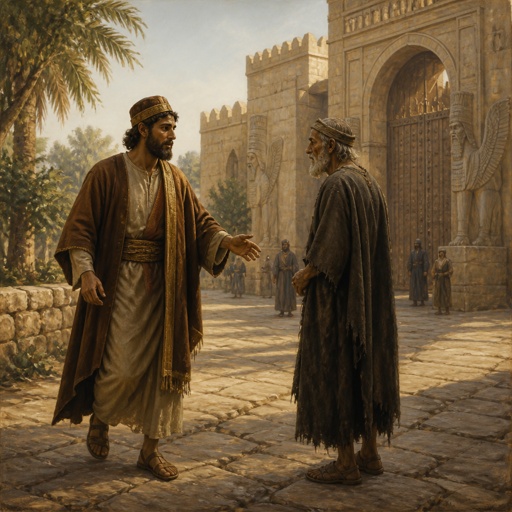
"So Hatach went forth to Mordecai unto the street of the city, which was before the king's gate." - Esther 4:6
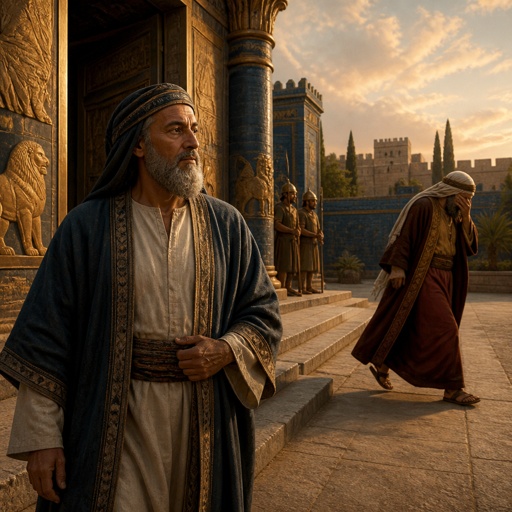
"¶ And Mordecai came again to the king's gate. But Haman hasted to his house mourning, and having his head covered." - Esther 6:12

"On that night could not the king sleep, and he commanded to bring the book of records of the chronicles; and they were read before the king." - Esther 6:1