What does Esther 7:1 mean?
“So the king and Haman came to banquet with Esther the queen.” — Esther 7:1
The book of Esther in the Bible is a unique and captivating narrative that tells the story of a young Jewish girl who becomes queen of Persia and ultimately saves her people from destruction. The verse Esther 7:1 from the King James Version reads, "So the king and Haman came to banquet with Esther the queen." This passage occurs at a crucial moment in the story, where Queen Esther, with the help of the king, exposes the villainous plot of Haman to annihilate the Jewish people.
To fully understand the significance of Esther 7:1, it is essential to explore the themes, context, and symbolism within the broader narrative of the book of Esther. The story takes place during the reign of King Ahasuerus, who rules over the vast Persian Empire. Ahasuerus holds a lavish banquet for his nobles and officials, and it is during this extravagant event that Queen Vashti defies the king, leading to her removal from the throne.
In search of a new queen, a beauty contest is organized, and Esther, a Jewish orphan raised by her cousin Mordecai, is chosen as the new queen, although her Jewish identity remains hidden. The antagonist of the story, Haman, rises to a position of power and authority within the king's court, and he harbors a deep-seated hatred for Mordecai and the Jewish people. Haman devises a plot to annihilate the Jews, manipulating the king into issuing a decree for their destruction.
The verse Esther 7:1 marks a pivotal moment in the narrative, as Queen Esther takes a tremendous risk by revealing her Jewish identity and pleading with the king to save her people. The banquet becomes a strategic setting for Esther to confront the king and Haman with her request. The context of this verse is crucial, as it highlights the courage and agency of Esther in the face of impending disaster.
The symbolism within Esther 7:1 is rich and multifaceted. The banquet itself serves as a metaphor for the opulence and excess of the Persian court, as well as the manipulation and deceit that permeate the king's inner circle. Esther, as the host of the banquet, adopts the role of a bold and resourceful leader who uses the opportunity to challenge the corrupt power structures that threaten her people.
Furthermore, Esther 7:1 underscores the theme of divine providence and the hidden hand of God in the events of the story. Despite the absence of explicit mention of God in the book of Esther, His presence is unmistakable in the deliverance of the Jewish people. Esther's bravery and the king's timely intervention are portrayed as instruments of God's deliverance, demonstrating that He works through human agency to fulfill His purposes.
The verse Esther 7:1 reminds readers of the importance of moral courage and the willingness to speak truth to power, even at great personal risk. Esther's actions exemplify the timeless principle of advocating for justice and standing up for those who are marginalized and oppressed. In doing so, she emerges as a figure of inspiration and heroism, offering a powerful example of faith, resilience, and moral leadership.
In conclusion, Esther 7:1 captures a pivotal moment in the book of Esther, where Queen Esther courageously confronts the king and Haman in a dramatic banquet setting, ultimately leading to the exposure of Haman's destructive plot and the salvation of the Jewish people. Through its themes, context, and symbolism, this verse offers profound insights into the enduring significance of moral courage, divine providence, and the triumph of justice over oppression. As readers continue to delve into the narrative of Esther, they are compelled to ponder the timeless lessons and inspiration found within its pages.
Get our apps


Artwork for Esther 7:1

Esther 7:1 - "So the king and Haman came to banquet with Esther the queen."

"So the king and Haman came to banquet with Esther the queen." - Esther 7:1

Esther 5:7 - "Then answered Esther, and said, My petition and my request is;"

Esther 7:6 - "And Esther said, The adversary and enemy is this wicked Haman. Then Haman was afraid before the king and the queen."

Esther 1:7 - "And they gave them drink in vessels of gold, (the vessels being diverse one from another,) and royal wine in abundance, according to the state of the king."

Esther 7:2 - "And the king said again unto Esther on the second day at the banquet of wine, What is thy petition, queen Esther? and it shall be granted thee: and what is thy request? and it shall be performed, even to the half of the kingdom."

Esther 7:7 - "¶ And the king arising from the banquet of wine in his wrath went into the palace garden: and Haman stood up to make request for his life to Esther the queen; for he saw that there was evil determined against him by the king."

Esther 9:7 - "And Parshandatha, and Dalphon, and Aspatha,"

Esther 8:7 - "¶ Then the king Ahasuerus said unto Esther the queen and to Mordecai the Jew, Behold, I have given Esther the house of Haman, and him they have hanged upon the gallows, because he laid his hand upon the Jews."
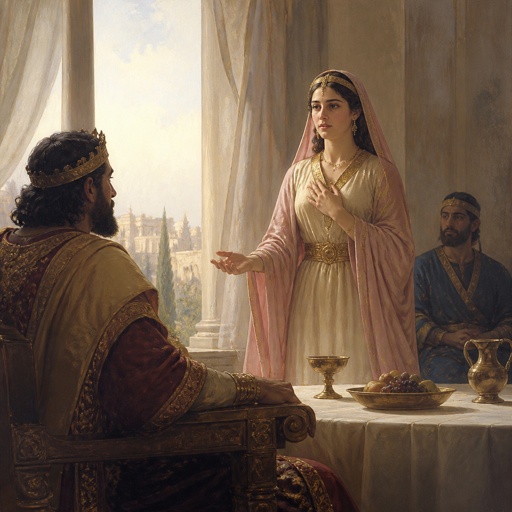
"Then answered Esther, and said, My petition and my request is;" - Esther 5:7

Esther 7:5 - "¶ Then the king Ahasuerus answered and said unto Esther the queen, Who is he, and where is he, that durst presume in his heart to do so?"
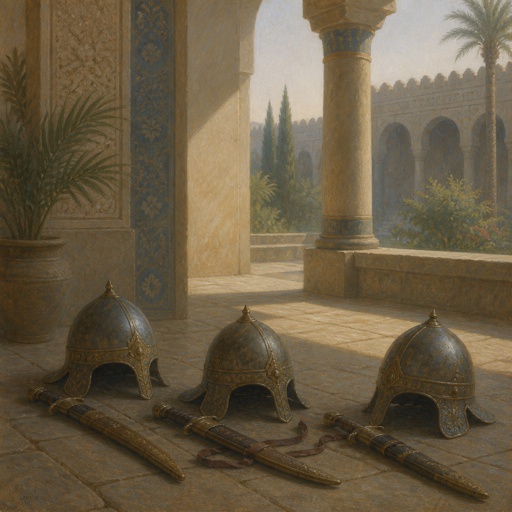
"And Parshandatha, and Dalphon, and Aspatha," - Esther 9:7

Esther 1:17

Esther 8:1 - "On that day did the king Ahasuerus give the house of Haman the Jews' enemy unto Esther the queen. And Mordecai came before the king; for Esther had told what he was unto her."

Esther 6:7 - "And Haman answered the king, For the man whom the king delighteth to honour,"

"And Esther said, The adversary and enemy is this wicked Haman. Then Haman was afraid before the king and the queen." - Esther 7:6

Esther 7:3 - "Then Esther the queen answered and said, If I have found favour in thy sight, O king, and if it please the king, let my life be given me at my petition, and my people at my request:"

Esther, the courageous queen

Esther 1:6

Esther 7:10 - "So they hanged Haman on the gallows that he had prepared for Mordecai. Then was the king's wrath pacified."

Esther 2:7 - "And he brought up Hadassah, that is, Esther, his uncle's daughter: for she had neither father nor mother, and the maid was fair and beautiful; whom Mordecai, when her father and mother were dead, took for his own daughter."

Esther 7:8 - "Then the king returned out of the palace garden into the place of the banquet of wine; and Haman was fallen upon the bed whereon Esther was. Then said the king, Will he force the queen also before me in the house? As the word went out of the king's mouth, they covered Haman's face."
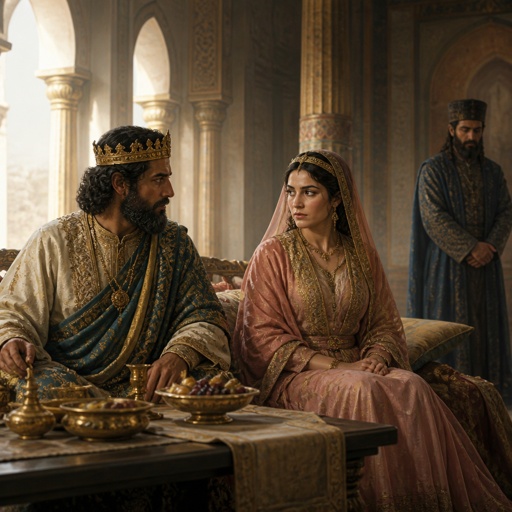
"¶ Then the king Ahasuerus answered and said unto Esther the queen, Who is he, and where is he, that durst presume in his heart to do so?" - Esther 7:5
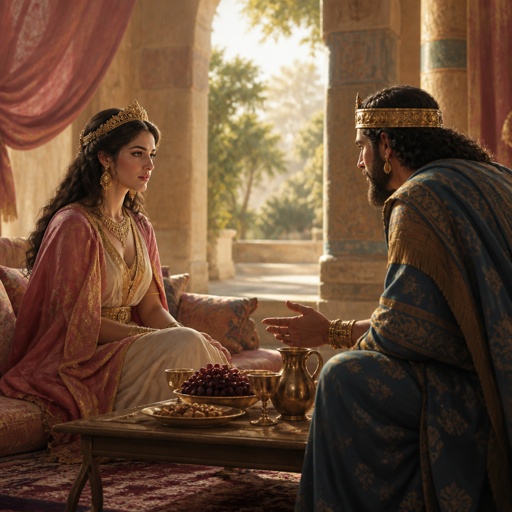
"And the king said again unto Esther on the second day at the banquet of wine, What is thy petition, queen Esther? and it shall be granted thee: and what is thy request? and it shall be performed, even to the half of the kingdom." - Esther 7:2

"And Haman answered the king, For the man whom the king delighteth to honour," - Esther 6:7

Esther 10:1 - "And the king Ahasuerus laid a tribute upon the land, and upon the isles of the sea."
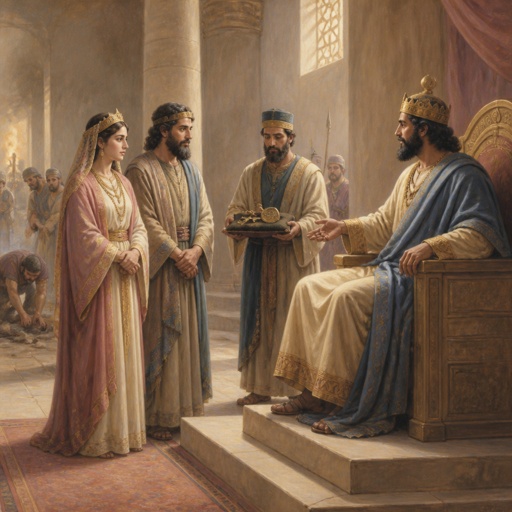
"¶ Then the king Ahasuerus said unto Esther the queen and to Mordecai the Jew, Behold, I have given Esther the house of Haman, and him they have hanged upon the gallows, because he laid his hand upon the Jews." - Esther 8:7
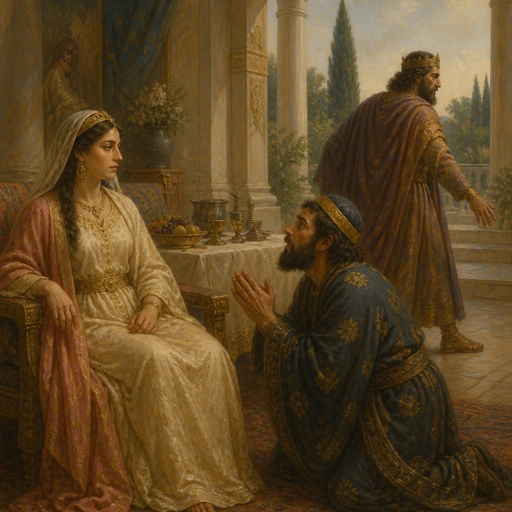
"¶ And the king arising from the banquet of wine in his wrath went into the palace garden: and Haman stood up to make request for his life to Esther the queen; for he saw that there was evil determined against him by the king." - Esther 7:7
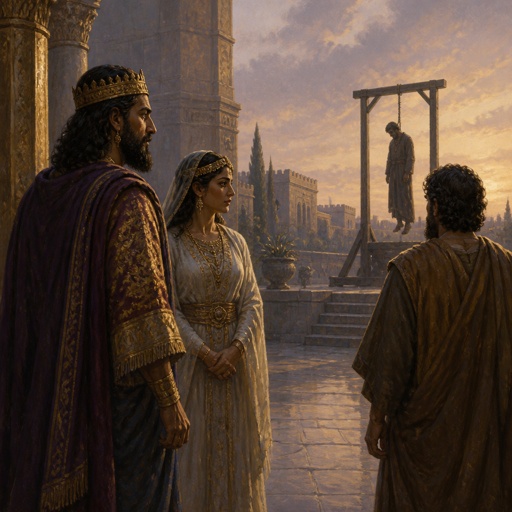
"So they hanged Haman on the gallows that he had prepared for Mordecai. Then was the king's wrath pacified." - Esther 7:10
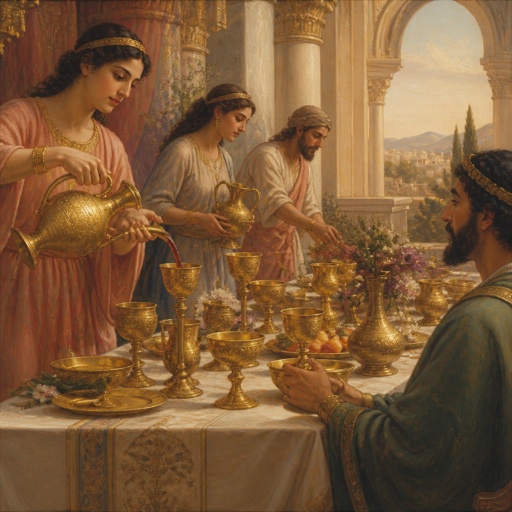
"And they gave them drink in vessels of gold, (the vessels being diverse one from another,) and royal wine in abundance, according to the state of the king." - Esther 1:7