What does Esther 7:8 mean?
“Then the king returned out of the palace garden into the place of the banquet of wine; and Haman was fallen upon the bed whereon Esther was. Then said the king, Will he force the queen also before me in the house? As the word went out of the king’s mouth, they covered Haman’s face.” — Esther 7:8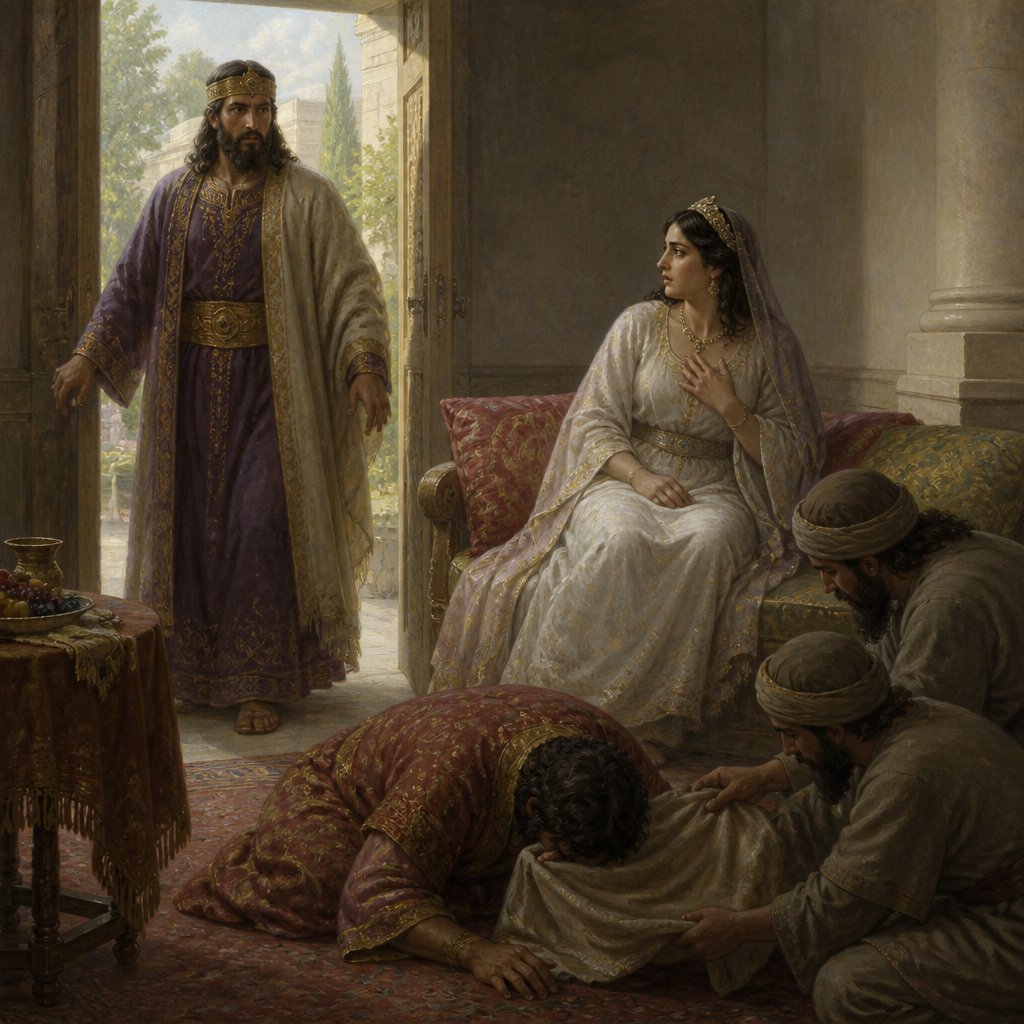
Esther 7:8 (KJV) reads, "Then the king returned out of the palace garden into the place of the banquet of wine; and Haman was fallen upon the bed whereon Esther was. Then said the king, Will he force the queen also before me in the house? As the word went out of the king's mouth, they covered Haman's face."
The book of Esther is set in the Persian Empire during the reign of King Xerxes, who is also known as King Ahasuerus. The story revolves around a young Jewish woman named Esther who becomes queen and plays a pivotal role in saving her people from the genocidal plot of a powerful court official, Haman.
In the context of Esther 7:8, there are several important themes and symbols that are worth exploring.
One of the key themes is the providence of God. Despite God not being directly mentioned in the Book of Esther, His providential care for His people is evident throughout the narrative. The events that unfold in the story, including Esther becoming queen and the ultimate downfall of Haman, demonstrate God's sovereignty and His ability to work through human events for the good of His people. In Esther 7:8, we see evidence of this providence as King Xerxes enters the banquet hall at a crucial moment and intervenes in what could have been a disastrous situation for Esther.
Another important theme in this verse is justice. The sudden entrance of King Xerxes into the banquet hall and his reaction to finding Haman on the bed with Esther demonstrates his sense of justice. The king's swift action in response to Haman's inappropriate behavior signifies the punishment that Haman is about to face for his crimes against the Jewish people. This is a foreshadowing of the justice that will be carried out in the subsequent chapters of the book.
This verse also contains symbolism that adds depth to the narrative. The contrast between the lush palace garden and the sinister plot of Haman serves as a reminder of the dichotomy between good and evil. The garden, typically a symbol of beauty and tranquility, is juxtaposed with the treachery and deceit of Haman. This serves to highlight the moral conflict at the heart of the story and the eventual triumph of righteousness over wickedness.
The actions and words of King Xerxes in Esther 7:8 also hold symbolic significance. The covering of Haman's face can be seen as a sign of his impending shame and humiliation, which is fitting given his heinous plans to destroy the Jewish people. Additionally, the king's question about Haman forcing the queen before him reflects his concern for the well-being of Esther and his readiness to protect her. This demonstrates the theme of protection and the king's responsibility to safeguard those under his care.
Overall, Esther 7:8 is a pivotal moment in the book that highlights the providential care of God, the theme of justice, and the symbolism of good versus evil. It sets the stage for the unraveling of Haman's plot and the ultimate deliverance of the Jewish people. The verse serves as a reminder of the power of God to work through human events and bring about justice for His people.
Get our apps


Artwork for Esther 7:8

Esther 7:8 - "Then the king returned out of the palace garden into the place of the banquet of wine; and Haman was fallen upon the bed whereon Esther was. Then said the king, Will he force the queen also before me in the house? As the word went out of the king's mouth, they covered Haman's face."
"Then the king returned out of the palace garden into the place of the banquet of wine; and Haman was fallen upon the bed whereon Esther was. Then said the king, Will he force the queen also before me in the house? As the word went out of the king's mouth, they covered Haman's face." - Esther 7:8

Esther 8:7 - "¶ Then the king Ahasuerus said unto Esther the queen and to Mordecai the Jew, Behold, I have given Esther the house of Haman, and him they have hanged upon the gallows, because he laid his hand upon the Jews."

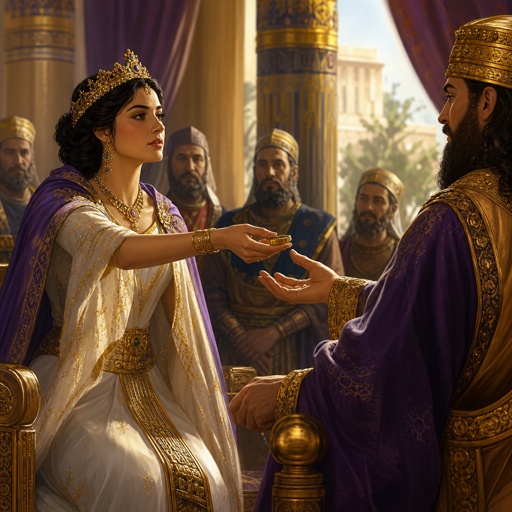
Esther 8:4 - "Then the king held out the golden sceptre toward Esther. So Esther arose, and stood before the king,"

Esther 5:7 - "Then answered Esther, and said, My petition and my request is;"

Esther 7:1 - "So the king and Haman came to banquet with Esther the queen."

Esther 7:6 - "And Esther said, The adversary and enemy is this wicked Haman. Then Haman was afraid before the king and the queen."

Esther 8:1 - "On that day did the king Ahasuerus give the house of Haman the Jews' enemy unto Esther the queen. And Mordecai came before the king; for Esther had told what he was unto her."
Esther 8:4

Esther 9:8 - "And Poratha, and Adalia, and Aridatha,"

Esther 7:2 - "And the king said again unto Esther on the second day at the banquet of wine, What is thy petition, queen Esther? and it shall be granted thee: and what is thy request? and it shall be performed, even to the half of the kingdom."

Esther 7:7 - "¶ And the king arising from the banquet of wine in his wrath went into the palace garden: and Haman stood up to make request for his life to Esther the queen; for he saw that there was evil determined against him by the king."

Esther 9:7 - "And Parshandatha, and Dalphon, and Aspatha,"
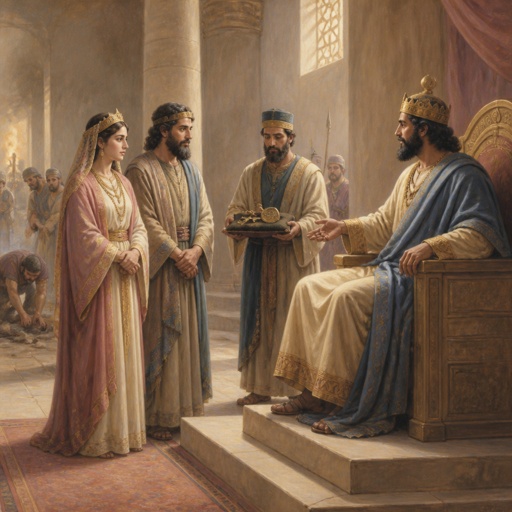
"¶ Then the king Ahasuerus said unto Esther the queen and to Mordecai the Jew, Behold, I have given Esther the house of Haman, and him they have hanged upon the gallows, because he laid his hand upon the Jews." - Esther 8:7

"So the king and Haman came to banquet with Esther the queen." - Esther 7:1
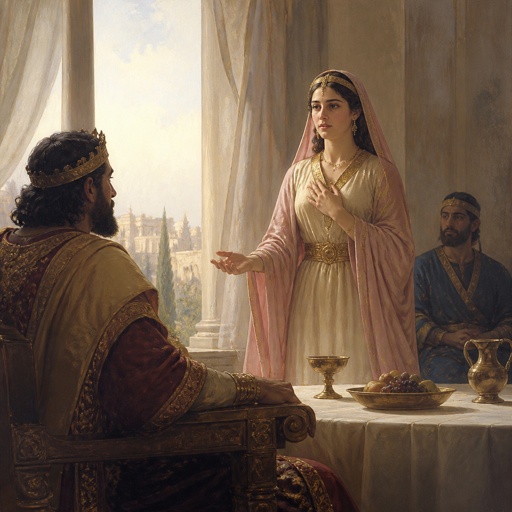
"Then answered Esther, and said, My petition and my request is;" - Esther 5:7

Esther 8:16 - "The Jews had light, and gladness, and joy, and honour."

Esther 7:5 - "¶ Then the king Ahasuerus answered and said unto Esther the queen, Who is he, and where is he, that durst presume in his heart to do so?"
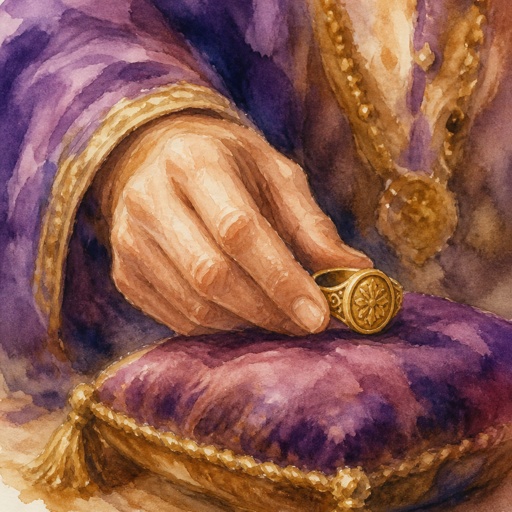
Esther 8:2 focus on the ring

"Then the king held out the golden sceptre toward Esther. So Esther arose, and stood before the king," - Esther 8:4

Esther 8:2 - "And the king took off his ring, which he had taken from Haman, and gave it unto Mordecai. And Esther set Mordecai over the house of Haman."
"And Parshandatha, and Dalphon, and Aspatha," - Esther 9:7
"And Poratha, and Adalia, and Aridatha," - Esther 9:8

Esther 8:3 - "¶ And Esther spake yet again before the king, and fell down at his feet, and besought him with tears to put away the mischief of Haman the Agagite, and his device that he had devised against the Jews."

Esther 6:7 - "And Haman answered the king, For the man whom the king delighteth to honour,"

"And Esther said, The adversary and enemy is this wicked Haman. Then Haman was afraid before the king and the queen." - Esther 7:6

Esther 7:3 - "Then Esther the queen answered and said, If I have found favour in thy sight, O king, and if it please the king, let my life be given me at my petition, and my people at my request:"

Esther 7:10 - "So they hanged Haman on the gallows that he had prepared for Mordecai. Then was the king's wrath pacified."

Esther 2:7 - "And he brought up Hadassah, that is, Esther, his uncle's daughter: for she had neither father nor mother, and the maid was fair and beautiful; whom Mordecai, when her father and mother were dead, took for his own daughter."

Esther 2:8 - "¶ So it came to pass, when the king's commandment and his decree was heard, and when many maidens were gathered together unto Shushan the palace, to the custody of Hegai, that Esther was brought also unto the king's house, to the custody of Hegai, keeper of the women."