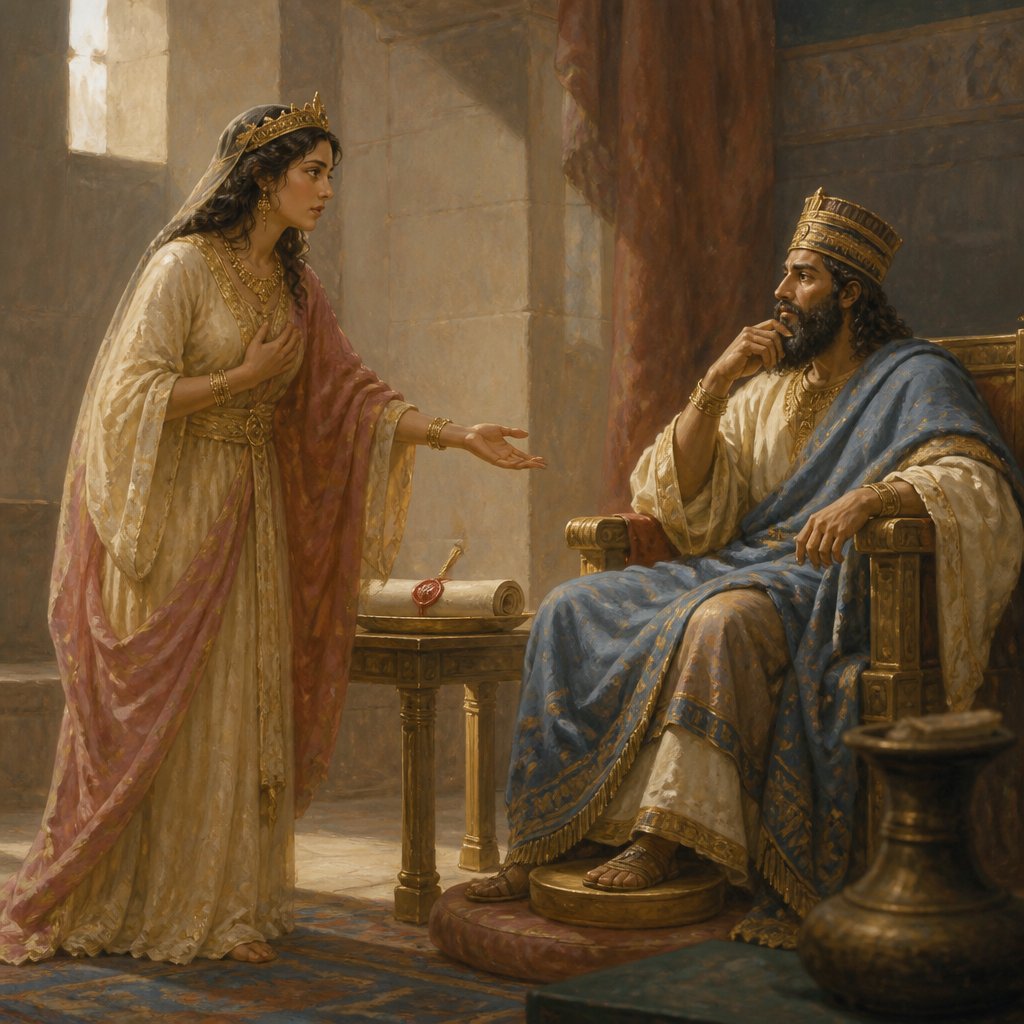
Esther 8:5 (KJV) - "And said, If it please the king, and if I have found favour in his sight, and the thing seem right before the king, and I be pleasing in his eyes, let it be written to reverse the letters devised by Haman the son of Hammedatha the Agagite, which he wrote to destroy the Jews which are in all the king's provinces:"
This verse comes from the book of Esther in the Old Testament, and it is a pivotal moment in the story of Esther. To fully understand the meaning and significance of this verse, it is essential to provide some context and background information.
The book of Esther is set in the Persian Empire during the reign of King Xerxes I, also known as King Ahasuerus. The story revolves around a young Jewish woman named Esther who becomes queen and her cousin Mordecai. A high-ranking official in the Persian government named Haman has plotted to annihilate all the Jews in the empire. Mordecai hears of this plan and pleads with Esther to appeal to the king on behalf of her people. Esther risks her life by approaching the king without being summoned, and in chapter 8, she makes her request known to the king.
In Esther 8:5, we see Esther's plea to the king. It is a significant moment for several reasons. First, it demonstrates Esther's courage and selflessness. Despite the danger to her own life, she is willing to speak up and intercede on behalf of her people. Her unselfish willingness to put herself at risk for the sake of others is a powerful example of compassion and bravery.
Second, Esther's words show her respect and deference to the king. She carefully phrases her request, making it clear that she acknowledges the king's authority and seeks his favor. Her humility and diplomacy in approaching the king reflect wisdom and discernment.
Furthermore, Esther's request also addresses the specific issue at hand – the reversal of the decree issued by Haman to destroy the Jews. This decree, sealed with the king's signet ring, carried the weight of law and was irrevocable. Esther's plea for its reversal is a desperate attempt to save the lives of her people, and it is a turning point in the narrative.
Symbolically, Esther's appeal to the king can be seen as a foreshadowing or parallel to the role of Jesus Christ as our intercessor before God. Just as Esther risked her life to save her people, Jesus sacrificed himself to save humanity from sin and death. Esther's willingness to plead for her people's deliverance reflects the selfless love and redemption that Christ offers to all who believe in him.
The theme of redemption and deliverance is central to the book of Esther. Despite the seemingly impossible situation facing the Jews, Esther's bravery and the intervention of God lead to a miraculous turnaround. The reversal of Haman's decree is a powerful testimony to God's faithfulness and His ability to bring good out of even the most dire circumstances.
In a broader sense, Esther's story is a reminder of the providential care of God for His people. Even when they are in exile and facing persecution, God remains faithful and works through ordinary individuals like Esther and Mordecai to accomplish His purposes. The book of Esther serves as a testament to the sovereignty of God and His concern for His chosen people.
In conclusion, Esther 8:5 is a pivotal moment in the book of Esther, showcasing Esther's courage, wisdom, and selflessness in appealing to the king for the reversal of the decree to destroy the Jews. It also carries broader themes of redemption, deliverance, and God's providential care for His people. The verse serves as a powerful example of faith and the enduring hope that rests in God's unfailing love and sovereignty.
Get our apps


Artwork for Esther 8:5

Esther 8:5 - "And said, If it please the king, and if I have found favour in his sight, and the thing seem right before the king, and I be pleasing in his eyes, let it be written to reverse the letters devised by Haman the son of Hammedatha the Agagite, which he wrote to destroy the Jews which are in all the king's provinces:"
"And said, If it please the king, and if I have found favour in his sight, and the thing seem right before the king, and I be pleasing in his eyes, let it be written to reverse the letters devised by Haman the son of Hammedatha the Agagite, which he wrote to destroy the Jews which are in all the king's provinces:" - Esther 8:5

Esther 5:5 - "Then the king said, Cause Haman to make haste, that he may do as Esther hath said. So the king and Haman came to the banquet that Esther had prepared."

Esther 8:4 - "Then the king held out the golden sceptre toward Esther. So Esther arose, and stood before the king,"

Esther 5:7 - "Then answered Esther, and said, My petition and my request is;"

Esther 8:1 - "On that day did the king Ahasuerus give the house of Haman the Jews' enemy unto Esther the queen. And Mordecai came before the king; for Esther had told what he was unto her."

Esther 5:2

Esther 5:2 - "And it was so, when the king saw Esther the queen standing in the court, that she obtained favour in his sight: and the king held out to Esther the golden sceptre that was in his hand. So Esther drew near, and touched the top of the sceptre."

Esther 8:4

Esther 5:2

Esther 5:2

Esther 9:8 - "And Poratha, and Adalia, and Aridatha,"

Esther 8:7 - "¶ Then the king Ahasuerus said unto Esther the queen and to Mordecai the Jew, Behold, I have given Esther the house of Haman, and him they have hanged upon the gallows, because he laid his hand upon the Jews."

Esther 5:4 - "And Esther answered, If it seem good unto the king, let the king and Haman come this day unto the banquet that I have prepared for him."
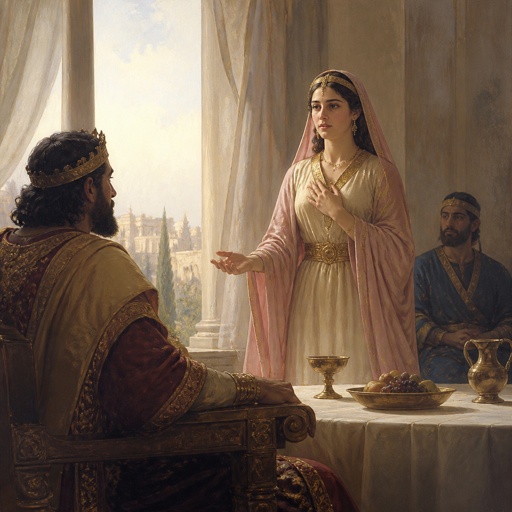
"Then answered Esther, and said, My petition and my request is;" - Esther 5:7

Esther 8:16 - "The Jews had light, and gladness, and joy, and honour."

Esther 5:3 - "Then said the king unto her, What wilt thou, queen Esther? and what is thy request? it shall be even given thee to the half of the kingdom."

Esther 7:5 - "¶ Then the king Ahasuerus answered and said unto Esther the queen, Who is he, and where is he, that durst presume in his heart to do so?"
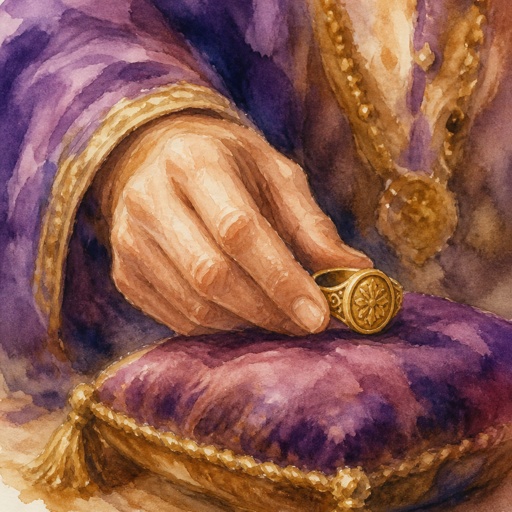
Esther 8:2 focus on the ring

"Then the king held out the golden sceptre toward Esther. So Esther arose, and stood before the king," - Esther 8:4

Esther 8:2 - "And the king took off his ring, which he had taken from Haman, and gave it unto Mordecai. And Esther set Mordecai over the house of Haman."

Esther 5:2 - "And it was so, when the king saw Esther the queen standing in the court, that she obtained favour in his sight: and the king held out to Esther the golden sceptre that was in his hand. So Esther drew near, and touched the top of the sceptre."
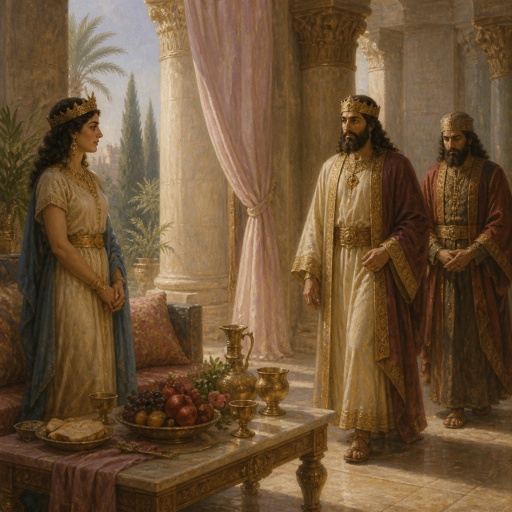
"Then the king said, Cause Haman to make haste, that he may do as Esther hath said. So the king and Haman came to the banquet that Esther had prepared." - Esther 5:5
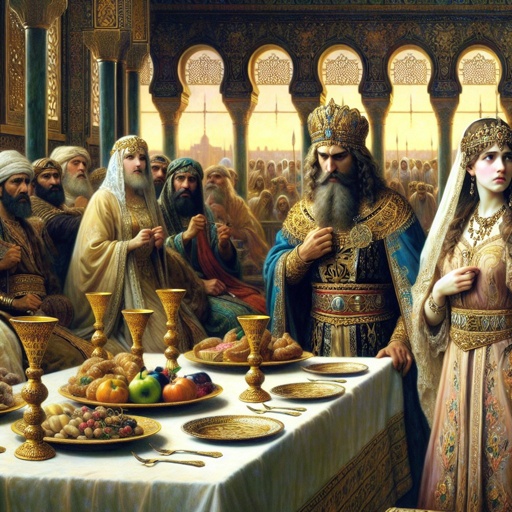
Esther 5:8 - "If I have found favour in the sight of the king, and if it please the king to grant my petition, and to perform my request, let the king and Haman come to the banquet that I shall prepare for them, and I will do to morrow as the king hath said."

Esther 4:5 - "Then called Esther for Hatach, one of the king's chamberlains, whom he had appointed to attend upon her, and gave him a commandment to Mordecai, to know what it was, and why it was."

Esther 5:6 - "¶ And the king said unto Esther at the banquet of wine, What is thy petition? and it shall be granted thee: and what is thy request? even to the half of the kingdom it shall be performed."
"And Poratha, and Adalia, and Aridatha," - Esther 9:8

Esther 8:3 - "¶ And Esther spake yet again before the king, and fell down at his feet, and besought him with tears to put away the mischief of Haman the Agagite, and his device that he had devised against the Jews."

Esther 5:12 - "Haman said moreover, Yea, Esther the queen did let no man come in with the king unto the banquet that she had prepared but myself; and to morrow am I invited unto her also with the king."

Esther 3:5 - "And when Haman saw that Mordecai bowed not, nor did him reverence, then was Haman full of wrath."