What does Esther 9:16 mean?
“But the other Jews that were in the king’s provinces gathered themselves together, and stood for their lives, and had rest from their enemies, and slew of their foes seventy and five thousand, but they laid not their hands on the prey,” — Esther 9:16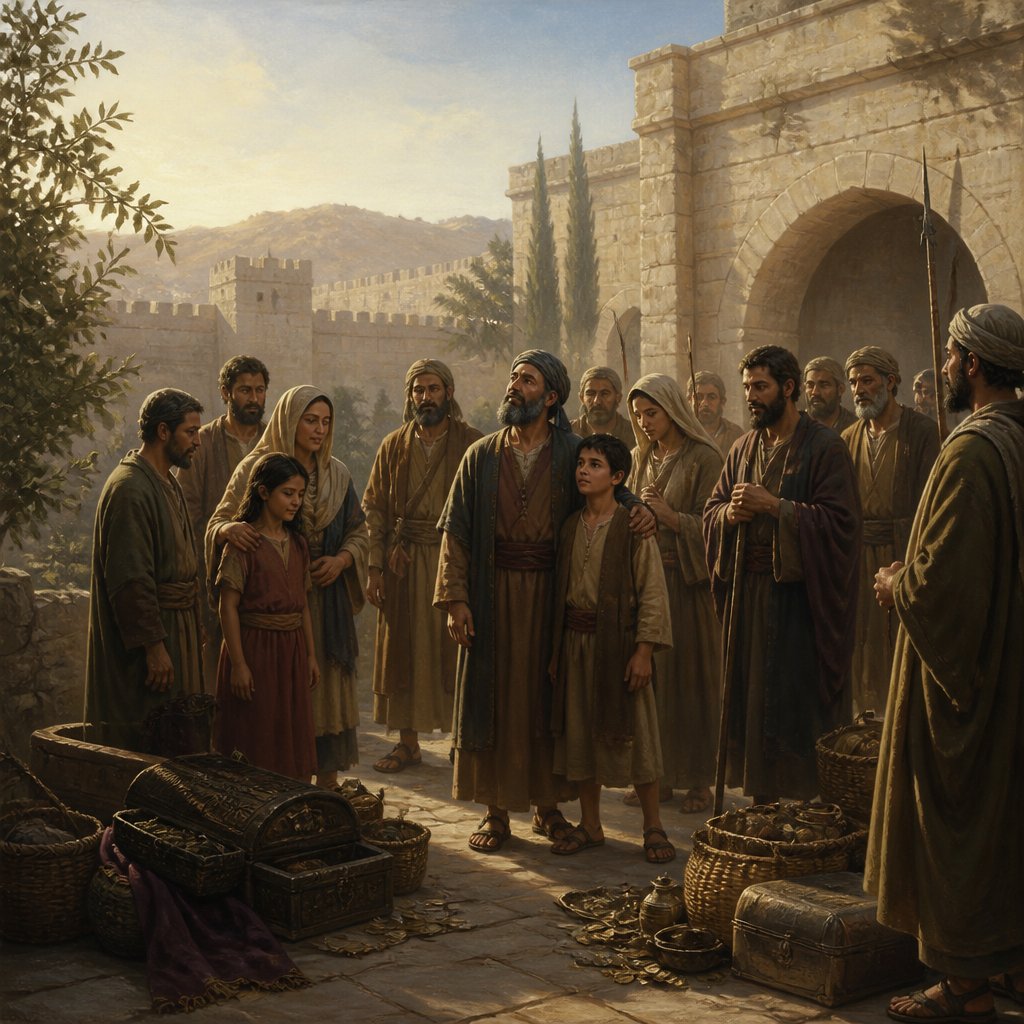
Esther 9:16 (KJV) reads, "But the other Jews that were in the king's provinces gathered themselves together, and stood for their lives, and had rest from their enemies, and slew of their foes seventy and five thousand, but they laid not their hands on the prey."
The Book of Esther is a unique and significant book in the Bible. It is set during the time of the Persian Empire and tells the story of a Jewish girl, Esther, who becomes Queen and saves her people from genocide. This particular verse comes at the climax of the story, describing the victory of the Jews over their enemies.
The verse begins by mentioning "the other Jews that were in the king's provinces". This refers to the Jewish community scattered throughout the Persian Empire. Despite their dispersion, they united together for a common purpose, which is a recurring theme in the book of Esther. This unity is significant, as it emphasizes the strength found in communal support and solidarity.
The verse goes on to say that the Jews "gathered themselves together, and stood for their lives". This phrase conveys the urgency and determination of the Jewish people to defend themselves. They were no longer passive victims, but active agents in securing their own safety. This is a powerful message about the importance of taking a stand in the face of adversity and fighting for survival.
The verse then states that the Jews "had rest from their enemies". This rest symbolizes the peace and security that the Jewish people were able to enjoy after their victory. It signifies not only physical rest from warfare but also emotional and spiritual rest from the constant threat of persecution. This theme of rest and peace is a central theme in the book of Esther – it highlights the triumph of good over evil and the eventual relief from suffering.
The verse concludes by mentioning that the Jews "slew of their foes seventy and five thousand, but they laid not their hands on the prey." This massive number emphasizes the magnitude of the Jewish victory. The fact that they did not take any spoil from their enemies demonstrates their commitment to righteousness and justice. This is in line with the overall theme of divine justice prevailing over greed and selfishness.
One of the key themes in this verse is the idea of divine providence and the ultimate triumph of good over evil. Throughout the book of Esther, God’s presence is not explicitly mentioned, but His influence is felt in the unfolding events. The victory of the Jewish people is a clear indication of God’s protection and intervention. It serves as a reminder that even in the face of trials and tribulations, God is always present and working behind the scenes.
Another important theme in this verse is the concept of unity and solidarity. The Jewish people in the king's provinces came together to support each other and fight for their survival. This underscores the importance of community and working together towards a common goal. It also illustrates the strength found in unity and the sense of empowerment that comes from standing together.
Symbolism plays a significant role in this verse as well. The number seventy-five thousand represents the magnitude of the Jewish victory. It symbolizes a complete and overwhelming triumph over their enemies. The fact that the Jews did not take spoil from their foes symbolizes their commitment to righteousness and integrity. It serves as a moral lesson about the importance of upholding virtue and refusing to compromise one’s values.
In conclusion, Esther 9:16 is a powerful and significant verse that captures the essence of the book of Esther. It conveys themes of unity, divine providence, victory over evil, and the moral importance of upholding righteousness. This verse serves as a timeless reminder of the strength found in community, the assurance of God’s protection, and the triumph of good over evil.
Get our apps


Artwork for Esther 9:16
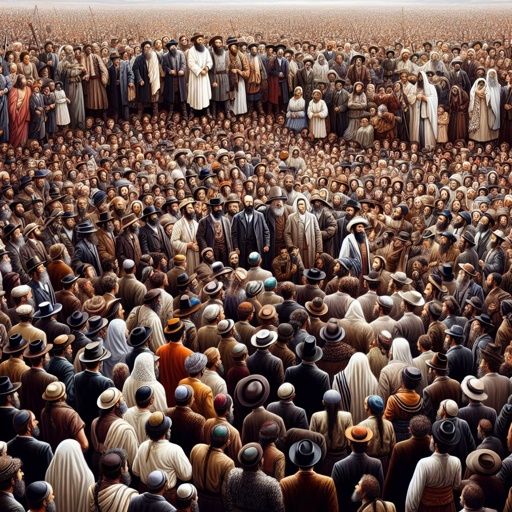
Esther 9:16 - "But the other Jews that were in the king's provinces gathered themselves together, and stood for their lives, and had rest from their enemies, and slew of their foes seventy and five thousand, but they laid not their hands on the prey,"
"But the other Jews that were in the king's provinces gathered themselves together, and stood for their lives, and had rest from their enemies, and slew of their foes seventy and five thousand, but they laid not their hands on the prey," - Esther 9:16

Esther 4:9 - "And Hatach came and told Esther the words of Mordecai."

Esther 9:32 - "And the decree of Esther confirmed these matters of Purim; and it was written in the book."

Esther 9:9 - "And Parmashta, and Arisai, and Aridai, and Vajezatha,"

Esther 9:29 - "Then Esther the queen, the daughter of Abihail, and Mordecai the Jew, wrote with all authority, to confirm this second letter of Purim."

"And Hatach came and told Esther the words of Mordecai." - Esther 4:9

Esther 9:8 - "And Poratha, and Adalia, and Aridatha,"

Esther 9:7 - "And Parshandatha, and Dalphon, and Aspatha,"

"And the decree of Esther confirmed these matters of Purim; and it was written in the book." - Esther 9:32

Esther 8:16 - "The Jews had light, and gladness, and joy, and honour."

Esther 2:16 - "So Esther was taken unto king Ahasuerus into his house royal in the tenth month, which is the month Tebeth, in the seventh year of his reign."
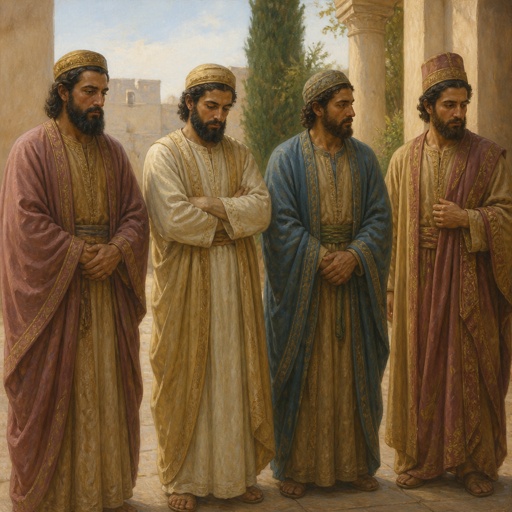
"And Parmashta, and Arisai, and Aridai, and Vajezatha," - Esther 9:9

Esther 9:31 - "To confirm these days of Purim in their times appointed, according as Mordecai the Jew and Esther the queen had enjoined them, and as they had decreed for themselves and for their seed, the matters of the fastings and their cry."

Esther 9:13 - "Then said Esther, If it please the king, let it be granted to the Jews which are in Shushan to do to morrow also according unto this day's decree, and let Haman's ten sons be hanged upon the gallows."
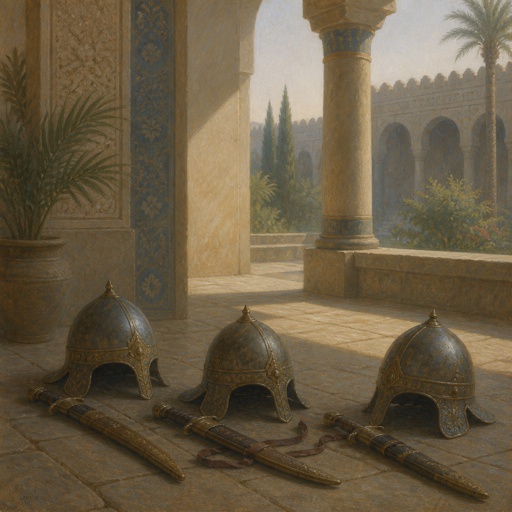
"And Parshandatha, and Dalphon, and Aspatha," - Esther 9:7
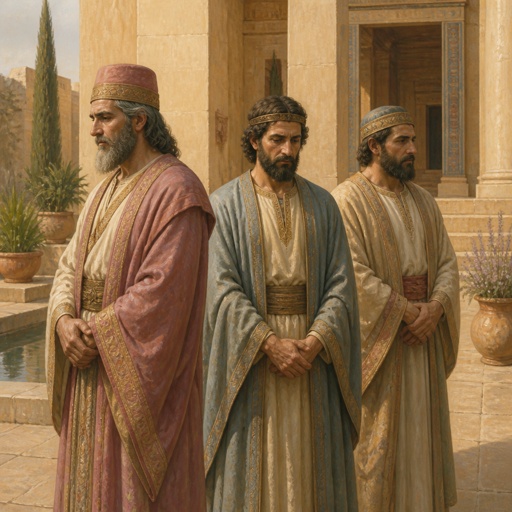
"And Poratha, and Adalia, and Aridatha," - Esther 9:8

Esther 9:6 - "And in Shushan the palace the Jews slew and destroyed five hundred men."

Esther 9:25 - "But when Esther came before the king, he commanded by letters that his wicked device, which he devised against the Jews, should return upon his own head, and that he and his sons should be hanged on the gallows."

Esther 9:10 - "The ten sons of Haman the son of Hammedatha, the enemy of the Jews, slew they; but on the spoil laid they not their hand."

Esther 9:11 - "On that day the number of those that were slain in Shushan the palace was brought before the king."

Esther 9:23 - "And the Jews undertook to do as they had begun, and as Mordecai had written unto them;"
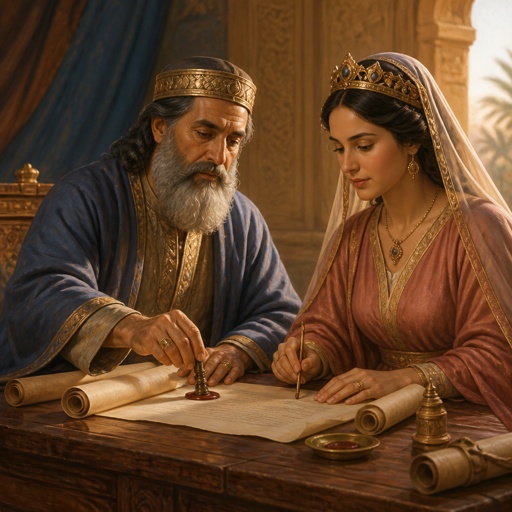
"Then Esther the queen, the daughter of Abihail, and Mordecai the Jew, wrote with all authority, to confirm this second letter of Purim." - Esther 9:29

Esther 9:17 - "On the thirteenth day of the month Adar; and on the fourteenth day of the same rested they, and made it a day of feasting and gladness."

Esther 1:9 - "Also Vashti the queen made a feast for the women in the royal house which belonged to king Ahasuerus."

Esther 9:14 - "And the king commanded it so to be done: and the decree was given at Shushan; and they hanged Haman's ten sons."
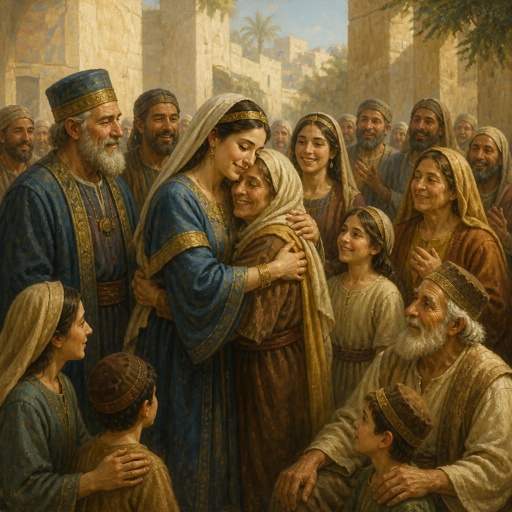
"The Jews had light, and gladness, and joy, and honour." - Esther 8:16

Esther 9:21 - "To stablish this among them, that they should keep the fourteenth day of the month Adar, and the fifteenth day of the same, yearly,"

Esther 9:3 - "And all the rulers of the provinces, and the lieutenants, and the deputies, and officers of the king, helped the Jews; because the fear of Mordecai fell upon them."

Esther 9:30 - "And he sent the letters unto all the Jews, to the hundred twenty and seven provinces of the kingdom of Ahasuerus, with words of peace and truth,"