What does Esther 9:18 mean?
“But the Jews that were at Shushan assembled together on the thirteenth day thereof, and on the fourteenth thereof; and on the fifteenth day of the same they rested, and made it a day of feasting and gladness.” — Esther 9:18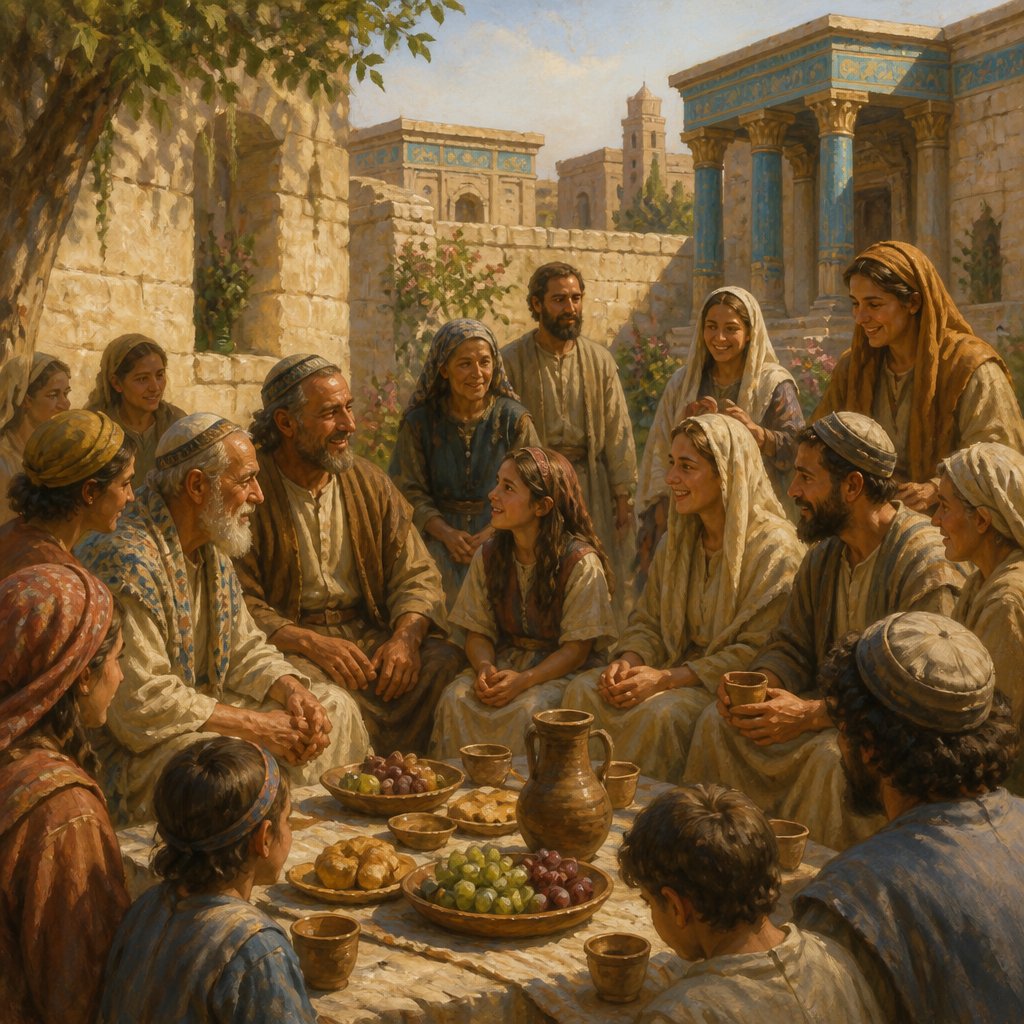
Esther 9:18 from the King James Version (KJV) reads: "But the Jews that were at Shushan assembled together on the thirteenth day thereof, and on the fourteenth thereof; and on the fifteenth day of the same they rested, and made it a day of feasting and gladness." This verse comes from the book of Esther, a historical narrative in the Old Testament that tells the story of a Jewish girl named Esther who becomes the queen of Persia and saves her people from a plot to annihilate them.
The context of Esther 9:18 is a pivotal moment in the book when the Jews in the city of Shushan (also known as Susa) come together to defend themselves against those who seek to destroy them. The feast that is established in this verse commemorates the victory and deliverance of the Jewish people from their enemies. This moment serves as a celebration of God's faithfulness and the triumph of good over evil.
One of the major themes in this verse is the idea of deliverance and celebration. The Jewish people were under threat of annihilation, and through the courage and bravery of Esther and Mordecai, they were able to defend themselves and emerge victorious. The establishment of a day of feasting and gladness signifies the sense of relief and joy that comes with being delivered from a great danger. It also serves as a reminder of the importance of coming together as a community to celebrate and give thanks for God's protection and provision.
Another theme present in Esther 9:18 is the concept of unity and solidarity among the Jewish people. The verse emphasizes that the Jews at Shushan assembled together on specific days to defend themselves and later to celebrate their deliverance. This underscores the importance of standing together in times of adversity and working as a community to overcome challenges. It also highlights the power of collective strength and the significance of commemorating important events as a unified group.
Symbolism is also evident in this verse, particularly in the establishment of the day of feasting and gladness. The act of feasting is often symbolic of abundance, joy, and prosperity. By designating a specific day for feasting and gladness, the Jewish people are making a deliberate statement about their gratitude for God's provision and their desire to express their joy and appreciation. Additionally, the act of resting on the fifteenth day symbolizes a period of peace and relaxation after a period of intense turmoil and conflict.
Overall, Esther 9:18 captures the essence of a significant moment in the biblical narrative, highlighting themes of deliverance, celebration, unity, and symbolism. It serves as a powerful reminder of the importance of faith, community, and gratitude in the face of adversity. The verse also points to the enduring relevance of the biblical text in providing guidance and inspiration for believers facing challenges in their own lives.
Get our apps


Artwork for Esther 9:18

Esther 9:18 - "But the Jews that were at Shushan assembled together on the thirteenth day thereof, and on the fourteenth thereof; and on the fifteenth day of the same they rested, and made it a day of feasting and gladness."
"But the Jews that were at Shushan assembled together on the thirteenth day thereof, and on the fourteenth thereof; and on the fifteenth day of the same they rested, and made it a day of feasting and gladness." - Esther 9:18

Esther 4:9 - "And Hatach came and told Esther the words of Mordecai."

Esther 9:32 - "And the decree of Esther confirmed these matters of Purim; and it was written in the book."

Esther 9:9 - "And Parmashta, and Arisai, and Aridai, and Vajezatha,"

Esther 9:29 - "Then Esther the queen, the daughter of Abihail, and Mordecai the Jew, wrote with all authority, to confirm this second letter of Purim."

"And Hatach came and told Esther the words of Mordecai." - Esther 4:9

Esther 9:8 - "And Poratha, and Adalia, and Aridatha,"

Esther 9:7 - "And Parshandatha, and Dalphon, and Aspatha,"

"And the decree of Esther confirmed these matters of Purim; and it was written in the book." - Esther 9:32
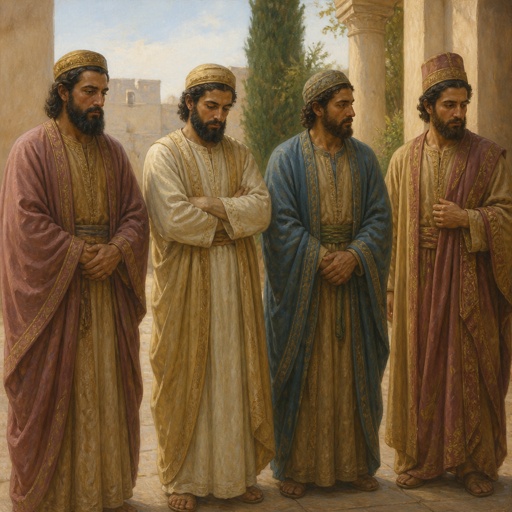
"And Parmashta, and Arisai, and Aridai, and Vajezatha," - Esther 9:9

Esther 9:31 - "To confirm these days of Purim in their times appointed, according as Mordecai the Jew and Esther the queen had enjoined them, and as they had decreed for themselves and for their seed, the matters of the fastings and their cry."

Esther 9:13 - "Then said Esther, If it please the king, let it be granted to the Jews which are in Shushan to do to morrow also according unto this day's decree, and let Haman's ten sons be hanged upon the gallows."

"And Parshandatha, and Dalphon, and Aspatha," - Esther 9:7
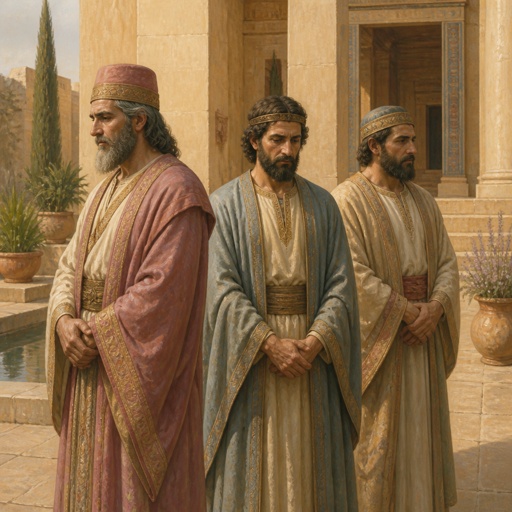
"And Poratha, and Adalia, and Aridatha," - Esther 9:8

Esther 9:6 - "And in Shushan the palace the Jews slew and destroyed five hundred men."

Esther 9:25 - "But when Esther came before the king, he commanded by letters that his wicked device, which he devised against the Jews, should return upon his own head, and that he and his sons should be hanged on the gallows."

Esther 9:10 - "The ten sons of Haman the son of Hammedatha, the enemy of the Jews, slew they; but on the spoil laid they not their hand."

Esther 9:11 - "On that day the number of those that were slain in Shushan the palace was brought before the king."

Esther 9:23 - "And the Jews undertook to do as they had begun, and as Mordecai had written unto them;"

"Then Esther the queen, the daughter of Abihail, and Mordecai the Jew, wrote with all authority, to confirm this second letter of Purim." - Esther 9:29

Esther 9:17 - "On the thirteenth day of the month Adar; and on the fourteenth day of the same rested they, and made it a day of feasting and gladness."

Esther 1:9 - "Also Vashti the queen made a feast for the women in the royal house which belonged to king Ahasuerus."

Esther 9:14 - "And the king commanded it so to be done: and the decree was given at Shushan; and they hanged Haman's ten sons."

Esther 9:21 - "To stablish this among them, that they should keep the fourteenth day of the month Adar, and the fifteenth day of the same, yearly,"

Esther 9:3 - "And all the rulers of the provinces, and the lieutenants, and the deputies, and officers of the king, helped the Jews; because the fear of Mordecai fell upon them."

Esther 9:30 - "And he sent the letters unto all the Jews, to the hundred twenty and seven provinces of the kingdom of Ahasuerus, with words of peace and truth,"

Esther 9:12 - "¶ And the king said unto Esther the queen, The Jews have slain and destroyed five hundred men in Shushan the palace, and the ten sons of Haman; what have they done in the rest of the king's provinces? now what is thy petition? and it shall be granted thee: or what is thy request further? and it shall be done."
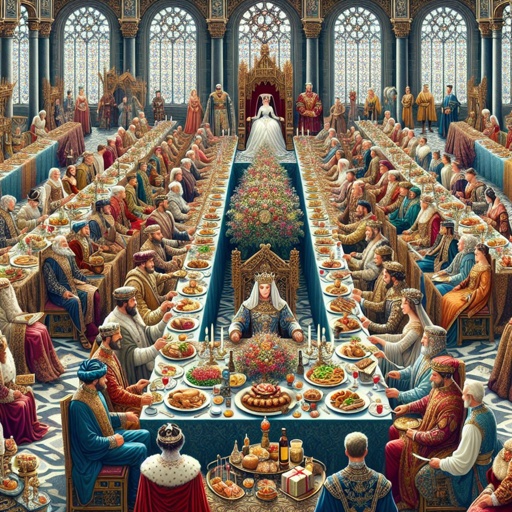
Esther 2:18 - "Then the king made a great feast unto all his princes and his servants, even Esther's feast; and he made a release to the provinces, and gave gifts, according to the state of the king."

Esther 9:4 - "For Mordecai was great in the king's house, and his fame went out throughout all the provinces: for this man Mordecai waxed greater and greater."