What does Esther 9:25 mean?
“But when Esther came before the king, he commanded by letters that his wicked device, which he devised against the Jews, should return upon his own head, and that he and his sons should be hanged on the gallows.” — Esther 9:25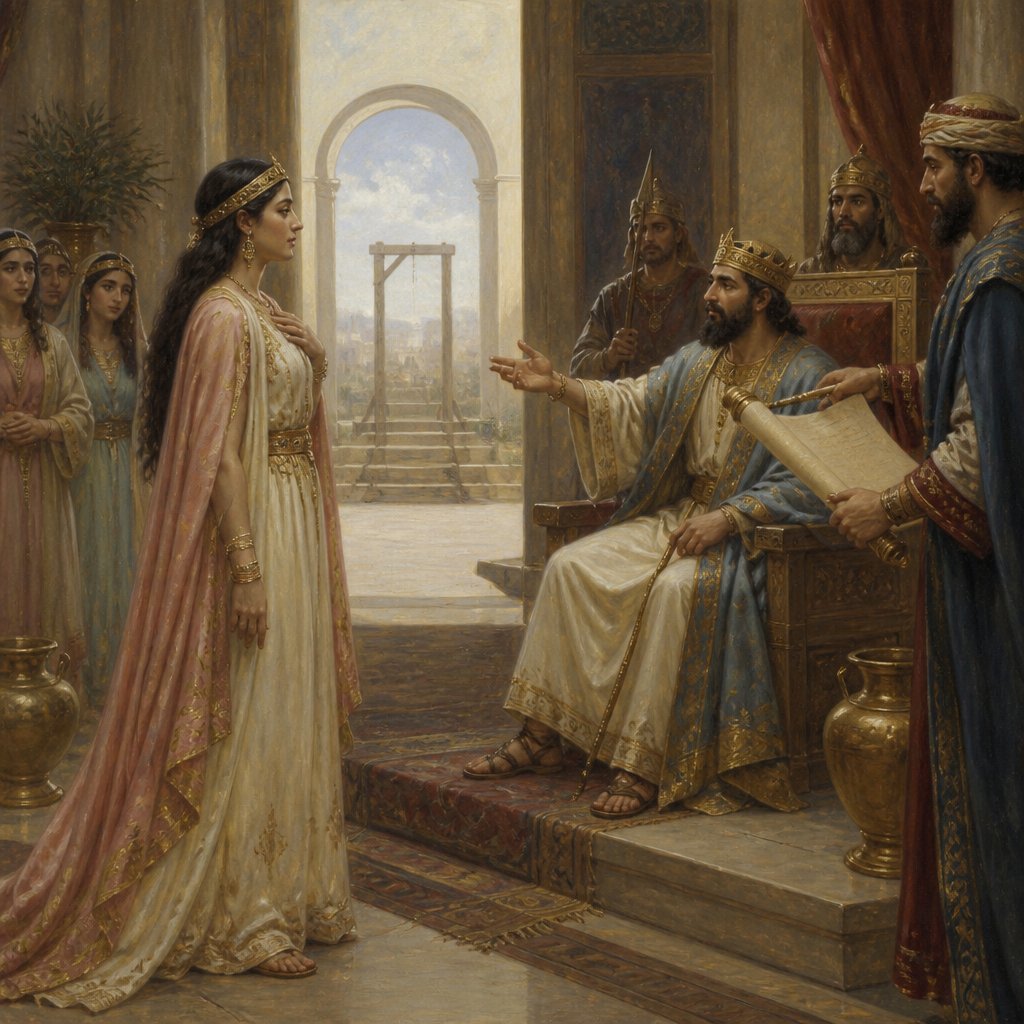
Esther 9:25 (KJV) – "But when Esther came before the king, he commanded by letters that his wicked device, which he devised against the Jews, should return upon his own head, and that he and his sons should be hanged on the gallows."
The book of Esther is a complex and rich narrative that contains a multitude of themes, symbolism, and deep meaning. The verse quoted above comes at a pivotal moment in the story, where the tables have turned for the Jewish people. They have been threatened with destruction by Haman, a high-ranking official in the Persian court, but through the bravery and cunning of Queen Esther, they are able to overcome their enemies.
The context of this verse is crucial to understanding its significance. Throughout the book of Esther, we see the themes of faith, courage, and divine providence at play. The Jewish people are in a foreign land, subjected to the rule of a pagan king, yet they remain loyal to their faith and traditions. Esther herself embodies these virtues, risking her life to save her people. The verse in question is the culmination of their struggle, as the wicked plot of Haman is exposed and ultimately turned against him and his family.
The theme of justice is central to this verse. The tables have turned for the Jewish people, and their enemies are now the ones facing destruction. This reflects a larger theme in the Bible, where justice and righteousness are ultimately upheld and the wicked are punished. It also speaks to the idea of divine retribution, where the schemes of the wicked ultimately lead to their own downfall. This verse serves as a reminder that ultimately, God is in control and will set things right in his own time.
The symbolism in this verse is powerful and multifaceted. The hanging of Haman and his sons on the gallows is a stark and brutal image, but it carries deep symbolic weight. It represents the defeat of evil and the triumph of good over adversity. The fact that the punishment is carried out on the very gallows that Haman had prepared for his enemies is a clear symbol of poetic justice. It serves as a warning to those who would plot harm against the innocent, that their schemes will ultimately lead to their own destruction.
Furthermore, the actions of Esther and the outcome of this verse serve as symbols of hope and perseverance. The Jewish people faced a grave threat, but through the bravery and cunning of Esther, they were able to overcome it. This serves as a message of encouragement to readers, reminding them that even in the face of seemingly insurmountable odds, there is always hope. The story of Esther is a testament to the power of faith and the ability of individuals to make a difference, even in the most difficult circumstances.
In conclusion, Esther 9:25 is a verse rich in meaning and significance. It encapsulates the themes of justice, divine providence, and the triumph of good over evil. The context and symbolism of this verse contribute to its deep and enduring impact, reminding readers of the timeless truths found in the biblical narrative. This verse serves as a powerful reminder of the ultimate victory of righteousness and the hope that prevails in the face of adversity.
Get our apps


Artwork for Esther 9:25

Esther 9:25 - "But when Esther came before the king, he commanded by letters that his wicked device, which he devised against the Jews, should return upon his own head, and that he and his sons should be hanged on the gallows."
"But when Esther came before the king, he commanded by letters that his wicked device, which he devised against the Jews, should return upon his own head, and that he and his sons should be hanged on the gallows." - Esther 9:25

Esther 4:9 - "And Hatach came and told Esther the words of Mordecai."

Esther 9:32 - "And the decree of Esther confirmed these matters of Purim; and it was written in the book."

Esther 9:9 - "And Parmashta, and Arisai, and Aridai, and Vajezatha,"

Esther 9:29 - "Then Esther the queen, the daughter of Abihail, and Mordecai the Jew, wrote with all authority, to confirm this second letter of Purim."

"And Hatach came and told Esther the words of Mordecai." - Esther 4:9

Esther 9:8 - "And Poratha, and Adalia, and Aridatha,"

Esther 9:7 - "And Parshandatha, and Dalphon, and Aspatha,"

"And the decree of Esther confirmed these matters of Purim; and it was written in the book." - Esther 9:32
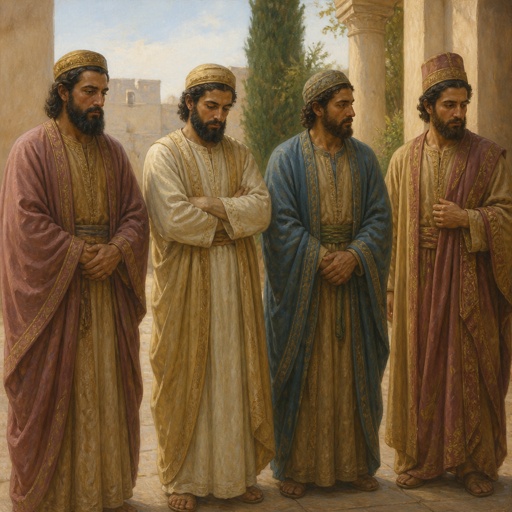
"And Parmashta, and Arisai, and Aridai, and Vajezatha," - Esther 9:9

Esther 9:31 - "To confirm these days of Purim in their times appointed, according as Mordecai the Jew and Esther the queen had enjoined them, and as they had decreed for themselves and for their seed, the matters of the fastings and their cry."

Esther 9:13 - "Then said Esther, If it please the king, let it be granted to the Jews which are in Shushan to do to morrow also according unto this day's decree, and let Haman's ten sons be hanged upon the gallows."

"And Parshandatha, and Dalphon, and Aspatha," - Esther 9:7
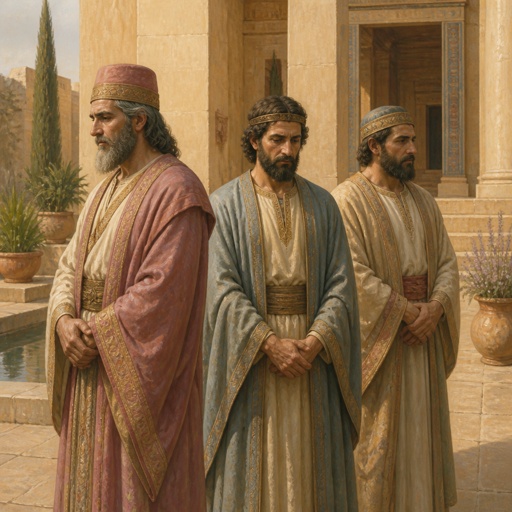
"And Poratha, and Adalia, and Aridatha," - Esther 9:8

Esther 9:6 - "And in Shushan the palace the Jews slew and destroyed five hundred men."

Esther 9:10 - "The ten sons of Haman the son of Hammedatha, the enemy of the Jews, slew they; but on the spoil laid they not their hand."

Esther 9:11 - "On that day the number of those that were slain in Shushan the palace was brought before the king."

Esther 9:23 - "And the Jews undertook to do as they had begun, and as Mordecai had written unto them;"
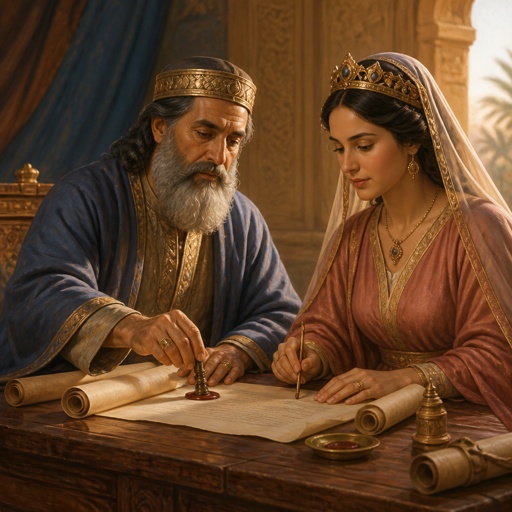
"Then Esther the queen, the daughter of Abihail, and Mordecai the Jew, wrote with all authority, to confirm this second letter of Purim." - Esther 9:29

Esther 9:17 - "On the thirteenth day of the month Adar; and on the fourteenth day of the same rested they, and made it a day of feasting and gladness."

Esther 1:9 - "Also Vashti the queen made a feast for the women in the royal house which belonged to king Ahasuerus."

Esther 9:14 - "And the king commanded it so to be done: and the decree was given at Shushan; and they hanged Haman's ten sons."

Esther 9:21 - "To stablish this among them, that they should keep the fourteenth day of the month Adar, and the fifteenth day of the same, yearly,"

Esther 9:3 - "And all the rulers of the provinces, and the lieutenants, and the deputies, and officers of the king, helped the Jews; because the fear of Mordecai fell upon them."

Esther 9:30 - "And he sent the letters unto all the Jews, to the hundred twenty and seven provinces of the kingdom of Ahasuerus, with words of peace and truth,"

Esther 9:12 - "¶ And the king said unto Esther the queen, The Jews have slain and destroyed five hundred men in Shushan the palace, and the ten sons of Haman; what have they done in the rest of the king's provinces? now what is thy petition? and it shall be granted thee: or what is thy request further? and it shall be done."

Esther 9:4 - "For Mordecai was great in the king's house, and his fame went out throughout all the provinces: for this man Mordecai waxed greater and greater."

Esther 9:5 - "Thus the Jews smote all their enemies with the stroke of the sword, and slaughter, and destruction, and did what they would unto those that hated them."

Esther 9:20 - "¶ And Mordecai wrote these things, and sent letters unto all the Jews that were in all the provinces of the king Ahasuerus, both nigh and far,"